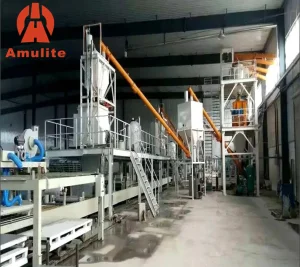
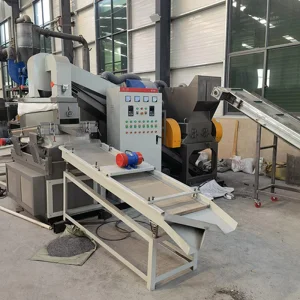
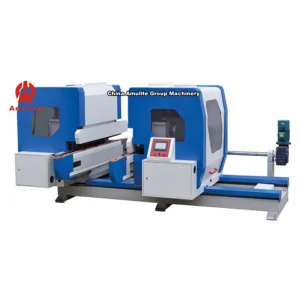
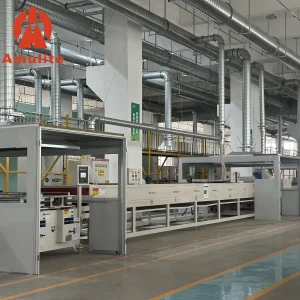
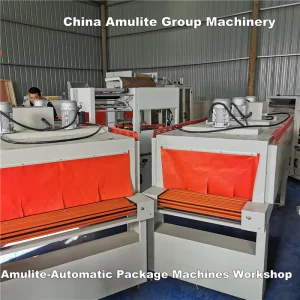
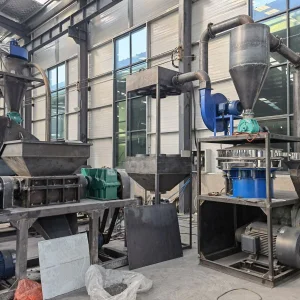
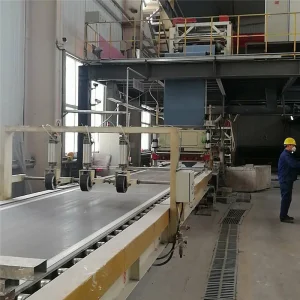
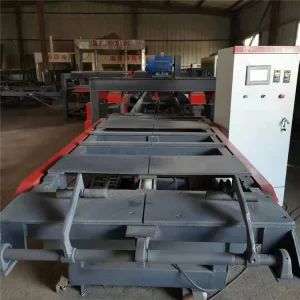
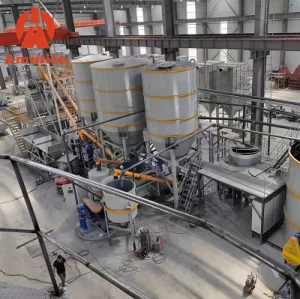
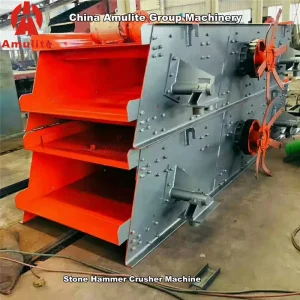
Explore our state-of-the-art turn-key manufacturing configurations designed for thermal insulation, wall panel production, recycling, and precision coating.
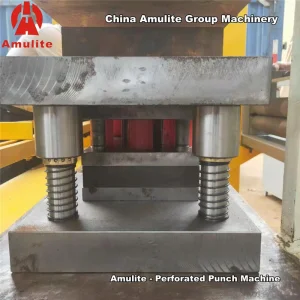
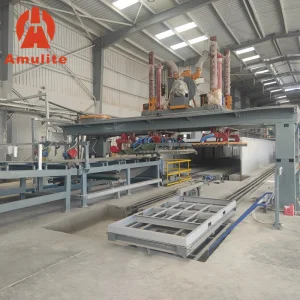
The modern construction ecosystem is undergoing an unprecedented structural transition driven by strict global decarbonization targets, accelerating urbanization, and the mandatory adoption of non-combustible, high-durability building envelopes. Purchasing capital equipment for building material manufacturing—whether full-scale fiber cement board production lines, autoclaved aerated concrete (AAC) block systems, or extruded polystyrene (XPS) insulation board plants—is no longer a basic machinery transaction. It represents an enterprise-level strategy requiring deep integration of raw material chemistry, mechanical precision engineering, continuous automated dousing, and compliance with stringent international building codes.
As a premier global equipment manufacturer and turnkey engineering provider, our production solutions are configured to address the operational friction points that traditional factories face: inconsistent slurry dispersion, sheet delamination under high humidity, thermal curing energy losses, high manual labor dependencies, and sub-optimal raw material utilization rates. By combining heavy structural mechanical engineering with state-of-the-art Programmable Logic Controller (PLC) integration, our equipment delivers exceptional operational efficiency (OEE) while lowering the overall cost per square meter of finished board output.
Legacy production plants often rely on fragmented equipment units from separate vendors, leading to communication breakdowns between the dosing systems, sheet-forming units, vacuum dewatering stations, autoclaves, and final trimming lines. Modern industrial procurement prioritizes unified automated architecture. Our plants integrate end-to-end SCADA control, allowing operators to oversee raw material slurry viscosity, web tensioning, temperature curves inside curing tunnels, and cut-off length precision from a single centralized interface.
Quantifiable metrics achieved across our installed client base across 60+ countries worldwide.
Modular equipment design lowers initial capital expenditure by up to 35% compared to European counterparts while preserving identical output specifications and component lifespans.
Integrated heat exchangers capture steam condensate from autoclaves and drying tunnels, recycling thermal energy to cut overall energy consumption by 22% annually.
All pressure vessels, electrical cabinets, and rotating machine bodies meet rigorous European Union Safety Directives (CE) and ISO 9001 quality management benchmarks.
Procuring heavy building material machinery directly from established Chinese manufacturing hubs yields distinct structural advantages for international corporate buyers, EPC contractors, and real estate developers. Over the past three decades, China has developed an unmatched industrial cluster incorporating raw steel processing, heavy-duty CNC machining center manufacturing, high-precision gearbox production, and advanced industrial automation engineering.
From heavy steel plate welding and stress-relief heat treatment to final automated panel assembly and trial dry-runs, our 100,000 m² manufacturing plant completes 95% of fabrication processes in-house. This eliminates third-party component markup and ensures rigorous quality tracking at every weld joint.
Utilizing optimized modular sub-assembly designs, complete turn-key plants (such as 5-million m²/year Fiber Cement lines) can be manufactured, dry-tested, and packed into standardized open-top and flat-rack containers within 90 to 120 days, minimizing project delivery schedules.
Unlike rigid Western equipment suppliers who enforce fixed off-the-shelf configurations, our technical team tailors machine dimensions, vat numbers, drum widths (1,300mm to 1,600mm), and electrical specs (Siemens, Schneider, ABB) to match your local plant dimensions and grid voltage requirements.
Investing in building material machinery requires absolute confidence in global field commissioning, raw material formulation tuning, and local building standard compliance. A machine line that operates perfectly using Chinese quartz sand and OPC cement might fail under different mineral distributions in Southeast Asia, the Middle East, South America, or Africa.
Before machinery shipping occurs, our chemical engineers analyze your locally sourced raw material samples—silica sand/flour, Portland cement, fly ash, hydrated lime, cellulose wood pulp, and volcanic ash. We perform slurry settling velocity calculations, viscosity optimization, and autoclave synthesis testing in our R&D facility to determine the exact mix formulation ratio guaranteed to hit your required flexural strength and fire resistance ratings (Class A1 Non-combustible).
We dispatch senior mechanical engineers, electrical automation specialists, and master process technicians directly to your site. Our team manages civil foundation layout verifications, mechanical erection, steam piping connection, PLC software loading, and dry/wet trial runs. We stay on-site until your local operating team is fully trained and the plant achieves contractually guaranteed output targets.
Different regions present unique environmental challenges requiring specialized board properties. Our production lines are engineered to produce a diverse matrix of non-metallic building materials.
High-density autoclaved fiber cement boards (1.4–1.7 g/cm³) engineered by our lines offer extreme freeze-thaw resistance, UV stability, and impact durability for commercial high-rise exterior rainscreen systems in North America and Europe.
Calcium silicate board lines produce moisture-proof, zero-swelling sheets specially formulated for high-humidity environments like hospital operating rooms, commercial kitchens, subways, and bathroom tile backer applications.
EPS cement sandwich panel machines produce fast-erection wall units featuring male-female interlocking joints. Widely deployed across social housing projects in the Middle East, Africa, and Latin America for quick thermal insulation construction.
MGO (Magnesium Oxide) and heavy-duty silicate boards fabricated on our production lines achieve up to 4-hour fire ratings (UL 263 / EN 1364), protecting steel columns, ductwork, and fire exit corridors in industrial facilities.
The non-metallic building material machinery domain is experiencing rapid technological evolution. Forward-thinking enterprise manufacturers are optimizing their lines around three primary innovation pillars:
Replacing conventional ozone-depleting HCFC/HFC blowing agents with recycled supercritical CO2 in XPS foam board production lines, eliminating direct greenhouse gas emissions during manufacturing.
Integrating high-speed camera arrays and AI visual algorithms at the trim-saw line to automatically flag micro-cracks, edge chipping, and thickness variations in real-time at 60 meters per minute.
Engineering slurry formulations capable of consuming up to 45% industrial solid waste—including fly ash, desulfurization gypsum, and mine tailings—turning hazardous byproduct streams into structural building assets.
Detailed answers to critical engineering, investment, and operational questions regarding building material line acquisition.
Our standard turnkey fiber cement board and calcium silicate board lines are engineered for capacities ranging from 2 million m² to 30 million m² per year. Output is dictated by the net width of the sheet-forming machine (typically 1,300mm to 1,600mm), the number of slurry vats (3 to 6 vats), vacuum pump dewatering power, and the size/quantity of steam curing autoclaves installed.
Autoclaved lines utilize high-pressure saturated steam curing (approx. 170°C to 190°C at 1.0–1.2 MPa for 10–12 hours). This induces a hydrothermal reaction between quartz sand (silica) and lime/cement to form tobermorite crystal matrix structures, yielding maximum dimensional stability, lower moisture movement, and extreme durability. Non-autoclaved lines rely on hydration curing of cement and air-drying, requiring less thermal capital investment but producing boards with slightly higher water absorption rates.
We require raw material samples (sand, cement, pulp, fly ash) prior to contract finalization. Our central laboratory conducts XRF/XRD chemical composition analysis, particle size distribution testing, and pilot slurry trials. We formally guarantee contractually specified flexural strength (MOR), density ranges, and water absorption rates based on our pre-tested chemical mix designs.
A standard full project timeline spans 6 to 9 months: Engineering & Manufacturing takes 90–120 days; Ocean Freight & Port Clearance 30–45 days; Civil & Mechanical Installation 45–60 days; and Commissioning, Chemical Tuning & Operator Training 20–30 days.
We provide a 12-month complete mechanical and electrical warranty. We supply a mandatory 2-year wearable spare parts package (felt, wire meshes, cutting blades, vacuum seals) with machine delivery. Furthermore, all PLC cabinets feature encrypted remote access modules allowing our software engineers in China to diagnose program anomalies, update recipes, and assist your technicians live 24/7.
Discover our extended line of fiber cement, AAC block, gypsum, metal panel, and heavy recycling equipment.