1 / 5
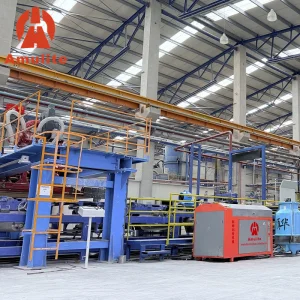
With Fiber Cement Board products seeing wide usage in the building and decoration industry, Fiber Cement Board Production Line technology and automatic levels are continuously upgrading. Through the continuous efforts of the Amulite engineers team, we maintain technology innovation to keep our Fiber Cement Board Machinery at a world-class level.
We regularly manufacture and supply Fiber Cement Board and Calcium Silicate Board Production Lines with standard capacities of 3 Million, 4 Million, 6 Million, 8 Million, and 10 Million Sq.m per year. Standard board sizes include 2440x1220x(4-25)mm and 3000x1220x(4-25)mm. Custom equipment manufacturing is also available to realize any tailored specification.
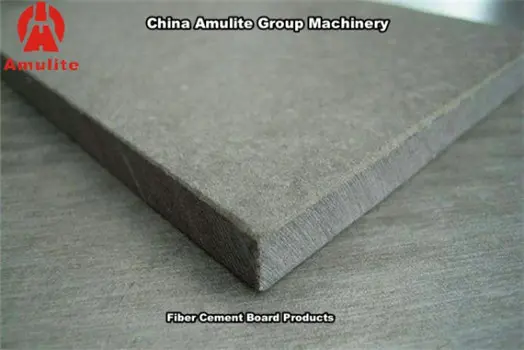
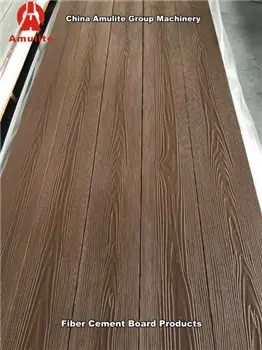
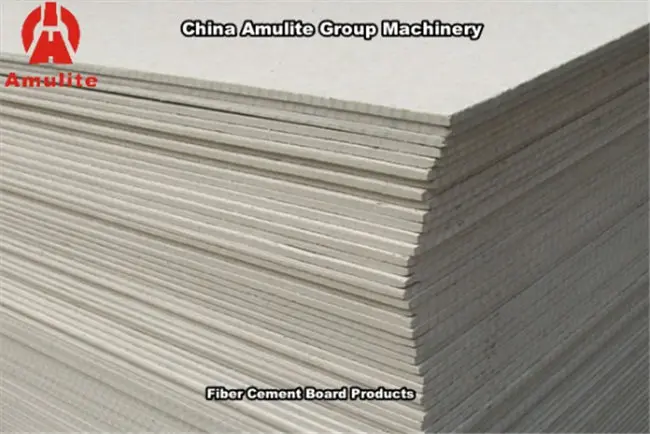
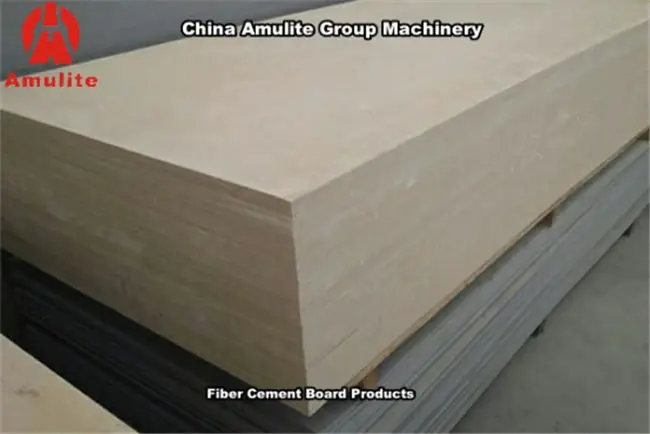
Fiber Reinforced Calcium Silicate Board / Fiber Cement Board (CSB/FCB Board) is a new environmental protection building material. It offers outstanding advantages including light weight, high strength, fireproofing, excellent heat insulation, versatile usage, and a long service lifetime.
Calcium Silicate Board / Fiber Cement Board utilizes inorganic fibers or cellulose fiber as reinforced materials, with calcium and silicate materials acting as the main cementing agents.
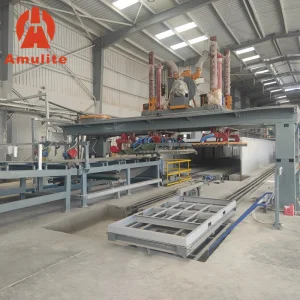
The standard manufacturing process includes Slurry Mixing, Board Forming, Board Stacking, Pre-Curing, Template Demolding, and Autoclave Curing. To meet higher board standards, optional processes such as Board Pressing, Drying, Sanding, Edge Trimming, and Surface Painting can be integrated to increase added value and expand market application. Standard sheet forming methods include Flow-On Slurry Forming, Hatschek Forming, and Extrusion Type.
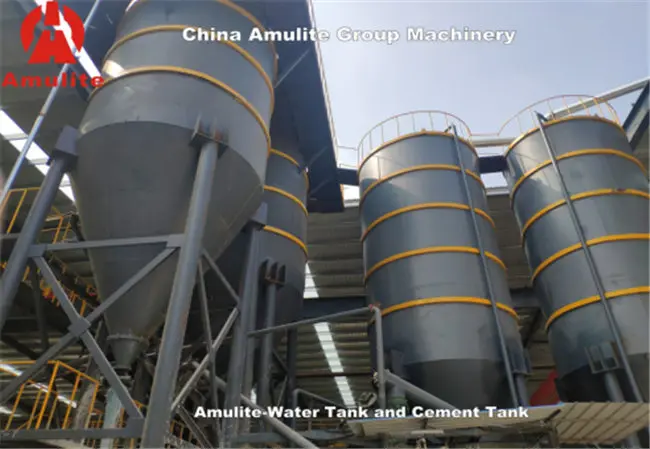
Includes one clean water tank and one muddy water tank, both welded from carbon steel. The muddy water tank collects recycled water from the sheet production process to mix into slurry, while the clean water tank supplies fresh water to clean felts and net cages.
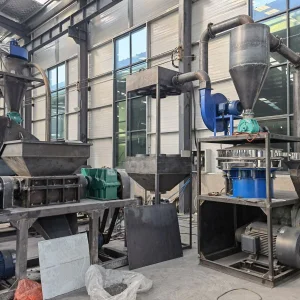
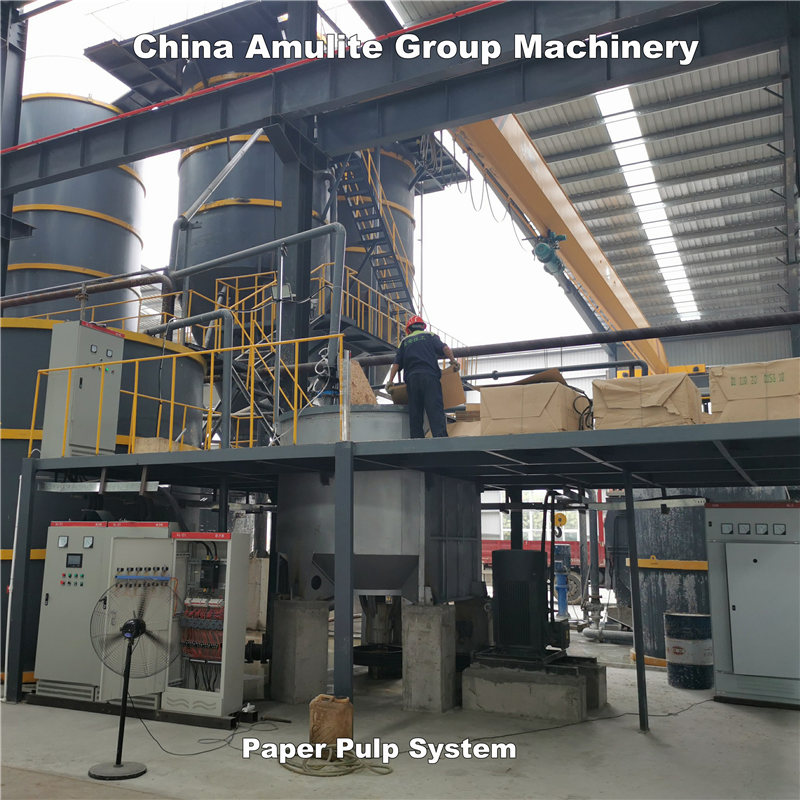
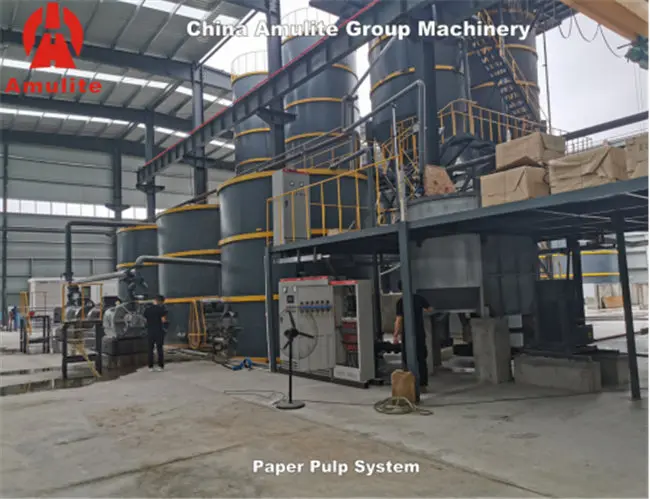
Comprises a paper shredder machine, refiner, and paper pulp storage tank. The shredder processes Kraft papers, the refiner grinds pulp into slurry for storage, and the storage tank maintains pulp supply.
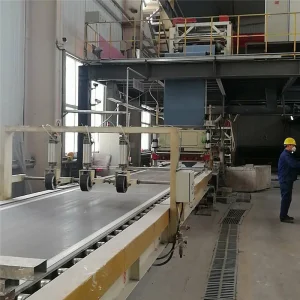
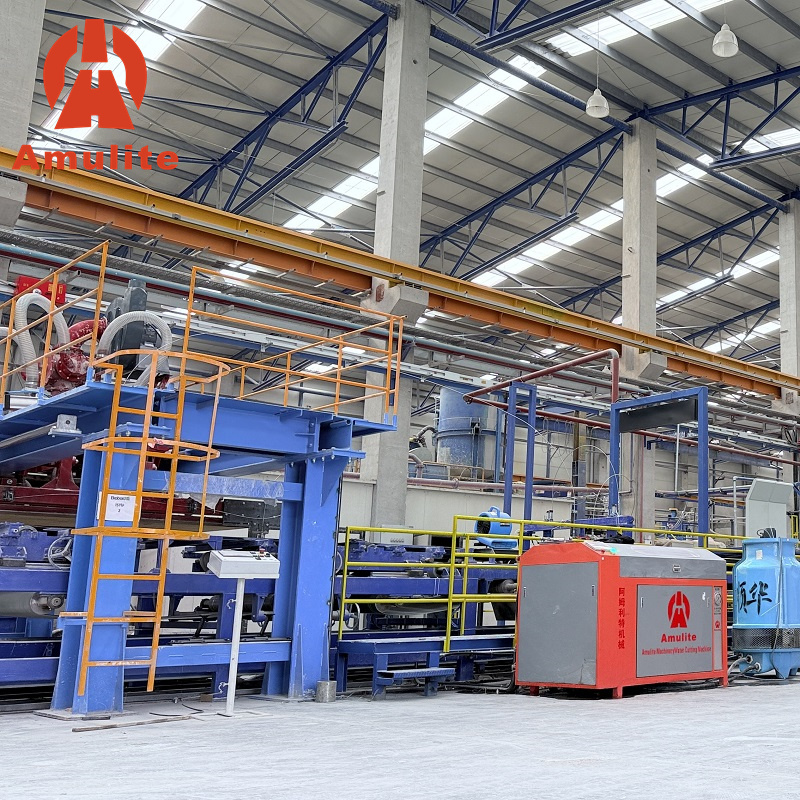
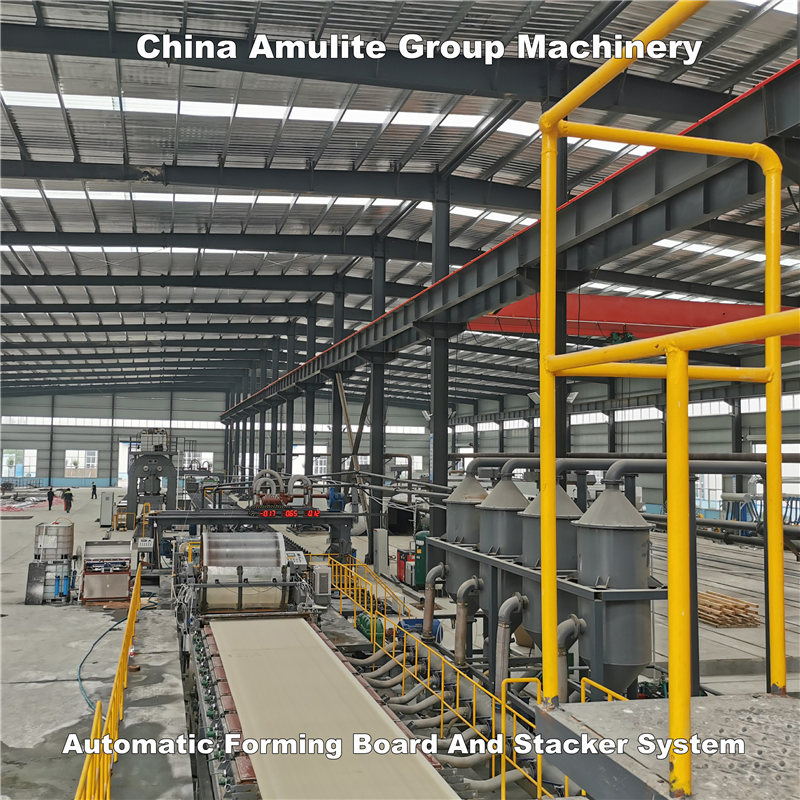
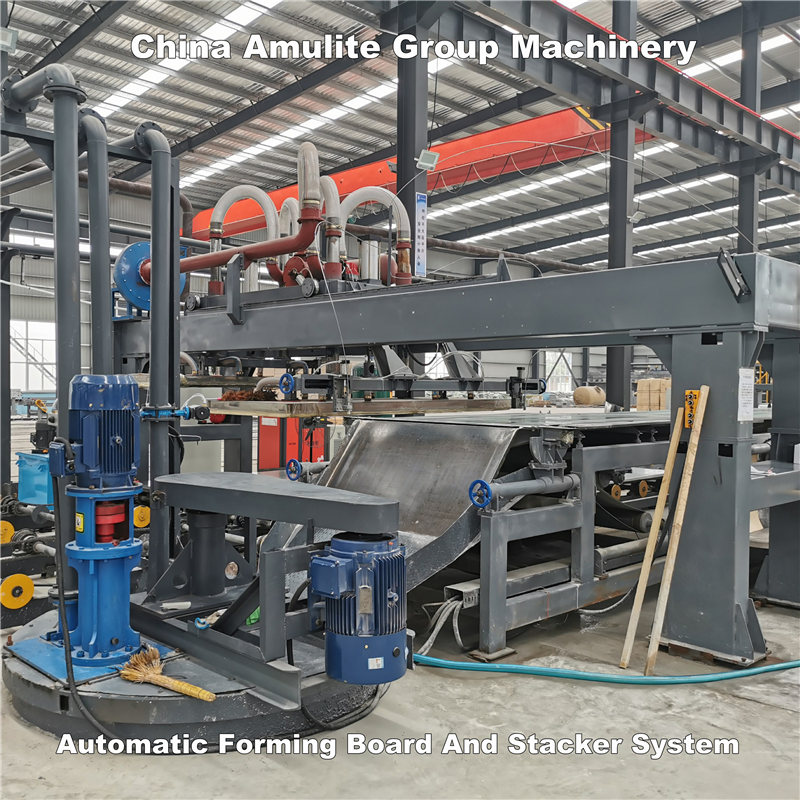
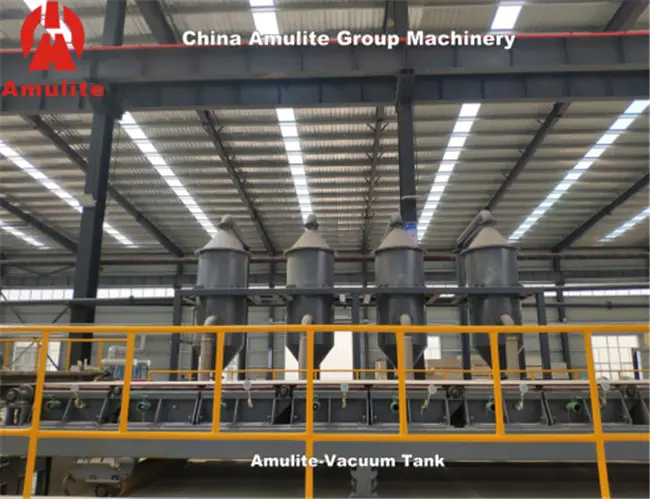
Well-mixed slurry flows into the slurry box, then onto running felt to form a slurry layer. Vacuum dehydration and chest roller pressing construct sheet layers rolled on forming drums, followed by automatic cutting into flat wet sheets. Air-water separators separate steam-water mixtures during vacuum extraction.
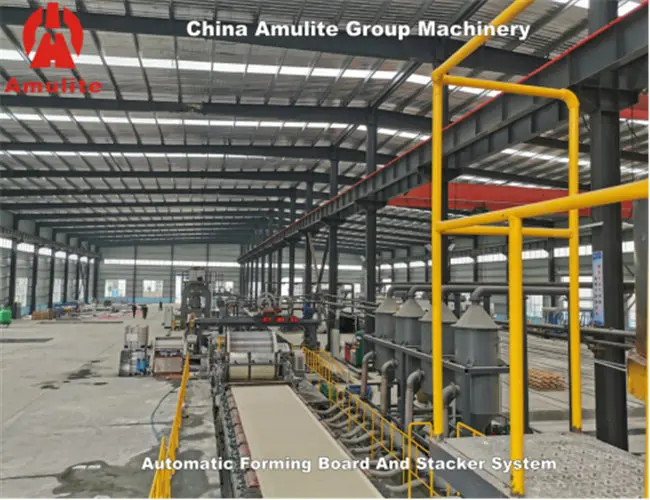
After the forming roller shapes the sheets, precise automatic laser positioning and cutting systems prepare wet sheets for conveying.
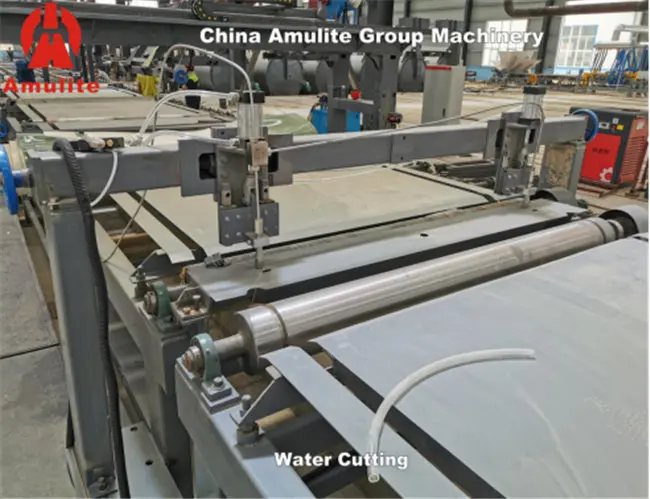
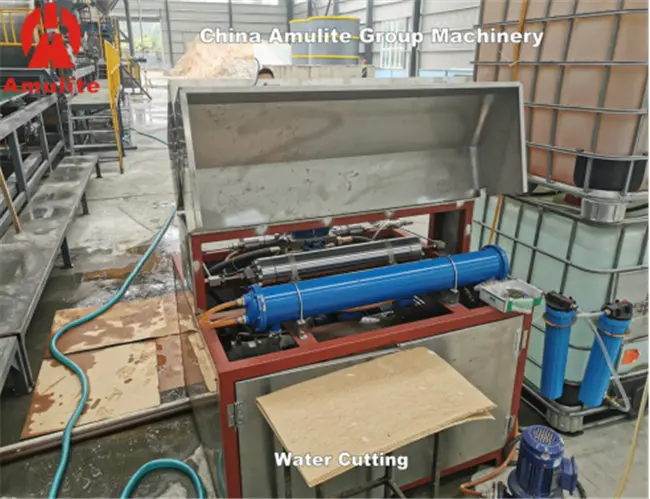
Our patented system features imported high-pressure water pumps that produce high-pressure water streams for clean, precise cutting of wet sheets on the conveyor line.
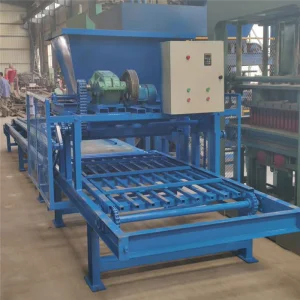
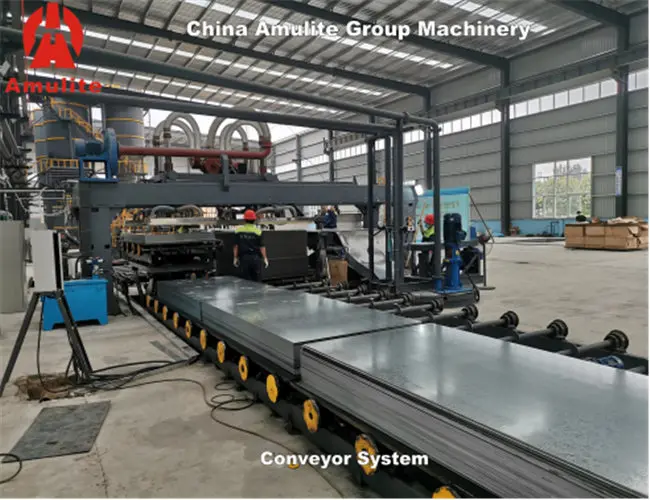
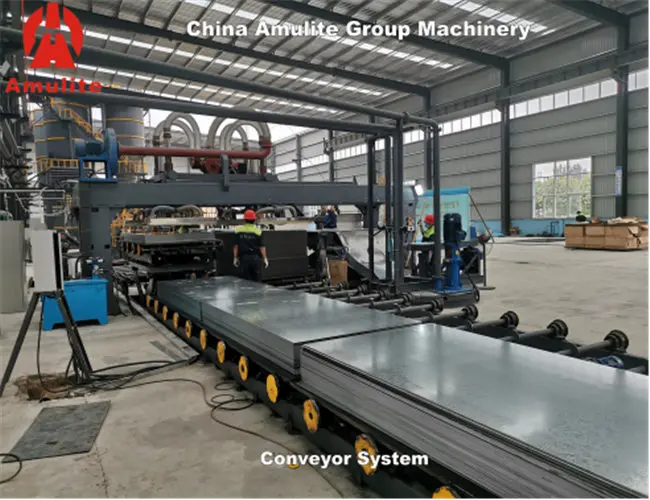
Conveys precision-cut wet sheets from the forming roller to designated positions while performing automated edge trimming.
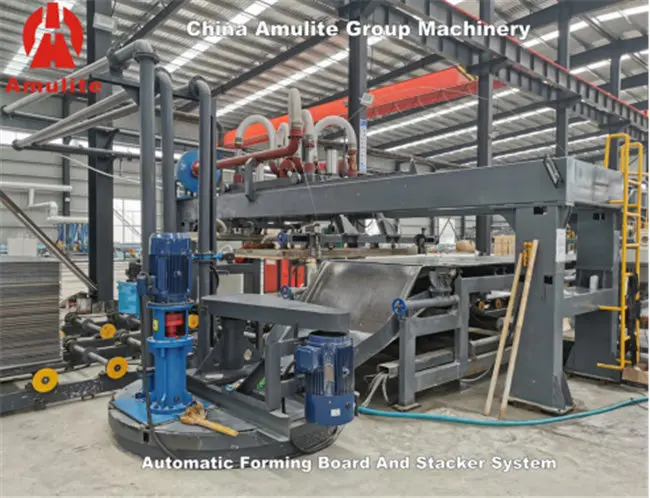
PLC-controlled automatic stacker capable of stacking two sheets at once using high-pressure fan vacuum suction cups. Accurately sorts quality and inferior products onto trolleys, boosting overall production efficiency.
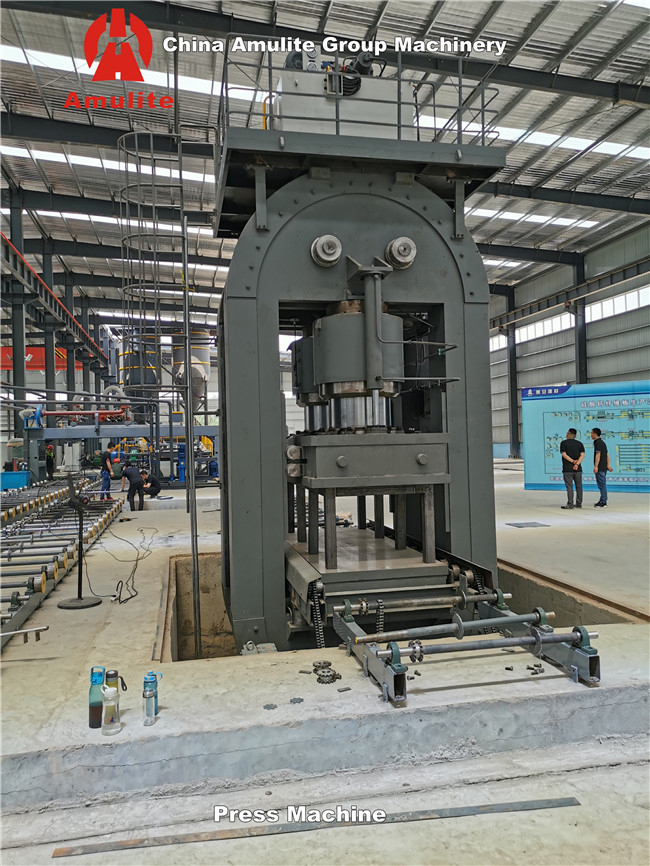
Increases product density and strength. Standard Pressure: 7000 Tons; Press Table Size: 1350 * 2700/3200mm; Spacing: 1200mm; Working Stroke: 400mm; Pressure Speed: 0.05–0.25mm/s; Power: 27.5kw.
Allowable Load: 20T; Table Rail Inner Distance: 750mm; Reducer Model: FA67-60-Y-1.5 (I=50); Matching Motor Speed: 1380r/min, Power: 1.5kw; Traveling Speed: 9m/min.
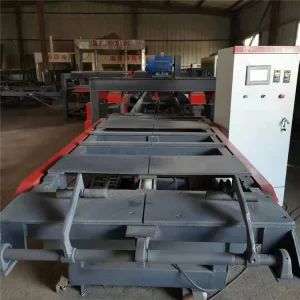
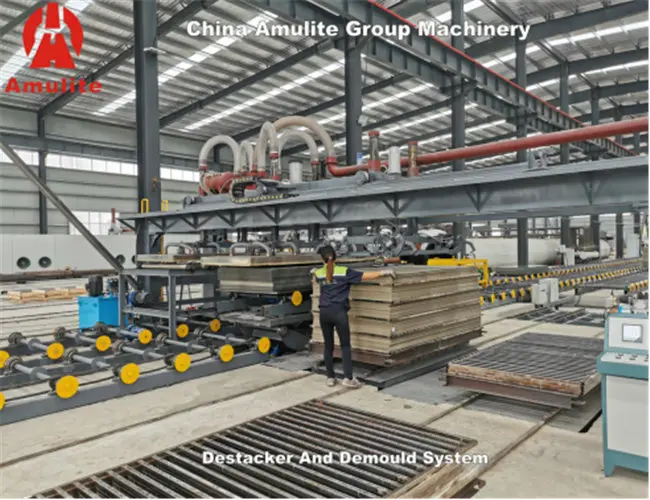
Servo-motor driven movement separates templates and sheets. Templates are routed to an oil brush machine, while sheets are piled on adjacent trolleys with an autoclave interleave spacer added every 150mm.
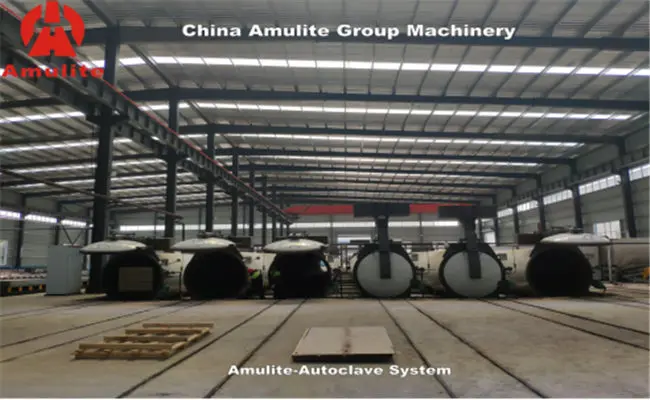
Subjects lime and quartz sand raw materials to high-temperature and high-pressure chemical reactions, ensuring thorough material binding for exceptional sheet hardness and durability.
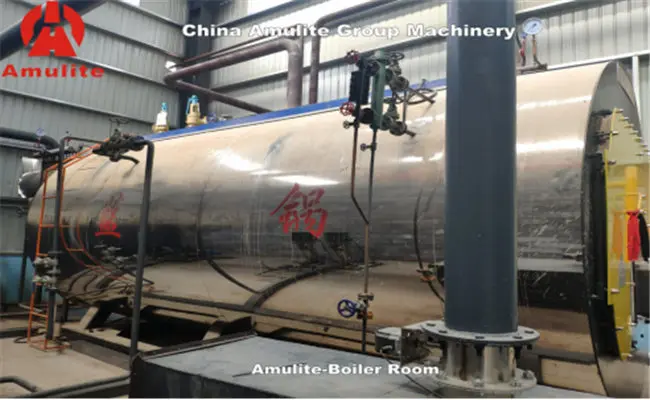
Supplies crucial heat energy required by both autoclaves and drying systems throughout the manufacturing cycle.
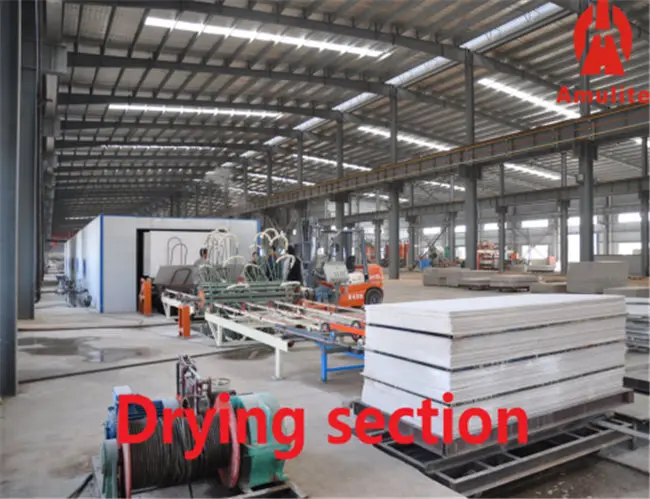
Reduces board moisture content from ~25% down to under 15% post-autoclave curing, preparing sheets for sanding, edging, and chamfering with high efficiency and easy operation.
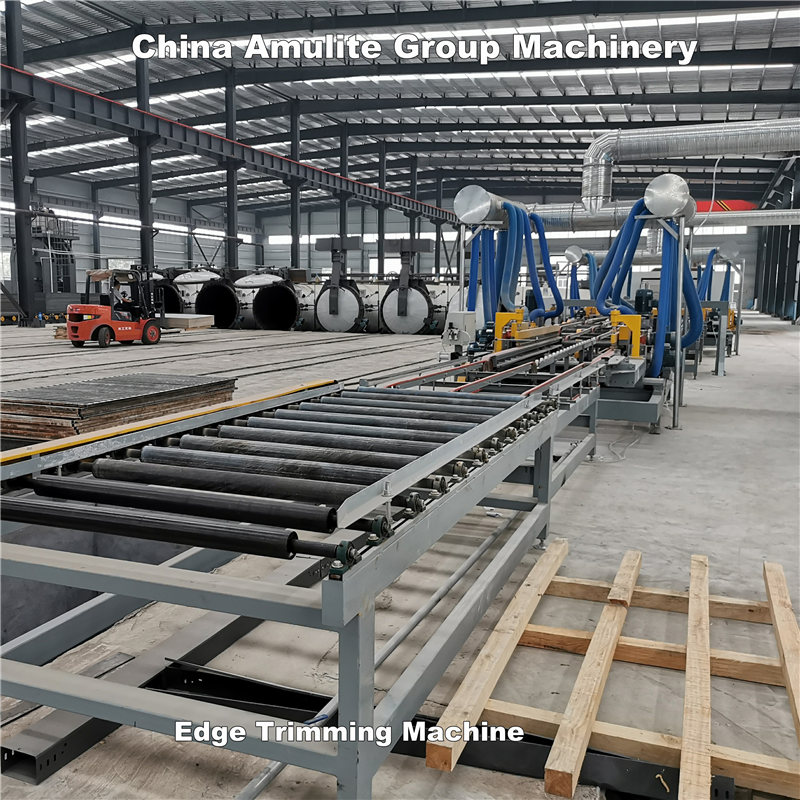
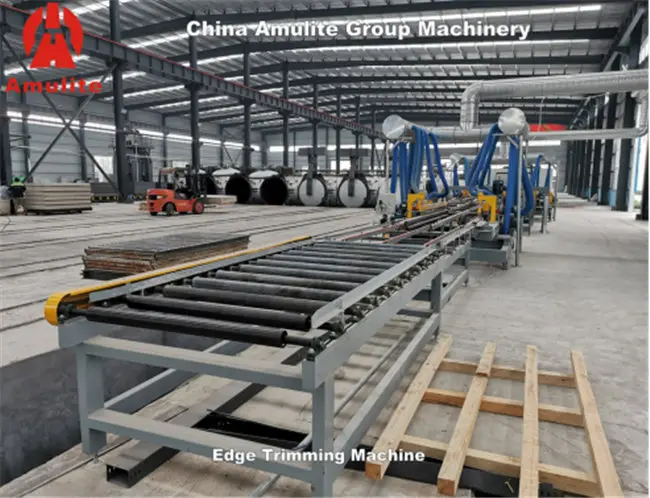
Composed of roller tables, longitudinal and transverse edge trimming units, and electrical control cabinets to execute final precise board sizing prior to finished product stacking.
We supply standard production lines with annual capacities of 3 Million, 4 Million, 6 Million, 8 Million, and 10 Million Sq.m per year, along with custom equipment options tailored to specific needs.
The standard manufactured board dimensions are 2440X1220X(4-25)MM and 3000X1220X(4-25)MM. Custom board dimensions can be configured upon request.
Our equipment supports Flow-On Slurry Forming Type, Hatschek Forming Type, and Extrusion Type forming options depending on production targets.
Boards comply with Calcium Silicate Board Standard JC/T 564-2008 and Non-Asbestos Flat Fiber Cement Board Standard JC/T 412.1-2006.
A press machine (e.g., 7000-ton pressure) significantly increases board density and structural strength, ensuring high load-bearing capacity and durability.
Autoclave curing subjects calcium and silicate raw materials to high temperature and pressure, promoting thorough chemical bonding for superior board hardness and environmental stability.