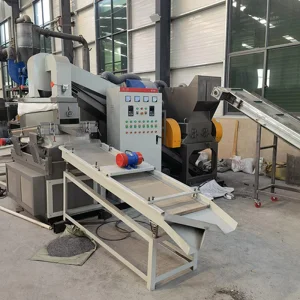
Explore our core extrusion systems, specialized recycled wire equipment, AAC block lines, and precast concrete machinery engineered for heavy industrial deployment.
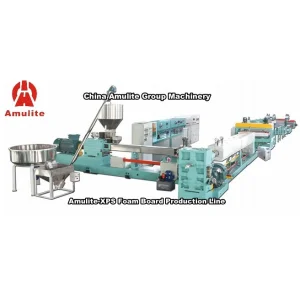
In the modern landscape of thermal insulation manufacturing and sustainable building envelope design, selecting a top-tier Amulite XPS Foam Board Production Line Supplier & Suppliers represents a critical strategic milestone for industrial investors, building material conglomerates, and EPC contractors worldwide. Extruded Polystyrene (XPS) foam board has firmly established itself as the gold standard for high-performance thermal insulation across building roofs, inverted roof systems, cold storage logistics facilities, sub-slab foundation permafrost protection, and External Thermal Insulation Composite Systems (ETICS).
The global transition away from traditional Hydrofluorocarbons (HFCs) and Hydrochlorofluorocarbons (HCFCs) toward eco-friendly, zero-Ozone Depletion Potential (ODP) and ultra-low Global Warming Potential (GWP) blowing agents has completely reshaped the extrusion equipment industry. Modern enterprise procurement teams require extrusion line suppliers capable of engineering high-precision, supercritical CO2 (Carbon Dioxide) combined with ethanol or DME (Dimethyl Ether) blowing technology. Amulite Group stands at the forefront of this industrial evolution, designing turnkey XPS foam board extrusion plants that synthesize superior cell structure control, massive energy efficiency, and extreme mechanical durability.
Information Gain Insight: Modern XPS manufacturing is no longer defined merely by board output per hour. Superior economic yield is driven by specific energy consumption per cubic meter (kWh/m³), precise control of cell diameter (100–250 µm), uniform density profiles across 20mm to 150mm board thicknesses, and online zero-scrap edge trimming recirculation.
Industrial buyers require rigorous performance metrics, compliant machinery standards, and reliable ROI models. Amulite engineers customized production lines aligned with global energy efficiency codes.
Global environmental mandates—such as the EU F-Gas Regulation and the US AIM Act—strictly phase out HFC-134a and HFC-142b. Enterprise buyers need high-pressure metering pumps (30+ MPa) capable of stable, pulse-free injection of liquid CO2 into the primary extruder melt zone.
Specialized heavy civil works, such as high-speed railway embankments, airport runways, and deep-freeze logistics centers, demand XPS boards with exceptional compressive performance. Amulite lines achieve uniform closed-cell structures exceeding 95% closed-cell ratio.
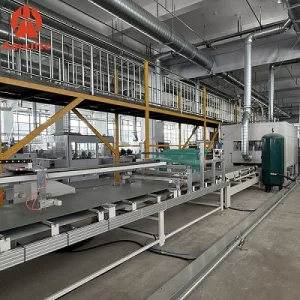
Modern production facilities require zero manual handling post-extrusion. Amulite lines integrate continuous cross-cutting, surface skin removal, edge profiling (lap joint, tongue & groove), automated stacking, and robotic stretch-film vacuum bagging.
| Performance Metric | Legacy Freon / HCFC-141b Line | Amulite Supercritical CO2 (R744) Line |
|---|---|---|
| Ozone Depletion Potential (ODP) | 0.05 – 0.11 (Severe environmental penalty) | 0.00 (Zero ODP Compliant) |
| Global Warming Potential (GWP) | 1430 – 4800 (High carbon tax exposure) | ≤ 1 (Eco-Friendly / Net-Zero Ready) |
| Cell Structure Uniformity | Large, non-uniform gas pockets (150–400 µm) | Micro-cellular closed structure (80–180 µm) |
| Blowing Agent Operational Cost | High cost per metric ton of fluorocarbon | Up to 65% reduction in gas consumable cost |
| Long-Term Thermal Conductivity | 0.032 – 0.036 W/(m·K) (Degrades over time) | ≤ 0.028 W/(m·K) (Stable aging retention) |
| Compressive Strength Range | 150 kPa – 400 kPa max | 200 kPa – 1000 kPa (Ultra-high heavy duty) |
Step-by-step technological breakdown of Amulite's high-efficiency tandem extrusion technology and smart plant integration.
Multi-component loss-in-weight gravimetric dosing feeds General Purpose Polystyrene (GPPS), recycled PS granules, flame retardant additives (HBCD-free / PolyFR), color masterbatch, and nucleating agents (Talcum) into the primary co-rotating twin-screw extruder (L/D 32:1–36:1) for rapid melting and homogenization.
Liquid CO2 and co-solvents (Ethanol/DME) are injected under ultra-high pressure into the secondary mixing zone. Specially designed barrier screw flights and dynamic static mixers ensure total gas solubility into the polymer melt matrix without phase separation.
The homogeneous melt transfers to a large-diameter secondary single-screw extruder dedicated to precise temperature reduction. Precise oil-cooling jackets lower polymer melt temperature to the exact foaming threshold, preventing cell collapse during expansion.
Melt passes through a temperature-controlled slot die into a multi-stage vacuum calibrator. Rapid pressure drop initiates uniform micro-cellular nucleated expansion, while precision temperature plates maintain board planar flatness and thickness tolerances (±0.5mm).
The next decade of XPS foam board manufacturing will be defined by autonomous, AI-driven process control loops. Amulite's engineering roadmap incorporates Siemens S7-1500 PLC platforms integrated with edge-computing IoT sensors. Real-time ultrasonic thickness gauges feedback instantly to the slot die thermal actuators, correcting gauge variations automatically without stopping the line.
Furthermore, cloud-based SCADA systems monitor extruder torque, melt pressure transducers, gas injection flow rates, and specific energy draw. Predictive maintenance algorithms detect screw wear or heater band anomalies weeks before failure occurs, ensuring zero unscheduled downtime for high-volume 24/7 manufacturing plants.
Regional insulation markets exhibit distinct technical preferences, regulatory pressures, and procurement specifications. Understanding these macro dynamics enables global investors to select line configurations optimized for regional market penetration.
Regulatory Focus: Strict EPBD (Energy Performance of Buildings Directive) and ASHRAE 90.1 standards. Mandatory Zero-ODP and low-GWP blowing agent compliance. High demand for tile backer boards, heavy foundation slab insulation (700+ kPa), and flame-retardant PolyFR formulations (Class B1 / Euroclass E & B).
Growth Drivers: Massive urban infrastructure expansion, mega-scale cold chain warehousing, and inverted roof thermal insulation for high-rise commercial structures. Priority is placed on high line throughput (800–1200 kg/h) and local raw material adaptability (high recycled PS pellet percentages).
Market Focus: Rapid adoption of ETICS external wall insulation and cost-effective agricultural cold-storage panel cores. Procurement centers heavily around robust machine mechanical longevity, simplified PLC operation interface, and affordable maintenance cost.
Deploying a heavy extrusion plant across international borders requires comprehensive engineering support, strict compliance adherence, and dedicated lifecycle service. Amulite Group provides end-to-end turnkey delivery tailored to local operating environments.
All electrical control cabinets are certified to CE (Directive 2006/42/EC & LVD 2014/35/EU) and optional UL/CSA standards. High-pressure CO2 gas dosing manifolds comply with PED (Pressure Equipment Directive) and ASME pressure vessel codes.
Amulite configures line drive motors, inverter drives, and resistance heating zones to match regional power grids without requiring external transformer steps: 380V/50Hz, 415V/50Hz, 460V/60Hz, or 220V/60Hz 3-Phase standard.
Our resident process engineers supervise civil foundation checks, mechanical installation, electrical wiring, and formulation adjustment. We conduct trial runs using your locally sourced PS resin, local talc, and regional flame retardants until contractually specified output and flexural board strength are proven.
Comprehensive engineering and procurement answers for potential factory investors and plant managers.
Supercritical CO2 (Carbon Dioxide) offers zero Ozone Depletion Potential (ODP=0) and near-zero Global Warming Potential (GWP≤1), ensuring absolute compliance with global environmental treaties. Economically, CO2 costs a fraction of fluorocarbon gases. From an engineering standpoint, supercritical CO2 exhibits rapid diffusion rates into polystyrene melt under high pressure (20–30 MPa), forming a high density of micro-cellular nuclei that results in higher compressive strength at lower overall board density.
A standard 600 kg/h Amulite CO2 XPS line requires a workshop footprint of approximately 80 meters in length, 12 meters in width, and a minimum hook height of 6 meters for crane installation. Installed electrical capacity is roughly 450–650 kW (with an average running power consumption of 55-65%). Chilled water cooling capacity requires approximately 300,000 kcal/h at 10–15°C, along with a dedicated high-pressure CO2 gas supply manifold.
Yes. Amulite's twin-screw primary extruder is engineered with high-torque gearboxes and specialized screw geometry capable of processing 30% to 100% recycled GPPS/EPS regrind flakes. Our multi-stage melt filtration unit (continuous hydraulic double-pot screen changer) removes impurities, ensuring constant melt pressure and preventing slot die clogs during continuous production.
Board density (typically 28 to 45 kg/m³) is controlled by modulating the gravimetric gas injection rate, secondary screw melt temperature, and vacuum calibration pressure. Thinner boards (20–40mm) utilize higher haul-off line speeds and precision upper/lower calibrator plate settings, while thick boards (80–150mm) utilize low-temperature melt stabilization, slower haul-off speeds, and multi-stage skin cooling to prevent core void formation.
Amulite extrusion systems support traditional Hexabromocyclododecane (HBCD) where permitted, as well as modern eco-friendly Polymeric Brominated Flame Retardants (PolyFR) and halogen-free systems. Special anti-corrosion bimetallic screw linings and barrel alloys (Nitrided/Bimetallic) are incorporated into the extruder design to prevent halide acid corrosion at elevated melt temperatures.
Depending on local power costs, raw material resin prices, and regional market selling price per cubic meter of XPS, most global clients achieve complete capital payback within 14 to 22 months. The significant savings on blowing agent gas costs (CO2 vs. Freon) and 100% online edge-scrap recycling provide an immediate operational cost reduction of 15-25% compared to legacy competitors.
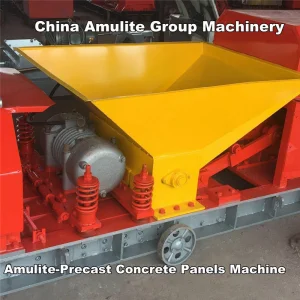
Explore specialized production lines including XPS insulation tile backer systems, EPS sandwich wall panel equipment, stone crushers, perlite lines, and perforated punch systems.