Explore turnkey manufacturing systems engineered by industry-leading manufacturers for flexible tiles, insulation boards, and advanced building material solutions.
Analyzing the paradigm shift in non-metallic decorative facade manufacturing, global decarbonization mandates, and low-energy industrial scaling.
The architecture and decorative surface sector is experiencing a monumental transformation. Traditional ceramic tile production lines, historically characterized by massive high-temperature roller kilns operating at 1100°C to 1250°C, are facing severe economic and environmental pressure. Rising natural gas prices, stringent carbon taxation frameworks (such as the EU Carbon Border Adjustment Mechanism - CBAM), and the physical structural limitations of heavy, rigid ceramic tiles have accelerated the demand for Flexible Clay Ceramic Tile Production Lines (commonly referred to as Modified Clay Material or MCM production lines).
Flexible Clay Ceramic Tiles represent a hybrid fusion of inorganic mineral technology and advanced polymer chemistry. Utilizing modified soil, natural quarry powder, or industrial stone tailings paired with micro-reactive polymers, these cladding materials offer the natural aesthetics of real stone, split brick, granite, and leather while remaining lightweight (3–5 kg/m² compared to 20–30 kg/m² for traditional porcelain tiles) and highly flexible. Consequently, global demand for automated Flexible Clay Ceramic Tile Production Line Manufacturers & Companies has skyrocketed across East Asia, Western Europe, the Middle East, and the Americas.
Key Strategic Insight: Unlike standard ceramics, flexible clay processing bypasses high-temperature sintering entirely. The continuous molding and dynamic low-temperature curing process operates between 80°C and 120°C, cutting plant energy consumption by up to 80% while dramatically reducing capital expenditure (CAPEX) for thermal insulation infrastructure.
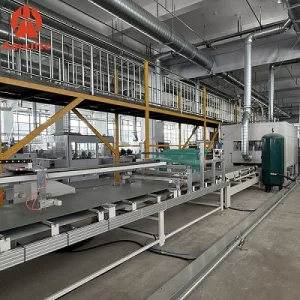
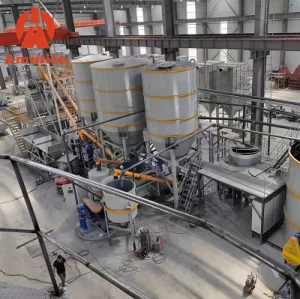
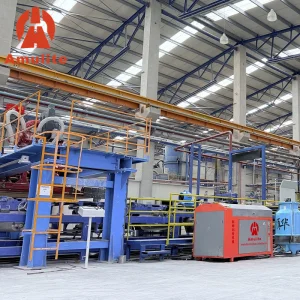
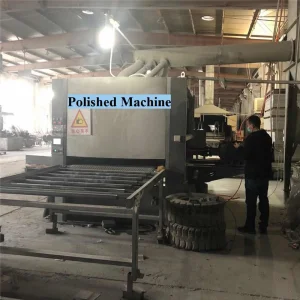
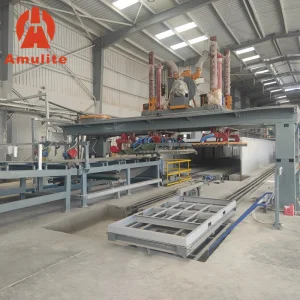
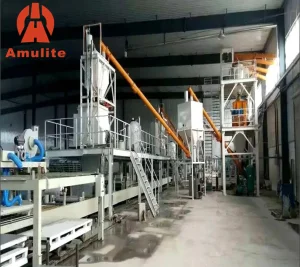
Inside an automated Flexible Clay Ceramic Tile plant: From raw material modification to continuous thermal curing and online laser trimming.
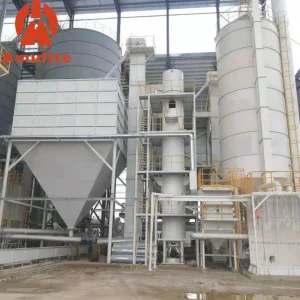
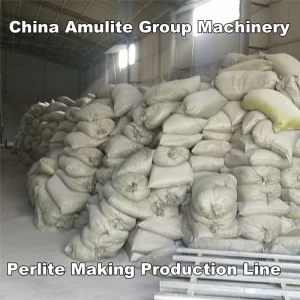
Uncontaminated yellow/red clay, stone powders, and quartz sand undergo micro-encapsulation with high-molecular water-based acrylic emulsions. High-shear dispersion mixers ensure absolute slurry homogeny.
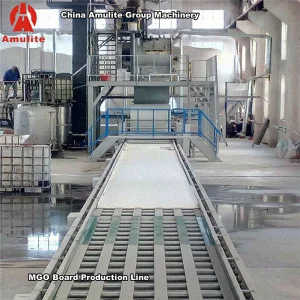
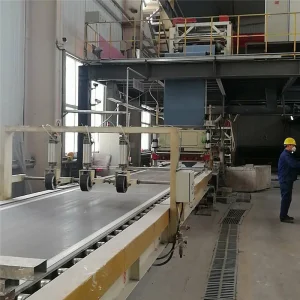
The slurry is evenly metered onto a continuous release matrix or fiber mesh substrate. Dual-axis servo rollers press custom 3D textures (travertine, granite, wood grain) with sub-millimeter fidelity.
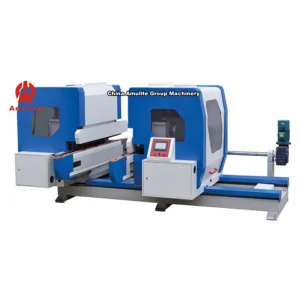
Multi-stage temperature-controlled drying tunnels (80°C–120°C) achieve fast cross-linking vulcanization. Online CCD vision cameras align high-speed laser cutters for edge trimming.
To assist plant managers, process engineers, and investment directors in evaluating capital investments, the table below details the benchmark technical specifications of an automated industrial-grade Flexible Clay Ceramic Tile Production Line engineered by premier manufacturers.
| System Parameter | Standard Line (MCM-1200) | High-Output Enterprise Line (MCM-2400) | Technical Benchmark / Standard |
|---|---|---|---|
| Annual Production Capacity | 1,200,000 m² / year | 3,000,000+ m² / year | Based on 24h continuous 3-shift operation |
| Effective Sheet Width | 600 mm – 1200 mm | 1200 mm – 2400 mm | Servo-adjustable width control |
| Tile Thickness Range | 2.0 mm – 6.0 mm (±0.1mm) | 1.5 mm – 10.0 mm (±0.1mm) | Precision doctor blade & roller gauge |
| Curing Oven Heat Source | Steam / Natural Gas / Electric Thermal Oil | Hybrid Heat Pump + Solar Thermal Assist | 80°C – 120°C low-temperature loop |
| Total Installed Power | 160 kW | 320 kW | Siemens PLC & VFD drive controls |
| Substrate Compatibility | Fiberglass mesh, non-woven fabric, matrix release film | Multi-layer reinforced structural mesh | High tensile anti-crack integration |
| Line Speed | 3.0 – 8.0 meters / minute | 6.0 – 15.0 meters / minute | Synchronized servo motor traction |
Why Tier-1 Chinese machinery OEMs deliver superior ROI, custom engineering adaptability, and rapid global commissioning.
When sourcing a Flexible Clay Ceramic Tile Production Line, overseas investors and industrial manufacturing groups prioritize equipment longevity, precision automation, lead-time reliability, and total cost of ownership (TCO). Chinese machinery engineering groups—such as China Amulite Group—have established a dominant global competitive advantage through several key structural factors:
China's heavy equipment manufacturing hubs (particularly in Hebei and Guangdong provinces) integrate steel metallurgy, precision CNC machining, thermal engineering, and PLC cabinet manufacturing within tight industrial radii, reducing component lead times by up to 60%.
By leveraging standardized structural fabrication and modular machine building, Chinese manufacturers provide turnkey MCM production lines at 30% to 50% of the cost of European equivalents without compromising on core component brands (e.g., Siemens PLC, Schneider electrics, NSK bearings).
Complete lines undergo full mechanical pre-assembly and dry-testing in-factory before export. On-site engineering teams deploy globally to complete mechanical installation, electrical integration, and raw material formulation tuning within 30 to 45 days.
Furthermore, Chinese OEMs excel at formulation adaptability. Recognizing that importing specialized clay or chemical polymers across continents severely degrades operational margins, technical teams adjust slurry chemistry to utilize locally available minerals—such as local river silt, volcanic ash, marble dust, or local red clay—ensuring long-term plant profitability.
Engineering versatility across diverse global climate zones, high-rise facades, curved architectural elements, and interior retrofits.
Flexible Clay Ceramic Tiles engineered on advanced machinery lines cater to structural and decorative applications where conventional granite, natural stone, ceramic tiles, and heavy fiber cement boards present severe technical liabilities:
In municipal exterior renovation projects (especially urban renewal initiatives across Europe, East Asia, and Eastern Europe), attaching heavy stone or porcelain tiles to exterior insulation systems (EIFS / ETICS) creates significant structural risk due to gravity load and wind shear stress. Flexible clay tiles weigh less than 4kg/m² and flex under thermal expansion, eliminating tile detachment and falling hazards completely.
Modern architecture frequently incorporates fluid, curved, cylindrical, or parametric building envelopes. Traditional rigid tiles require expensive custom water-jet cutting and complex mounting sub-frames. Flexible clay tiles bend seamlessly around column radii down to 20cm without cracking, bonding directly with high-performance C2-grade tile adhesives.
By utilizing custom 3D silicone texture molds, a Flexible Clay Tile line can accurately replicate weathered brick, aged wood, ram-earth walls, and ancient masonry. Architectural restoration authorities utilize these lightweight cladding sheets to preserve structural historical profiles without burdening aging timber or brick foundations.
Advanced polymer modification gives flexible clay tiles exceptional hydrophobic properties and freeze-thaw endurance (passing 100+ freeze-thaw cycles from -40°C to +80°C). Unlike natural sandstone which absorbs moisture and spalls in cold climates, flexible clay retains structural integrity, UV colorfastness, and A2-class fire resistance in harsh environments ranging from Nordic cold to Middle Eastern desert heat.
The convergence of industrial AI, zero-carbon manufacturing, and self-healing bio-polymer surface chemistry.
Integration of multi-pass digital inkjet printing directly synced with 3D embossing rollers, allowing non-repeating natural stone patterns over 100+ continuous meters.
Replacing fossil fuel burner systems with industrial heat-pump heat recovery and microwave-assisted low-energy vulcanization chambers.
Transitioning from petroleum-derived acrylic modifiers to bio-synthesized lignin and plant-derived polymer binders for true net-zero circular product lifecycles.
Autonomous factory systems incorporating automated guided vehicles (AGVs) and robotic picking arms for zero-human packaging and continuous quality scanning.
Ensuring seamless international plant deployment through rigorous engineering certification and remote operational assistance.
All production line equipment is manufactured under strict ISO9001 quality management and ISO14001 environmental frameworks. Electrical systems carry CE certification, complying with EN 60204-1 safety standards, NFPA 79 specifications, and UL electrical component approvals.
Before equipment delivery, our central laboratory conducts comprehensive chemical and physical testing of your local raw materials (soil composition, clay plasticity, sand mesh size, water absorption) to build tailored slurry formulas guaranteed to pass ASTM and EN building tests.
Production lines are equipped with secure industrial IoT gateways. Senior automation engineers can remotely diagnose PLC logic, assist local maintenance technicians with parameter tuning, and deliver over-the-air (OTA) software optimizations anywhere in the world.
Addressing core technical, financial, and operational queries from global factory owners and project developers.
Given the substantially lower energy consumption (no high-temperature firing kilns) and strong market demand for lightweight cladding, most plant operators achieve full payback on capital equipment investment within 14 to 22 months of continuous production, depending on local tile selling prices and plant capacity utilization.
The primary solid materials (approx. 80-85%) consist of modified natural soil, red/yellow clay, quarry dust, silica sand, or stone tailings. The remaining 15-20% comprises water-based acrylic emulsion binders, natural mineral pigments, and structural fiberglass reinforcement mesh.
Flexible clay tiles manufactured on high-quality production lines meet A2-s1, d0 fire reaction standards (non-combustible) according to EN 13501-1. When exposed to flame, they emit zero toxic smoke, zero toxic drip, and maintain structural cohesion up to 1000°C.
A standard 1.2 million m²/year line requires a factory workshop footprint of approximately 100m in length by 15m in width (1,500 m² minimum). Utility requirements include an electrical connection of ~160-200 kW, a pressurized air line (0.6-0.8 MPa), and a modest thermal heating source (gas, electric, or steam) for the curing tunnel.
Yes. The embossing rollers and color dosing units are designed for quick-change capability. Mold textures (such as slate, split brick, travertine, or wood panel) can be swapped in under 45 minutes, while digital color mixing units allow seamless shade transitions during active runs.
Turnkey projects include full installation supervision by resident mechanical, electrical, and chemical process engineers. Our team remains on site until the line operates stably at contracted output capacity, while conducting hands-on training for your local operators, maintenance staff, and QC lab technicians.
Explore our additional high-performance plant machinery, recycling systems, and wall panel manufacturing solutions.