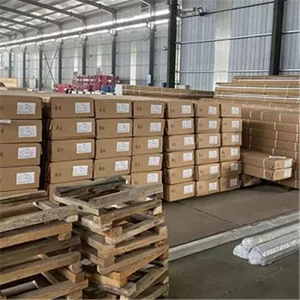
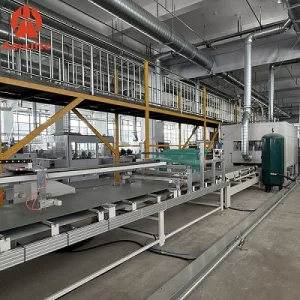
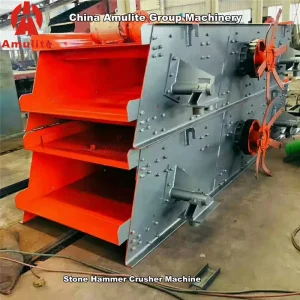
Explore our flagship building material equipment, engineered for high throughput, precise thermal control, and zero-emissions compliance.
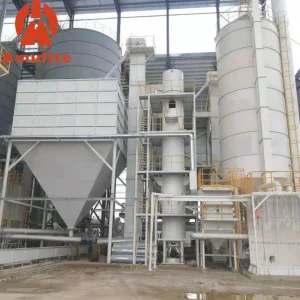
Demystifying the thermodynamic principles, raw material pre-conditioning, and high-temperature vertical expansion systems driving modern non-metallic mineral processing.
Information Gain Insight: Raw perlite ore contains between 2% and 5% combined water trapped within its siliceous volcanic glass structure. When rapidly heated above 870°C (1,600°F) in a controlled vertical expansion furnace, this bound moisture instantly vaporizes, forcing the softened rock particles to expand like popcorn up to 13–20 times their original solid volume. Controlling particle bulk density ($40–120 \text{ kg/m}^3$) requires extreme thermal stabilization and sub-second residence timing.
Modern expanded perlite production lines incorporate multi-pass preheating towers that utilize waste heat exhaust gases. Pre-warming crushed raw ore to 300°C–400°C prior to furnace insertion lowers natural gas or LPG consumption by up to 28% while eliminating thermal shock cracking.
Optimal cell expansion directly hinges on uniform feed size distribution. Integrated multi-deck vibrating screens classify crude perlite ore into tightly controlled fraction brackets (e.g., 0.15–0.3mm, 0.3–0.6mm, 0.6–1.18mm), preventing under-expansion of coarse grains or vitrification of fines.
For insulation boards and loose-fill applications demanding moisture resistance, inline silicone oil or liquid wax atomizers spray hot expanded perlite particles immediately upon furnace exit. This creates a microscopic hydrophobic shell with water absorption rates drops below 1.5%.
From raw ore crushing to automatic bagging: A turn-key process designed for high availability, minimal manual intervention, and consistent density control.
| Process Module | Technical Specification | Operational Function | Key Hardware Components |
|---|---|---|---|
| 1. Ore Feed & Drying | Moisture reduction to <0.5%; Feed rate 1.5 - 8.0 tons/hr | Removes free surface moisture from raw perlite ore without liberating chemically bound water. | Rotary Drum Dryer, Hot Blast Stove, Screw Conveyor, Moisture Sensors |
| 2. Multi-Stage Screening | Vibrational frequency 960 rpm; 4-tier separation screens | Separates raw perlite into uniform particle sizes to ensure equal expansion rates in furnace. | Linear Vibrating Screens, Dust-tight Chutes, Bucket Elevator |
| 3. Vertical Expansion Furnace | Operating Temp: 1100°C - 1250°C; Fuel: Natural Gas / LPG / Oil | Rapid thermal shock expands ore; upward draft lifts light expanded perlite out of flame zone. | 310S Stainless Steel Inner Tube, High-Velocity Gas Burner, Refractory Insulation |
| 4. Cyclone Separation & Cooling | Air flow velocity 18 - 24 m/s; Cooling gradient <60°C exit | Pneumatically transports expanded product, separates coarse light solids from high-temperature exhaust. | Dual High-Efficiency Cyclones, Air Lock Valves, Counter-flow Air Cooler |
| 5. Hydrophobic Coating Unit | Atomization pressure 0.4 - 0.6 MPa; Silicone emulsion coating | Applies liquid water-repellent coating onto hot perlite particle surfaces via ultra-fine spray nozzles. | Dosage Pump, Atomizing Nozzle Ring, Thermal Coating Chamber |
| 6. Pulse-Jet Dust Collection | Filter mesh micro-rating < 2 microns; Air cleanliness <10 mg/m³ | Captures sub-micron perlite dust fines, returning clean air to atmosphere to meet strict EPA standards. | PTFE Membrane Filter Bags, Solenoid Pulse Valves, Draft Fan |
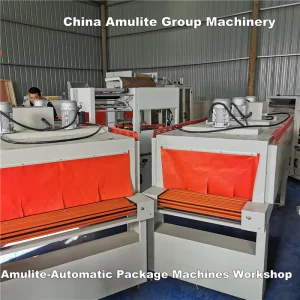
| 7. Automated Packaging Station | Bag capacity 50L - 100L / Jumbo bags (1-2 m³); PLC weight control | Weighs and packages finished expanded perlite into woven bags or bulk sacks with zero dust leakage. | Volumetric Screw Filler, Bag Clamp Mechanism, Automatic Sewing Line |
Combining high-capacity metallurgical fabrication, integrated automation, and competitive capital expenditure (CapEx) efficiency.
Chinese production lines benefit from locally sourced industrial heavy components, high-nickel alloy fabrication (310S/316L stainless steels), and specialized burner technology, drastically reducing total capital cost while maintaining world-class build quality.
Our plants are equipped with centralized Siemens S7-1500 PLC systems, touchscreen HMI interfaces, and real-time gas-to-air ratio adjustment. Thermal sensors dynamically respond to raw ore moisture fluctuation to guarantee uniform density output 24/7.
We provide complete overseas project support—from site layout planning, civil foundation engineering drawings, custom furnace design, to overseas technician dispatch for commissioning, formula calibration, and local staff training.
Versatile expanded perlite processing technologies customized for construction, cryogenic storage, horticulture, and industrial filtration media.
Expanded perlite is the primary ingredient for Class-A fireproof insulation boards, perlite plaster, light concrete screeds, and acoustic ceiling tiles. Its non-combustible nature (melting point ~1,200°C) provides critical fireproofing for modern high-rise architecture.
Specially processed low-density perlite ($32-48 \text{ kg/m}^3$) is used worldwide to insulate double-walled Liquefied Natural Gas (LNG) storage tanks, liquid oxygen vessels, and cryogenic transport tankers operating down to -196°C.
Coarse expanded perlite grades act as an exceptional soil conditioner. It retains moisture while promoting root aeration, making it an essential component for commercial hydroponics, potting soil mixes, and green roof installations.
Milled expanded perlite provides a maze of microscopic channels used in rotary vacuum filters. It clarifies beer, sugar syrups, edible oils, pharmaceuticals, and industrial chemicals without imparting taste, odor, or chemical impurities.
Silicone-treated perlite loose-fill insulation is poured directly into concrete block cavities and masonry walls. It reduces thermal transmission, resists moisture migration, and inhibits vermin infestation in residential and commercial builds.
Blended with refractory cements, expanded perlite forms lightweight castables used in industrial kilns, foundry ladles, and chimney liners, reducing overall structural weight while resisting thermal shock up to 1100°C.
Key performance indicators and evaluation metrics when selecting an OEM Expanded Perlite Machinery Manufacturer.
Energy accounts for over 60% of ongoing operational expenditure in perlite expansion plants. Evaluate manufacturers on their furnace thermal insulation efficiency and waste-heat recovery designs. Premium systems should consume less than $2.5 - 3.2 \text{ Nm}^3$ of natural gas per cubic meter of finished perlite.
Standard carbon steel expansion tubes fail within months under continuous 1,200°C thermal exposure. Insist on certified 310S (UNS S31008) high-nickel stainless steel inner liners with a minimum wall thickness of 6mm–8mm to ensure 5+ years of continuous furnace operation without warping or scaling.
Perlite processing releases significant particulate matter. Ensure your equipment supplier incorporates reverse pulse-jet baghouses rated for sub-micron filtration with an exhaust particle emission level strictly under $10 \text{ mg/Nm}^3$ to satisfy local municipal air safety regulations.
Different downstream markets require vastly different expanded bulk densities (e.g., $40 \text{ kg/m}^3$ for cryogenic vs. $100 \text{ kg/m}^3$ for plaster). Your production line must feature variable-frequency drive VFD draft fans, adjustable burner turndown ratios, and precise raw ore metering feeders.
Expert answers to common engineering, operational, and investment queries regarding expanded perlite plants.
From Gypsum, Wall Panels, and XPS Foams to AAC Blocks and Recycled Materials – Turnkey Production Systems Engineered for Precision.