Advanced automatic brick production systems, mineral processing lines, and recycling machinery engineered for global infrastructure demands.
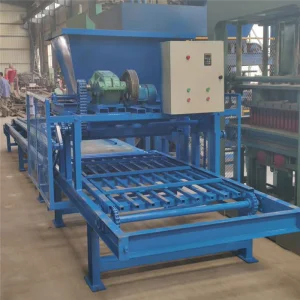
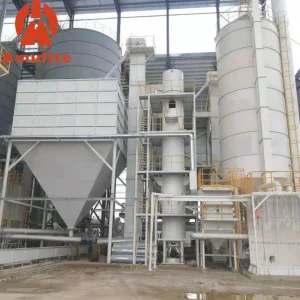
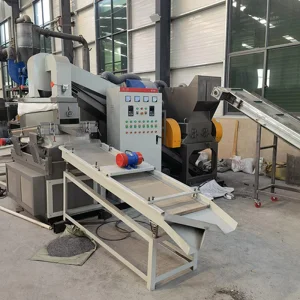
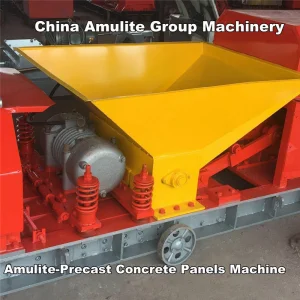
The global construction sector is undergoing an unprecedented structural transition. Driven by rapid urbanization in emerging economies, stringent carbon-neutrality mandates, and rising labor costs worldwide, the market for bricks making machinery has evolved from basic mechanical presses into highly automated, energy-efficient, and multi-functional material processing systems. Modern brick manufacturing enterprises no longer search merely for individual moulding equipment; they require fully integrated ecosystem solutions that deliver consistent product quality, minimize raw material waste, and support diverse industrial waste derivatives such as coal fly ash, blast furnace slag, and recycled concrete aggregates.
According to recent industrial market intelligence, the worldwide demand for automated concrete block and brick making machinery is projected to grow at a CAGR of 6.2% over the next decade. Key drivers include massive public infrastructure programs, residential housing pushes across Africa, Southeast Asia, and Latin America, alongside commercial refurbishment projects throughout Europe and North America. In this dynamic market, industrial procurement teams must understand the core engineering trade-offs between hydraulic compaction, high-frequency vibration moulding, and thermal curing cycles to select machinery that maximizes ROI while lowering operational cost per unit block.
High-performance block and brick making equipment relies on three core physical mechanisms: precise volumetric dosing, synchronized multi-axis hydraulic pressure application, and resonant directional vibration. Evaluating machinery suppliers requires an in-depth review of these mechanical and electronic subsystems.
Traditional fixed-displacement hydraulic pumps suffer from excessive energy dissipation and oil heating during pressure dwell cycles. Advanced Chinese brick machinery integrates dynamic servo-motor pump drivers. By modulating motor RPM based on realtime PLC pressure feedback, power consumption is reduced by up to 30%, while fluid temperature stabilization extends hydraulic valve lifespans by up to 2.5 times.
Block density is heavily influenced by the vibration mode applied during compaction. Modern brick machinery utilizes frequency-controlled eccentric shaft agitators mounted directly beneath the main mold table. By forcing uniform air displacement from the cement slurry within milliseconds, these systems yield hollow and solid bricks with identical density profiles across the entire pallet surface.
Technical Insight on Mold Metallurgy: Machine durability depends heavily on mold steel selection. Premium manufacturers utilize high-carbon chromium steel (such as 20CrMnTi or Q350 structural steel) subjected to carbonitriding or vacuum heat treatments, achieving surface hardness ratings above 60-64 HRC and operational life spans exceeding 150,000 moulding cycles.
| Machine Classification | Hydraulic Pressure (Tons) | Target Materials | Forming Cycle (s) | Typical Annual Capacity |
|---|---|---|---|---|
| Fully Automatic Heavy-Duty Hydraulic Block Machine | 120 - 400 Tons | Aggregate concrete, crushed stone, fly ash, furnace slag | 12 - 18 seconds | 150,000 - 300,000 m³ |
| High-Pressure Static Brick Press | 600 - 1200 Tons | Sand-lime, silica, high-percentage tailings, lime clay | 8 - 14 seconds | 50 to 120 Million Bricks |
| AAC (Autoclaved Aerated Concrete) Cutting & Block Line | Automated Tilt/Cut | Ground silica sand, lime, cement, aluminum powder paste | Continuous process | 100,000 - 500,000 m³ |
| Semi-Automatic Mobile Block Machine | 20 - 80 Tons | Standard cement, river sand, fine gravel | 20 - 30 seconds | 20,000 - 50,000 m³ |
Over the past two decades, China has emerged as the global epicenter for heavy industrial machinery fabrication, refined by comprehensive industrial supply chains, ultra-modern CNC machining infrastructure, and rigorous international quality certifications (CE, ISO9001, EAC). Sourcing brick making production equipment directly from established Chinese OEM manufacturers provides international procurement officers with distinct commercial and technical leverages:
Chinese machinery hubs (notably in Hebei, Shandong, Fujian, and Henan) house fully integrated supply chains. Raw steel plate cutting, precision planetary gear manufacturing, hydraulic valve blocks, control cabinet wiring, and heavy surface painting occur within tight geographical radii. This cluster concentration significantly lowers total manufacturing lead times compared to Western counterparts.
Unlike standard off-the-shelf suppliers with rigid product catalogs, leading Chinese machinery manufacturers provide extensive engineering customization. Whether your factory site requires specialized voltage/frequency transformer configurations, custom pallet sizing, dual-material face-mix feeding attachments, or extreme climate thermal protection, Chinese engineering teams routinely modify CAD drawings to fulfill site-specific constraints.
Furthermore, China's rapid adoption of advanced digital manufacturing tools—such as multi-axis Gantry CNC machining centers and robotic arc welding cells—guarantees structural frame alignment tolerances down to sub-millimeter precision. This eliminates mechanical binding, reduces frame fatigue, and extends machine operating lifetimes even under harsh 24/7 continuous duty cycles in high-dust quarry environments.
A standalone brick press cannot achieve scalable factory efficiency. Global industrial project managers must evaluate the total system integration—from raw material storage silos to automated end-of-line packaging. A turnkey block manufacturing facility encompasses six synchronized processing nodes:
Industrial Internet of Things (IIoT) Integration: Modern turnkey lines integrate Siemens or Schneider PLC systems with cloud telemetry. Plant managers can monitor cycle times, hydraulic oil temperatures, batch weight deviations, and daily total yields in real-time through localized HMI touchscreens or mobile dashboards.
When enterprise buyers evaluate bids for large-scale brick making machinery, upfront capital expenditure (CAPEX) represents only a fraction of lifetime operating cost (OPEX). A comprehensive TCO model must account for power consumption, wear-part replacement frequencies, labor efficiency, and raw material flexibility.
Over-sizing a machine leads to idle plant capacity, excessive electrical transformer costs, and higher mold tooling investments. Conversely, under-sizing forces machines to operate continuously at max mechanical thresholds, accelerating hydraulic seal wear and structural stress fractures. Work with supplier process engineers to select capacity matched to local demand curves.
Key consumables include vibration table rubber dampers, mold wear plates, feeder box scraper blades, and hydraulic filter elements. Partnering with suppliers that provide standardized, globally available electrical components (e.g., ABB motors, Schneider breakers, Yuken/Bosch Rexroth hydraulic valves) ensures fast spare parts procurement locally.
Building codes, climate conditions, and available raw materials vary vastly across global regions. Modular brick making machines adapt to localized requirements through specialized formulation engineering and mold geometries:
In Middle Eastern and North African territories where river sand is scarce, specialized high-pressure static compaction presses utilize ultra-fine desert dune sand combined with lime and fly ash to produce durable, high-density building blocks without water-intensive curing methods.
Seismically active zones across Latin America and the Pacific Rim utilize brick machinery configured with interlocking mold designs. These blocks enable rebar vertical reinforcement and grout filling, significantly strengthening lateral masonry resistance against earthquake tremors.
Additionally, European and North American markets prioritize high-permeability eco-pavers for municipal storm-water runoff management. Chinese dual-feed block machines produce dual-layer porous concrete pavers that rapidly drain surface runoff into subterranean aquifers, directly addressing urban heat island and local flooding challenges.
The brick manufacturing industry is rapidly adopting Industry 4.0 paradigms. Key innovations shaping the next generation of block production lines include:
High-resolution optical cameras equipped with AI vision models scan green blocks immediately after demoulding. Any blocks exhibiting edge chipping, surface micro-fissures, or dimensional variance outside ±1mm tolerance are flagged automatically, preventing wasteful curing of sub-standard products.
As conventional Portland cement production accounts for ~8% of global carbon emissions, leading machinery suppliers are developing specialized mixing and curing technology for alkali-activated slag and geopolymer binders. These systems allow 100% replacement of cement, turning industrial waste into eco-certified structural blocks.
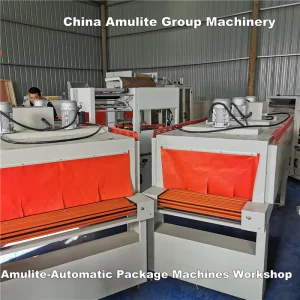
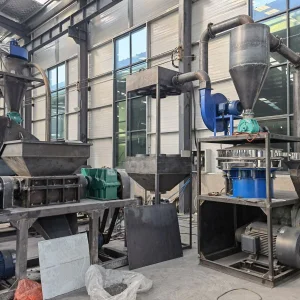
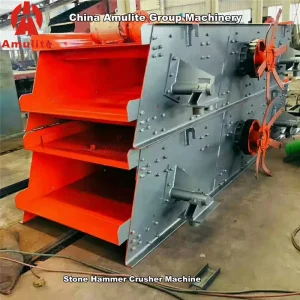
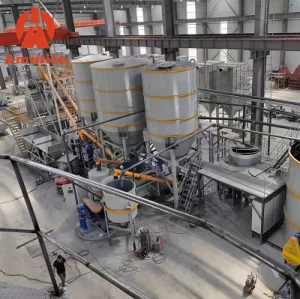
Comprehensive machinery suites for specialized construction board production, crushing, coating, and material recycling.
Expert answers addressing operational, technical, and commercial inquiries for machinery buyers worldwide.
With structured preventative maintenance, high-grade hydraulic oil filtration, and regular replacement of sacrificial wear plates, a heavy-duty steel frame brick machine operates continuously for 12 to 15+ years. Main hydraulic cylinders and structural frames are engineered for over 10 million press cycles.
Yes. By optimizing particle size distribution (psd) and applying specialized chemical accelerants or lime activators, fly ash and blast furnace slag can replace 50% to 80% of fine aggregates while producing structural concrete masonry units that exceed ISO 10080 compressive strength benchmarks.
For a standard automatic block line, civil foundation preparation takes 30-45 days. Mechanical assembly and electrical wiring by factory-certified engineers take 20 to 30 days. Trial batching, PLC tuning, and local staff operational training require an additional 10 to 15 days before final hand-over.
Main forming plants typically demand connected electrical power between 45 kW and 180 kW depending on hydraulic pump scale and vibration motor numbers. Standard machinery ships configured for 380V/50Hz/3-Phase, but transformers can be configured for 220V, 415V, 440V, or 480V at 60Hz upon request.
Carburized molds withstand 100,000 to 150,000 cycles under normal concrete aggregate abrasion. Swapping molds to change product geometries (e.g., from 8-inch hollow blocks to interlocking pavers) takes between 30 and 60 minutes on machines equipped with quick-clamping hydraulic tool changers.
Hollow core geometry lowers block self-weight while creating dead-air chambers that impede conductive thermal flow. When combined with lightweight expanded aggregate formulations (such as expanded perlite or vermiculite), thermal conductivity (K-value) drops significantly below 0.35 W/m·K.