High-Quality Amulite Automatic AAC Block Production Line Manufacturers, Companies

Product Description

Amulite Automatic AAC Block Production Line 11
Amulite Automatic AAC Block Production Line 12
What Is AAC Block?

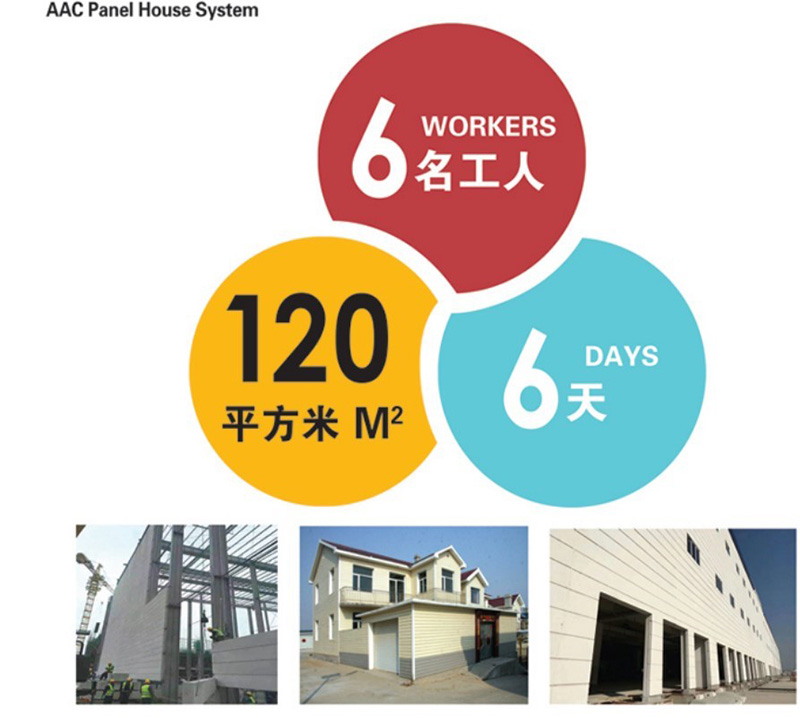
The Concept Of AAC Block: AAC Block is based on siliceous materials (sand, fly ash, silica-containing materials, etc.) and calcareous materials (lime, cement) as the main raw materials, mixed with air-entraining agents (aluminum powder). After the process of raw materials batching, slurry mixing, pouring, pre-curing, cutting, autoclave curing, and packaging, AAC block finished products are produced. It is called aerated concrete because it contains a large number of uniform and small pores after it is aerated.
Amulite Automatic AAC Block Production Line 13
What Is The Process To Produce AAC Block Products?
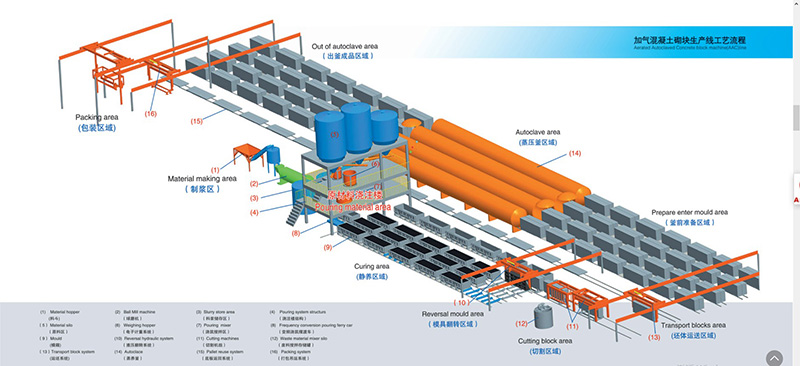
  • 1) All raw materials metering and mixed slurry;
  • 2) Slurry enters into pouring system, after mixing then pouring into mold box;
  • 3) Inside mold box (panel reinforcement), after a certain temperature and pre-curing time;
  • 4) After the wet panel reaches a certain hardness, the mold box and panels will be hoisted to the cutting machine by the turnover crane, and the turnover crane completes the following functions:
  • 5) A: Is to turn the mold box 90 degrees in the air (one side of the mold box becomes the support trolley plate for the wet panel body until autoclave process is finished);
  • 6) B: Is to hoist to the trolley or the cutting support frame to completely open the mold; C: The took off mold frame and the return autoclave side plate are recombined to form a mold box after cleaning, spraying oil and re-pouring;
  • 7) And the wet panel body is cut in six steps on the cutting machine: 1: First cuts both sides of the panel body vertically; 2: Then cuts longitudinally and horizontally;
  • 8) Finally cuts horizontally horizontal or knife cutting;
  • 9) The cut panel body is hoisted from the semi-finished product crane together with the bottom plate to the autoclave trolley;
  • 10) Then grouped into the autoclave for high temperature and high pressure curing;
  • 11) After well autoclave curing, the trolley will be taken out and leave the autoclave;
  • 12) The finished products are stacked or loaded on the truck by the finished product hoisting crane, packaged well;
  • 13) The autoclave curing side plates are returned;
About Main Raw Materials Introduction

The production of AAC block is rich in raw materials, especially the use of fly ash as raw materials which can not only comprehensively use industrial waste residues, treat environmental pollution, and not damage farmland, but also create good social and economic benefits. It is a good substitute for traditional solid clay bricks. Promising wall products have been strongly welcomed by government, estate companies, and construction teams. The government has made tax policy and environmental protection policy support, foreseeing broad market development prospects.

1. Fly Ash / Quartz Sand

Fly Ash / Quartz Sand is the main core raw material of AAC block products, and is the main source of the silicon and aluminum components of aerated concrete.

2. Cement

Cement is the main source of the strength of AAC blocks. It provides the main calcareous materials. Cement suitable for the production of AAC blocks should be selected mainly in terms of type and grade. In production, 52.5 grade Ordinary Portland Cement should be selected first. In general, to reduce production costs, 42.5 grade Ordinary Portland Cement can be used also.

3. Lime

Lime is also one of the main raw materials for the production of AAC blocks. Its main function is to cooperate with cement to provide effective calcium oxide, interacting with SiO2 and Al2O3 in siliceous materials under hydrothermal conditions to produce calcium silicate hydrate. Therefore, lime is one of the main strength sources of AAC blocks. The effective calcium oxide content of lime used to produce AAC blocks should be higher than 65%, preferably higher than 80%.

4. Gypsum

Gypsum is a regulator of the air evolution process in AAC block production. The regulating effect of gypsum is mainly reflected in delaying quicklime digestion and slurry thickening speed. The main chemical component of gypsum is CaSO4. There are three types of gypsum on the market: raw gypsum, anhydrite, and plaster of Paris. Waste gypsum produced in chemical production processes (such as phosphogypsum, fluorogypsum, and titanium dioxide gypsum) can also replace natural gypsum to reduce production costs.

5. Air Generating Agent

AAC Block must have an air-generating agent to create pores in the block to form a lightweight porous structure.

6. Foam Stabilizer

After the air generating agent gasses, due to the thin foam wall, it is easy to break and destroy the foam under the interference of various conditions, affecting concrete quality. Therefore, it is necessary to add a foam stabilizer to the slurry.

Production Process
1) Storage And Supply Of Raw Materials For AAC Block

Raw materials are transported into the factory by automobiles. Fly ash (sand, stone powder) is concentrated in the raw materials yard and conveyed into the hopper when used. Bagged or bulk cement is stored in the cement warehouse and transported into the hopper. Chemicals and aluminum powder are placed in storage and conveyed to the production workshop when needed.

2) Processing Of Raw Materials For AAC Blocks

Fly ash (or sand, stone powder) is sent to the ball mill through an electromagnetic vibrating feeder and belt conveyor, and ground fly ash slurry is sent to the slurry tank. Lime is crushed by a jaw crusher, conveyed to the storage tank by a bucket elevator, and sent to the ball mill. Aluminum powder is lifted to the batching building, poured into the mixer with water, and stirred into a suspension.

3) Slurry Mixing, And Pouring Of AAC Blocks

Lime and cement are sequentially sent to the automatic weighing scale. The slurry should meet process requirements (approximately 45℃) before pouring. Autoclave heating can be carried out in the slurry metering tank if needed, and the aluminum powder suspension is added 0.5-1 minute before pouring.

4) AAC Block Pre-Curing And Cutting

After pouring, the mold box is pushed into the initial curing room (50~70℃, 1.5-2 hours). A negative pressure hoist lifts the mold frame and wet block onto the cutting table. The cutting machine cross-cuts, longitudinally cuts, and mills the wet block. Waste materials are recycled into the slurry agitator.

5) Autoclaved AAC Block And Finished Product

After assembly in front of the autoclave, trolleys enter the autoclave for high-temperature and high-pressure steam curing. Finished products are hoisted to the warehouse and transported to the yard by forklift truck. Empty trolleys return to the carriage line for the next cycle.

Production Equipment Show
1) Material Grinding And Making Slurry Section

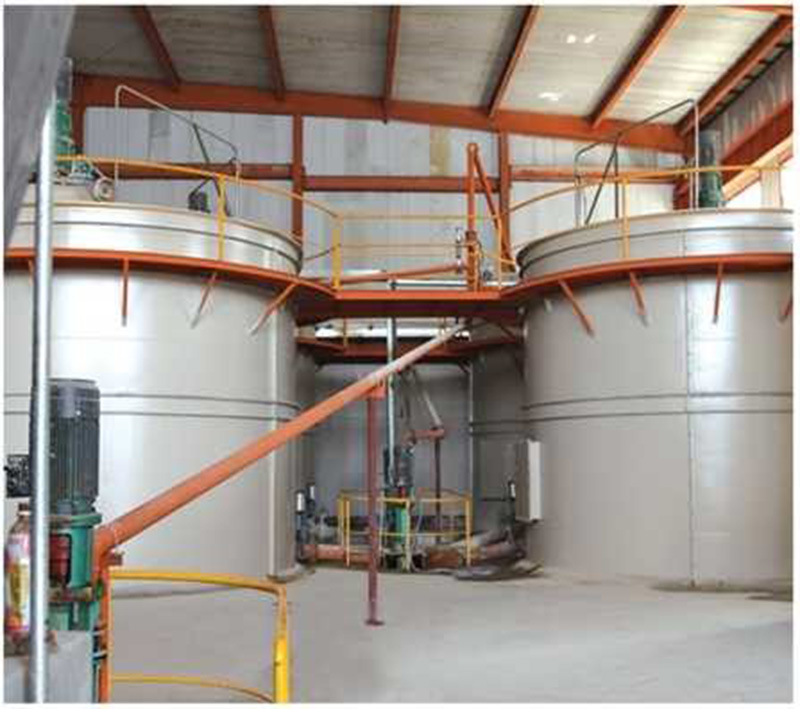
The traditional process of slurry density control is not strict. The density of protoplasm is often measured artificially, causing bigger errors. Amulite uses the latest pipeline measurement method which offers real-time density feedback to the central control room to continuously correct real-time density and ensure overall high-precision slurry concentration.
Amulite Automatic AAC Block Production Line 14
Amulite Automatic AAC Block Production Line 15
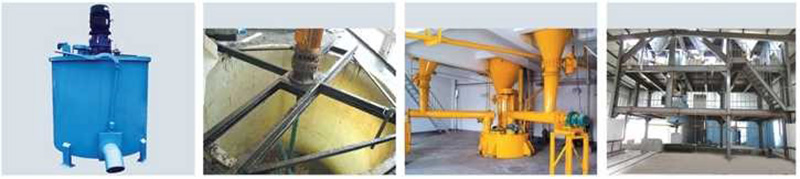
Fly Ash Slurry Making Machine
Slurry Storage Mixer
Material Scale
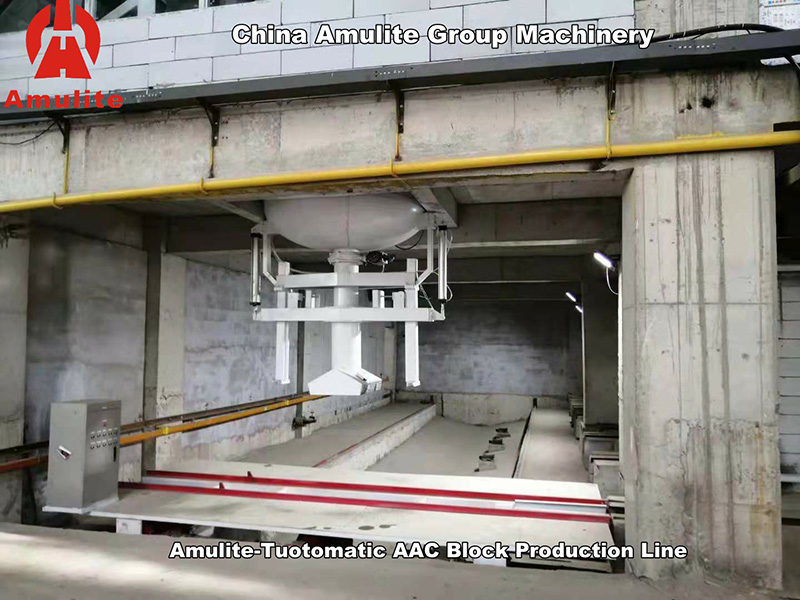
Pouring System
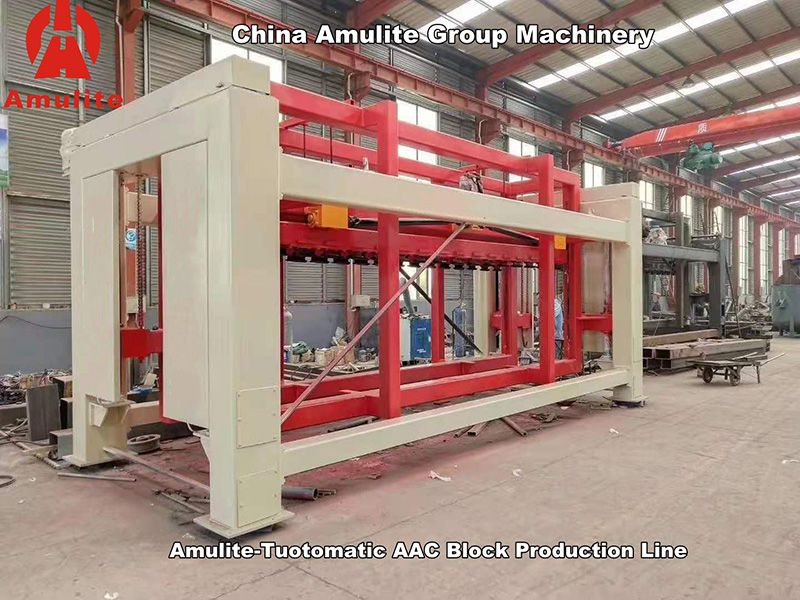
2) Turnover And Cutting Section
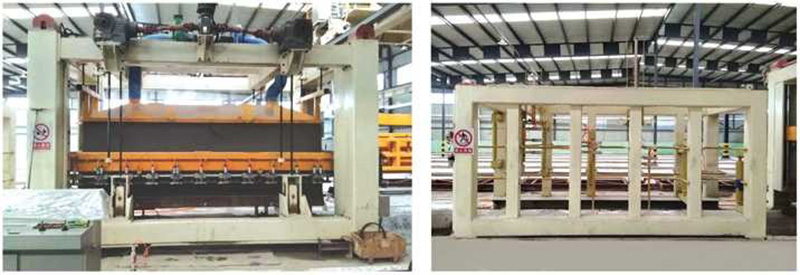
Amulite Automatic AAC Block Production Line 16
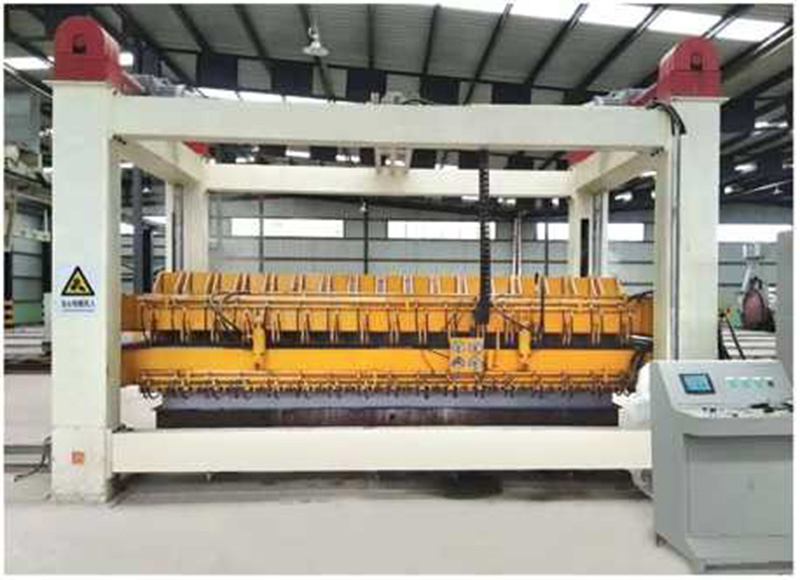
Main Features Of Amulite Cutting Machine
  • 1) Simple-structured, convenient to install and maintain;
  • 2) Fixed to the ground, driven by planet-gear reducer. While doing vertical cutting, the machine does eccentric and swinging cutting to increase efficiency;
  • 3) Absorbing German technology, added vacuum aspirator to remove waste materials without destroying blocks;
  • 4) 6-side cutting of the whole block ensures high pass rates regardless of mould changes;
  • 5) High roughness of finished block surface is favorable for building operation;
  • 6) Positioning numerical control technology reduces shaking and can be upgraded to PLC control system.
Amulite Automatic AAC Block Production Line 17
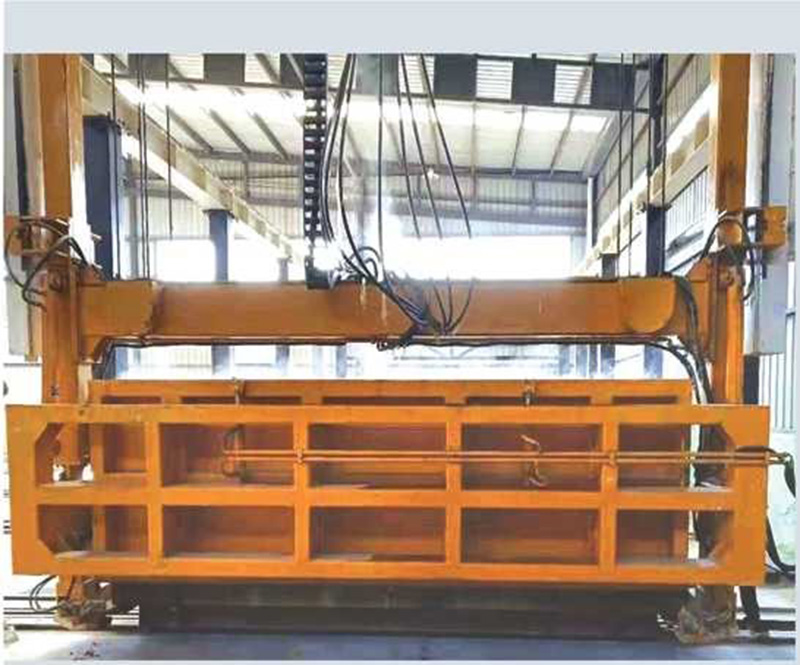
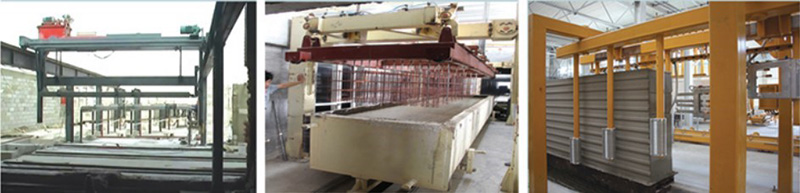
Hydraulic Frequency Convert Turnover Crane

Turns the mold box with block 90 degrees, puts it on the block dragging trolley, and processes demolding works. Reorganizes, cleans, and polishes mold boxes for reuse.

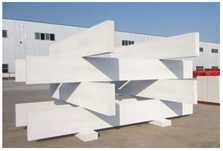
Horizontal Cutting Machine

Takes the whole block into the cutting machine, completes horizontal cutting, peeling the whole block by two sides, and separating wasted materials.
Amulite Automatic AAC Block Production Line 18
Amulite Automatic AAC Block Production Line 19
Amulite Automatic AAC Block Production Line 31
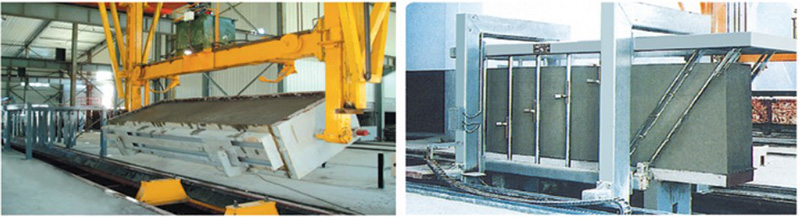
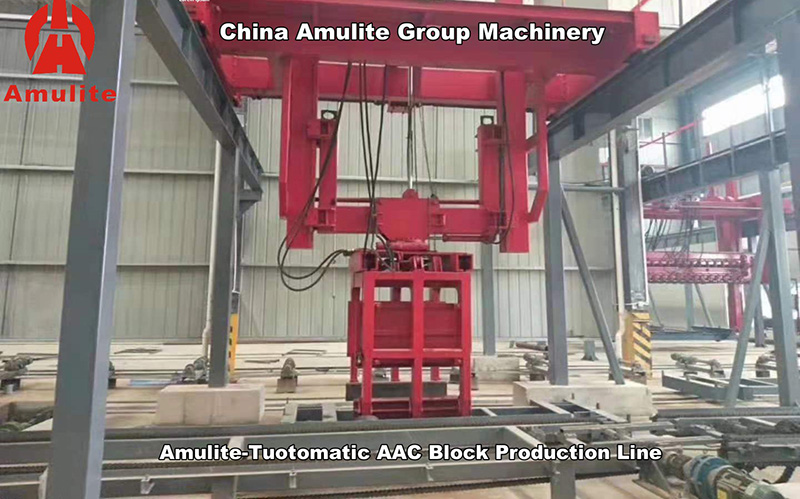
3) Turnover Crane To Remove The Bottom Waste Material
Amulite Automatic AAC Block Production Line 21

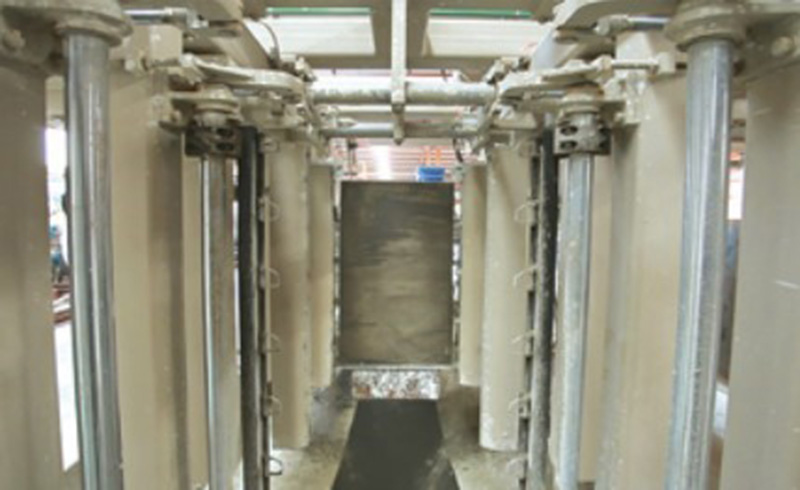
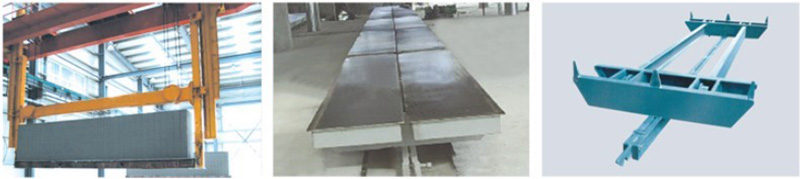
This device is self-developed by Amulite Group to solve bottom material waste problems. It includes a turnover platform and crane to remove both top and bottom waste material, and can also act as a semi-product transport crane.
Amulite Automatic AAC Block Production Line 22
Amulite Automatic AAC Block Production Line 23
Transport Crane Before Autoclave: Carries blocks to the autoclave trolley after cutting. Simple structure, stable operation, easy to maintain.
Base Plate: Designed by Amulite Group, made of manganese steel, never deforms under high temperature and pressure.
Autoclave Trolley: Composed of quality profile steel. Resists stuck and distortion issues in high pressure environments.
4) Finished Product Handling Equipment
Amulite Automatic AAC Block Production Line 24

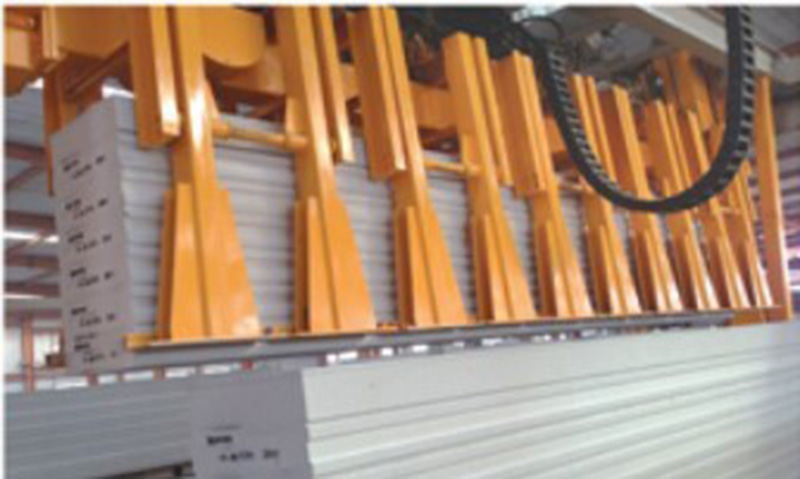
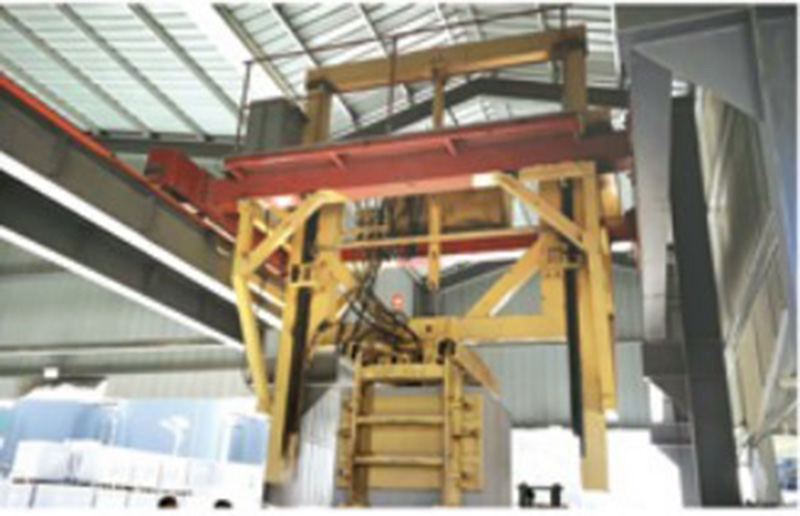
The separating machine completely separates adhesion blocks without damage. Each separating hand is controlled independently, lowering overall costs while ensuring top quality.
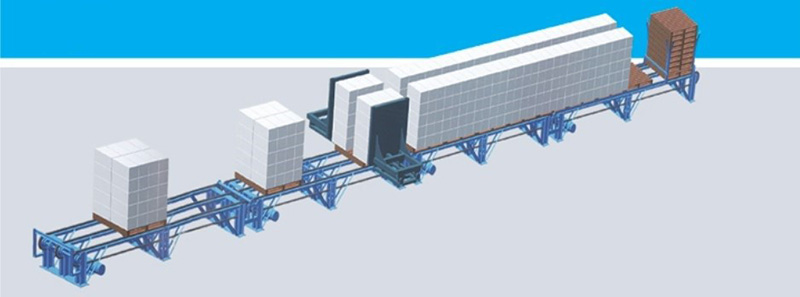
Convey And Package Line
Amulite Automatic AAC Block Production Line 25

Includes conveying and packing lines for wooden pallets. Features automatic computer distribution, precise positioning during conveying, and automatic separation of loaded pallets for easy shipment.
5) More Machines Show
Amulite Automatic AAC Block Production Line 26
Finished Products Clamp
Amulite Automatic AAC Block Production Line 27
Rotary Clamp
Amulite Automatic AAC Block Production Line 28
Special Crane For Panels
Plug Machine
Open Slot Machine
Amulite Automatic AAC Block Production Line 29
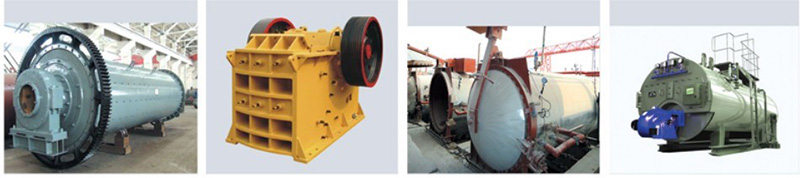
Ball Mill
Jaw Crusher
Autoclave
Boiler
Amulite Automatic AAC Block Production Line 30
Frequently Asked Questions (FAQ)
Q1: What is an AAC Block and what makes it porous?
An AAC (Autoclaved Aerated Concrete) block is a lightweight building material produced from siliceous materials (sand, fly ash) and calcareous materials (lime, cement) mixed with aluminum powder as an air-entraining agent. The chemical reaction creates numerous uniform, small pores that give it a lightweight structure.
Q2: What are the primary raw materials required for AAC block manufacturing?
The main raw materials include Fly Ash or Quartz Sand, Cement (typically 52.5 or 42.5 grade Ordinary Portland Cement), Lime, Gypsum, Air Generating Agents (aluminum powder suspension), and Foam Stabilizers.
Q3: Why is Fly Ash commonly used in AAC production?
Fly ash utilizes industrial waste residues, helping treat environmental pollution and preserve farmland while reducing overall production costs. It provides essential silicon and aluminum components and often benefits from government tax incentives and environmental policies.
Q4: What role does Gypsum play in the AAC block manufacturing process?
Gypsum acts as an air evolution regulator. It delays quicklime digestion and controls slurry thickening speed, ensuring balanced pore formation and optimal mechanical stability during initial setting.
Q5: How does the cutting machine process the wet AAC blocks?
Once the wet block reaches sufficient hardness, it is turned 90 degrees by a turnover crane. The cutting machine then cuts it vertically on both sides, followed by longitudinal and horizontal knife cutting in six total steps to achieve precise dimensions.
Q6: Why is high-pressure Autoclave curing necessary?
Autoclave curing subjects the pre-cut wet blocks to high temperature and high pressure steam. This hydrothermal reaction causes the calcium oxide and siliceous components to bind into calcium silicate hydrate, giving the blocks their final strength, structural integrity, and durability.

Related Products