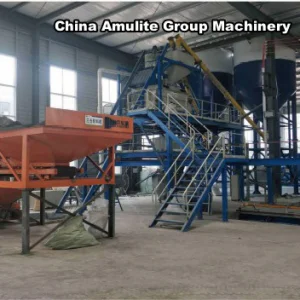
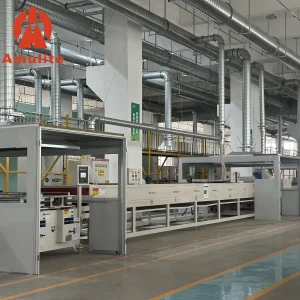
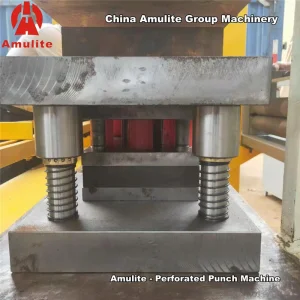
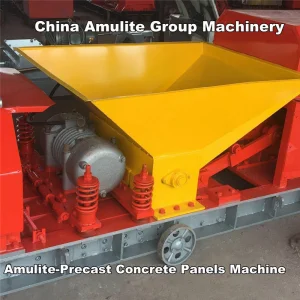
Featured automated production solutions, precision milling systems, and composite board manufacturing plants.
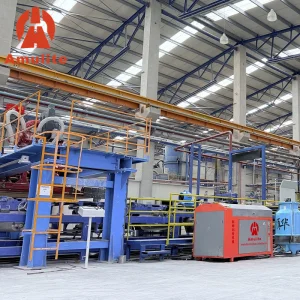
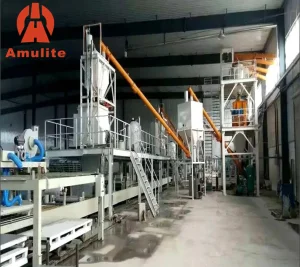
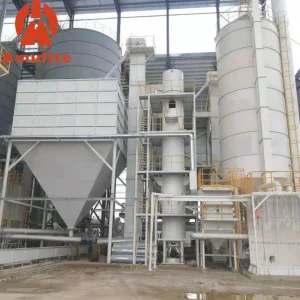
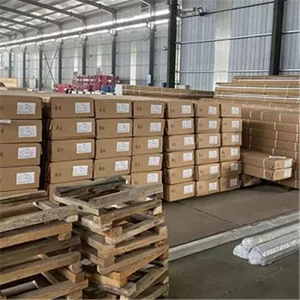
Analyzing the macro-economic forces accelerating the adoption of fiber cement and calcium silicate board lines worldwide.
The global construction sector is undergoing a structural transition toward modularity, structural fire prevention, and sustainable building envelopes. Central to this evolution is the surging international demand for high-performance non-asbestos boards. Industrial EPC contractors, commercial real estate developers, and national infrastructure funds are aggressively transitioning away from legacy gypsum and wood-composite panels toward fiber cement boards (FCB) and calcium silicate boards (CSB).
This structural realignment is governed by stringent international building codes. Severe fire safety regulations across Europe (EN 13501-1 Class A1/A2), North America (ASTM E136), and the Asia-Pacific region have mandated non-combustible exterior cladding and interior partitioning for commercial high-rises, institutional healthcare facilities, and mass transit hubs. Consequently, investing in automated, turnkey fiber cement board production lines has transformed from an option into a strategic prerequisite for building material conglomerates.
An end-to-end breakdown of raw material slurry preparation, forming, pressing, and hydrothermal autoclave synthesis.
Modern production machinery relies on two primary forming processes: the Hatschek Wet-Forming Method and the Flow-on (Slurry-Spreading) Method. The engineering choice directly dictates board mechanical performance, thickness uniformity, and production speed.
Cellulose fibers undergo high-consistency disc refining to optimize freeness (SR degrees), maximizing mechanical interlocking with Ordinary Portland Cement (OPC), silica sand powder (SiO2 > 90%), and active additives. Automated gravimetric batching ensures precision slurry solid concentration (7-12%).
The Hatschek machine utilizes 3 to 5 rotating mesh vats. Vacuum dewatering boxes extract excess moisture as the felt transfers ultrathin green films (0.2–0.3mm) onto the main forming drum, building the board layer-by-layer up to target thickness (4mm–30mm) under continuous compaction.
Green boards are subjected to inline hydraulic pressing (up to 10,000–14,000 metric tons). This process eliminates capillary micro-voids, increases density from 1.1 g/cm³ to over 1.6 g/cm³, elevates flexural strength (Bending Strength > 16 MPa), and drastically lowers water absorption.
| Technical Parameter | Fiber Cement Board Line (FCB) | Calcium Silicate Board Line (CSB) |
|---|---|---|
| Primary Raw Materials | Cement, Silica Sand/Fly Ash, Cellulose Fiber, Micro-Pulp | Lime (CaO), Quartz Sand (SiO2), Cellulose Fiber, Wollastonite |
| Chemical Curing Reaction | Hydrated Cement Matrix + Hydrothermal Quartz Synthesis | Tobermorite / Xonotlite Crystalline Phase Hydrothermal Synthesis |
| Board Density Range | 1.2 – 1.7 g/cm³ (Medium to Ultra-High) | 0.8 – 1.3 g/cm³ (Low to Medium Density) |
| Autoclave Steam Profile | 10–12 Hours at 170°C – 190°C ( saturated steam 1.0–1.2 MPa) | 12–16 Hours at 190°C – 215°C ( saturated steam 1.2–1.4 MPa) |
| Primary End-Use Applications | Exterior Facade Cladding, Flooring Substrate, Siding | Fireproof Interior Partitions, Suspended Ceilings, Thermal Ducting |
Decarbonization, closed-loop hydrology, and digital Industry 4.0 integration in modern building sheet manufacturing.
Building material manufacturers are confronted with stringent carbon compliance mandates, skyrocketing energy costs, and raw material volatility. Modern machinery OEMs must deliver holistic, eco-efficient manufacturing ecosystems rather than isolated machine components.
Modern wet-process lines utilize advanced multi-stage sedimentation tanks combined with automatic flocking clarifiers. Process water from the Hatschek forming vats and vacuum dewatering units is 100% clarified and recirculated. Solid sludge is recovered inline and reintroduced into the raw material slurry batching tank, eliminating material waste while complying with regional environmental protection laws (ISO 14001).
Autoclave steam consumption represents up to 40% of factory operational expenditure. Advanced turnkey plants integrate sequential steam cascading technology. High-pressure steam exhausted from Autoclave Vessel A is not vented, but transferred into Autoclave Vessel B during its pre-heating phase. Combined with thermal insulation jackets and automatic condensate recovery units, total thermal efficiency is elevated by up to 28%.
Leading plant engineers incorporate integrated Siemens/Schneider PLC architectures with centralized SCADA control. Real-time sensor networks continuously track fiber dispersion consistency, board thickness micro-variations, hydraulic pressure gradients, and autoclave temperature-pressure curves. Predictive maintenance modules alert engineers to bearing wear or felt degradation before unplanned downtime occurs.
Ensuring regional raw material adaptability, international pressure vessel certification, and seamless global field engineering.
Every geography features distinct mineral traits. Machine engineers conduct pre-procurement laboratory testing of locally sourced OPC cement, quartz sand, fly ash, and recycled kraft pulp to formulate custom mix recipes that guarantee ASTM C1186 structural compliance.
Autoclave curing vessels represent critical safety nodes in board factories. Equipment compliance includes ASME Section VIII Div. 1, CE-PED (Pressure Equipment Directive), and China SELO pressure vessel manufacturing licenses, backed by X-ray non-destructive weld inspections.
Turnkey commitments encompass civil foundation design guidance, mechanical and electrical erection supervision, PLC programming adjustments, and on-site workforce training until stable commercial output is achieved.
Addressing core technical, financial, and operational queries raised by plant investors and procurement officers.
Explore auxiliary block lines, recycling systems, wall panel equipment, and automated punching solutions.