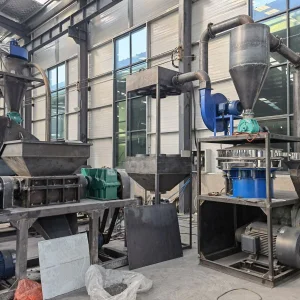
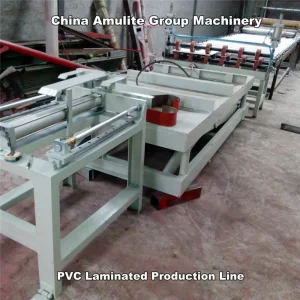
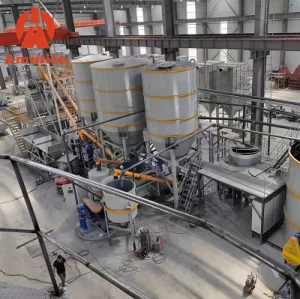
The global construction sector is undergoing a structural transition toward industrial prefabrication, driven by strict decarbonization targets, escalating site labor costs, and compressed project delivery timelines. At the center of this revolution is the Hollow Core Cement Wall Panel Production Line, an advanced automated manufacturing matrix engineered to produce lightweight, load-bearing, fire-resistant, and acoustically insulated non-loadbearing interior partitions and exterior envelope panels.
A hollow core cement wall panel engineered via extrusion or battery casting reduces structural dead weight by 35% to 50% compared to solid concrete masonry units (CMU), without compromising structural flexural rigidity or axial shear capacity. The tubular void geometry within the core creates continuous dead-air insulation channels, significantly lowering thermal conductivity ($\lambda$-values down to 0.17 W/m·K) and enhancing Airborne Sound Insulation Ratings (STC values up to 52 dB).
Engineering Gain Notice: Modern hollow core cement panel production lines integrate real-time PLC moisture-sensing dosing, high-frequency vibratory compaction (50–60 Hz), and automated hydraulic core-pulling technology. This yields a surface tolerance within ±1.0 mm across a 3.5-meter panel length, totally eliminating the need for wet plastering in high-rise building projects.
When selecting a supplier or machinery company, engineering leaders must evaluate the core manufacturing topology: Continuous Slipform Extrusion versus Vertical Hydraulic Mould Battery Casting.
| Performance Characteristic | Continuous Slipform Extrusion Line | Vertical Battery Mould Casting Line |
|---|---|---|
| Raw Material Rheology | Zero-slump dry-hard mix (W/C ratio ~0.26–0.30) | Fluid thixotropic slurry (W/C ratio ~0.42–0.48) |
| Compaction Mechanism | Archimedean screws with high-torque vibrators | Internal pneumatic/hydraulic pin vibrators |
| Reinforcement Integration | Pre-stressed high-tensile steel wire (2mm–4mm) | Glass fiber mesh or loose alkali-resistant fibers |
| Dimensional Flexibility | Fixed width (usually 600mm), continuous length cutting | Fixed length/width cell matrices, precise height control |
| Curing & Demoulding Cycle | Bed-curing (6-8 hours with thermal heating pipes) | In-mould steam heating curing (2-4 hours per batch) |
| Surface Finish Quality | Textured smooth surface, ideal for direct tiling/putty | Mirror-finish dual faces, ultra-smooth for direct paint |
The global sourcing landscape for hollow core cement wall panel machinery exhibits high geographic variation in technical preferences, raw material availability, and structural regulatory mandates:
Megaprojects (e.g., Saudi Arabia Vision 2030, NEOM, UAE real estate expansion) require massive output capacity. Buyers seek automated heavy-duty extrusion lines operating continuously at high speeds with raw material formulations using local dune sand, crushed limestone, and Portland cement.
Rapid urbanization in Indonesia, Philippines, Vietnam, and India has created an urgent need for low-cost, high-speed partition wall manufacturing. Sourcing intent prioritizes compact vertical mould lines using industrial byproducts like fly ash from power plants and slag to lower raw material expenditure.
Focuses on modular, earthquake-resistant construction systems. Procurement teams demand lines capable of fabricating panels with integrated vertical tongue-and-groove joints, pre-wired electrical conduit channels, and reinforced steel mesh for seismic energy dissipation.
China has emerged as the premier manufacturing hub for building material machinery. Sourcing a hollow core cement wall panel production line from top-tier Chinese manufacturers provides concrete business and operational gains over European counterparts:
By leveraging integrated industrial clusters in Hebei and Shandong, Chinese OEMs supply turnkey manufacturing lines featuring Siemens PLCs, Schneider electronics, and Italian-grade hydraulic valves at less than half the equipment cost of Western suppliers.
Chinese process engineers tailor concrete formulations around locally sourced aggregates—such as volcanic ash, expanded perlite, lightweight EPS beads, agricultural waste ash, or industrial tailing slag—significantly cutting operational material costs.
From initial foundation engineering design, plant layout CAD modeling, and electrical SCADA integration to local commissioning and operator training, Chinese companies offer complete end-to-end EPC plant setup.
Understanding the exact mechanics of a hollow core panel line allows factory directors to audit potential machinery suppliers effectively:
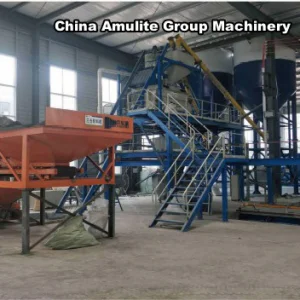
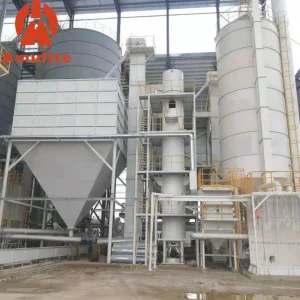
Precision load-cell sensors under raw material silos accurately weigh Ordinary Portland Cement (OPC 42.5/52.5), fly ash, sand, aggregate, and dry additives. Water dosage is continuously controlled via microwave moisture sensors inside the planetary or twin-shaft mixer to maintain precise rheological slump properties.
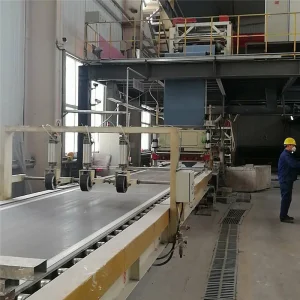
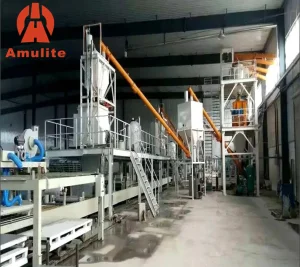
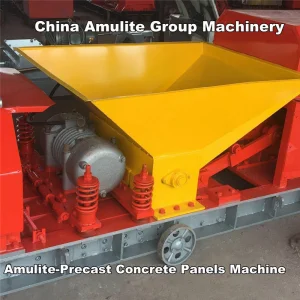
In extrusion systems, the mixed concrete drops into the hopper of a self-propelled slipform machine. High-torque alloy Archimedean screws extrude the dry concrete over internal core tubes while high-frequency vibrators dense-pack the material around pre-stressed steel wires. In battery mould systems, liquid slurry is pumped into vertical multiple-cavity moulds fitted with automated core pins.
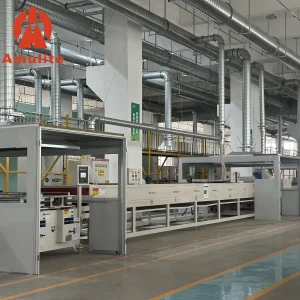
To maximize daily turnover, green panels enter a steam curing kiln or integrated thermal pipe heating zone ($55^\circ\text{C} - 70^\circ\text{C}$). Rapid hydration allows concrete to reach 70% of its ultimate compressive strength within 6 to 8 hours.
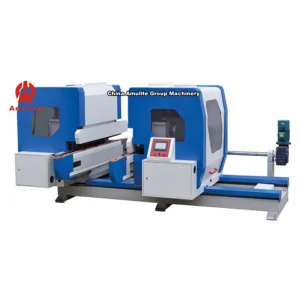
A diamond-tipped automatic tracking saw cuts continuous extruded slabs into custom length segments (e.g., 2.8m to 3.5m). Vacuum turnover stackers lift finished panels onto transport pallets for final curing and delivery wrapping.
Hollow core wall panels replace traditional gypsum drywall and clay brick partitions in skyscraper interiors. The hollow channels allow seamless installation of plumbing and electrical conduits without tedious wall chasing, reducing MEP installation labor by up to 60%.
With an STC sound reduction of over 48 dB and an A1 non-combustible fire rating up to 4 hours (tested under ISO 834 / UL 263 standards), hollow core panels deliver maximum tenant privacy and life-safety compliance.
Heavy-duty reinforced hollow core panels are installed vertically or horizontally between steel H-beams for quick boundary wall erection, offering superior resistance to wind load shear pressures and weathering.
Before issuing an L/C or signing an equipment contract with a hollow core panel line company, technical buyers should verify the following engineering criteria:
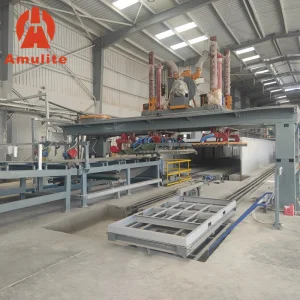
China Non-Asbestos/Asbestos Cement Corrugated Roof Sheets Production Line Company, Product
View Equipment Specs