Engineered for high-yield throughput, raw material versatility, and compliance with rigorous structural standards.
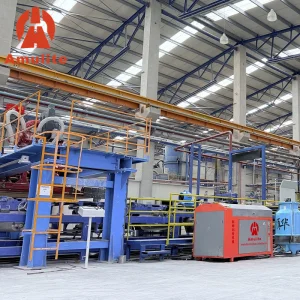
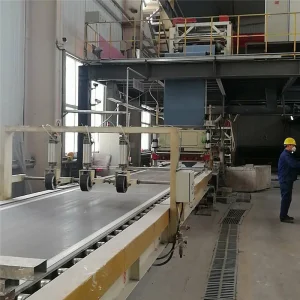
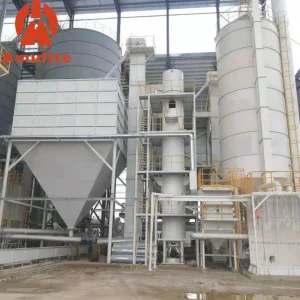
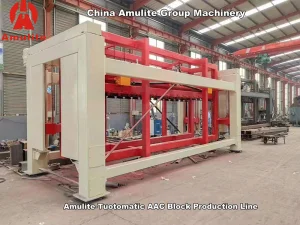
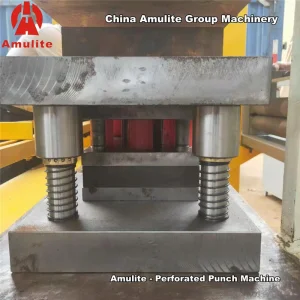
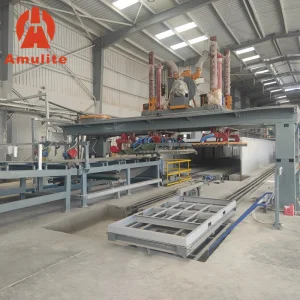
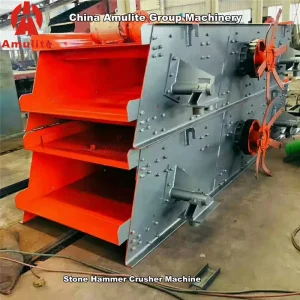
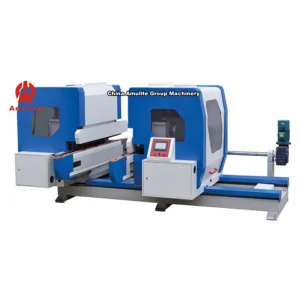
How advanced OEM concrete wall machines are redefining offsite construction efficiency, thermal performance, and zero-carbon building operations globally.
The global construction ecosystem is undergoing an unprecedented structural transition toward modern methods of construction (MMC) and industrialised building systems (IBS). At the center of this revolution is the specialized OEM Concrete Wall Machine—an integrated industrial system designed to mass-produce lightweight concrete wall panels, hollow-core cementitious slabs, EPS sandwich composite walls, and fiber-reinforced silicate sheets. Commercial developers, modular building contractors, and infrastructure conglomerates no longer evaluate concrete wall machinery solely based on raw structural output; today's buying criteria focus on total operational efficiency, multi-material flexibility, micro-structural density control, and digital automated integration.
As a leading pioneer in precast machinery engineering, China Amulite Group integrates decades of mechanical fabrication experience with cutting-edge process control logic. OEM customization allows global procurement directors to tailor core machine attributes—such as panel thickness (ranging from 60mm to 300mm), tongue-and-groove joint geometry, internal structural core void configurations, and slurry recipe algorithms—to match native raw materials such as Portland cement, fly ash, silica sand, expanded perlite, expanded polystyrene (EPS) beads, and basalt fiber reinforcement.
A granular breakdown of core subsystem modules engineered for continuous, zero-defect wall panel fabrication.
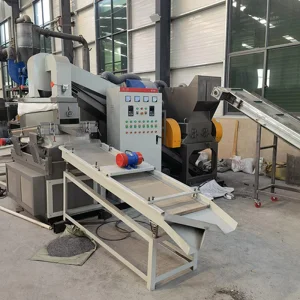
Features micro-processor-controlled gravimetric feeders, multi-stage planetary high-shear mixers, and fluidizing foam generators. Ensures uniform dispersal of EPS beads, fibers, and mineral admixtures without slurry segregation or air pocket voids.
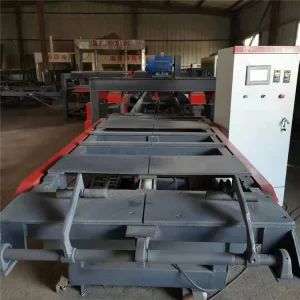
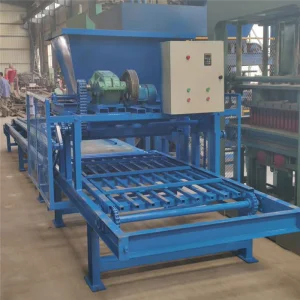
Engineered with hydraulic side-opening mold cars and high-frequency vibration compaction systems. The vertical molding layout maximizes floor space efficiency while producing double-sided, mirror-smooth wall panels requiring zero plastering.
Utilizes low-pressure steam curing tunnels integrated with automated mechanical turn-over manipulators and vacuum stacking units, guaranteeing rapid mold turnover cycles (down to 120-180 minutes per set) without panel corner cracking.
Pioneering the next decade of intelligent, low-carbon precast manufacturing through AI, robotics, and circular material chemistry.
Real-time machine-vision sensors and ultrasonic rheometer arrays feed live viscosity data directly into the master PLC. The system automatically adjusts superplasticizer dosage and water-cement ratios on the fly, compensating for micro-variations in moisture level within aggregate hoppers.
Next-generation mixing modules are optimized for Supplementary Cementitious Materials (SCM), replacing up to 70% of standard clinker with blast furnace slag, calcined clay, and bio-char. Direct mineralization chambers inject captured industrial CO₂ directly during initial mixing, hardening the matrix via accelerated mineralization.
Fully autonomous precast manufacturing plants governed by Cloud Digital Twins. Specialized 6-axis robotic arms perform automatic core insert positioning, wire mesh reinforcement placement, continuous demolding, and automated ultrasonic non-destructive testing (NDT) prior to shipment logistics.
Adapting machine kinematics and panel density classes to fulfill distinct structural, acoustic, and thermal envelope mandates.
Engineered for lightweight non-loadbearing interior wall partitions (600–700 kg/m³ density). Delivered panels achieve an STC acoustic rating of 45–52 dB and 4-hour fire endurance, reducing total structural weight on primary concrete columns and foundation pilings by up to 35%.
Extruded or molded EPS concrete sandwich wall panel systems featuring tongue-and-groove interlocking profiles. Enables rapid dry-stack installation without mortar wet work, providing superior thermal envelope performance (U-value < 0.35 W/m²K) for energy-efficient passive housing.
Heavy-duty precast fiber cement and calcium silicate sandwich board machinery producing high-durability, weather-resistant exterior cladding and perimeter walls resistant to seismic shear forces, salt freeze-thaw cycles, and industrial atmospheric corrosion.
Why China's integrated heavy equipment industrial base delivers unparalleled ROI, mechanical precision, and fast project turnarounds for international buyers.
Procuring heavy industrial machinery for precast concrete wall panel production requires a strategic evaluation of manufacturing supply chains, component metallurgy, component interchangeability, and long-term spare part availability. Operating from China’s heavy-industry engineering hub in Hebei, China Amulite Group leverages a completely vertically-integrated manufacturing ecosystem.
From large-scale gantry CNC milling of mold battery plates to dynamic balancing of continuous extrusion augers, all mechanical core components are machined in-house under ISO 9001:2015 quality standards, ensuring zero reliance on unverified sub-tier vendors.
While primary structural frames are fabricated using high-tensile Q355B structural steel, critical electronic and hydraulic control subsystems utilize standardized components from global leaders (Siemens PLC, Schneider Electric relays, Rexroth hydraulic valving, and ABB inverter drives), ensuring localized spare part access worldwide.
Capital expenditures (CAPEX) for complete Amulite OEM turn-key concrete wall lines are typically 40% to 60% lower than European legacy alternatives, while matching or exceeding line throughput rates, micro-dimensional tolerance standards, and total mechanical uptime reliability.
End-to-end operational risk mitigation: from foundation civil engineering drawings to localized raw material mix optimization and certified plant compliance.
Deploying a full-scale concrete wall production line involves complex civil, electrical, hydraulic, and chemical engineering. China Amulite Group assigns dedicated project management engineering teams to every contract, guiding the buyer through a structured 5-stage deployment framework:
Custom 3D CAD/BIM floor layouts, utility load specifications (kW electric, steam pressure, air CFM), and foundation loading diagrams.
Dry-run assembly and electrical PLC loop verification in our factory bays prior to ocean container loading.
Dispatch of resident mechanical, electrical, and process engineers for mechanical alignment, piping, and wiring supervision.
In-house chemical lab testing of client aggregate, local cements, fly ash, and fibers to achieve optimum flexural strength and density targets.
Comprehensive technical training of native plant managers, quality assurance personnel, and maintenance staff until stable mass output is achieved.
Evaluating technical and financial parameters: Amulite Automated OEM Concrete Wall Lines vs. Traditional Cast-in-Place & Legacy Equipment.
| Key Performance Indicators (KPIs) | Amulite OEM Concrete Wall Machine | Traditional Wet Concrete Casting | Legacy Semi-Manual Wall Molds |
|---|---|---|---|
| Annual Line Output Capacity | 500,000 m² – 3,000,000 m²/year | Dependent on site labor (< 100,000 m²) | 100,000 m² – 300,000 m²/year |
| Panel Dry Bulk Density Range | 500 – 1000 kg/m³ (Highly Configurable) | 2200 – 2400 kg/m³ (Heavy Concrete) | 1200 – 1600 kg/m³ (Limited Range) |
| Thermal Conductivity (U-Value) | 0.085 – 0.14 W/m·K (Superb Insulation) | 1.30 – 1.70 W/m·K (Poor Insulation) | 0.35 – 0.50 W/m·K (Moderate) |
| On-Site Labor Requirement | 4 – 7 operators per shift (PLC Controlled) | 30+ laborers (High turnover risk) | 15 – 20 operators per shift |
| Dimensional Tolerance | ± 0.5 mm (Precision CNC Extrusion/Mold) | ± 5.0 mm to 10.0 mm (Plastering required) | ± 2.0 mm to 3.0 mm |
| Demolding / Turnover Time | 120 – 180 Minutes (Rapid Steam Curing) | 24 to 48 Hours | 8 to 12 Hours |
| Target Return on Investment (ROI) | 10 – 14 Months | N/A (Ongoing operational overhead) | 22 – 30 Months |
Expert insights directly addressing material science, machine operating parameters, utility connections, and commercial guarantees.
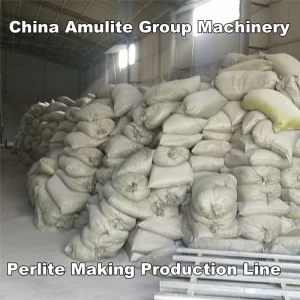
Amulite concrete wall panel machinery is engineered with open-architecture dosing systems capable of processing Ordinary Portland Cement (OPC 42.5/52.5), Class F or C fly ash, ground granulated blast-furnace slag (GGBS), natural silica sand, expanded perlite, lightweight expanded clay aggregates (LECA), recycled EPS beads, glass-fiber mesh, and polypropylene (PP) structural fibers. Raw material recipes are custom-calibrated during commissioning based on your locally available mineral supplies to minimize material transportation costs.
Our vertical battery mold systems utilize ultra-flat, high-tensile steel mold plates ground to micro-finish tolerances (< 0.5mm variance across 6 meters). Coupled with automated oil-spraying systems and multi-frequency vibratory compaction, all air bubbles are forced to the panel core, resulting in a mirror-smooth, zero-void surface finish ready for direct painting, tiling, or wallpaper application on the construction site.
A standard mid-scale production line (500,000 m²/year capacity) typically requires a clear covered factory footprint of 120 meters by 18 meters with a minimum hook height of 6.5 meters. Total connected electrical load ranges from 120 kW to 250 kW, with a steam generator capability of 1.5 to 3.0 tons/hour (fueled by natural gas, biomass, or electric boiler systems). Detailed civil load foundations and utility drop point maps are provided during project engineering.
All heavy structural frames carry a 3-year structural guarantee, while core electrical, hydraulic, and mechanical components are backed by a 12-month comprehensive warranty. Every control cabinet includes an integrated IoT industrial telemetry router enabling 24/7 remote PLC program troubleshooting, parameter updates, and fault code isolation directly by Amulite senior automation software engineers in real time.
Explore our complementary product line to build an integrated, end-to-end building material manufacturing facility.