



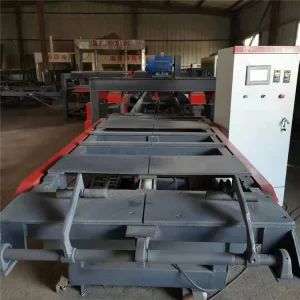
Explore our state-of-the-art wall panel equipment catalog engineered for high throughput, precise dimensional tolerance, and minimal operational downtime.
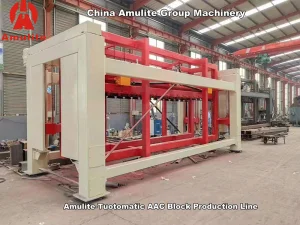
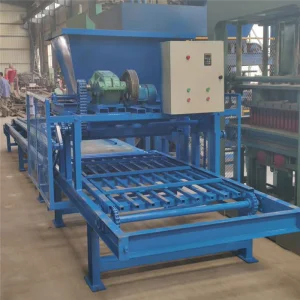
The global construction ecosystem is undergoing an unprecedented structural transition toward modular prefabrication, industrial off-site assembly, and green building materials. Driven by severe labor shortages in primary urban markets, escalating job-site safety mandates, and global ESG regulations (such as Net Zero 2050 directives), general contractors and building material manufacturers are migrating rapidly from cast-in-place concrete toward prefabricated wall panel systems.
When enterprise buyers evaluate options to buy a wall panel machine factory setup or dedicated production equipment, the procurement decision extends far beyond equipment cost (CapEx). It demands an end-to-end evaluation of raw material availability, energy transformation efficiency, automatic slurry batching precision, autoclaving energy integration, and lifetime Total Cost of Ownership (TCO).
Industrial wall panel machinery typically spans four major manufacturing technological routes. Factory engineers and procurement executives must select the alignment that matches local raw material supply chains and structural building requirements:
Combines expanded polystyrene (EPS) beads, Portland cement, fly ash, and chemical additives poured between calcium silicate skin boards. Offers lightweight properties (550–650 kg/m³), high thermal resistance, and rapid tongue-and-groove site installation.
Utilizes multi-vat slurry dewatering, cylinder forming, and high-pressure hydraulic pressing (up to 10,000 tons) followed by high-pressure steam autoclaving. Produces high-density (1.2–1.6 g/cm³), weather-resistant exterior siding and interior backer boards.
Relies on aluminum powder gas-generation within a silica-lime slurry mold. Wire cutting units slice large cake blocks into high-precision structural wall panels reinforced with anti-corrosion welded steel mesh cages.
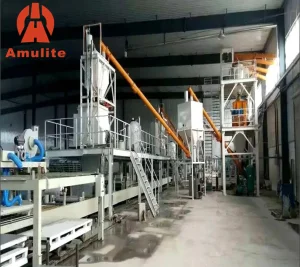
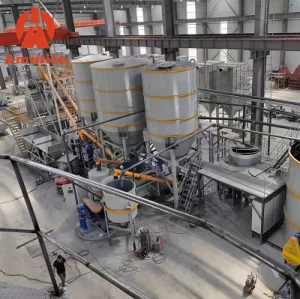
Factory efficiency is heavily dictated by slurry stability. Advanced Amulite production equipment integrates real-time slurry density sensors, automated loss-in-weight feeders, and closed-loop hydrologic dosing system to prevent delamination or micro-cracking during curing phases.
How artificial intelligence, IoT telemetry, and high-precision robotics are transforming traditional building material machinery into digital smart factories.
SCADA-controlled loss-in-weight batching for silica, cement, and chemical additives with ±0.1% accuracy.
Continuous extruders and vertical hydraulic mould cars with automated side-door clamping systems.
6-Axis articulated arms equipped with vacuum grippers for zero-breakage sheet demoulding and stacking.
Laser triangulation and machine vision scanners checking edge trim precision and surface defects in real-time.
Vibration and temperature telemetry on core gearboxes predicting bearing failures before downtime occurs.
A side-by-side engineering evaluation of primary wall panel production line configurations for project planners.
| Equipment / Line Type | Annual Capacity Range | Primary Raw Materials | Target Board Density | Automation Grade | Autoclave Required? |
|---|---|---|---|---|---|
| Fiber Cement / Calcium Silicate Line | 2,000,000 - 20,000,000 m² | Quartz Sand, Cement, Kraft Pulp, Mica | 1.2 - 1.65 g/cm³ | Fully Automated (PLC) | Yes (1.2-1.3 MPa Steam) |
| EPS Lightweight Concrete Wall Panel Line | 300,000 - 3,000,000 m² | EPS Beads, Cement, Sand, Foaming Agent | 550 - 800 kg/m³ | Semi to Fully Automated | No (Thermal Curing) |
| AAC Wall Panel & Block Line | 100,000 - 500,000 m³ | Fly Ash/Sand, Lime, Cement, Aluminum Powder | 425 - 625 kg/m³ | High Industry 4.0 SCADA | Yes (Saturated Steam) |
| Embossed Metal Composite Panel Line | 500,000 - 5,000,000 m² | Al-Zn Steel Coil, PU Foam, Aluminum Foil | 3.8 - 4.5 kg/m² | Continuous Roll-Forming | No |
| XPS Tile Backer Insulation Line | 1,000,000 - 8,000,000 m² | XPS Foam Core, Polymer Mortar, Fiberglass Mesh | 32 - 45 kg/m³ | Continuous Laminating | No |
Procuring industrial machinery requires an understanding of localized building standards and operational requirements. Amulite engineers design production configurations aligned with regional compliance frameworks:
High demand for thermal insulation drives adoption of EPS Sandwich panels and AAC wall panels capable of withstanding extreme ambient heat while complying with SASO and UAE Civil Defense fire code regulations.
Rapid urban developments in monsoon zones require Fiber Cement Boards compliant with high moisture absorption and mold resistance tests. Production lines prioritize non-asbestos formulations using local cellulose fiber.
Strict energy efficiency directives (such as EU CPR directives) necessitate advanced XPS insulation backer board lines and embossed metal composite systems with low embodied carbon profiles and zero-VOC emissions.
Purchasing directly from a manufacturing factory partner ensures continuous operational support throughout the plant life cycle:
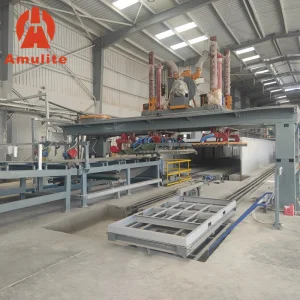
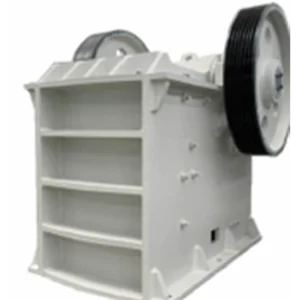
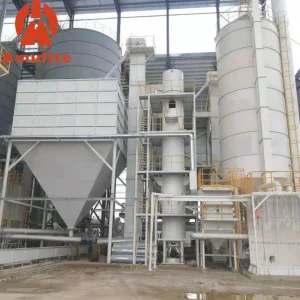
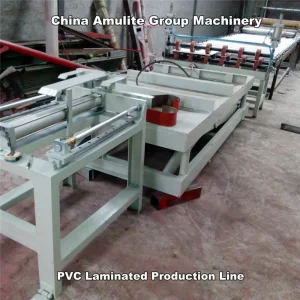
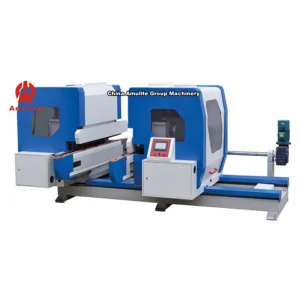
Complete your turnkey manufacturing plant with integrated cutting, coating, laminating, and raw material processing machinery.
Direct answers from our senior industrial machinery team covering technical specs, factory installation, raw material formulation, and export logistics.
Depending on local raw material costs (cement, silica sand, EPS), labor costs, and regional board selling prices, most Amulite factory installations achieve full capital payback within 12 to 24 months of reaching continuous commercial output capacity.
Yes. Our process engineers specialize in custom material formulations. Fly ash, bottom ash, volcanic slag, or crushed quartz tailings can replace up to 40-60% of silica sand or Portland cement, significantly reducing raw material costs while meeting structural flexural strength standards (ASTM C1185 / EN 12467).
All main electrical cabinets are custom-engineered to comply with the buyer’s regional industrial power grid specs (e.g., 380V/50Hz, 415V/50Hz, 480V/60Hz). Motor drives utilize international brands such as Siemens, Schneider, or ABB with CE/UL certified components.
Standard production machinery fabrication takes 60 to 90 days depending on plant configuration and autoclave capacity. Complete factory pre-assembly and dry testing are conducted at our workshop before ocean container loading.
Each line ships with a 2-year consumable spare parts package (such as cutting blades, vacuum suction caps, conveyor belts, and sealing gaskets). Emergency spares can be dispatched via express air courier from our global service centers within 48 hours.