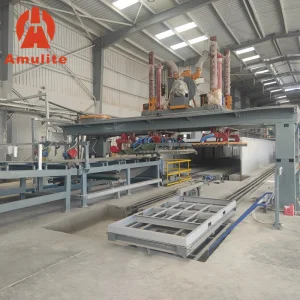
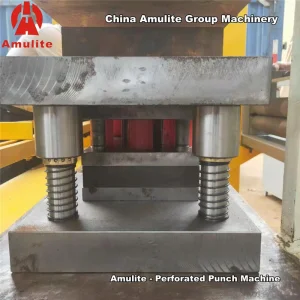
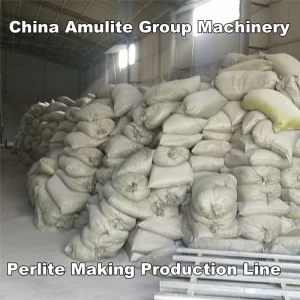
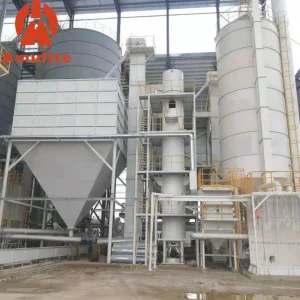
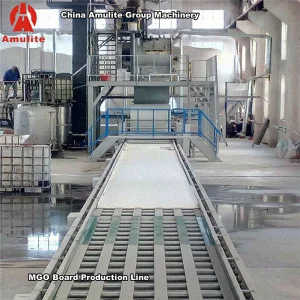
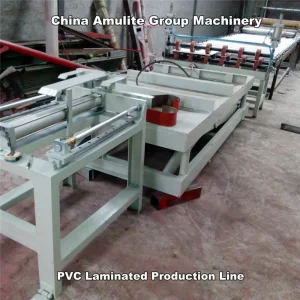
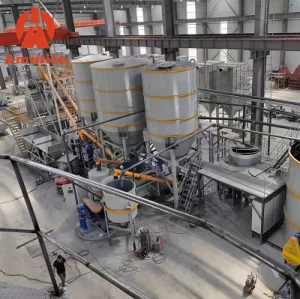
Explore our state-of-the-art production line equipment engineered for high-throughput building material factories worldwide.
An in-depth evaluation of thermal insulation performance, fire safety metrics, structural durability, and manufacturing benchmarks across global construction sectors.
In modern architectural engineering and high-density industrial infrastructure, the global demand for 4-18mm autoclaved calcium silicate sheets has reached unprecedented levels. As modern building codes enforce stricter non-combustibility standards (such as EN 13501-1 Class A1 and ASTM E136), traditional gypsum drywall, plywood, and low-density mineral boards are increasingly replaced by autoclaved calcium silicate matrices. Formulated through a hydrothermal reaction between siliceous materials (silica sand, quartz powder) and calcareous materials (quicklime, hydrated lime, Portland cement), reinforced with natural cellulose fibers, these boards deliver unmatched dimensional stability under extreme moisture and thermal stress.
Major commercial infrastructure projects across Europe, North America, Southeast Asia, and the Middle East rely heavily on 4-18mm sheets for passive fire protection, acoustic separation walls, moisture-prone cleanrooms, and exterior rainscreen facades. Finding a trustworthy manufacturer or OEM factory requires evaluating not just board price per square meter, but raw material purity, autoclave curing parameters, hydraulic pressing capacity, and factory QA compliance.
Choosing the correct thickness is critical for optimizing structural integrity, acoustic performance, and fire rating across distinct commercial applications.
| Thickness Range | Typical Density Class | Primary Application Scenarios | Flexural Strength (MPa) | Fire Resistance Rating |
|---|---|---|---|---|
| 4mm – 6mm | 1.1 – 1.3 g/cm³ | Suspended ceiling systems, curved interior wall linings, backing boards for acoustic tiles. | ≥ 10.5 MPa | 60 Minutes |
| 8mm – 10mm | 1.2 – 1.4 g/cm³ | Standard interior partition walls, bathroom/kitchen wet-area tile backer boards, cleanroom enclosures. | ≥ 12.0 MPa | 120 Minutes |
| 12mm – 15mm | 1.3 – 1.5 g/cm³ | Heavy-duty wall partitions, industrial fireproofing ducts, raised access flooring sub-layers, exterior facade backing. | ≥ 14.0 MPa | 180 Minutes |
| 16mm – 18mm | 1.4 – 1.6 g/cm³ | High-impact exterior cladding, passive fire barrier walls, server room security walls, structural shaft linings. | ≥ 16.0 MPa | 240 Minutes |
Engineered for lightweight versatility. These sheets provide smooth surfaces for paint finishes, exhibit zero sagging under humid conditions, and allow mild curvature during installation for decorative architectural ceilings.
The workhorse of commercial fit-outs. Designed to resist impact while accommodating concealed wiring and plumbing. Ideal for hospitals, hotels, and schools where moisture and flame resistance are strict requirements.
Heavy-density, high-flexural strength sheets capable of supporting structural wind loads and thermal cycles. Frequently UV-coated, painted, or combined with exterior insulation finishing systems (EIFS).
Inside the advanced Hatschek process, slurry preparation, hydraulic pressing, and high-pressure steam autoclaving.
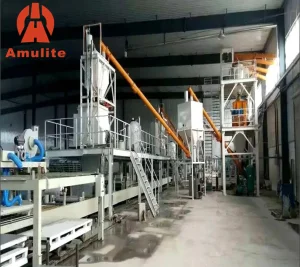
The manufacturing quality of 4-18mm calcium silicate sheets relies entirely on precise stoichiometric control and modern machinery automation. Premier factories employ sophisticated slurry mixing and multi-stage Hatschek cylinder forming equipment to build uniform green sheets layer by layer.
High-purity quartz silica powder (fineness >325 mesh) is combined with quicklime, unbleached kraft pulp fibers, and water. High-shear pulpers ensure homogeneous fiber dispersion without agglomeration, setting the foundation for mechanical tensile strength.
The slurry passes through 3 to 5 rotating sieve vats where thin film layers are picked up by a continuous felt. These film layers wrap continuously around a forming drum until the exact thickness (from 4mm up to 18mm) is reached with precise mechanical precision.
For premium exterior grade sheets (density >1.4g/cm³), the green sheets undergo high-pressure hydraulic pressing (up to 7000–10000 tons). This process removes residual interstitial water, closes micro-voids, and boosts flexural strength by over 30%.
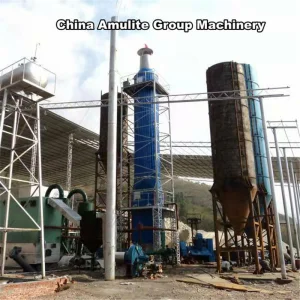
The pre-cured boards are loaded into massive horizontal autoclaves under saturated steam pressure (1.0 to 1.3 MPa at 180°C to 195°C). Here, the silica and lime undergo hydrothermal synthesis to crystallize into stable Tobermorite. This reaction eliminates moisture expansion and prevents future warping or cracking.
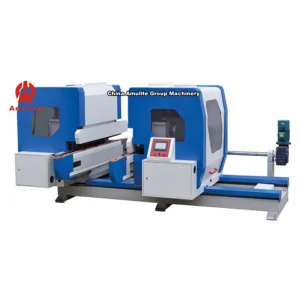
Cured boards are conditioned, passed through high-speed edge trimming saws, and dual-side sanded for thickness tolerances within ±0.2mm before automated stack packing and shrink-wrapping.
Why international EPC contractors, building material importers, and OEM brands source calcium silicate sheets directly from top Chinese manufacturing hubs.
Chinese factories located in industrial manufacturing zones enjoy direct access to high-purity quartz reserves, premium Portland cement plants, and fast-growing cellulose fiber supply chains. This proximity minimizes raw material transport costs and insulates buyers from global commodity inflation.
Leading Chinese plants operate multi-line automated facilities yielding upwards of 10,000,000 m² of fiber cement and calcium silicate sheets annually. Scale economy allows highly competitive FOB/CIF unit prices alongside guaranteed lead times during surge project demands.
Custom dimensions beyond standard 1220x2440mm (such as 1200x2400mm, 1220x3000mm, or square ceiling tiles 600x600mm), tailored dry densities (1.0g/cm³ to 1.6g/cm³), hydrophobic mass treatment, and private label branding are fully supported.
Ensuring seamlessly compliant project submittals for international building regulations across different commercial regions.
To successfully pass local engineering audits and municipal fire inspector approvals, 4-18mm calcium silicate sheets must strictly conform to international testing criteria. Elite factories supply full third-party test reports (SGS, TÜV, Intertek) verifying compliance with:
Standard Specification for Flat Fiber-Cement Sheets (Type A and Type B). Defines mechanical performance, flexural strength under wet and dry conditions, linear moisture movement, and frost resistance cycles for North American and South American project specs.
European Union compliance covering fiber-cement flat sheets. Certifies Reaction to Fire Class A1 Non-Combustible (no smoke generation, zero toxic drop out) alongside category NT (non-asbestos technology) designation.
British Standard compliance mandatory across Middle Eastern, British Commonwealth, and South Asian building jurisdictions. Verifies non-combustibility, fire propagation index ($I < 12$), and Class 1 surface flame spread prevention.
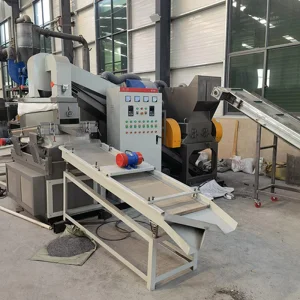
Explore our complete machinery options designed to establish full-scale manufacturing facilities for boards, panels, and recycled industrial solutions.
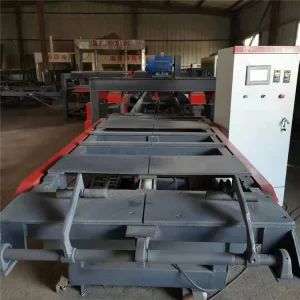
OEM 1300 II Type Automatic Four Side Edge Cutting Machine Factory, Companies
View Plant Specifications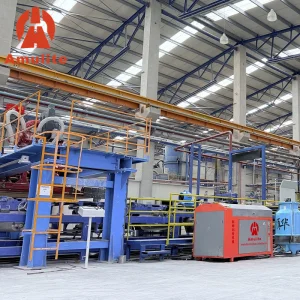
China Fiber Cement Board /Calcium Silicate Board Production Line Factory, Companies
View Plant SpecificationsExpert engineering answers to critical purchasing, installation, and manufacturing questions for calcium silicate sheet procurement.