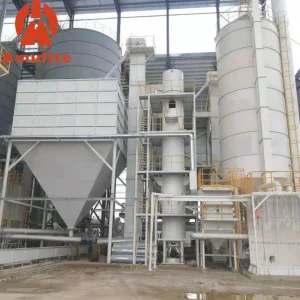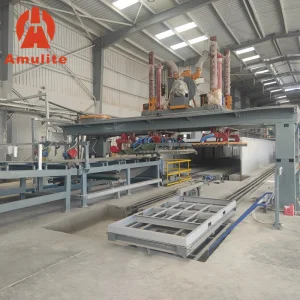
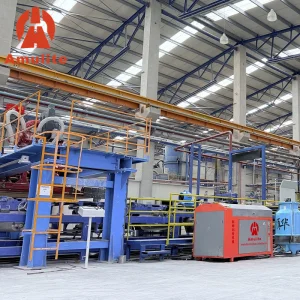
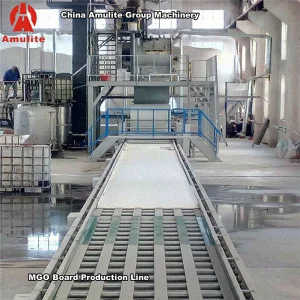
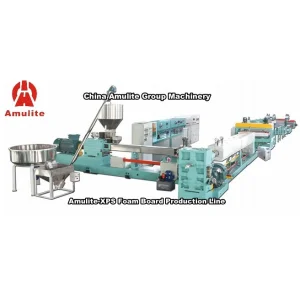
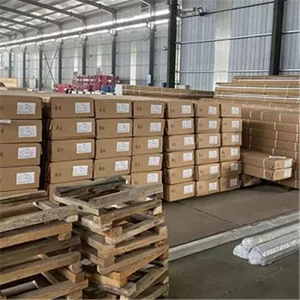
The global construction ecosystem is undergoing a fundamental structural transition from traditional wet-construction, on-site bricklaying to high-precision Offsite Manufacturing (OSM) and Modern Methods of Construction (MMC). At the core of this transformation is the advanced Wall Panel Making Machine. As commercial developers, civil engineering contractors, and government infrastructure projects demand higher thermal efficiency, seismic resilience, rapid deployment times, and strict compliance with carbon-neutral mandates, the procurement of high-performance prefabricated wall panel production machinery has shifted from a capital luxury to a strategic necessity.
Original Equipment Manufacturers (OEM) and turnkey engineering factories play a pivotal role in establishing continuous production ecosystems. Modern wall panel machines are no longer standalone mechanical presses; they are integrated, cyber-physical automation platforms combining automated pneumatic raw material batching, continuous slurry rheology control, precision continuous extrusion, high-pressure autoclaving, dynamic curing chambers, and AI-assisted non-destructive quality assurance systems.
Choosing the correct equipment engineering architecture depends heavily on the destination market's architectural specs, raw material availability, structural load requirements, and thermal conductivity targets. Below is an engineering evaluation comparing the four primary OEM wall panel manufacturing tech lines.
| Machine Category | Core Process Technology | Primary Material Matrix | Density Range (kg/m³) | Annual Production Scale | Target Architectural Applications |
|---|---|---|---|---|---|
| EPS Cement Sandwich Panel Line | Vertical Battery Moulds / Hydraulic Automatic Opening | Ordinary Portland Cement (OPC), EPS Beads, Fly Ash, Sand | 550 – 800 kg/m³ | 500,000 – 3,000,000 m² | Internal Partitioning, High-Rise Infill Walls, Acoustic Enclosures |
| Fiber Cement / Calcium Silicate Line | Hatschek Wet-Forming Process & High Pressure Autoclave | Silica Sand, Lime, Cellulose Fiber, OPC, Micro-Silica | 1,200 – 1,700 kg/m³ | 2,000,000 – 10,000,000 m² | Exterior Cladding, Wet Area Backer Boards, Fireproof Ceiling Systems |
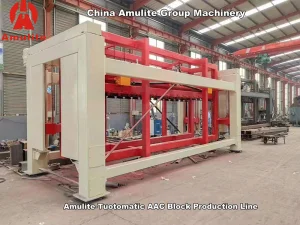
| AAC Block & Panel Extrusion Line | Aluminum Powder Reaction, Wire Cutting & Steam Autoclaving | Lime, Silica Slurry, Cement, Anhydrite Gypsum, Aluminum Paste | 400 – 650 kg/m³ | 100,000 – 500,000 m³ | Load-Bearing Thermal Envelope Walls, Modular Steel Framing Infill |
| MGO & Composite Fireproof Board Line | Continuous Flat Pressing & Multi-Layer Fiberglass Mesh Embedding | Magnesium Oxide, MgCl₂ / MgSO₄, Wood Fiber, Perlite, Mesh | 800 – 1,100 kg/m³ | 1,000,000 – 5,000,000 m² | Fire-Rated Commercial Assemblies, Cleanroom Panels, SIP Cores |
Utilized extensively for EPS cement lightweight sandwich panels. Vertical battery molds feature automated core-pulling, internal heat-pipe circulation for accelerated hydration, and single-operator hydraulic opening routines. Ensures zero taper and exceptional surface flatness across 3-meter panel heights.
Engineered for high-density fiber cement board production. Incorporates precision felt tensioning, vacuum dewatering boxes, accumulator rollers, and high-tonnage post-press units. Reaches up to 28 MPa flexural strength post 12-hour high-pressure steam autoclaving.
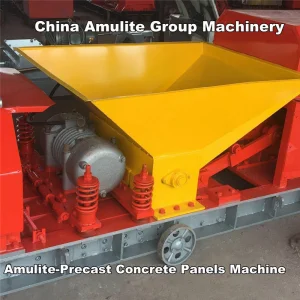
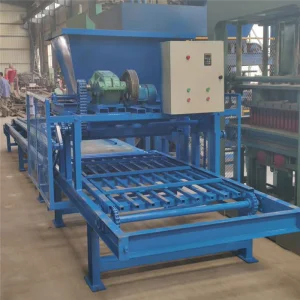
Designed for continuous hollow-core cement wall panel lines. Twin-screw continuous homogenizers blend light aggregates with foaming agents, extruding panels directly onto dynamic steel track conveyors with micro-vibration compactors to eliminate internal voids.
When enterprise buyers, industrial factory owners, and OEM partners evaluate wall panel production machinery suppliers, the procurement decision hinges on Total Cost of Ownership (TCO). A modern manufacturing line must deliver immediate ROI through raw material flexibility, minimal scrap generation, energy-efficient curing, and low human-resource dependency.
• Custom Machinery Engineering: Modular line configuration allows initial low-CapEx entry with built-in expansion joints for scaling annual capacity by 200%.
• Autoclave & Steam Energy Integration: Closed-loop steam heat exchangers capture residual enthalpy, reducing boiler capacity requirements by up to 35%.
• Heavy Metal Machining Quality: Steel frame stress-relieving treatment ensures line precision over a 20-year operation lifecycle without structural warping.
• Slurry Recipe Optimization: Intelligent SCADA batching systems allow switching between high-purity silica sand and low-cost fly ash or pozzolanic deposits.
• Automated Demolding & Bundling: Robotic arm pick-and-place systems reduce labor forces from 35 technicians per shift down to just 6 system supervisors.
• Maintenance & Wear Parts: Self-lubricating guide tracks, hardened alloy mixer paddles, and quick-change felt belts dramatically lower scheduled downtime.
From initial civil foundation design to final shrink-wrapped panel stacking, establishing an industrial-scale wall panel factory requires a seamless multi-stage manufacturing sequence. Below is the standardized workflow deployed across state-of-the-art OEM manufacturing plants.
Computerized load-cell hoppers meter cement, aggregates, additives, and water with ±0.5% precision. Planetary slurry mixers homogenize matrix rapidly.
Automated injection into vertical battery molds or continuous Hatschek slurry dewatering cylinders under active vacuum pressure controls.
Accelerated thermal tunnel curing (45°C–60°C) accelerates green-strength development. Automatic hydraulic turn-over demolders lift panels safely.
High-pressure saturated steam autoclaving (1.2 MPa, 190°C) creates stable Tobermorite crystalline structures, followed by dual-face calibration sanding.
Operating wall panel equipment demands strict compliance with global safety, mechanical, and environmental standards. Leading OEM manufacturers maintain stringent Quality Management Systems (QMS) to ensure operational reliability regardless of geographical deployment environment.
Autoclaves and steam headers engineered in accordance with ASME Section VIII Div 1, CE-PED (Pressure Equipment Directive), and SQL (China Special Equipment License), featuring double safety interlocks and hydro-static burst testing.
Deploying specialized field service engineers worldwide for foundation alignment, wiring verification, dry-runs, wet-testing, material mix calibration, and local technical crew certification within a 30-to-45 day window.
Maintaining localized spare parts inventories (including hydraulic valves, PLC modules, conveyor belts, cutting wires, and seals) alongside 24/7 remote IoT telemetry debugging to ensure >98% plant uptime uptime.
As the construction industry faces escalating pressure to meet net-zero carbon goals and mitigate skilled labor shortages, next-generation wall panel making machinery is evolving along several key technological frontiers:
Future lines are being engineered to handle alkali-activated geopolymers (combining industrial slag, calcined clay, and volcanic ash). Machinery components are equipped with specialized anti-corrosive linings and ultra-high-shear mixers to manage the accelerated reaction kinetics of cement-free binders.
By embedding microwave inline moisture sensors and acoustic rheometers into the continuous mixing chamber, automated control loops dynamically adjust water-to-binder ratios in real time, compensating for ambient humidity fluctuations and batch-to-batch raw material variance.
Advanced physical foaming injectors generate micro-bubble matrices under 50 microns in diameter. This allows wall panels to achieve high structural compressive strength (above 5.0 MPa) while lowering bulk dry density down to an ultra-lightweight 350 kg/m³ for exceptional thermal insulation.