Explore our engineered production machinery designed for structural insulation, cementitious wall panels, and high-precision board manufacturing.
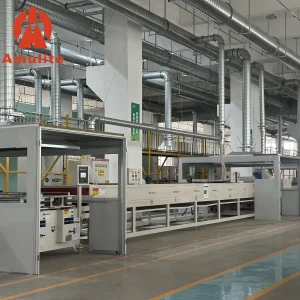
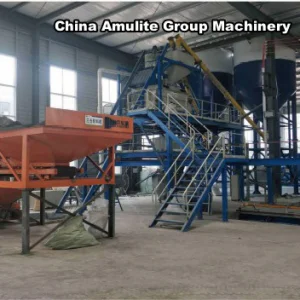
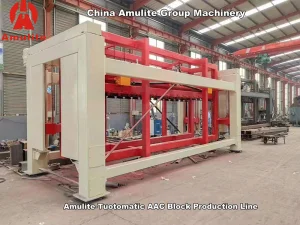
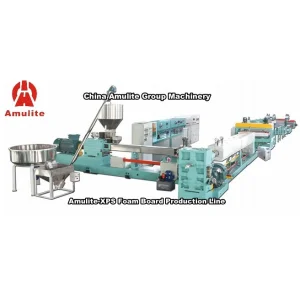
An authoritative analysis of continuous automated panel manufacturing, market growth drivers, and structural envelope technologies.
The global demand for high-performance, thermally efficient, and fire-resistant building enclosures has catapulted OEM sandwich panel production lines to the forefront of modern industrial engineering. Modern commercial construction no longer relies solely on heavy traditional brick-and-mortar masonry. Instead, project developers, industrial EPC contractors, and modular building architects heavily prioritize prefabricated structural insulated panels (SIPs), composite cementitious sandwich wall panels, Polyurethane/Polyisocyanurate (PU/PIR) insulated boards, and Rockwool fire-rated architectural cladding.
According to current market intelligence, the worldwide industrial sandwich panel market is expanding at a Compound Annual Growth Rate (CAGR) exceeding 6.8%. Driven by global industrialization, the exponential surge in cold-chain logistics hubs, e-commerce fulfillment mega-warehouses, pharmaceutical cleanrooms, and urgent demands for net-zero energy buildings (NZEB), factory investors require high-speed, continuous, and flexible manufacturing lines. To capture maximum market share, plant owners are migrating from legacy manual batch operations toward fully automated, multi-component continuous production systems designed by expert original equipment manufacturers (OEMs).
Over 42% of newly erected mega-warehouses and distribution hubs worldwide utilize continuous insulated metal sandwich panels for fast assembly, superior R-values, and lower lifetime HVAC loads.
Leading OEM machine builders enable international clients to configure versatile plants capable of running EPS, mineral wool, XPS, and lightweight fiber cement composites on unified production platforms.
Strict energy efficiency building codes in Europe, North America, and East Asia demand lower thermal bridging values (U-values below 0.15 W/m²K), accelerating upgrades to automated OEM lines.
From Industry 4.0 IoT control integration to ultra-low-carbon core materials, examine how manufacturing technology is evolving.
Modern sandwich panel production lines feature automated Siemens/Schneider PLC systems integrated with closed-loop optical infrared sensors. Real-time feedback continuously auto-adjusts chemical reaction injection rates, double-belt conveyor temperature zones, and hydraulic pressure parameters to prevent panel delamination and surface blistering.
Environmental regulations banning HCFCs and HFCs have forced machine manufacturers to engineer high-pressure metering units compatible with fourth-generation blowing agents such as Solstice LBA, Cyclopentane, and Supercritical CO₂. Modern OEM lines feature explosion-proof enclosures and automated gas detection systems.
Market trends showcase a shift toward hybrid panel configurations. A single advanced OEM production line can now alternate between roll-formed prepainted galvanized steel, aluminum foil, calcium silicate board, and glass-fiber reinforced cement (GFRC) facing sheets with quick-change cassette systems.
Step-by-step technical breakdown of continuous roll forming, liquid chemical metering, curing, and automated handling.
A high-capacity continuous sandwich panel line is a complex integration of mechanical, hydraulic, pneumatic, and chemical engineering. China Amulite Group’s OEM engineering design organizes the continuous line into seven distinct modular stations:
Heavy-duty hydraulic dual-head decoilers support steel or aluminum coils up to 10 metric tons per spindle. Equipped with automatic loop controls, surface film application units, and strip splicers, this section permits continuous non-stop operation during coil changes.
Precision-ground alloy steel rollers shape upper and lower metallic facings. Quick-change cassette stands enable operators to switch profiles (micro-rib, box-rib, deep corrugated roof profile, trapezoidal, smooth cleanroom finish) within minutes. Integrated corona treatment units enhance surface energy, guaranteeing maximum adhesive bond strength with the core substrate.
For PU/PIR panels, high-pressure axial piston pumps precisely proportion Polyol, Isocyanate, and eco-blowing agents at pressures reaching 150 to 200 bar. The multi-component mixing head oscillates laterally on a servo-driven gantry, laying down a uniform chemical ribbon across the bottom sheet. For Rockwool/EPS lines, automated mineral wool side-slabbing, ribbon turning, glue spraying, and insertion mechanisms replace chemical foaming heads.
The heart of structural curing, the double-belt conveyor spans 24 to 42 meters in length depending on target line speed. Precision-machined steel slat blocks are heated via recirculated hot air to maintain a uniform temperature zone (60°C – 70°C). This ensures complete, isotropic polymerization of the core foam without density variations or micro-structural collapse.
As the cured panel exits the continuous laminator, a servo-tracked flying band saw or disk blade unit clamps onto the moving panel. It cuts precise lengths up to 18 meters with zero edge burring or core crushing, operating at tight tolerances within ±1.0 mm.
Finished panels are directed onto a motorized cooling wheel stacker to dissipate exothermic chemical heat, eliminating internal thermal stress. Panels are automatically flipped, vacuum-stacked, strapped, and plastic wrapped, yielding sea-freight ready bundles.
| Performance Metric | PIR / PUR Rigid Foam | Rockwool / Mineral Wool | EPS / Cement Composite | XPS Tile Backer Board |
|---|---|---|---|---|
| Thermal Conductivity (λ) | 0.019 – 0.023 W/m·K | 0.038 – 0.044 W/m·K | 0.033 – 0.039 W/m·K | 0.027 – 0.030 W/m·K |
| Fire Reaction Class (EN 13501-1) | B-s1, d0 / B-s2, d0 | A1 Non-combustible | B1 / B2 Standard Flame Retardant | B1 / B2 Class |
| Core Density Range | 38 – 45 kg/m³ | 80 – 140 kg/m³ | 15 – 30 kg/m³ (foam / cement mix) | 32 – 40 kg/m³ |
| Water Absorption Rate | < 1.5% Volume | High (requires hydrophobic treatment) | Moderate to Low | < 0.5% Volume (Hydrophobic) |
| Target Industrial Application | Cold Storage, Freezer Warehouses | Firewall Enclosures, Power Plants | Modular Prefab Housing, Interior Walls | Tile Backer, Underfloor Heating |
Adaptable machinery setups tailored to distinct climatic demands, localized building standards, and industrial end-user requirements.
In high-ambient-temperature regions like the Gulf Cooperation Council (GCC) and Southeast Asia, continuous PIR panel production lines are configured with thick-panel capability (up to 250mm). Deep cam-lock profiling and labyrinths tongue-and-groove jointing setups prevent thermal leakage in -40°C deep freeze logistics hubs.
Strict ISO 14644 cleanroom criteria require totally flat, non-gassing, non-dusting panels. Amulite OEM lines for high-precision cleanroom panels feature specialized anti-static UV coating modules, double-skin flat aluminum or stainless steel alignment systems, and flush-mounted joint geometry.
Addressing housing deficits in developing urban markets requires high-throughput lightweight cement sandwich panel machinery. By combining expanded polystyrene (EPS) beads, cement, fly ash, and fiber-cement facings, our low-cost structural wall panel machinery produces load-bearing, earthquake-resistant walling systems.
Expert responses from China Amulite Group’s senior process engineers regarding plant feasibility, customization, and ROI.
A continuous PU/PIR sandwich panel line designed by China Amulite Group operates at variable speeds ranging from 6 to 30 meters per minute. Assuming an 8-hour shift and standard 100mm wall panel profiles, a fully automated line yields between 3,000 to 10,000 square meters per day. Output depends on the length of the continuous caterpillar laminator, chemical cream time, and raw material feeding automation.
Yes, we specialize in supplying "2-in-1" or "3-in-1" 2-in-1 multi-functional continuous sandwich panel lines. These lines incorporate both high-pressure chemical foam liquid injection gantries and automated mineral wool block feeding, slabbing, ribbon-turning, and adhesive spraying stations. Operators can switch between PIR and Rockwool production runs with minimal downtime via motorized rail-displacement gantries.
A standard continuous line requires an industrial clear-span bay approximately 120 to 180 meters in length, 12 to 18 meters in width, and a clear height of 6 to 8 meters to accommodate overhead crane handling of raw steel coils. Electrical power requirements range between 250 kW and 450 kW depending on heating systems, along with a dry compressed air supply (0.8 MPa, 3 m³/min) and clean water cooling for the hydraulic stations.
Every machinery system built by China Amulite Group undergoes factory acceptance testing (FAT), full dry-run assembly, and electrical testing under ISO 9001 and CE standards before shipment. We provide complete turnkey commissioning: deploying specialized field mechanical and chemical engineers directly to customer job sites globally to supervise foundation work, electrical wiring, chemical recipe fine-tuning, and operator safety training.
Complete your plant configuration with high-performance raw material preparation, board finishing, and recycling lines.