Engineered to integrate seamlessly with industrial roll forming stations, continuous laminators, and high-throughput production plants.
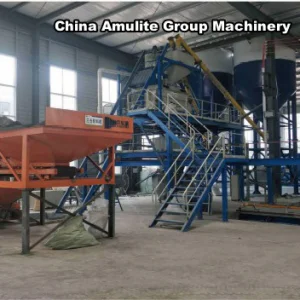
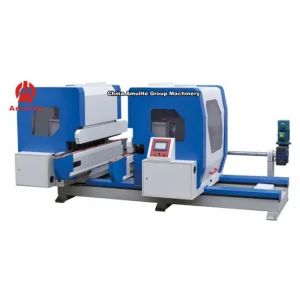
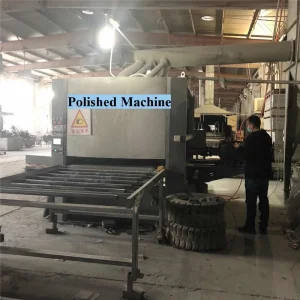
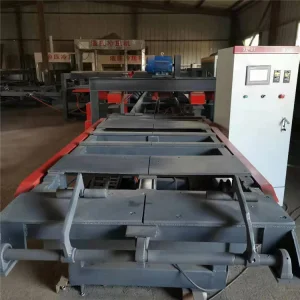
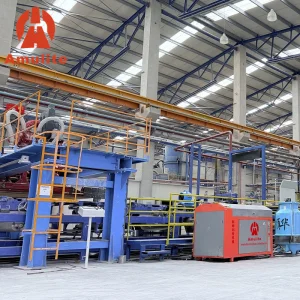
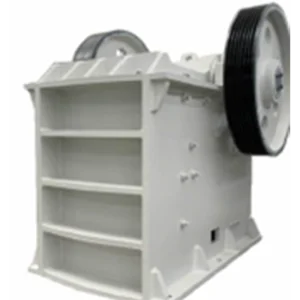
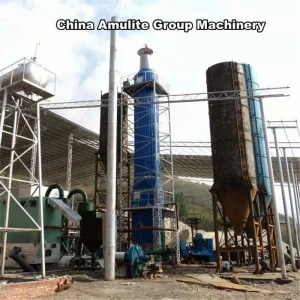
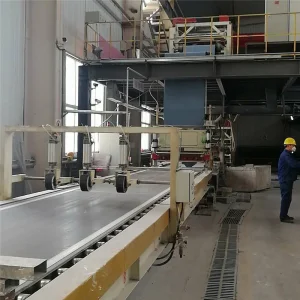
Addressing international supply chain vulnerabilities, multi-material processing challenges, and automated fabrication realities across 60+ industrialized nations.
International EPC contractors require sheet profile tolerances within ±0.05 mm. Modern roller formers utilize multi-stage roll stations calibrated via FEA modeling to eliminate oil canning, residual springback, and cross-sectional deflection.
Modern lines must handle heavy-gauge structural zinc-aluminum steels, prepainted coils, and composite sandwich facings alike, compensating automatically for fluctuating tensile strengths without tool wear degradation.
Procurement directors enforce strict Overall Equipment Effectiveness thresholds (>88%). Integrated digital synchro-shears, non-stop flying punches, and high-speed stackers prevent downstream bottlenecks.
Heavy structural CNC fabrication, induction heat treatment, and precision assembly lines.
Fully engineered commercial lines commissioned across global manufacturing hubs.
Specialized in mechanical roll profiling, hydraulic controls, PLC firmware, and process chemistry.
Active operating plants complying with North American UL, EU CE, and GCC standards.
Bridging heavy mechanical metal forming with advanced mineral substrate engineering for complete facade, roofing, and wall panel automation.
Designed with Cr12MoV vacuum-quenched rollers, micro-adjustable side stands, and heavy gear train transmissions for continuous manufacturing of standing seams, C/Z purlins, and deck profiles with zero line chatter.
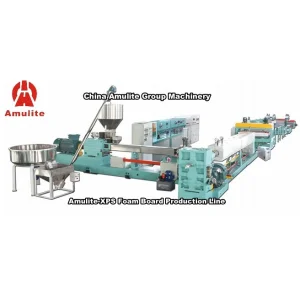
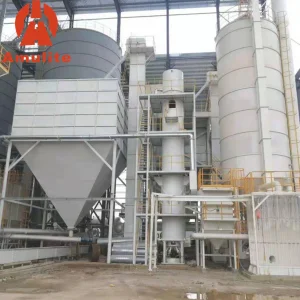
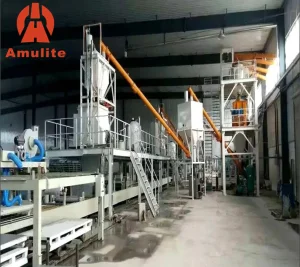
Direct inline sync with autoclaved fiber cement board, calcium silicate plants, and XPS insulation foam lines. Automated synchronization creates unified composite exterior claddings and structural SIPs.
Edge milling, four-side diamond saws, auto-stacking gantry robots, and automated strapping lines. Eliminates physical contact handling and protects delicate pre-coated architectural surfaces.
Our strategic engineering path for next-generation roller formers and board manufacturing systems from 2026 through 2030.
Continuous optical measurement of incoming raw coil strip thickness and curvature, adjusting hydraulic servo roll gaps dynamically within 5 milliseconds.
Vibration and thermal sensor nodes placed on roller bearings and gearbox pinions calculate mechanical fatigue life, preventing unexpected factory shutdowns.
Regenerative variable frequency drives on heavy roller shafts harness braking energy during deceleration, reducing plant power draws by up to 18.5%.
Virtual hardware-in-the-loop (HIL) PLC simulation enables overseas engineers to configure, test, and accept custom tooling dies prior to physical equipment export.
Ensuring zero operational disruption through rigorous safety mandates, regional engineering field units, and certified metallurgical standards.
All electrical architectures comply with EN 60204-1 and ISO 12100 safety codes. Autoclaves and pressure vessels are certified to ASME Section VIII and EU PED directives with third-party verification.
Dedicated field engineering teams stationed across Southeast Asia, the Middle East, Central Asia, and Latin America deliver rapid on-site commissioning, foundation layout verification, and staff training.
Critical components rely globally on Tier-1 brands: Siemens S7-1500 PLC systems, Schneider low-voltage switchgear, SEW-Eurodrive geared reducers, and Yuken hydraulics for easy replacement anywhere.
Key architectural metrics comparing standardized industrial roller former configurations for modern building sheet manufacturing.
| Technical Parameter | Standard Duty Series | Heavy-Duty Industrial Series | Continuous Composite Line |
|---|---|---|---|
| Raw Material Scope | Galvanized Steel, PPGI (0.3–0.8 mm) | High-Tensile Structural Steel (0.8–2.5 mm) | Metal Facings + Rigid Core Panels |
| Forming Speed | 15 – 25 m/min (flying cut) | 25 – 45 m/min (servo synchronized) | 6 – 15 m/min (continuous laminate) |
| Roll Station Design | 14 – 18 Stations (Cast Iron Stands) | 22 – 32 Stations (Solid Steel Wallboard) | Multi-Stage Dual Belt Roller Former |
| Shaft & Tooling Material | 45# Carbon Steel, Hard Chrome Plated | Cr12MoV, Vacuum Heat Treated (HRC 58-62) | Alloy Steel with Precision Mirror Polish |
| Drive & Automation | Chain / Sprocket, Delta PLC | Precision Gearbox / Cardan Shaft, Siemens PLC | Multi-Axis Synchronous Servo Drive |
Detailed procurement and engineering answers straight from our process design specialists.
We use multi-pass incremental flower pattern design along with FEA simulation software. By spreading sheet bend angles gradually over additional forming stands and integrating adjustable anti-crown concave/convex intermediate rolls, transverse residual stresses in the sheet are eliminated.
Standard equipment fabrication takes between 90 and 150 days depending on tooling complexity and hydraulic options. Mechanical erection requires 30 to 60 days on site, accompanied by 15 to 30 days of cold dry runs and live material commissioning guided by our resident field engineers.
Yes. Every line includes standard industrial Profinet, EtherCAT, and OPC-UA communication protocols. Real-time length feedback, stack counting, and automated bundle transfers can be tied directly to upstream ERP or downstream pallet wrap stations.
Before factory dispatch, customer-supplied sheet coils or mineral binders are laboratory tested for yield point, tensile elongation, and grain texture. Tooling die clearances and variable speed acceleration profiles are then tailored specifically to the regional supply chain.
Complete production systems for insulated architectural panels, non-asbestos sheets, flexible tile skins, and high-density AAC block plants.