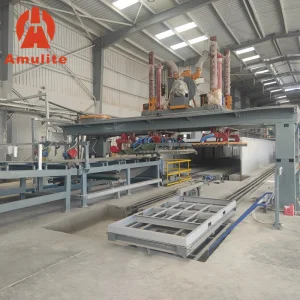
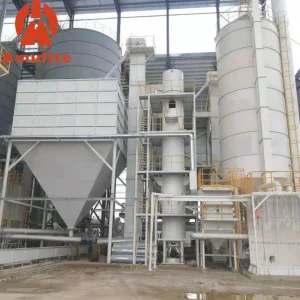
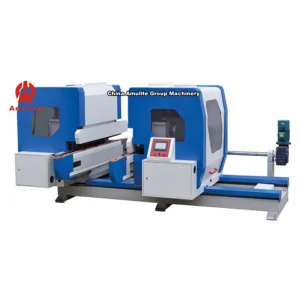
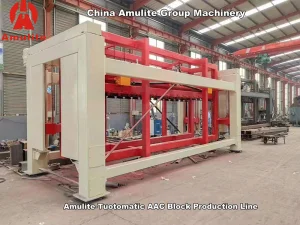
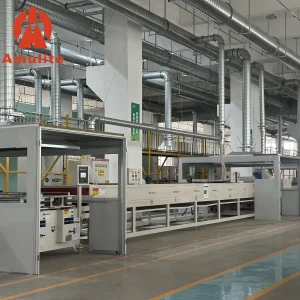
Precision-engineered machinery lines designed for high-density sheet formation, continuous extrusion, and automated stacking.
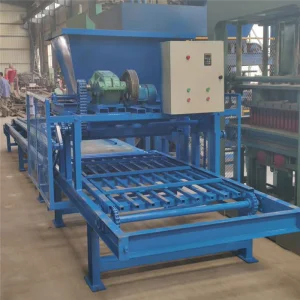
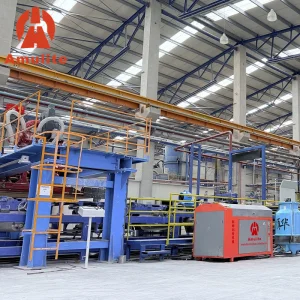
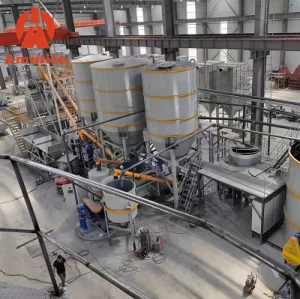
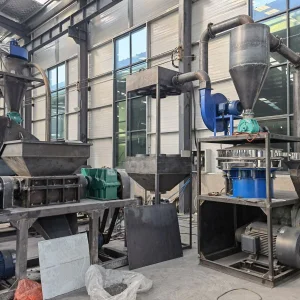
Architectural transformation demands high-density, fireproof, and eco-friendly building boards. Modern manufacturing relies on automated sheet lines to deliver structural integrity and high throughput.
In the contemporary landscape of global construction and industrial manufacturing, the demand for high-quality sheets production lines (often searched as sheets ion line supplier & factory) has undergone a structural paradigm shift. As modern architectural codes mandate strict non-combustibility, superior moisture resistance, lightweight acoustic insulation, and rapid prefabrication capabilities, industrial investors can no longer rely on legacy batch-mixing production methods.
When evaluating a tier-1 sheet machine line manufacturer, enterprise procurement teams must dissect the underlying chemical-mechanical process routes. The two primary paradigms dominating the global fiber cement board and calcium silicate sheet industries are:
Ideal for high-density, thin architectural cladding (4mm to 20mm). Utilizing multiple rotating screen cylinders in slurry vats, micro-layers of cementitious fiber slurry are continuously deposited onto a moving felt belt, dewatered under high vacuum suction, and accumulated on a calendar forming roll until precise thickness is achieved.
Optimized for high-thickness, heavy-duty building boards (12mm to 30mm+) and medium-density calcium silicate panels. Slurry is poured uniformly via an adjustable feed box directly onto a dewatering wire felt, offering higher volumetric throughput and reduced fiber alignment anisotropy.
Vertical integration, heavy industrial CNC fabrication capabilities, and unmatched cost-to-performance ratios make Chinese equipment manufacturers the prime choice for building material machinery.
Unlike regional integrators that outsource critical sub-assemblies, advanced China plants feature 100,000 m² heavy-fabrication bays equipped with 10-meter CNC gantry milling machines, automated robotic welding cells, and dynamic balancing test rigs for forming cylinders.
Direct proximity to world-class industrial steel mills, pressure vessel forging facilities, and PLC component distribution hubs allows Chinese suppliers to deliver complete turnkey lines at 35% to 50% lower capital expenditure (CAPEX) than European alternatives.
Integrated engineering taskforces enable project turnaround times from initial plant civil drawing layout to machine delivery in 90 to 120 days, backed by resident engineering crews deployed directly to overseas job sites for commissioning.
| Performance Metrics | Legacy Batch System | Standard Import Line | Amulite Next-Gen Automated Line |
|---|---|---|---|
| Annual Production Yield | 1.5M - 3M m² | 5M - 10M m² | 10M - 30M m² / Year |
| Thickness Deviation Tolerance | ±0.8 mm | ±0.3 mm | ±0.1 mm (Laser Monitored) |
| Raw Material Utilization Efficiency | 88% | 94% | 98.6% (Zero Slurry Waste Recycling) |
| Autoclave Energy Recovery Rate | 12% | 25% | 42% Multi-Stage Thermal Loop |
| Automation Level (Labor Needs) | 28 Operators / Shift | 14 Operators / Shift | 5 - 7 Operators (Fully Automated PLC) |
For international building material conglomerates, purchasing a board production line is a 20-year capital investment. Success requires evaluating Total Cost of Ownership (TCO) across four critical lifecycle dimensions.
A truly high-performance sheet line must accept locally sourced raw materials without requiring expensive imported additives. Our systems are engineered to accommodate diverse binder matrices:
Thermal energy consumed during autoclave steam curing accounts for up to 35% of operational expenditure (OPEX). Modern line engineering incorporates closed-loop waste heat recovery:
How intelligent sensors, cloud SCADA systems, and green cement replacement technology are redefining industrial building board production.
Automated viscosity and solid-to-liquid ratio meters monitor slurry consistency inside the vat in real-time, automatically modulating pulp dosing pumps to guarantee uniform sheet formation.
Lines are optimized for low-carbon geopolymers, calcined clay, and blast furnace slag solids—reducing the embodied carbon footprint of finished building panels by up to 60%.
High-speed gantry pneumatic suction arms handle green sheets without edge chipping, seamlessly stacking boards onto curing pallets for automated forklift or AGV transfer.
From extreme weather exterior rain-screen facades to sound-dampening interior partition walls, board versatility drives commercial demand.
High-density fiber cement sheets (density >1.4 g/cm³) manufactured on our lines undergo 10-hour steam autoclaving at 1.2 MPa pressure. This hydrothermal reaction converts free lime and quartz sand into stable tobermorite crystalline structures, providing zero moisture expansion, A1 fire rating (EN 13501-1), and resistance to freeze-thaw cycles in extreme northern climates.
Medium-density calcium silicate sheets produced via our lines serve as prime structural substrates for commercial skyscrapers, hospital cleanrooms, and subterranean transit hubs. Offering superior screw-holding strength and mold resistance, these sheets replace conventional drywall in high-humidity zones.
Heavy-duty fiber cement flooring boards (20mm to 30mm thick) reinforced with multi-layer fiber networks deliver bending flexural strength exceeding 28 MPa. They provide structural floor decking for modular housing, light-steel villas, and industrial mezzanines.
By integrating our fiber cement sheet lines with continuous core-filling foam injection systems, factories produce lightweight composite sandwich panels used for rapid-erection perimeter walls and cold-storage insulated building envelopes.
Ensuring seamless installation, international electrical compliance, and lifetime spare-part availability across North America, Europe, Asia, and Africa.
Control systems fully comply with CE, UL, and CSA standards. Built with Siemens S7-1500 PLC cores, Schneider electrical contactors, and dual-channel safety relay interlocks.
All curing autoclaves carry ASME Stamp, PED (2014/68/EU), and EAC certifications, backed by X-ray non-destructive testing (NDT) on 100% of structural weld seams.
Senior mechanical, electrical, and raw material chemical formulation engineers remain on-site throughout civil foundation verification, equipment positioning, and commercial trial runs.
Clear, expert answers to key technical questions when acquiring a high-quality sheet production line.
Explore our expanded machinery portfolio, ranging from roof sheet lines and perlite equipment to block forming systems and recycling machinery.