Explore high-capacity continuous casting, forming, and processing systems engineered for modern industrial facilities.
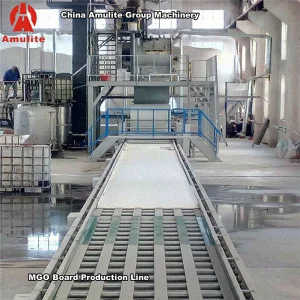
OEM China Amulite Group MGO Board Production Line Factories, Product
View Equipment Specs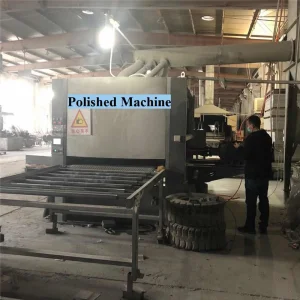
China Single Face Polished Machine Manufacturers, Suppliers
View Equipment Specs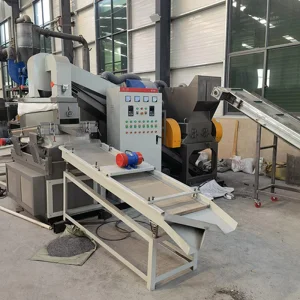
Buy Copper Wire Recycling Machine Companies, Products
View Equipment Specs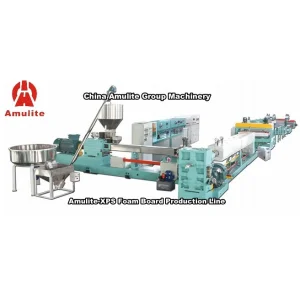
OEM Amulite CO2 XPS Foam Board Production Line Factory, Factories
View Equipment Specs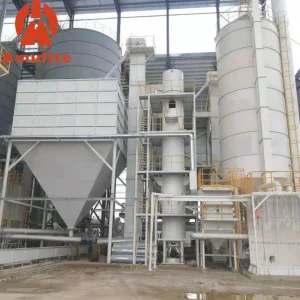
China Expanded perlite production line Supplier, Products
View Equipment Specs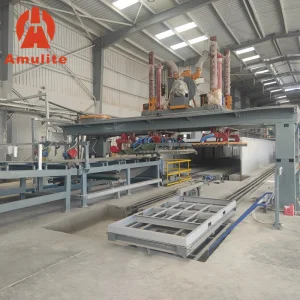
China Non-Asbestos/Asbestos Cement Corrugated Roof Sheets Production Line Company, Product
View Equipment Specs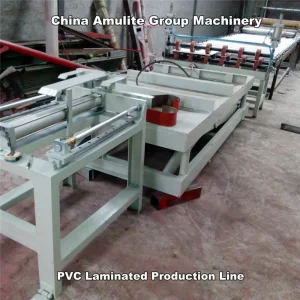
China PVC Laminated Production Line Factories, Products
View Equipment Specs
Famous Amulite AAC Blocks Customized Automatic Machines- 4.2m Manufacturers, Company
View Equipment SpecsAnalyzing macroeconomic drivers, cold chain expansion, and energy efficiency mandates reshaping industrial construction.
The global surge in temperature-controlled supply chains—driven by biologics manufacturing, fresh food logistics, and e-commerce fulfillment centers—has intensified the demand for high-performance polyurethane (PUR) and polyisocyanurate (PIR) insulated panels. Corporate buyers require panels that maintain strict thermal integrity between -40°C and +8°C while eliminating thermal bridging risks.
Industrial developers are transitioning to modular off-site construction to reduce field labor costs and erection timelines. High-precision PU sandwich panels serve as complete wall, ceiling, and roofing envelopes, offering structural rigidity, weather tightness, and rapid mechanical installation via interlocking joint profiles.
Stringent regional regulations—such as Europe's Energy Performance of Buildings Directive (EPBD) and ASHRAE 90.1 in North America—mandate lower operational carbon footprints. Polyurethane core insulation yields the highest R-value per unit thickness among commercially available structural building materials, maximizing usable internal space while fulfilling net-zero carbon targets.
When engineering large-scale commercial facilities, selecting the correct core insulation impacts both initial capital expenditure (CAPEX) and long-term operational expenditure (OPEX). Below is an engineering comparison matrix:
| Thermal & Physical Property | Polyisocyanurate (PIR) Panel | Standard Polyurethane (PUR) | Expanded Polystyrene (EPS) | Rockwool / Mineral Wool |
|---|---|---|---|---|
| Thermal Conductivity ($\lambda$) | 0.018 - 0.021 W/mK | 0.022 - 0.024 W/mK | 0.035 - 0.040 W/mK | 0.038 - 0.044 W/mK |
| Fire Reaction Class (EN 13501-1) | B-s1, d0 (Flame Retardant) | B-s2, d0 / C-s2, d0 | E / F (Combustible) | A1 / A2 (Non-Combustible) |
| Core Density ($\text{kg/m}^3$) | 40 - 44 kg/m³ | 38 - 42 kg/m³ | 15 - 25 kg/m³ | 100 - 140 kg/m³ |
| Water Vapor Permeability | > 98% Closed-Cell (Impervious) | > 95% Closed-Cell | Open Cell Structure | Hydrophilic (Absorbs Moisture) |
| Structural Weight to Insulation Ratio | Optimal High Efficiency | High Efficiency | Moderate Efficiency | Heavy / Structural Loading Required |
Understanding the engineering architecture inside modern high-quality PU sandwich panel factories.
Leading manufacturing lines utilize high-pressure metering units equipped with multi-component mixing heads. Cyclopentane or n-pentane is deployed as an environmentally compliant, Zero-ODP (Ozone Depletion Potential) blowing agent. Precise chemical dosing ensures consistent cell nucleation, uniform density ($40 \pm 2\text{ kg/m}^3$), and superior dimensional stability under extreme thermal stress.
The core structural integrity of a PU panel depends on the polymerization process inside the double-belt press. Advanced continuous production lines utilize caterpillar belt lengths ranging from 24 to 42 meters, operating under controlled temperatures ($40^\circ\text{C}\text{--}65^\circ\text{C}$). This guarantees optimal curing time, flat metal facings, and strong chemical bonding without adhesive delamination.
Factory precision relies on integrated high-speed band saws, cooling index tables, and automatic stacking units. CNC edge-profiling equipment cuts labyrinth tongue-and-groove joint geometry with double air-tight sealant gaskets, eliminating thermal bridges during installation.
Tailored structural configurations designed for extreme operational environments.
Freezer rooms operating down to -35°C demand PIR sandwich panels with thicknesses up to 200mm. Integrated labyrinths equipped with heated gasket joints prevent ice formation and vapor diffusion, while specialized anti-corrosive prepainted galvanized steel (PPGI) or stainless steel (SS 304) facings resist harsh sanitization chemicals.
Pharmaceutical, semiconductor, and biotechnology cleanroom modules require smooth, non-shedding wall surfaces. Concealed-fix PU panels feature flush joints with anti-bacterial PVDF coatings, resisting airborne particulate adhesion and complying with ISO 14644 cleanroom standards.
Commercial warehouses and distribution centers require long-span roof and wall cladding solutions. High-density PIR cores combined with micro-ribbed or architectural flat steel skins provide high flexural modulus, allowing wider purlin spacing and reduced structural steel sub-frame requirements.
Navigating global building codes, fire safety certifications, and supply chain quality control.
For corporate enterprise procurement, fire performance is a primary structural compliance criterion. Polyisocyanurate (PIR) formulations incorporate cyclic ring structures that form a protective insulating char layer when exposed to open flame. Top-tier manufacturing plants produce panels tested to international fire standards:
Exporting PU panels worldwide requires localization support to ensure panels withstand site-specific mechanical loads. Leading manufacturers provide complete structural engineering calculations detailing wind load resistance (up to 3.0 kPa), snow load capacities, and thermal movement allowance based on structural purlin spans.
Quality assurance includes Factory Production Control (FPC) verified under ISO 9001, ISO 14001, and CE Marking (EN 14509), ensuring batch-to-batch consistency in tensile bond strength ($\ge 0.10\text{ MPa}$) and compressive strength ($\ge 140\text{ kPa}$).
Direct responses to key technical procurement questions posed by structural engineers, EPC contractors, and global buyers.
While both are polyurethane insulation foams, PIR (Polyisocyanurate) is synthesized using an excess of isocyanate (MDI) reacted with polyol at higher index ratios (typically 250–350%). This creates strong isocyanurate ring structures within the polymer matrix. Consequently, PIR exhibits significantly higher fire resistance (EN 13501-1 B-s1,d0), lower smoke density, and superior dimensional stability at high temperatures compared to standard PUR (index 100–150%).
Panel thickness calculation depends on internal operating temperature, external ambient conditions, relative humidity, and target thermal transmission ($U$-value). Standard engineering guidelines suggest: 80mm–100mm for chill rooms (0°C to +5°C), 120mm–150mm for freezer rooms (-18°C to -25°C), and 180mm–200mm+ for blast freezers (-35°C to -40°C). Selecting the correct thickness keeps total thermal transfer below $8\text{--}10\text{ W/m}^2$, preventing refrigeration compressor overwork and avoiding wall condensation.
When conducting technical vendor audits, evaluate five core capabilities: (1) Length and heat stability of the double-belt caterpillar press, (2) Multi-component high-pressure pentane foaming dosing precision, (3) In-house laboratory testing equipment for shear strength, compression strength, and thermal conductivity ($\lambda$-meter), (4) Automated continuous edge milling and gasket application, and (5) Certification records for FM 4880, CE (EN 14509), and ISO 9001 quality management.
Thermal bridging is eliminated through precision-engineered joint profiles, such as labyrinth tongue-and-groove systems, secret-fix male/female joints, and eccentric cam-lock mechanisms. During installation, continuous butyl sealant, factory-applied neoprene gaskets, or expanding polyurethane foam are injected into the joint core, creating a continuous thermal break and hermetic vapor seal across the entire envelope.
With high-quality prepainted galvanized steel (e.g., 25-micron HDP or PVDF coating on 0.5mm–0.7mm steel facings), high-density closed-cell PIR sandwich panels feature a designed structural service life exceeding 30 to 50 years. The core foam remains chemically inert, maintaining over 90% of its initial thermal insulation capacity throughout its operating lifetime when protected from prolonged UV exposure and direct water ingress.
Comprehensive plant solutions engineered for high performance, reliability, and automated panel production.
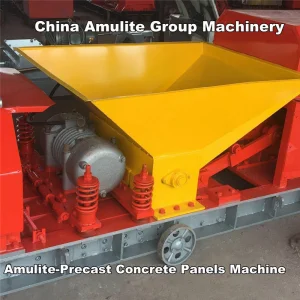
Best Precast Concrete Products Machinery Manufacturers, Products
View Equipment Specs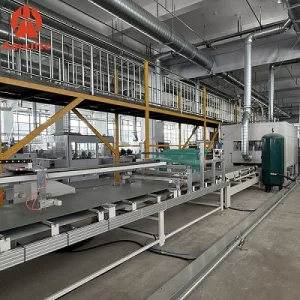
Best Flexible Clay Ceramic Tile Production Line Manufacturer, Companies
View Equipment Specs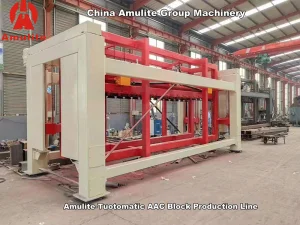
High-Quality Amulite Automatic AAC Block Production Line Manufacturers, Companies
View Equipment Specs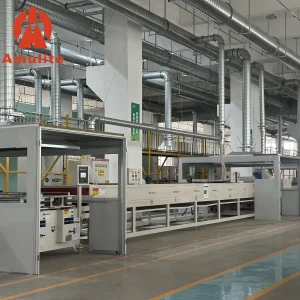
OEM UV Coating/Painting Production Line Manufacturer, Factories
View Equipment Specs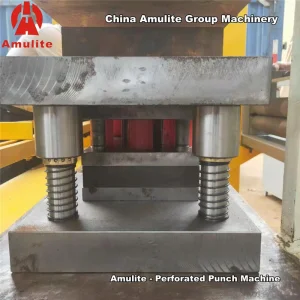
High-Quality Amulite Perforated Punch Machine System Technical Data Manufacturer, Suppliers
View Equipment Specs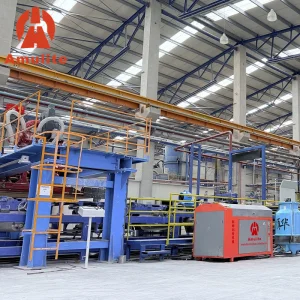
China Fiber Cement Board /Calcium Silicate Board Production Line Factory, Companies
View Equipment Specs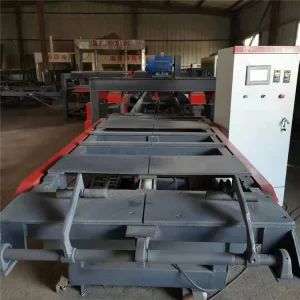
OEM 1300 II Type Automatic Four Side Edge Cutting Machine Factory, Companies
View Equipment Specs
Buy Stone Hammer Crusher 6CX Euro Series Jaw Crusher Company, Product
View Equipment Specs