Explore our premium industrial production lines engineered for maximum throughput, low energy consumption, and high operational reliability.
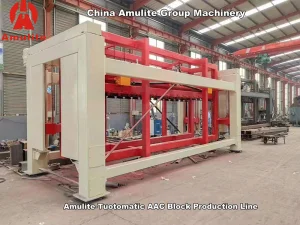
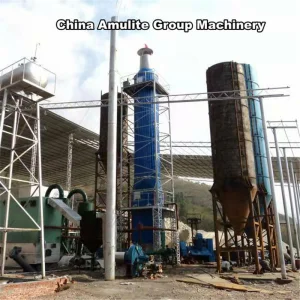
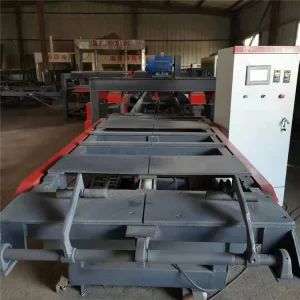
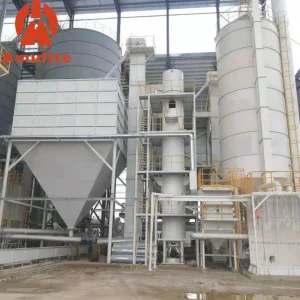
An in-depth analysis of worldwide production capacity, supply chain shifts, and structural demand drivers reshaping modern building material infrastructure.
The global fiber cement board machinery industry stands at the nexus of modern civil engineering, rapid urban evolution, and stringent environmental governance. Fiber cement boards—composed of Ordinary Portland Cement (OPC), silica sand (or quartz powder), organic cellulose pulp, synthetic reinforcing fibers (such as Polyvinyl Alcohol/PVA), and specialized chemical additives—have increasingly replaced traditional gypsum panels, plywood, and brickwork across residential, commercial, and industrial construction sectors worldwide. Consequently, the demand for advanced, automated fiber cement board machinery is experiencing unprecedented expansion, expanding at an estimated Compound Annual Growth Rate (CAGR) of over 6.8% globally.
In high-growth regions throughout Southeast Asia, the Middle East, Latin America, and Africa, accelerating urbanization combined with mandates for fire-resistant, termite-proof, and weather-resilient building envelopes has driven plant operators to transition from legacy manual batch operations to continuous high-speed Hatschek forming systems. Concurrently, strict environmental regulations in North America and Western Europe demanding A1 non-combustibility (BS EN 13501-1) and zero-asbestos compliance have prompted widespread recapitalization of legacy factories.
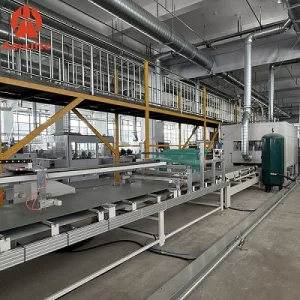
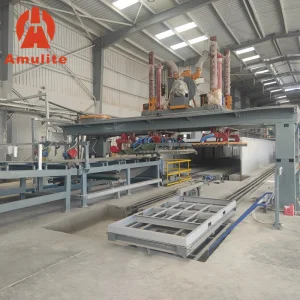
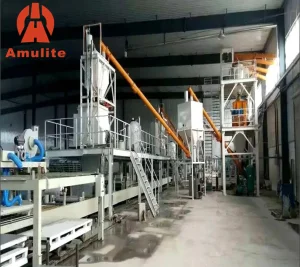
Modern equipment manufacturing has evolved beyond isolated mechanical units into fully integrated, cyber-physical production lines. Premium manufacturers now deliver turnkey infrastructure incorporating micro-dosing systems, high-shear slurry mixers, automated vacuum dewatering, multi-cylinder sheet accumulators, hydraulic stackers, high-pressure steam autoclaves, and high-speed CNC trimming systems connected via centralized Programmable Logic Controller (PLC) architecture.
Global regulatory prohibitions against chrysotile asbestos have mandated the implementation of advanced pulping, fiber refining, and synthetic PVA/PE fiber dispersing mechanisms within the wet-end slurry phase.
Off-site construction and volumetric modular building demand ultra-flat, high-density fiber cement boards for light-gauge steel (LGS) wall frames, flooring substrates, and external siding systems.
Modern plant designs integrate closed-loop water filtration, heat recovery heat exchangers from autoclave steam blowdowns, and optimized slurry dewatering to cut thermal consumption per unit board area.
A rigorous comparative engineering study on slurry dynamics, web formation, vacuum dewatering, and hydro-thermal curing regimes.
The manufacturing process of fiber cement panels is fundamentally governed by hydraulic slurry deposition, mechanical filtration, and cementitious matrix hydration. Selecting the appropriate machinery configuration depends directly on target density, board thickness range, production volume, and locally available raw materials.
The Hatschek process remains the world standard for high-volume, premium-grade fiber cement board production. Dilute slurry (solids content of 8%–12%) containing cement, finely milled silica flour, cellulose pulp, and synthetic fibers is fed into multiple agitation vats (typically 3 to 5 vats in series). Rotating wire-mesh sieve cylinders capture solid particles, forming a micro-thin film layer (approx. 0.2 mm to 0.3 mm) which is transferred onto a continuous running felt belt.
As the accumulated film passes over high-vacuum suction boxes, water is extracted rapidly. The film is continuously wound onto a heavy-duty forming roll until the exact engineered board thickness (e.g., 6mm, 8mm, 12mm, or 18mm) is reached. The wet sheet is then cut automatically by an ultra-fast flying cutter blade, dropped onto steel carrier plates, and transferred to pre-curing chambers.
In contrast to immersion cylinders, the Flow-On method dispenses slurry directly onto the forming belt through a pressurized headbox equipped with adjustable slurry distribution nozzles. This technique is particularly advantageous for high-density boards containing larger aggregate sizes or specialized mineral additives where sieve cylinder blinding would occur in standard Hatschek vats.
A pivotal differentiation among machinery factories lies in the curing infrastructure provided. Understanding the microstructural chemistry explains the massive performance variation between non-autoclaved and autoclaved boards:
| Performance Parameter | Autoclaved Fiber Cement Board Line | Air-Cured (Non-Autoclaved) Line |
|---|---|---|
| Primary Raw Materials | OPC Cement + Fine Quartz Sand (SiO₂ > 90%) + Pulp + PVA | OPC Cement + Fly Ash / Limestone Powder + Pulp + PVA |
| Curing Regime | High-pressure saturated steam (12 bar / 185°C – 195°C for 10–12h) | Ambient humidity & temperature pre-curing (50°C – 70°C for 24h) |
| Crystalline Phase | Tobermorite ($Ca_5Si_6O(OH)_5 \cdot 4H_2O$) formation | Amorphous Calcium Silicate Hydrate (C-S-H) gel phase |
| Dimensional Stability | Ultra-low moisture movement (< 0.08%), zero swelling | Moderate moisture expansion (< 0.25%), higher water absorption |
| Flexural Strength (MOR) | High (Category 3/4: ≥ 16 MPa to 24 MPa) | Medium (Category 1/2: ≥ 9 MPa to 14 MPa) |
| Primary Applications | Exterior architectural cladding, curtain walls, high-load subfloors | Interior ceiling tiles, partition walls, temporary hoardings |
Under saturated steam conditions at 12 bar pressure and 190°C inside the autoclave, finely ground quartz silica reacts with the calcium hydroxide [$Ca(OH)_2$] liberated by hydrated Portland cement. This hydrothermal reaction converts brittle hydrated lime into crystalline 1.1 nm Tobermorite. Crystalline Tobermorite imparts exceptional dimensional stability, high flexural strength, and total immunity to moisture-induced degradation.
How versatile fiber cement board plant machinery caters to extreme weather conditions, seismic performance metrics, and specialized architectural finishes worldwide.
In Southeast Asian and Caribbean climates, boards must resist continuous humidity, rot, and fungi. Machinery engineered with deep vacuum dewatering and autoclaving ensures non-porous boards with water absorption below 20%.
In active fault lines (e.g., Japan, Turkey, Chile), light steel frame housing requires lightweight yet tough substrate boards. Amulite lines feature inline edge-profiling and tongue-and-groove milling units for fast interlocking wall assembly.
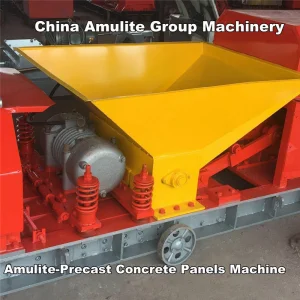
Commercial skyscrapers demand 2 to 4-hour fire barrier partitions (ASTM E119 / EN 1364). Our press machinery incorporates 7000-ton hydraulic post-pressing, boosting dry board density up to 1.7 g/cm³ for extreme fire resistance.
Pioneering advancements in AI-driven process control, low-carbon geopolymer binder formulations, and automated material handling.
As cement manufacturers strive for net-zero carbon targets, machinery engineering must adapt to alternative cementitious binders. Future fiber cement plants are being designed to handle Limestone Calcined Clay Cement (LC3) and alkali-activated fly ash/slag geopolymers. These alternative matrices require specialized slurry dispersion chemistry, ultrasonic agitation, and modified curing temperature profiles that reduce embedded CO₂ by up to 45% compared to pure OPC boards.
Next-generation Hatschek lines incorporate real-time laser profile scanners and nuclear/microwave moisture sensors positioned immediately after the forming cylinder and pre-cutter. Sensor data is fed back directly into the PLC controlling slurry feed valves, cylinder rotational speeds, and vacuum levels. This eliminates thickness variations across the board width, achieving tighter tolerances (±0.1mm) and reducing raw material waste by 3.5% annually.
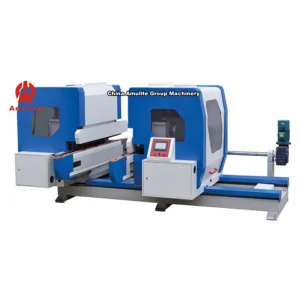
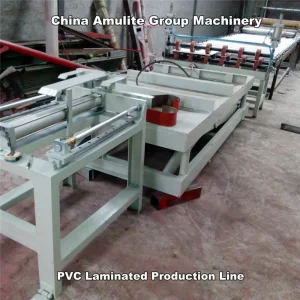
Industry 4.0 automation extends past the wet-end and autoclaves. Modern factories feature fully integrated robotic arms for green-board handling, automatic steel plate oiling/cleaning, and end-of-line high-speed UV coating, wood-grain embossing, and water-repellent silane spraying lines.
Critical operational answers curated by senior process engineers and turnkey equipment project directors.
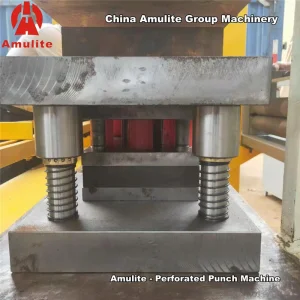
Explore specialized cutting, punching, wall panel, and composite material processing machinery built for global industrial deployment.