Engineered for high throughput, minimal operational downtime, and precise material density control. Discover our premier machinery series for global infrastructure developments.
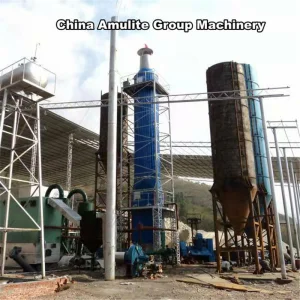
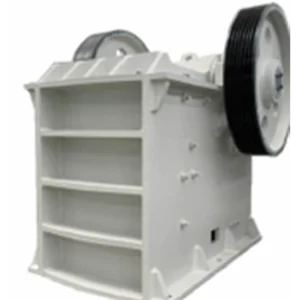
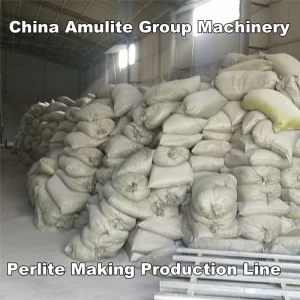
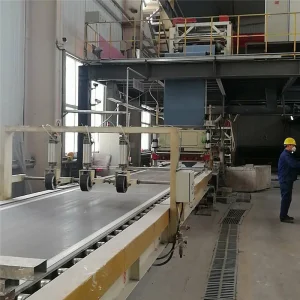
The global construction equipment market is experiencing a profound paradigm shift. Driven by rapid urbanization, massive infrastructure investments across emerging economies, and stringent international carbon-neutrality mandates, modern building projects no longer tolerate conventional, energy-intensive fabrication methodologies. Advanced Construction Material Making Machines represent the operational backbone of modern sustainable architecture, enabling high-output manufacturing of fiber cement boards, calcium silicate panels, autoclaved aerated concrete (AAC) blocks, and eco-friendly insulating composite walls.
Industrial demand currently prioritizes equipment that achieves three non-negotiable operational benchmarks: zero-emissions manufacturing capability, material efficiency through closed-loop recycling, and hyper-automated continuous forming processes. As EPC (Engineering, Procurement, and Construction) contractors and large-scale industrial material manufacturers seek to decarbonize their supply chains, investment in modular, high-yield, turn-key processing lines has accelerated exponentially.
Rapid urban migration across Southeast Asia, the Middle East, and Latin America demands high-speed modular building panels. Lightweight wall panels produced by automatic extruded lines reduce dead-weight loads in high-rise structures by up to 40%, significantly cutting foundational concrete consumption.
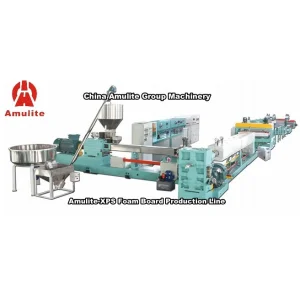
Regulators worldwide are restricting energy-heavy materials. Modern plant configurations incorporate waste heat recovery systems, flue gas desulfurization (FGD) gypsum utilization, and zero-carbon CO2 foaming agents for XPS thermal insulation panel production lines.
Fluctuating global shipping costs have compelled material buyers to shift from importing finished cladding boards to establishing localized manufacturing plants. Enterprise buyers rely on OEM/ODM machine vendors to deliver localized production lines tailored to regional raw material availability.
Procuring industrial-scale manufacturing equipment requires a sophisticated valuation model beyond initial capital expenditure (CapEx). B2B enterprise procurement officers and plant directors must evaluate line throughput, electrical efficiency per unit output, maintenance lifecycle costs, and raw material formulation adaptability.
A rigorous Total Cost of Ownership (TCO) calculation for board and panel plants spans four critical vectors:
| Evaluation Parameter | Legacy Machinery Baseline | Next-Gen Automated Machinery | Operational Impact & ROI Factor |
|---|---|---|---|
| Energy Consumption Rate | 120-150 kWh / ton of board output | 75-95 kWh / ton (Variable Frequency Driven) | Reduces annual utility overheads by up to 35%. |
| Raw Material Versatility | Requires virgin cement & premium silica | Supports fly ash, slag, perlite & recycled aggregates | Cuts raw material procurement costs by 20–40%. |
| Labor Intensity & Automation | 15-20 operators per shift required | 3-5 supervisory operators (PLC controlled) | Mitigates labor risks and human operational error. |
| Defect Rate & Scrap Yield | 3.5% to 5.0% post-curing waste | Under 0.5% waste with auto-rejection loop | Protects gross profit margins on high-volume runs. |
Our machine architectures utilize closed-loop hydration, automated slurry dosing, and regenerative heat exchangers in drying tunnels. Over a 10-year operational life, the reduced energy usage far outweighs initial machine procurement costs.
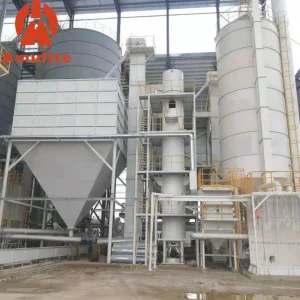
Lines are designed with modular expansion ports. Factories can initiate production at 2 million m²/year capacity and scale up to 10 million m²/year by adding inline autoclaves and automated stacking units without re-engineering the primary mixing phase.
Standardizing critical pneumatic, hydraulic, and electrical components with globally accessible brands (e.g., Siemens PLC, Schneider Electric, Festo Pneumatics) guarantees rapid spare part availability anywhere in the world.
Modern building material manufacturing requires specialized production equipment tailored to precise material chemistry, hydration dynamics, and curing mechanics. Below is an engineering overview of key equipment lines deployed across world-class material manufacturing factories.
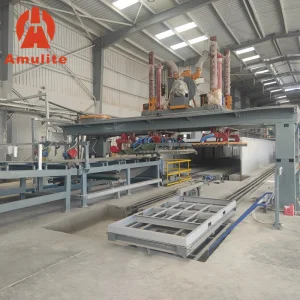
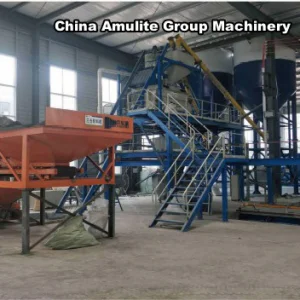
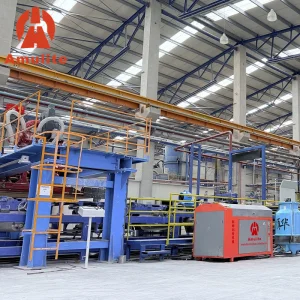
Utilizing high-precision Hatschek continuous wet-process technology or flow-on methods, these lines turn slurry (composed of Portland cement, silica sand, cellulose fibers, and additives) into high-density structural boards. Key modules include slurry distribution vats, vacuum dewatering belts, hydraulic auto-stackers, and high-pressure steam autoclaves achieving 1.2–1.6 g/cm³ final product density.
High-speed plasterboard manufacturing systems integrate continuous powder dosing, water-to-plaster ratio controllers, high-shear pin mixers, double-belt forming lines, and multi-deck drying tunnels. Matched with raw gypsum rock calcination units, these lines deliver lightweight, fire-resistant, and acoustic drywall panels at speeds up to 60 meters per minute.
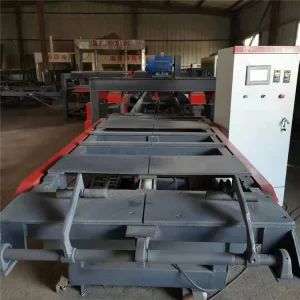
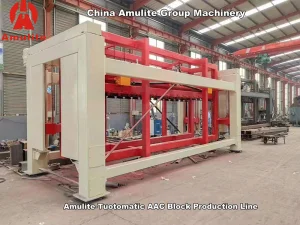
Designed for rapid wall construction, EPS sandwich wall panel lines and Autoclaved Aerated Concrete (AAC) systems turn cement, aluminum powder expanding agents, fly ash, and sand into insulating blocks and panels. Automated wire-cutting machines guarantee dimension tolerances within ±1mm, reducing on-site plastering needs.
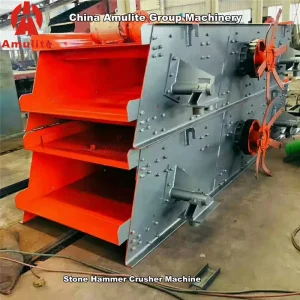
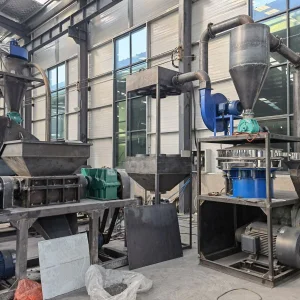
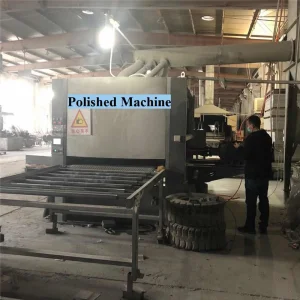
Circular economy solutions including lithium-battery recycling systems, copper wire processing machinery, stone hammer crushers, and single-face surface polishing machines. These systems enable industrial plants to re-process waste streams into high-value mineral fillers and metal resources.
The next decade of building material machinery will be defined by deep digital integration, autonomous quality control, and zero-carbon processing technologies. Equipment manufacturers are evolving from traditional mechanical suppliers into providers of integrated digital industrial ecosystems.
Future-ready lines feature embedded IoT sensors monitoring slurry viscosity, moisture content, thickness variations, and autoclave pressure curves in real time. Closed-loop AI algorithms make micro-adjustments to mixing speeds and dewatering vacuum pressure automatically, eliminating operator error.
Transitioning from steam-intensive curing to carbonation curing mechanisms. Next-gen autoclaves inject industrial waste CO2 into board curing chambers, permanently sequestering carbon dioxide within the calcium silicate matrix while accelerating mineral hardening.
Engineering equipment capable of processing agricultural waste fibers (such as bagasse, rice husk ash, and hemp bast) alongside inorganic binders. Machinery feeds will automatically adjust for organic fiber moisture absorption to produce structural, hyper-insulating structural panels.
Deploying heavy industrial manufacturing assets internationally requires strict adherence to regional electromechanical standards, structural safety codes, and environmental regulations. High-quality machine manufacturing facilities operate under comprehensive total quality management systems (ISO 9001:2015) and deliver factory acceptance testing (FAT) before shipment.
All machinery control cabinets, wiring looms, and high-voltage motors are built in full compliance with European CE Mark directives, North American UL/CSA standards, and ATEX explosion-proof requirements for dust-prone milling areas.
Curing autoclaves and high-pressure steam boilers undergo non-destructive ultrasonic weld inspection, hydrostatic pressure testing, and certification under ASME Section VIII Division 1 and European Pressure Equipment Directive (PED 2014/68/EU).
Expert field engineers oversee civil foundation validation, mechanical assembly, electrical wiring, slurry formulation balancing, and trial-run production. Comprehensive technical documentation and multi-lingual operator training ensure seamless plant handover.
Answers to critical technical, operational, and commercial questions asked by plant managers, project developers, and procurement directors.
A standard turnkey plant order (e.g., 5 million m²/year Fiber Cement Board line) requires approximately 90 to 120 days for custom equipment manufacturing and pre-assembly FAT testing. Shipping takes 30 to 45 days depending on destination port. On-site installation, civil alignment, wiring, and trial-run formulation adjustment require an additional 45 to 60 days. The total timeline from contract signing to commercial output typically ranges between 6 and 8 months.
Yes. Our engineering process lab analyzes your local raw materials (cement grade, silica sand mesh size, fly ash reactivity, cellulose pulp type) prior to manufacturing line components. Machine parameters—such as slurry mixer shear rates, vacuum pump suction capacities, and autoclave curing temperature profiles—are customized to ensure your local raw material matrix achieves target flexural strength (MPa) and water absorption standards.
Air-cured board lines utilize Portland cement hydration over 28 days of humidity curing, producing flexible, durable boards suitable for exterior siding and roofing. Autoclaved lines use high-pressure steam (1.0 MPa at 180°C) to induce a hydrothermal reaction between quartz sand (SiO2) and lime/cement (CaO), forming a crystalline tobermorite matrix in just 12 hours. Autoclaved boards feature higher dimensional stability, lower moisture movement, and enhanced fire resistance (A1 Non-combustible).
We provide comprehensive lifecycle support including: 24/7 remote PLC network diagnostics via encrypted VPN gateways, guaranteed spare parts dispatch within 48 hours, annual engineering maintenance audits on site, and continuous chemical formulation upgrades when launching new product variations (e.g., wood-grain textured panels or ultra-thin ceiling tiles).
Explore our specialized industrial processing equipment, edge cutters, composite panel lines, and high-efficiency crushing units.