The international construction industry is undergoing an unprecedented paradigm shift toward prefabricated building systems, lightweight dry-wall installations, and low-carbon mineral matrices. As urbanization accelerates across global markets—spanning Asia-Pacific, the Middle East, Sub-Saharan Africa, and Latin America—the commercial demand for high-throughput, industrial-scale wall panel production lines has surged. Modern real estate developers and infrastructure EPC contractors no longer accept traditional masonry due to rising labor costs, structural load constraints, and strict thermal efficiency mandates.
As a recognized leader among famous wall panel production line manufacturers and engineering companies, China Amulite Group integrates heavy industrial machinery fabrication, advanced process chemistry, and fully integrated automation. From continuous wet-process Hatschek fiber cement sheet machinery to automated autoclaved aerated concrete (AAC) block lines and EPS cement sandwich panel extruders, establishing an optimized manufacturing facility requires a deep understanding of raw material reactivity, hydration kinematics, thermal curing cycles, and line synchronicity.
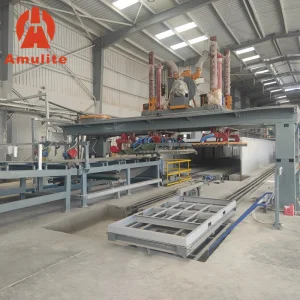
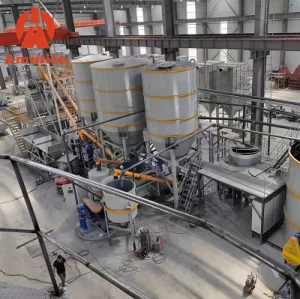
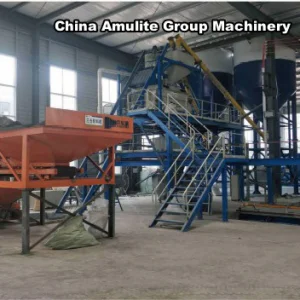
Explore our specialized manufacturing lines and auxiliary processing machinery engineered for maximum yield, structural stability, and seamless operational reliability.
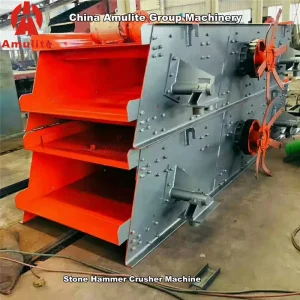
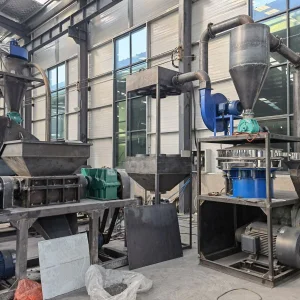
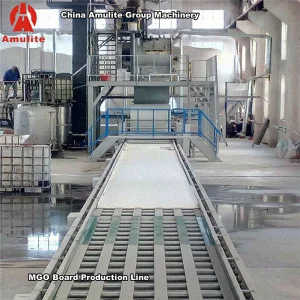
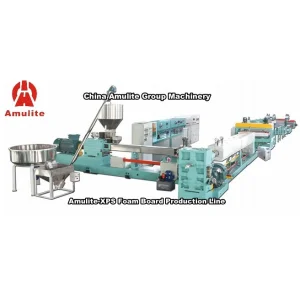
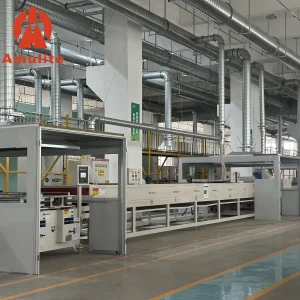
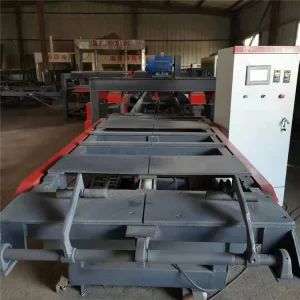
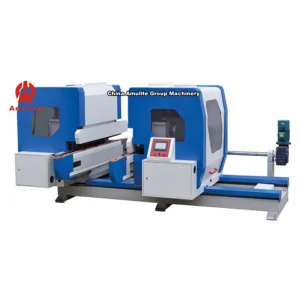
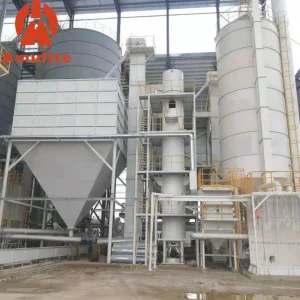
Selecting the appropriate wall panel line technology requires evaluating end-market requirements regarding fire rating (Class A1 non-combustible), acoustic attenuation (STC ratings), density, flexural strength, and moisture resistance. A turnkey plant engineered by Amulite Group addresses these variables through precise chemical dosing and customized process machinery.
Utilizing the continuous Hatschek wet-forming method, raw materials (Portland cement, silica quartz powder, cellulose fibers, and micro-additives) are blended into a uniform slurry (8-12% solids). The slurry is picked up by rotating sieve cylinders, dewatered under vacuum, and wound onto a forming drum to reach specified sheet thicknesses (4mm to 30mm). Hydrothermal synthesis inside high-pressure autoclaves (1.2 MPa, 190°C) forms crystalline Tobermorite matrix structure, ensuring zero warping and permanent structural durability.
Engineered for fast-track modular housing and commercial high-rises. These continuous or vertical-mold production lines laminate dual fiber cement / calcium silicate facing sheets with a core matrix of expandable polystyrene (EPS) beads, Ordinary Portland Cement, sand, and proprietary foaming agents. The resulting compound wall panels offer exceptionally lightweight performance (450–650 kg/m³), superior acoustic insulation, and 4-hour fire endurance ratings.
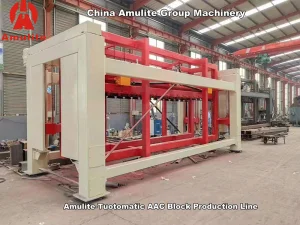
Autoclaved Aerated Concrete (AAC) production lines convert fly ash or silica sand, lime, cement, gypsum, and aluminum powder expansion paste into ultra-lightweight structural blocks and reinforced floor/wall panels. Amulite's fully automated cutting machines deliver ±1mm dimensional accuracy, minimizing mortar usage on construction sites while offering optimal thermal mass performance.
| Panel Technology Type | Primary Raw Materials | Density Range (kg/m³) | Flexural / Strength | Key Application Profile |
|---|---|---|---|---|
| Fiber Cement Sheet (Autoclaved) | Cement, Quartz Sand, Cellulose Pulp | 1,200 – 1,700 | ≥ 16 MPa (Class 4) | Exterior Facades, Wet Area Backerboard, Exterior Cladding |
| EPS Cement Sandwich Panel | EPS Beads, Cement, Sand, Facing Sheets | 450 – 650 | ≥ 3.5 MPa Compressive | Internal Partitioning, Modular Housing, Cold Storage Walls |
| AAC Wall Panel (Mesh Reinforced) | Fly Ash / Sand, Lime, Aluminum Paste | 420 – 625 | ≥ 4.0 MPa Compressive | Commercial Curtain Walls, Firewall Barriers, Roof Panels |
| Magnesium Oxide (MGO) Board | MgO, MgCl2 / MgSO4, Fiberglass Mesh | 900 – 1,100 | ≥ 14 MPa | Fireproof Ceiling, Flooring Substrate, Cleanroom Panels |
Achieving profitability in wall panel manufacturing relies heavily on minimizing scrap rates, optimizing thermal energy recovery, and reducing manual intervention. Top-tier wall panel line manufacturers focus on complete operational integration across mechanical, electrical, and pneumatic subsystems.
Modern lines integrate micro-loss-in-weight feeders for solid additives, mass flow meters for liquid polymers, and high-shear turbomixers. Slurry viscosity is dynamically monitored using inline ultrasonic sensors to maintain uniform dispersion, preventing sheet delamination during high-speed rolling in fiber cement wet machines.
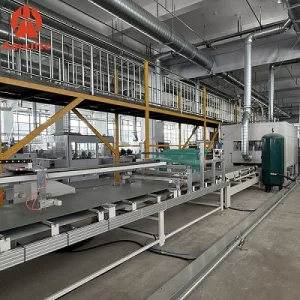
From robotic stackers equipped with vacuum suction arrays to automated transfer cars and dynamic demolding tables, the production process utilizes centralized Siemens S7-1500 PLC control architectures with real-time SCADA visualization. This setup ensures seamless communication between slurry preparation, sheet cut-off saws, static pre-curing chambers, and autoclave loading bridges.
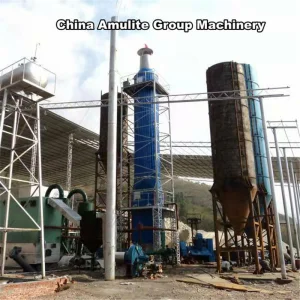
Thermal curing represents a significant portion of operational expenditure (OPEX). Amulite's advanced plant designs feature multi-stage flash steam recovery systems from high-pressure autoclaves, directional heat-exchange loops in drying tunnels, and CO2-assisted curing channels that optimize carbon capture while accelerating hydration kinetics.
Procuring an industrial wall panel production line involves major capital expenditure (CAPEX). Project engineering directors and international investors must perform comprehensive technical due diligence when choosing equipment partners. Amulite Group establishes rigorous global compliance protocols to streamline site commissioning and regulatory approval:
All autoclaves, steam boilers, and pressure-retaining vessels are fabricated in strict compliance with international standards, including ASME Section VIII Div 1, CE-PED directives, and ISO 3834-2 welding quality management system guidelines.
Control panels, drive units, and safety systems feature top-tier global componentry (Siemens, Schneider Electric, ABB, Omron) certified under CE, UL, and CSA standards, simplifying localized maintenance and spare-parts sourcing.
Deploying a plant overseas requires adjusting formula chemistries to fit locally sourced raw materials (such as OPC grades, local quartz sand purity, or agricultural waste fibers). Our process engineers provide on-site commissioning and hands-on laboratory support until full production metrics are attained.
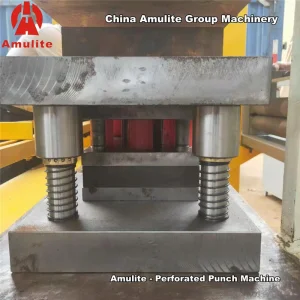
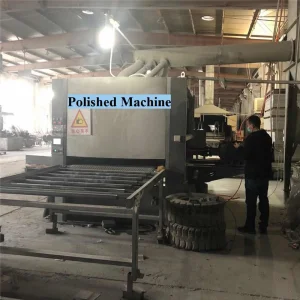
Review our high-efficiency processing systems, cutting-edge trimming equipment, and specialized panel assembly technologies.
In-depth answers addressing critical technical concerns raised by procurement officers, chief plant engineers, and project investors.
Depending on local raw material pricing, energy costs, and panel market demand, typical ROI ranges between 14 to 26 months. Mid-to-high capacity lines (such as 5 million to 10 million m²/year) achieve rapid payback through lower unit manufacturing costs, automated material handling, and minimal scrap rates.
Yes. Our process laboratory performs comprehensive raw material characterization (XRF and XRD analysis) on your local sand, fly ash, cement, and lime samples. We optimize wet-milling ball mill parameters and chemical dosing to accommodate local silica purity levels without compromising final flexural strength or autoclave curing dynamics.
Non-autoclaved boards rely solely on air hydration over 28 days, producing higher moisture absorption and lower dimensional stability (suitable primarily for basic indoor ceilings). Autoclaved lines cure boards under saturated high-pressure steam (1.2 MPa, 190°C) for 10-12 hours, accelerating the reaction to form Tobermorite crystals. This delivers A1 fire resistance, high flexural strength, and zero dimensional shrinkage—essential for exterior facades and structural cladding.
Every production line includes a standardized 2-year wearable spare parts kit alongside remote IoT diagnostic capabilities embedded within the main PLC system. Our field service engineers provide 24/7 technical support, on-site annual maintenance audits, and rapid dispatch of custom mechanical components worldwide.
Footprint requirements vary by line capacity and technology. A typical 5 million m²/year fiber cement board plant requires a building footprint of roughly 180m x 24m (4,320 m²) with a minimum clear height of 7.5 meters. Additional covered bay areas are recommended for raw material stockpiling, autoclave yards, and finished product inventory staging.