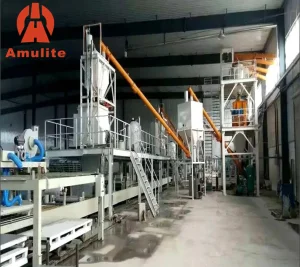
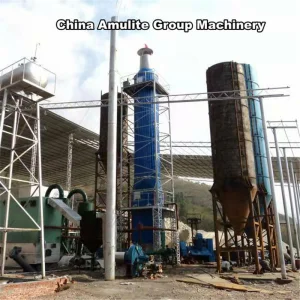
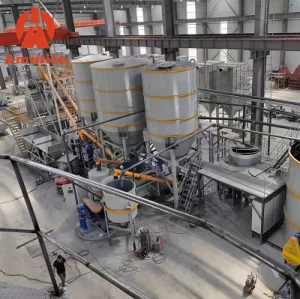
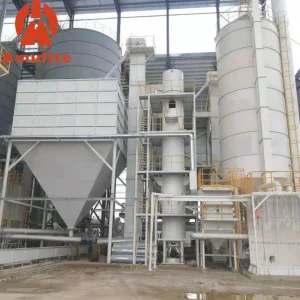
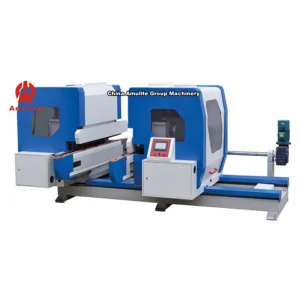
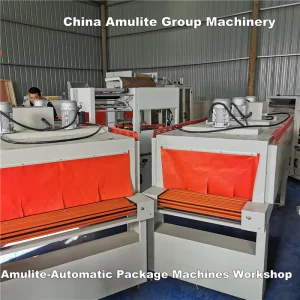
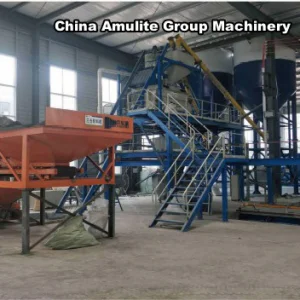
Explore our factory-direct turnkey production lines designed for maximum raw material conversion efficiency, rigorous structural strength, and zero-defect output.
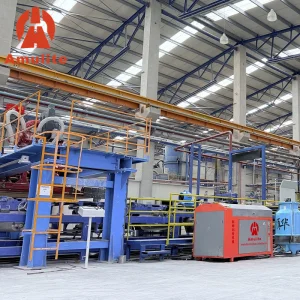
In modern civil engineering and architecture, searching for a reliable famous lightweight building material for sale factory & factories is no longer just about procuring commodities. It represents a strategic imperative toward structural decarbonization, thermal efficiency, seismic hazard mitigation, and rapid prefabrication. Lightweight building materials—including fiber cement boards, calcium silicate panels, autoclaved aerated concrete (AAC), XPS insulation tile backers, and lightweight EPS cement sandwich wall panels—are fundamentally transforming construction efficiency worldwide.
From an E-E-A-T (Experience, Expertise, Authoritativeness, and Trustworthiness) standpoint, China Amulite Group stands as an industry authority in non-metallic building material machine design and chemical process engineering. Our manufacturing intelligence bridges raw mineral slurry mechanics with advanced automation technology, providing global procurement teams with verifiable Information Gain: actionable engineering insights, precise thermodynamic parameters, optimized raw material slurry formulations, and transparent total-cost-of-ownership (TCO) benchmarks.
A deep breakdown of processing mechanics, material chemistry, and next-generation equipment engineering across core product lines.
Modern Hatschek process machinery integrates multi-vat slurry deposition with continuous vacuum dewatering. By utilizing high-pressure autoclaving (hydrothermal reaction at 1.2 MPa and 190°C), silica sand and hydrated lime react chemically to produce crystalline Tobermorite ($\text{C}_5\text{S}_6\text{H}_5$). This grants Class A1 fire rating, exceptional flexural strength (> 16 MPa), and absolute moisture immunity.
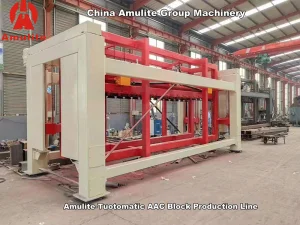
AAC manufacturing relies on microscopic hydrogen gas bubble release triggered by aluminum powder reacting within an alkaline slurry matrix. Advanced 4.2m precision cutting machines allow zero-damage block and panel wire slicing. High-pressure steam curing yields ultra-light density classes ($300 - 600 \text{ kg/m}^3$) with thermal conductivity as low as $0.09 \text{ W/(m}\cdot\text{K)}$.
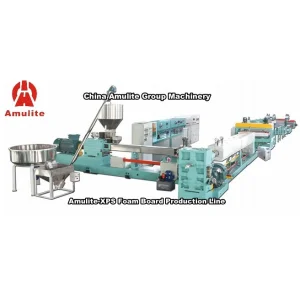
Eliminating ozone-depleting HCFCs, Amulite's OEM CO2 blowing XPS foam board production line uses supercritical $\text{CO}_2$ and ethanol as blowing agents. This achieves fine closed-cell microstructures, delivering permanent compressive strength ($>300 \text{ kPa}$) and low moisture absorption for wet-room tile backer systems and perimeter insulation.
| Material Type | Bulk Density Range ($\text{kg/m}^3$) | Thermal Conductivity ($\text{W/m}\cdot\text{K}$) | Fire Reaction Rating | Primary Application Spectrum |
|---|---|---|---|---|
| Fiber Cement Board | 1,200 – 1,600 | 0.18 – 0.25 | Class A1 Non-Combustible | Exterior cladding, ventilated facades, high-impact partitions |
| Calcium Silicate Board | 800 – 1,100 | 0.12 – 0.16 | Class A1 Non-Combustible | Ceiling tiles, interior drywall, moisture-prone interior lining |
| Autoclaved Aerated Concrete (AAC) | 300 – 600 | 0.09 – 0.14 | Class A1 Non-Combustible | Load-bearing blocks, floor panels, thermal envelope walls |
| CO2 XPS Foam Board | 28 – 45 | 0.027 – 0.032 | Class B1 / E (Flame Retardant) | Roof insulation, cold storage, tile backer structural cores |
| EPS Sandwich Cement Panel | 550 – 700 | 0.11 – 0.15 | Class A Fire Rated Core | Fast-track preassembled interior & exterior wall partitions |
Global urbanization and strict net-zero carbon mandates demand a structural shift in building material selection. Factory managers and project directors searching for a verified famous lightweight building material for sale factory & factories require manufacturing lines that optimize energy consumption, maximize industrial byproduct utilization, and enable off-site prefabrication.
Amulite plant designs are engineered to substitute raw OPC cement and quartz sand with industrial waste products—such as pulverized fly ash from power stations, blast furnace slag, and recycled paper cellulose fibers. This reduces raw material procurement costs by 18% to 35% while lowering embodied carbon metrics.
Lightweight wall panels—especially EPS sandwich cement panels and hollow core wall panels—allow contractors to complete structural wall assemblies up to five times faster than traditional brickwork. High dimensional stability, tongue-and-groove jointing, and integrated utility chases significantly reduce job-site labor requirements.
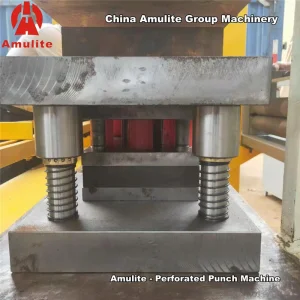
Integrating perforated punch machine systems for acoustic fiber cement ceiling tiles or utilizing high-density perlite expanded insulation cores reduces operational energy demand for HVAC systems in commercial and residential developments by up to 40% over the building lifecycle.
How China Amulite Group integrates heavy industrial manufacturing, digital PLC automation, and continuous quality control under one roof.
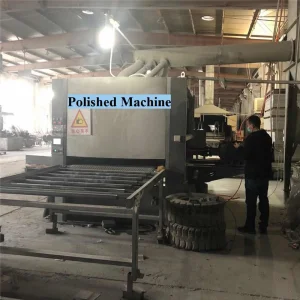
Unlike machine aggregators that outsource core machinery components, Amulite operates its own 100,000 m² heavy engineering plant in Hebei, China. Forming cylinders, high-pressure autoclaves, 4-side edge cutting machine units, and single-face polishing machinery are precision-machined in-house to guarantee sub-millimeter tolerances.
All automatic production lines feature fully integrated PLC control cabinets with touch-screen SCADA interfaces. Real-time telemetry tracks slurry viscosity, hat-drum wrapping layer thickness, autoclave pressure-temperature curves, and automated stacking rates to ensure zero scrap production.
Before export containers are loaded, full mechanical assembly and dry-run testing take place within our assembly bays. Hydraulic systems, electric motors, speed reducers, and automated transfer cars are pre-tested to mitigate installation risks on buyer sites.
Capital investments in building material factories require meticulous planning, total cost of ownership (TCO) evaluation, and long-term risk management. Below is the framework used by institutional investors and plant owners when sourcing machinery from a famous lightweight building material for sale factory & factories ecosystem.
Production lines must be scaled dynamically based on realistic 3-year market demand. Amulite fiber cement board lines range from 1M $\text{m}^2/\text{yr}$ for specialized markets to 30M $\text{m}^2/\text{yr}$ for mass industrial supply, allowing plant owners to optimize capital allocation.
Machinery design directly impacts operational expenditure. Features like multi-deck thermal heat recycling on gypsum dryers, water recovery circuits in Hatschek forming vats, and auto oiling systems for AAC blocks lower electrical, steam, and water consumption per board unit.
Fragmented equipment procurement introduces severe integration risks. A single turnkey provider guarantees compatible mechanical transfer speeds, unified PLC communications, standardized spare parts, and undivided engineering responsibility.
Deploying manufacturing machinery internationally requires localized adaptation. China Amulite Group has installed equipment across 60+ countries, including Pakistan, Saudi Arabia, the UAE, Egypt, Nigeria, Kenya, Vietnam, Indonesia, Chile, Russia, and Uzbekistan.
Local mineral qualities vary significantly. Our process chemical engineers evaluate your local Portland cement, quartz sand mesh size, fly ash reactivity, and pulp grade in our lab to formulate an optimized slurry recipe before line assembly begins.
All mechanical components, electrical layouts, and pressure vessels conform strictly to international standards: CE Directive for European markets, ASME standards for autoclaves, ISO9001 quality management, and local industrial safety codes.
Our senior installation engineers remain on-site throughout foundation alignment, mechanical assembly, electrical wiring, slurry calibration, and trial mass production. We train local operators until plant target yields are met consistently.
Clear engineering answers from Amulite Group's senior project leadership team.
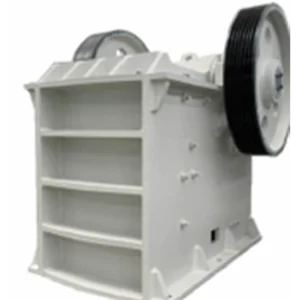
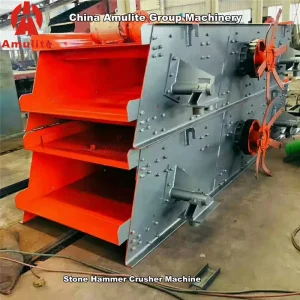
Explore our specialized AAC machines, stone crushers, EPS wall panel lines, and high-efficiency cutting and packaging workshops.
Submit your technical requirements, desired annual capacity, and local raw material parameters. Our process engineering team will deliver a comprehensive project proposal, layout drawing, and utility investment matrix within 24 hours.