Explore precision-engineered production lines, crushing units, and automated building material systems supplied globally by industry-leading manufacturers.
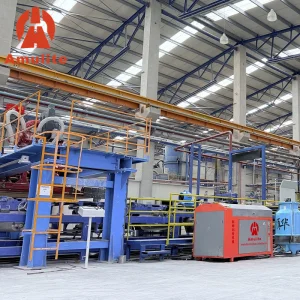
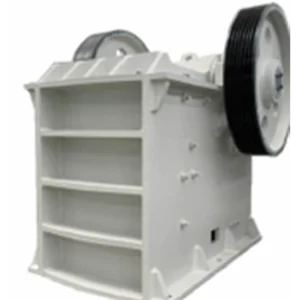
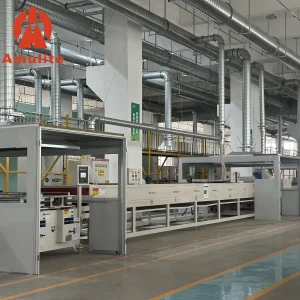
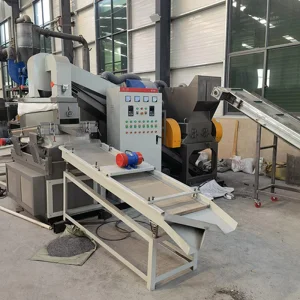
The worldwide construction sector is undergoing a seismic paradigm shift toward industrialized, off-site precast manufacturing to counter labor shortages and accelerate building cycles.
In modern industrial and residential infrastructure engineering, Concrete Hollow Core Wall Machines represent the pinnacle of automated precast extrusion technology. By engineering longitudinal void structures within precast concrete wall panels, these specialized machines achieve an optimal ratio between dead weight, structural load-bearing capacity, acoustic dampening, and thermal resistance. As sustainable architecture standards (such as LEED and BREEAM) become mandatory across Europe, North America, the Middle East, and Asia-Pacific, the demand for high-efficiency concrete extrusion machinery has reached unprecedented peaks.
The global industrial status reveals a clear transition from traditional wet-cast mold casting toward continuous extrusion and high-frequency slipform molding systems. Industrialized contractors are phasing out energy-intensive brickwork and heavy cast-in-place concrete partitions in favor of lightweight precast hollow core panels produced on multi-strand casting beds reaching lengths over 100 meters.
Hollow core wall machines eliminate up to 45% of concrete volume while retaining structural integrity. The continuous inner longitudinal tubes act as natural air-insulation buffers, dramatically lowering heating and cooling energy loads in commercial developments while providing embedded utility conduits for electrical and plumbing systems.
Understanding the core mechanical principles powering famous concrete hollow core wall machine manufacturers ensures structural accuracy, void symmetry, and optimal concrete consolidation.
Utilizes heavy-duty alloy augers (screws) to push dry hard concrete (zero-slump) around forming cores. High shear forces compact the mix tightly, providing immediate green strength so the machine walks forward continuously on steel casting tracks without side forms.
Employs synchronized hydraulic or electric vibrators combined with a traveling mold box. Ideal for mixes with slightly higher aggregate sizes, utilizing intense harmonic resonance to fluidize and consolidate the concrete around tube formers as the unit advances.
Stationary hydraulic mold systems designed for tight urban plants. Hydraulic mandrels automatically expand and contract during the pour and cure cycle, enabling mass production of wall panels with smooth dual-sided architectural finishes.
Leading global manufacturers focus on three vital parameters: void ratio optimization, compaction density index, and wear-resistant metallurgy. The table below illustrates standard technical configurations across high-efficiency wall panel production lines:
| Machine Classification | Panel Thickness (mm) | Standard Width (mm) | Concrete Slump | Production Speed (m/min) | Primary Application |
|---|---|---|---|---|---|
| High-Speed Extruder | 90 - 150 mm | 600 / 1200 mm | Zero-Slump (Dry Mix) | 1.2 - 2.5 m/min | Interior Lightweight Partitions |
| Heavy Slipformer | 150 - 300 mm | 1200 mm | Semi-Dry (10-30mm) | 1.0 - 1.8 m/min | Load-Bearing Boundary Walls |
| Pre-Stressed Extruder | 200 - 400 mm | 1200 mm | Zero-Slump | 0.8 - 1.5 m/min | Long-Span Floor Slabs & Exterior Walls |
| Hydraulic Battery Mold | 80 - 200 mm | Custom modular | Plastic Concrete | Batch casting | High-Finish Prefab Wall Assemblies |
Concrete hollow core wall panel equipment must adapt to diverse geographical climates, regional seismic building codes, and local material profiles.
In regions such as Saudi Arabia, the UAE, and Qatar, rapid urban development demands non-load-bearing interior divider walls capable of resisting extreme thermal flux. Concrete extruders deployed here incorporate accelerated steam curing technology and aggregate cooling mixing systems to prevent thermal micro-cracking during initial concrete setting.
For colder climates, hollow core wall panels are engineered as multi-layer insulated composite elements. Extrusion machinery is paired with automated EPS/XPS foam injection modules, embedding continuous thermal barriers inside the longitudinal voids to satisfy strict Net-Zero energy building codes.
In high-density seismic zones (Japan, Philippines, Indonesia), hollow core wall panel machinery is retrofitted with automated strand-tensioning frames. Pre-stressed high-tensile steel wire (PC strands) is embedded along panel edges, providing flexural ductility to survive horizontal shear loads during seismic activity.
Furthermore, local raw material availability heavily influences machine configuration. In regions rich in industrial byproducts (such as fly ash, blast furnace slag, or crushed recycled aggregates), extruder augers are treated with specialized tungsten-carbide cladding to withstand abrasive shear forces, maintaining exact dimensional tolerances over long production runs.
Next-generation concrete hollow core wall machinery integrates artificial intelligence, IoT telemetry, and low-carbon material science to push structural efficiency boundaries.
The future of precast concrete machinery centers on real-time feedback loops. Ultrasonic density sensors mounted inside the extrusion chamber dynamically adjust auger rotational speeds (RPM) and vibration frequencies to compensate for subtle variations in concrete batch moisture content.
Smart sensors analyze concrete consistency during compaction. Automatic water-cement ratio adjustments guarantee uniform void geometry without operator intervention, reducing material waste to under 0.5%.
Fully automated casting beds utilize laser-guided robotics to position PC wires, apply pre-stressing tension, and perform precision diamond-saw cutting of cured slabs to laser-measured site lengths.
Extrusion components are re-engineered to handle OPC-free alkali-activated cements, allowing precast plants to manufacture hollow core panels with up to 70% lower embodied carbon footprints.
Evaluating the cost-to-performance benchmark, structural metallurgy, and manufacturing ecosystem advantages of Chinese precast equipment leaders.
In recent years, famous concrete hollow core wall machine manufacturers in China have established an unparalleled competitive baseline in the international precast sector. This dominance stems from an integrated industrial ecosystem that combines raw steel production, heavy CNC machining, specialized heat treatment, and advanced automation assembly within unified regional clusters.
Extrusion augers and forming vibrators are subject to extreme friction. Chinese manufacturers utilize localized specialized foundries producing high-chromium alloy steels treated with vacuum quenching, increasing wear life by over 300% relative to standard carbon steels.
By streamlining component sourcing and leveraging vertical integration, Chinese engineering plants deliver complete automated hollow core production lines at 40% to 60% lower capital outlay (CAPEX) compared to European equivalents, without sacrificing component reliability.
With standardized component modularity and dedicated heavy assembly bays, full production line manufacturing cycles are compressed to 45–90 days, enabling international buyers to fast-track factory commissioning.
Leading Chinese machinery exporters also maintain extensive international spare-part hubs and field support networks, ensuring rapid dispatch of replacement augers, mold cores, and electrical controls to keep global casting beds running continuously.
Deploying precast wall panel machinery requires strict adherence to international safety, structural, and electrical engineering frameworks.
To guarantee seamless integration into multinational job sites, concrete hollow core wall machines are built in compliance with international quality standards. Leading equipment vendors supply complete technical dossiers supporting local factory acceptance testing (FAT) and site acceptance testing (SAT).
Machinery is wired according to IEC standards with Schneider/Siemens switchgear, emergency safety shut-off systems, and low-voltage control circuits complying with European CE Directives (2006/42/EC Machinery Directive).
Wall panels produced by extrusion units are engineered to meet EN 1168 and ASTM C1670 standards, certifying flexural strength, shear load capacity, fire rating (up to 4 hours), and dimensional tolerance compliance.
Engineers provide on-site civil bed foundation layout inspection, electrical/hydraulic integration, local concrete formulation optimization, and multi-lingual operator safety training before plant sign-off.
Expert technical answers regarding concrete hollow core wall machine selection, mix design, operating parameters, and maintenance routines.
Browse our extended product portfolio including corrugated roof sheet lines, MGO board machinery, composite panel lines, and brick machinery.