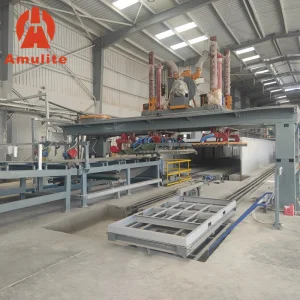
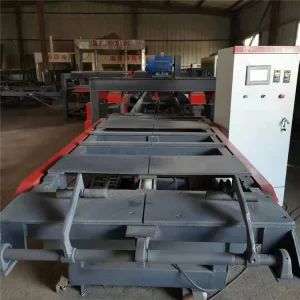
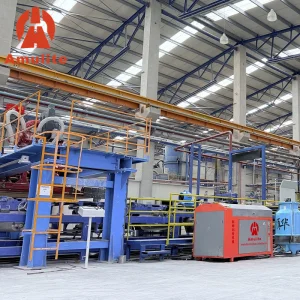
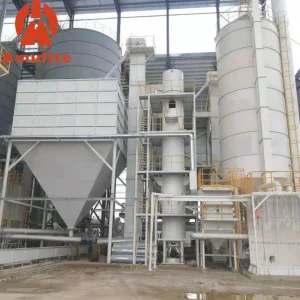
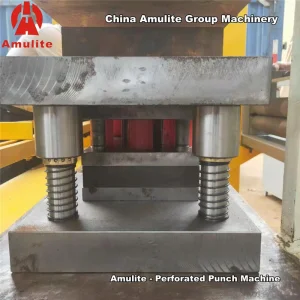
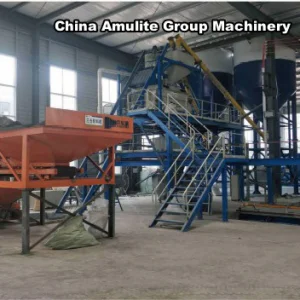
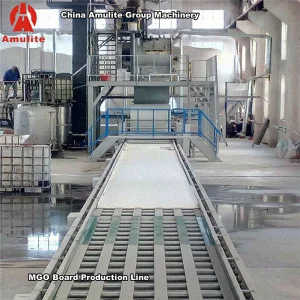
Explore top-tier equipment engineered for high-volume non-metallic building material manufacturing, precast concrete processing, and composite board production lines.
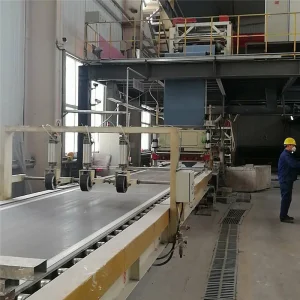
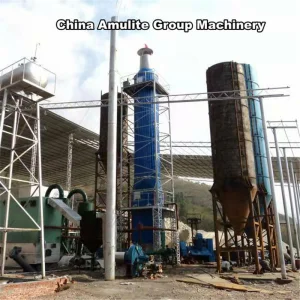
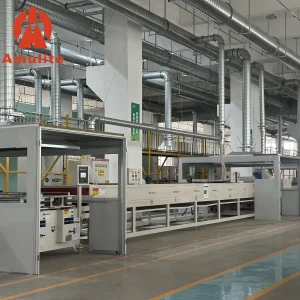
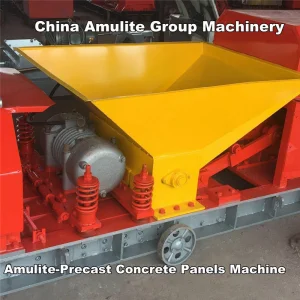
Key operational metrics achieved by modern automated cement sandwich panel mould machines engineered by industry-leading Chinese machinery manufacturers.
The global structural building sector is currently undergoing a massive paradigm shift toward modern methods of construction (MMC), industrialized building systems (IBS), and modular prefabrication. At the core of this transition lies the rapid adoption of lightweight composite building elements, specifically EPS (Expanded Polystyrene) cement sandwich panels and fiber cement skin partition boards. These structural elements provide exceptional thermal insulation, fire rating (A-class non-combustible), acoustic attenuation (STC ratings exceeding 45dB), and unprecedented speed of installation compared to traditional clay bricks or poured-in-place concrete masonry.
However, the quality, structural integrity, and surface finish of these precast panels depend almost entirely on the mechanical engineering quality of the cement sandwich panel mould systems utilized during fabrication. As global construction codes demand tighter dimensional tolerances (frequently below ±0.5 mm) and perfect tongue-and-groove jointing, procurement teams and plant investors must partner with famous cement sandwich panel mould suppliers capable of delivering state-of-the-art machinery.
Modern cement panel casting has evolved from primitive manual flat-laying steel frames to vertical hydraulic batch mould cars equipped with integrated high-frequency pneumatic vibrators and automated steam-curing channels. This evolution reduces floor footprint by over 70% while quadrupling daily output per square meter of factory area.
An EPS cement sandwich wall panel typically consists of two outer calcium silicate or fiber cement skin boards (5mm to 8mm thickness) enveloping a lightweight core composite matrix. This core matrix comprises Ordinary Portland Cement (OPC grade 42.5/52.5), expanded polystyrene beads (density 12–18 kg/m³), fly ash, silica fume, sand, and specialized chemical admixtures (polycarboxylate superplasticizers, air-entraining agents, and viscosity modifiers).
When this liquid slurry is injected under pressure into the mould cavities, the mould structure must withstand significant hydrostatic pressure, exothermic reaction temperatures (reaching 60°C to 85°C during initial hydration), and dynamic compaction energy from vibrators. Any structural flexure or thermal distortion in the mould walls results in warped panels, uneven panel thickness, or joint misalignments—causing catastrophic failure during job-site installation.
Premium cement sandwich panel moulds are complex mechanical assemblies designed for intensive heavy-duty manufacturing environments. Top-tier Chinese manufacturers employ sophisticated CAD/CAM modeling, finite element analysis (FEA), and heavy CNC machining to manufacture mold cars that offer high mechanical durability and operational longevity.
Selecting between vertical battery mould cars and horizontal automated circulating lines is a crucial decision for factory planning. The table below illustrates the mechanical and economic tradeoffs engineered into modern panel mould systems:
| Engineering Parameter | Vertical Hydraulic Mould Car System | Horizontal Pallet Circulating Line | Manual Fixed Box Moulds |
|---|---|---|---|
| Footprint Efficiency | Ultra-High (Up to 40 panels cast per 15 m²) | Medium (Requires large floor layout) | Low (Extremely space-intensive) |
| Dimensional Tolerances | ±0.3 mm (Controlled by hydraulic locks) | ±0.5 mm | ±1.5 to 2.5 mm |
| Daily Capacity / Line | 1,200 – 3,500 m² / day | 800 – 1,800 m² / day | 100 – 300 m² / day |
| Tongue & Groove Molding | Machined alloy side profiles (integrated) | Rubber magnetic side rails | Manual wooden/steel strip inserts |
| Labor Requirement | 3 to 5 operators per shift | 6 to 10 operators per shift | 15+ manual laborers |
| Initial Capital Expenditure | Optimized / High ROI Ratio | High Automation Investment | Low initial, High operational cost |
China has established itself as the undisputed global capital for building material machinery manufacturing. For global precast project developers, government housing ministries, and private enterprise factory owners, sourcing cement sandwich panel moulds from leading Chinese vendors provides distinct structural, technological, and financial advantages:
The next decade of cement panel manufacturing will be defined by digital control systems, automated material handling, and green energy conservation. Leading suppliers are incorporating several groundbreaking technology solutions into their mould designs:
Cement sandwich panels produced via high-precision mould systems serve a broad spectrum of structural and non-structural application scenarios across the modern architectural landscape:
Procuring industrial machinery from international suppliers requires rigorous technical due diligence and strategic risk mitigation. When evaluating famous cement sandwich panel mould suppliers, procurement executives should enforce the following 5-point verification framework:
Direct answers from senior machinery engineers regarding mold car maintenance, daily output scaling, raw material formulations, and operational ROI.
Discover our full catalogue of heavy-duty machinery solutions, automated edge cutting units, recycling lines, and board fabrication technology.