Explore our primary high-capacity production lines engineered for industrial-scale manufacturing, precise material dosing, high-pressure forming, and continuous automated curing.
The global construction sector is undergoing a rapid paradigm shift toward prefabrication, modular building systems, and sustainable architectural materials. At the heart of this revolution lies the demand for high-performance, fire-rated, moisture-resistant building boards.
Global architectural standards increasingly mandate non-combustible Class A1 fire-rated materials. Modern high automatic board production lines empower industrial manufacturers to fulfill global shortages in fiber cement cladding, calcium silicate ceiling tiles, and EPS sandwich wall panels with minimal manual labor.
Legacy wet-forming board machinery suffered from high reject rates, inconsistent density profile, and intensive manual handling. Next-generation Chinese automatic production lines integrate closed-loop PLC SCADA architectures, real-time ultrasonic slurry thickness gauge control, and automatic robotic de-stacking.
Modern board machinery prioritizes heat recovery loops within steam autoclaves, closed-circuit water recycling, and optimized pulp refining systems, cutting total energy consumption per square meter by up to 35% compared to legacy line configurations.
China's industrial machinery ecosystem has evolved from component fabrication to high-precision, fully integrated EPC (Engineering, Procurement, Construction) turnkey solutions for non-metallic building material lines.
Chinese machinery giants like China Amulite Group leverage localized industrial clusters in Hebei and regional heavy-machinery bases. From precision CNC machining of large-diameter forming cylinders (up to 1,600 mm width) to ASME-certified autoclave vessel fabrication, every critical process is controlled in-house. This minimizes supply chain friction and delivers unprecedented capital expenditure (CAPEX) savings to international buyers.
Modern Chinese automated lines feature integrated control hardware from world-class suppliers such as Siemens, Schneider Electric, and Omron. Real-time Ethernet connectivity allows local operators and remote field support engineers to monitor slurry batching ratios, vacuum dewatering levels, cutting accuracy, and autoclave temperature profiles live across global production sites.
| Evaluation Parameter | Legacy / Standard Production Lines | China New-Type Automated Line (Amulite Standard) | Operational Impact |
|---|---|---|---|
| Forming Speed | 20 – 40 meters / min | 70 – 110 meters / min | +150% Daily Square Meter Output |
| Raw Material Dosing Precision | Manual / Volumetric (± 3.0% error) | Loss-in-Weight Automated Gravimetric (± 0.2%) | Zero Board Delamination & Density Spikes |
| Labor Requirement | 25 – 40 workers per shift | 5 – 8 technicians per shift | Up to 75% Reduction in Labor Cost |
| Vacuum Dewatering Rate | Conventional Single-Stage (-0.04 MPa) | Multi-Stage High Vacuum System (-0.085 MPa) | Reduced Drying Energy & Superior Flexural Strength |
| Autoclave Steam Recycling | Direct Vent / Single Use | Dual-Tank Cascading Heat Recovery | 30% Lower Boiler Fuel Consumption |
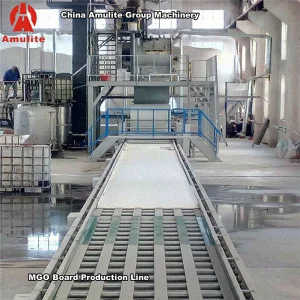
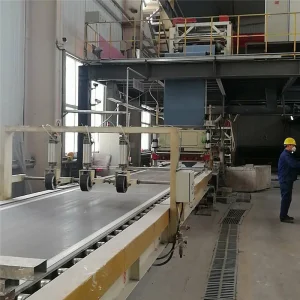
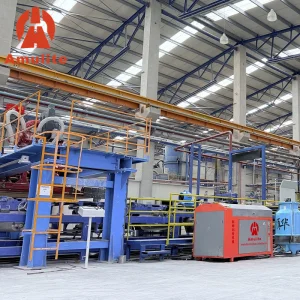
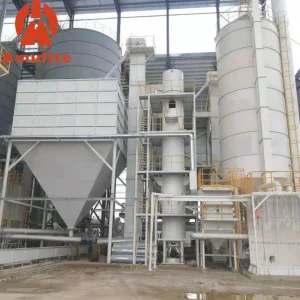
A modern automatic building board production plant requires continuous synchronization between chemical raw material preparation, mechanical web forming, high-pressure hydraulic compaction, thermal curing, and automatic finishing.
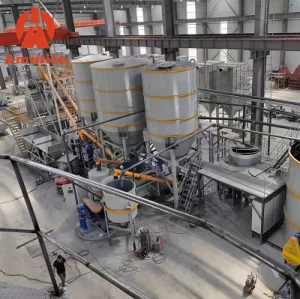
High-shear pulping of unbleached kraft wood pulp, combined with automated silica sand wet grinding, Portland cement pneumatic dosing, and fly ash slurry homogenization.
Multi-cylinder vat slurry agitation forming paper-thin wet films, continuously accumulated on felt belts and wound around forming rolls to exact target sheet thickness (4mm to 30mm).
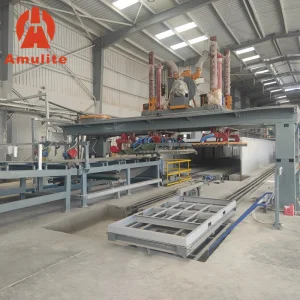
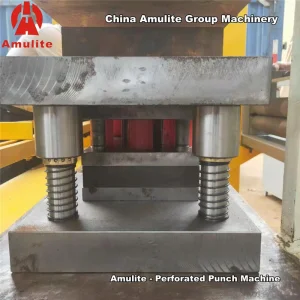
Automatic green sheet cutting followed by 5000-to-7000 ton hydraulic stack pressing. High-pressure steam autoclave curing (1.0 MPa, 180°C) triggers tobermorite crystal synthesis for high flexural strength.
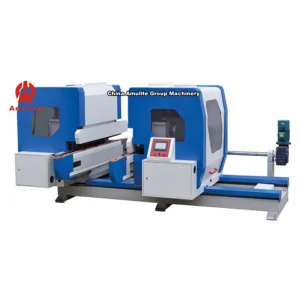
Precision 4-side automatic edge profiling, surface sanding, dust extraction, automated quality vision inspection, and high-speed robotic suction cup palletizing.
Boards manufactured on China New-Type automated production lines fulfill rigorous international building standards (ASTM C1186, EN 12467, ISO 8336) across diverse climate conditions and structural applications.
High-density autoclaved fiber cement boards (1.4 – 1.7 g/cm³) provide superior freeze-thaw endurance, extreme wind-load resistance, and Class A non-combustible protection for high-rise commercial facades and institutional exterior cladding.
Calcium silicate boards and MGO (Magnesium Oxide) boards synthesized via high-pressure hydro-thermal reaction guarantee 2 to 4-hour fire resistance ratings. Used extensively in hospital cleanrooms, subways, data centers, and high-occupancy commercial interiors.
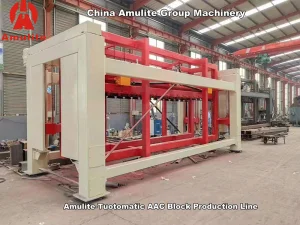
EPS sandwich cement wall panels and AAC (Autoclaved Aerated Concrete) blocks produced on automated lines offer outstanding thermal insulation (thermal conductivity < 0.12 W/m·K) and structural weight reduction for rapid modular house assembly.
The technological horizon of board machinery is focused on three major pillars: artificial intelligence monitoring, waste-to-resource material substitution, and digital twin management.
By embedding vibration sensors, pressure transducers, and thermal cameras throughout the production line, plant managers track machine wear (such as felt sleeve degradation, vacuum pump cavitation, and cutter blade dullness) prior to failure, maintaining up to 99.4% equipment availability.
Next-gen Chinese machinery handles high substitution rates of industrial solid waste (blast furnace slag, fly ash, desulfurization gypsum, and recycled board scrap up to 45% of solid batching), drastically cutting the embodied carbon footprint of finished panels.
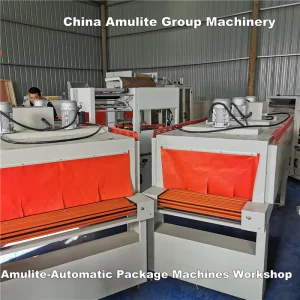
Integrated 6-axis industrial robots now handle dynamic edge alignment, plastic film shrink wrapping, corner protection fitting, and wooden pallet banding without human intervention, boosting line-end packaging speed by over 200%.
Procuring a complete industrial board line requires rigorous multi-stage technical audits, factory acceptance testing (FAT), and site acceptance testing (SAT) protocols to protect capital investment.
When sourcing board production lines from China, international buyers should look beyond the initial machinery sticker price. Evaluate operational expenditure factors including kw/h per cubic meter of finished board, steam recycling efficiency, felt consumption rates per thousand sheets, and local spare parts availability.
Leading companies like China Amulite Group operate in-house material testing laboratories. Prior to machinery manufacturing, prospective buyers send local raw material samples (cement, silica sand, local pulp, fly ash) to China for slurry rheology analysis, autoclave trial runs, and flexural strength verification.
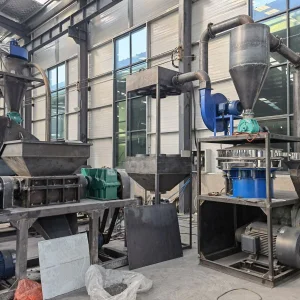
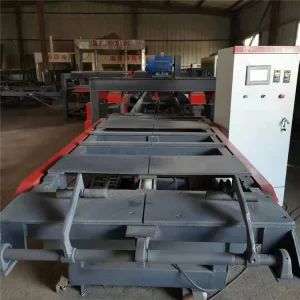
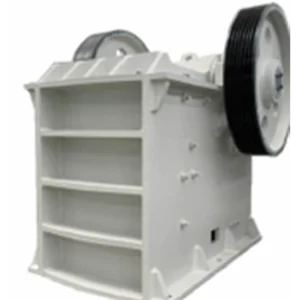
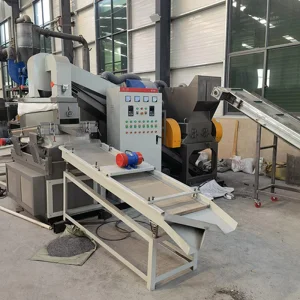
Discover specialized cutting, crushing, recycling, and secondary processing machinery designed to complement high-capacity automated board production plants.
Clear technical answers directly from senior process engineers regarding plant installation, raw material formulation, output scaling, and ROI payback periods.
Annual production capacity is customizable based on plant footprint, forming cylinder width (typically 1,300 mm to 1,600 mm), and autoclave configuration. Standard industrial lines range from 3 million square meters to 30 million square meters per year (calculated based on standard 6mm sheet thickness). Modular layout allows for Phase I setup with pre-engineered expansion space for Phase II.
The core formulation uses Ordinary Portland Cement (OPC 42.5/52.5), finely ground silica sand (SiO2 > 85%), unbleached kraft wood pulp (or cellulose fiber), and water. Next-generation Chinese lines can incorporate up to 45% local industrial waste materials, including coal fly ash, blast furnace slag, desulfurization gypsum, and crushed board waste without compromising EN 12467 strength standards.
Autoclaved lines process calcium-silicate reaction under high steam pressure (1.0 MPa, 180°C), synthesizing crystalline Tobermorite. This results in ultra-stable, zero-shrinkage boards suitable for external architectural cladding. Air-cured lines rely on hydration setting over 28 days, producing high-density, flexible sheets suitable for roofing corrugated tiles and internal wall linings.
Manufacturing lead time for complete turnkey machinery is typically 90 to 150 days. Civil foundation preparation occurs concurrently in the buyer's country. On-site mechanical installation, electrical wiring, and SCADA setup require 45 to 60 days under the guidance of resident engineering supervisors from China, followed by 15 days of trial slurry tuning and operator training.
Turnkey contracts include comprehensive remote PLC diagnostics (via encrypted VPN gateway), annual field technician maintenance visits, continuous raw material trial support, and guaranteed fast dispatch of critical wear parts (such as felt belts, vacuum seals, and carbide cutter blades) from centralized global spare-parts depots.