Engineered for structural density, material conservation, and low operational TCO across global precast plants.
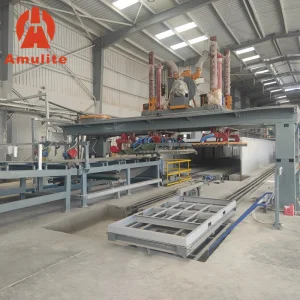
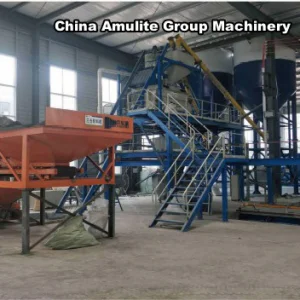
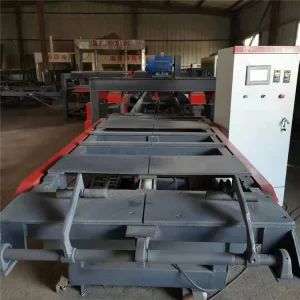
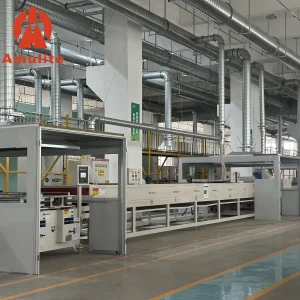
The modern construction ecosystem is undergoing a dramatic structural transformation driven by urban density pressures, labor shortage constraints, and increasingly stringent building decarbonization mandates. Central to this transformation is the rapid adoption of prefabricated lightweight non-load-bearing partition wall systems. Among these systems, hollow core cement wall panels have emerged as the dominant structural solution for high-rise commercial complexes, industrial parks, and multi-family residential towers.
Engineered with continuous internal longitudinal voids, hollow core concrete panels achieve a weight reduction of 35% to 50% compared to solid masonry or traditional cast-in-place concrete walls. This mass reduction yields exponential structural benefits: foundation dead-load requirements decrease significantly, seismic shear stress during earthquake events is attenuated, and structural steel tonnage per square meter of floor space is minimized.
A standard 100mm thick hollow core lightweight concrete panel provides a sound transmission class (STC) rating of 42–48 dB and a fire resistance limit exceeding 3 to 4 hours (EN 1364-1 compliance), while requiring 40% less raw cement slurry volume during manufacturing than solid partition units.
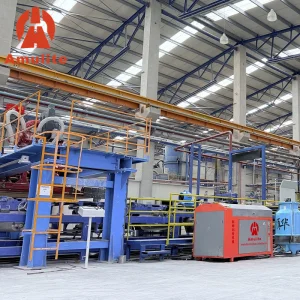
To capture these economic and architectural advantages, precast component manufacturers require industrial-grade panel production lines that deliver absolute dimensional precision, continuous high-volume extrusion, and adaptable raw material compatibility. As a leading China Hollow Core Cement Panel Machinery Manufacturer & Company, China Amulite Group integrates heavy mechanical engineering, automated PLC control architectures, and advanced concrete rheology science to provide turnkey production assets tailored for international contractors and modular build enterprises.
Achieving consistent mechanical strength, surface flatness, and core geometry in hollow core cement panels requires rigorous control over shear vibration, auger compaction, and core-tube extraction kinetics. Amulite’s machinery design leverages state-of-the-art multi-frequency compaction dynamics to eliminate micro-voids and internal segregation within the cementitious matrix.
Features alloy reamers treated with tungsten carbide wear-resistant cladding. Operating under variable-frequency drive (VFD) motor systems, the augers push dry-hard concrete slurry through forming tubes under intense dynamic pressure, reaching green-state densities over 1800 kg/m³.
Employs dual eccentric high-frequency vibrators embedded within the molding cavity. Operating at frequencies up to 58 Hz, the system liquefies dry mix rheology briefly to ensure uniform flow around core mandrel tubes without material segregation.
In vertical battery mold configurations, precision hydraulic core-pulling pins withdraw central mandrels automatically following initial concrete set, preventing internal micro-fracturing and ensuring pristine core surface geometry.
Understanding the optimal technical pathway is essential for factory capital investment. Below is an engineering comparison of the primary machine paradigms engineered by Amulite Group:
| Performance Parameter | Continuous Slipform Shear Extruder | Vertical Battery Mold Hydraulic System | Horizontal Tilting Mold Line |
|---|---|---|---|
| Primary Application | High-volume standard partition panels (60–150mm) | High-precision architectural & composite panels | Heavy structural load-bearing precast elements |
| Slurry Consistency Requirement | Zero-slump dry hard mix (W/C ratio 0.28–0.32) | Plastic fluid slurry (W/C ratio 0.40–0.48) | Semi-fluid standard aggregate concrete mix |
| Production Capacity Range | 1.2 – 2.2 meters per minute line speed | 400 – 1,200 m² per 8-hour shift shift cycle | Batch based (15–20 molds per day) |
| Dimensional Tolerance | ± 1.5 mm thickness accuracy | ± 0.8 mm ultra-flat face precision | ± 2.0 mm total panel variance |
| Reinforcement Capability | High-tensile steel wire (prestressed) / PP Fiber | Full steel mesh cage + PP synthetic fiber | Heavy steel rebar cage assemblies |
| Footprint Requirement | Long casting track (100m - 150m bed length) | Compact vertical plant footprint (30m x 15m) | Wide horizontal mold circulation area |
In the global capital equipment market, machinery buyers face a constant trade-off between European high-cost precision and low-cost uncertified equipment. China Amulite Group resolves this dilemma by pairing localized industrial cluster integration with tier-1 international component sourcing standards.
Located in Hebei’s advanced industrial manufacturing corridor, Amulite operates self-owned heavy fabrication shops, CNC horizontal boring mills, robotic welding gantries, and automated surface treatment blast lines. By eliminating third-party structural outsourcing, we maintain direct engineering control over machine frame rigidity, gear box concentricity, and thermal stress relief treatments.
Our structural machine frames utilize heavy steel plate weldments subjected to ultrasonic flaw detection and full thermal annealing cycles, ensuring structural alignment remains vibration-proof over decades of heavy extrusion cycles.
While structural fabrication benefits from Chinese industrial scale, core control and hydraulic actuation systems rely on globally recognized components to ensure seamless on-site maintenance across international markets:
Deploying an Amulite hollow core cement panel production line reduces initial capital expenditure by 40% to 60% compared to equivalent European plant suppliers, while offering identical continuous shift yield, lower spare-part procurement lead times, and modular expansion versatility.
Building codes, aggregate availability, climate challenges, and structural norms vary significantly from region to region. Amulite’s process engineering team optimizes machine configuration and raw material formulations according to specific geographic requirements:
Thermal & High-Speed Partition
In hot, arid climates, high air-conditioning electrical loads demand superior thermal mass wall partitions. Amulite hollow core lines in Saudi Arabia and the UAE utilize lightweight aggregates such as expanded clay, volcanic pumice, or perlite combined with OPC cement.
Key Benefit: Interlocking tongue-and-groove joint profiles produce rapid dry-wall assembly, eliminating traditional wet plastering under extreme heat conditions.
Moisture & Mold Resistance
Tropical regions face continuous high relative humidity and monsoon rains. Hollow core cement panels extruded by Amulite machines leverage fly ash, silica sand, and hydrophobic fibers to ensure zero moisture absorption and structural rot protection.
Key Benefit: Ideal for wet area partitions (bathrooms, kitchens, basements) in high-density residential towers across Indonesia, Vietnam, and the Philippines.
Ductility & Shear Isolation
In earthquake-prone regions such as Chile, Peru, and Mexico, non-load bearing walls must allow structural frame deflection without collapsing. Amulite lines produce fiber-reinforced hollow panels integrated with flexible steel top-clip fasteners.
Key Benefit: High shear strength coupled with low dead-weight reduces overall building inertia during seismic shaking events.
As the precast industry advances toward Industry 4.0 standards and zero-carbon manufacturing goals, Amulite Group is pioneering next-generation technological upgrades across our hollow core machinery product matrix:
Integration of inline microwave moisture sensors and dynamic viscosity monitoring inside aggregate hoppers. The automated PLC system automatically adjusts auger RPM and vibration intensity in real time based on raw material batch variations, eliminating operator error and panel slump defects.
Modifying compaction screw dynamics and vibratory shear parameters to allow up to 70% substitution of traditional Portland cement with industrial fly ash, blast furnace slag (GGBS), and calcined clay. This pathway allows panel producers to achieve carbon-neutral panel certifications without sacrificing 28-day flexural strength.
Investing in heavy building material machinery requires more than equipment delivery; it demands comprehensive process engineering support, civil plant design, and long-term field support. Amulite Group enforces an end-to-end turnkey project management protocol:
Custom 3D CAD layout planning, electric load calculations, foundation civil drawings, and steam/curing chamber routing.
Machinery fabrication under ISO9001 QA protocols, complete mechanical pre-assembly, and pre-shipment electrical testing.
Dispatch of resident mechanical & electrical engineers for assembly supervision, wiring, and initial line power-up.
Trial panel casting using local cement, sand, and additives, combined with complete operator certification and maintenance transfer.
In-depth insights for plant directors, structural engineers, and precast investors.
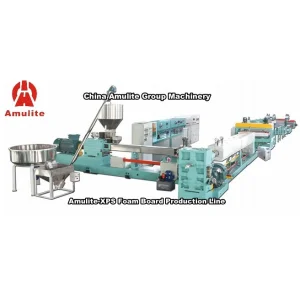
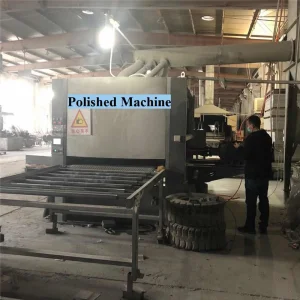
Explore related automated processing lines manufactured by China Amulite Group.
Partner with China Amulite Group to engineer your lightweight concrete panel plant. Send us your project target capacity, panel specifications, and available raw materials for an exhaustive engineering assessment.