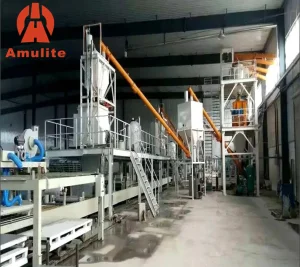
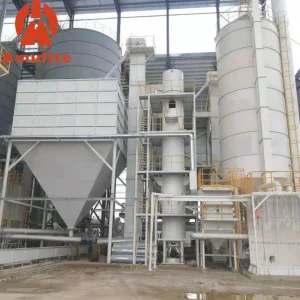
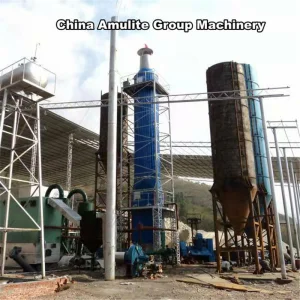
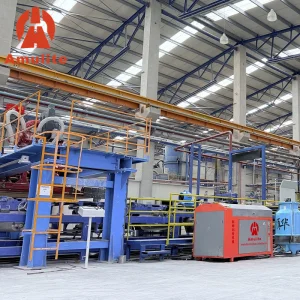
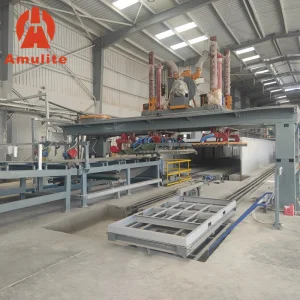
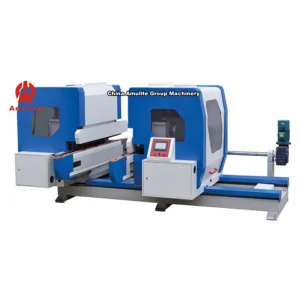
Explore our core engineered production systems, designed for high-throughput, energy-efficient manufacturing of calcium silicate boards, thermal insulation matrices, and prefabricated composite wall panels.
An in-depth analysis of material synthesis, structural performance, and industrial processing trends shaping global modern off-site construction (MMC).
The industrial transformation of modern building systems has established Calcium Silicate Board (CSB) as the primary inorganic substrate for advanced prefabricated wall panel assemblies. Engineered via high-pressure hydrothermal synthesis, calcium silicate substrates possess an unparalleled combination of non-combustibility (Class A1), high flexural strength-to-weight ratio, zero flame spread, and exceptional dimensional stability under extreme hydrothermal fluctuation.
Unlike standard gypsum plasterboards or organic composite sheathings, calcium silicate board matrices are formed through chemical reactions between siliceous materials (flour silica, quartz powder, fly ash) and calcareous materials (slaked lime, Quicklime, Ordinary Portland Cement), reinforced with high-purity cellulose fibers. When cured inside high-pressure autoclaves, these raw precursors synthesize into a stable crystal lattice dominated by Tobermorite ($5CaO \cdot 6SiO_2 \cdot 5H_2O$) and Xonotlite ($6CaO \cdot 6SiO_2 \cdot H_2O$) phase matrices.
The fundamental mechanical integrity of industrial calcium silicate boards stems from Tobermorite hydrothermal synthesis at temperatures between 180°C and 195°C under 1.2–1.5 MPa saturated steam pressures. This crystalline structure eliminates moisture-induced swelling, prevents biological decay, and guarantees zero thermal shrinkage up to 1000°C for fireproof wall assemblies.
Macroeconomic structural shifts toward modular prefabrication, strict carbon accounting, and rapid urban developments are accelerating demand across tier-1 global infrastructure projects.
Strict energy efficiency building codes (such as EU NZEB standards and US LEED v4.1 certification) require lightweight cladding and interior partitions with documented Environmental Product Declarations (EPD). Calcium silicate substrates sourced from certified Chinese OEMs offer low embodied energy profiles when produced via high-efficiency heat-recovery autoclaves.
Large-scale developments in Saudi Arabia (NEOM, Red Sea Project) and the UAE necessitate massive quantities of fire-rated, sandstorm-resistant interior drywall systems and light-aggregate EPS sandwich wall panels. Calcium silicate facing boards act as the exterior sheath for pre-assembled volumetric pods due to their extreme thermal degradation resistance.
High-density residential housing construction in Southeast Asia, Central Asia, and Latin America requires high-speed wall erection equipment. The transition from heavy masonry units to lightweight hollow-core cement wall panels and sandwich panels faced with calcium silicate boards reduces structural load and construction cycle duration by up to 60%.
From raw slurry formulation to high-pressure autoclaving and automated edge profiling, inspect the stage-by-stage engineering flow of high-capacity board production lines.
Computerized gravimetric batching of quartz sand (ground to fine silica flour), quicklime slurry, hydrated lime, OPC cement, and unbleached Kraft cellulose fibers (refined via disc refiners to 30–35°SR freeness).
Dilute slurry (solid concentration 7–10%) is fed into 3 to 6 vats. Rotating wire mesh cylinders pick up microscopic film layers, dewatered via vacuum boxes, and wound around a forming cylinder to achieve exact targeted thickness (4mm to 30mm).
Green boards are subjected to static hydraulic pre-pressing (up to 3,000–10,000 Tons) to squeeze out free interstitial water, densifying the fiber matrix and boosting final flexural strength to over 16–22 MPa.
Stack-loaded green sheets enter heavy-duty pressure autoclaves for 10 to 14 hours at 1.2–1.4 MPa saturated steam pressure (185°C–195°C). The hydro-thermal reaction converts raw silica and lime into pure Tobermorite crystals.
| Performance Parameter | Low-Density Thermal CSB | Medium-Density Standard CSB | High-Density Structural CSB |
|---|---|---|---|
| Nominal Density Range | 0.80 – 1.00 g/cm³ | 1.10 – 1.30 g/cm³ | 1.40 – 1.70 g/cm³ |
| Bending / Flexural Strength (EMC) | ≥ 8.0 MPa | ≥ 14.0 MPa | ≥ 20.0 MPa |
| Thermal Conductivity (W/m·K) | ≤ 0.095 W/m·K | ≤ 0.14 W/m·K | ≤ 0.22 W/m·K |
| Moisture Movement (Wet to Dry) | ≤ 0.08% | ≤ 0.10% | ≤ 0.12% |
| Fire Reaction Classification | Class A1 Non-Combustible | Class A1 Non-Combustible | Class A1 Non-Combustible |
| Screw Pull-Out Force (N) | ≥ 600 N | ≥ 1,200 N | ≥ 2,100 N |
| Standard Thickness Capability | 6mm – 25mm | 4mm – 20mm | 4mm – 30mm |
How China calcium silicate board machinery powers the production of energy-efficient composite EPS sandwich wall panels and hollow-core partition lines.
Engineered by laminating 4.5mm or 6mm high-strength calcium silicate boards as outer facings on a lightweight concrete core composed of expanded polystyrene beads, Portland cement, perlite, and specialty foaming agents. Produces wall panels with acoustic insulation up to STC 50 dB and structural dead-weight reduction of over 70% compared to traditional red brick walls.
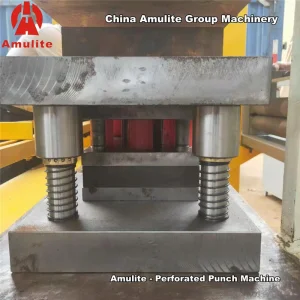
Calcium silicate sheets serve as the structural substrate for Light-Gauge Steel (LGS) framing systems. CNC-punched high-density CSB boards are mechanically anchored to cold-formed galvanized studs, providing shear wall racking resistance, thermal break insulation, and a smooth base for direct application of decorative UV coatings or exterior insulation finishing systems (EIFS).
Utilizing high-thickness (12mm–25mm) low-density calcium silicate boards to construct rated shaft walls, duct enclosures, and ceiling soffits. The chemically bound hydration water in Tobermorite crystals absorbs heat during fire exposure, maintaining structural integrity for over 4 hours under ISO 834 fire test standards.
Leading Chinese machinery manufacturers are re-engineering plant architectures to align with global ESG targets and Industry 4.0 operational standards.
Real-time optical sensors and micro-viscometers feed slurry rheology metrics directly to PLC control loops. Automatic adjustment of flocculant dosing, disc-refiner gap calibration, and cylinder vat water ratios prevents sheet delamination during high-speed Hatschek winding.
Implementation of closed-loop autoclaving systems where flue gas carbon dioxide is captured and injected into curing chambers. This accelerates calcium carbonate crystallization within the void spaces, increasing board density while permanently sequestering ambient carbon dioxide.
Integration of 6-axis heavy payload articulated robots equipped with vacuum suction grippers for automatic green sheet stacking, template sheet insertion, demolding, automated edge trimming, and automated visual defect sorting using machine vision algorithms.
Rigorous quality management systems and customized plant engineering guarantee rapid ROI and full compliance with local regulatory frameworks worldwide.
All plant equipment is manufactured under ISO 9001:2015 quality management systems and meets European CE safety standards. Finished board production lines are pre-configured to comply with ASTM C1185, ASTM C1288, ISO 8336, and EN 12467 international product specifications.
Our process engineering teams perform comprehensive laboratory chemical analyses on local raw materials (such as local quartz sand, volcanic ash, pozzolanic slag, and local pulp sources) to formulate optimized slurry recipes without relying on expensive imported additives.
Field installation engineers deliver complete site layout civil work design, mechanical erection supervision, electrical PLC integration, trial production tuning, and comprehensive operator training to achieve stable target capacity output within 60 days of arrival.
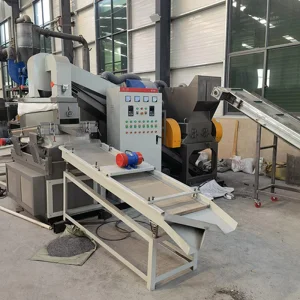
Browse our extended suite of auxiliary machinery, crushing units, coating lines, and specialized recycling processing systems designed to complete your industrial plant ecosystem.
Comprehensive answers curated by senior process engineers covering plant setup, raw material ratios, energy consumption, and equipment maintenance.