Precision-engineered continuous and batch production solutions for modern prefabricated wall panels, fireproof boards, and structural insulated cladding.
The global construction industry is experiencing a seismic paradigm shift away from traditional wet-construction methods (such as bricklaying and cast-in-place concrete) toward Modern Methods of Construction (MMC) and Prefabricated Volumetric Modular Systems. At the core of this transformation is the Sandwich Panel Making Machine—a complex, highly integrated industrial production assembly engineered to produce insulated composite wall panels, roofing slabs, and exterior architectural cladding.
Sandwich panels consist of a low-density core material rigidly bonded between two high-rigidity structural facings (such as fiber cement boards, calcium silicate boards, color-coated galvanized steel sheets, or magnesium oxide boards). Driven by stringent net-zero carbon building regulations, rapid urbanization in developing regions, and soaring labor costs in industrialized economies, the market demand for automated, high-output sandwich panel equipment has accelerated exponentially.
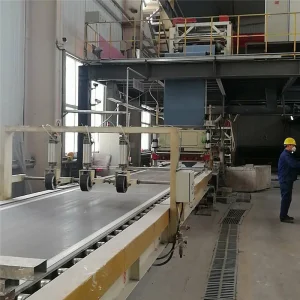
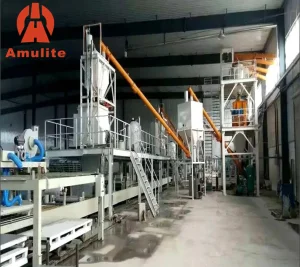
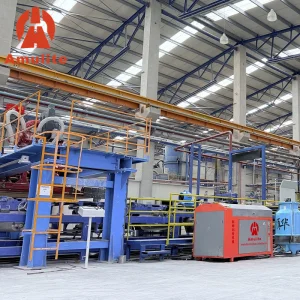
Industrial sandwich panel production lines are no longer simple mechanical presses. Modern manufacturing setups integrate sophisticated pneumatic dosing, automated core slurry agitation, high-precision hydraulic double-belt continuous vulcanization/curing presses, zero-waste edge milling systems, and robotic palletizers connected via Industry 4.0 IoT SCADA architectures.
When selecting the best sandwich panel making machine manufacturer, industrial buyers must evaluate the underlying core technology, material compatibility, and mechanical engineering precision. Sandwich panel production machinery is primarily classified into three major structural archetypes based on core composition and production methodologies:
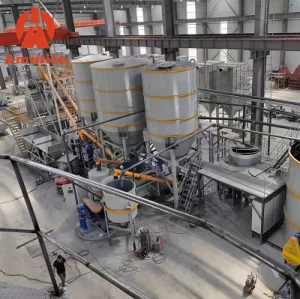
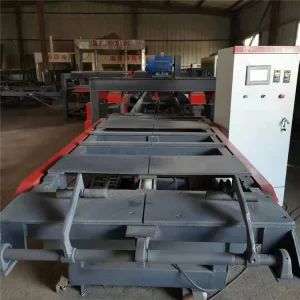
EPS (Expanded Polystyrene) cement sandwich wall panel lines are tailored for mass-producing solid or hollow lightweight interior partition walls and exterior building envelopes. These lines mix Ordinary Portland Cement (OPC), expanded EPS foam beads, fly ash, sand, and specialized chemical additives into a homogenous slurry. The slurry is pumped into vertical or horizontal mold cars lined with fiber cement or calcium silicate facing boards.
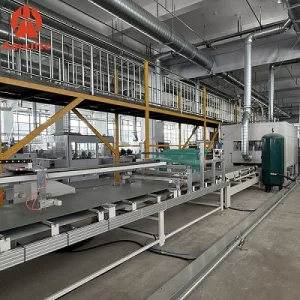
Designed for cold-storage logistics facilities, cleanrooms, and high-performance industrial roofing, continuous PU/PIR lines feature double-belt caterpillar laminators ranging from 24 meters to 42 meters in length. Polyurethane liquid reactants (Isocyanate and Polyol) are metered through high-pressure mixing heads and injected directly between flexible or rigid steel skin facings, reacting dynamically under temperature-controlled pressure zones.
For applications requiring strict A-class fire resistance (e.g., thermal power plants, high-hazard chemical facilities), Rock Wool sandwich panel machinery utilizes automated mineral wool lamella cutters, 90-degree strip turners, and high-strength polyurethane adhesive spraying systems to bond oriented mineral fibers perpendicular to structural metal faces.
| Machinery Type | Core Material | Density Range (kg/m³) | Fire Rating | Automation Level | Primary Application |
|---|---|---|---|---|---|
| EPS Cement Panel Line | OPC Cement + EPS Beads + Fly Ash | 550 – 800 | Class A (Non-combustible) | Semi-Auto / Fully Automatic | Residential & Commercial Partitions |
| Continuous PU/PIR Line | Rigid Polyurethane / Polyisocyanurate | 38 – 45 | Class B1 / PIR Class B-s1,d0 | Fully Continuous Industry 4.0 | Cold Storage, Cleanrooms, Logistics |
| Rock Wool Panel Line | High-Density Mineral Fiber Strands | 100 – 140 | Class A1 (4-Hour Fire Barrier) | Continuous Automatic | Industrial Plants, Firewalls |
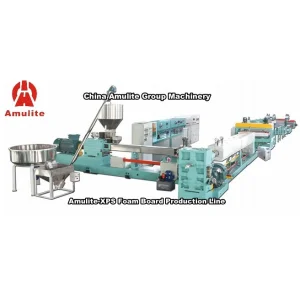
| Metal Composite Board Line | XPS / EPS / Mineral Fiber | 40 – 120 | Class B1 to A2 | High-Speed Continuous Roll-Forming | Exterior Architectural Cladding |
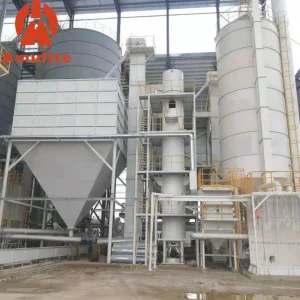
Understanding the turnkey engineering flow is essential for evaluating a equipment supplier's technical capability. A high-efficiency automated sandwich panel plant engineered by leading suppliers follows a continuous 7-stage manufacturing process:
The operational specifications of sandwich panel machinery must adapt seamlessly to regional environmental demands, architectural requirements, and structural engineering codes. Leading machine suppliers provide customized equipment configurations tailored to regional market dynamics:
In high-ambient regions (e.g., Saudi Arabia, UAE, Qatar), sandwich panel equipment focuses heavily on PIR (Polyisocyanurate) continuous lines and thick EPS cement panel plants. Panels must achieve an ultra-low thermal transmittance value (U-Value < 0.18 W/m²K) to comply with local energy conservation mandates like SASO and ESTIDAMA.
For flood-prone and seismically active zones across Indonesia, Philippines, and Vietnam, lightweight fiber cement EPS sandwich panel machinery is prioritized. The panels produced feature tongue-and-groove interlocks combined with anti-seismic steel dowel channels, allowing structures to withstand Zone 4 earthquake accelerations while resisting tropical moisture absorption (< 6%).
In Western markets governed by ASTM E84, EN 13501-1, and UL 790 fire safety standards, panel machinery incorporates advanced blowing agents such as pentane or CO2-blown XPS/PU technologies to eliminate ozone depletion potential (ODP) and global warming potential (GWP), coupled with inline mineral wool insertion units.
The next decade of sandwich panel manufacturing will be defined by digital transformation, green technology, and automated quality assurance. Premium machinery manufacturers are investing heavily in four core technological vectors:
1. Real-Time Viscosity & Density Closed-Loop Control: Utilizing inline ultrasonic sensors and gamma-ray density gauges to continuously monitor slurry viscosity and foam expansion inside double-belt laminators, automatically adjusting chemical metering pumps in real time.
2. Computer Vision Defect Detection: High-speed optical cameras paired with deep-learning AI models scan panel surfaces at speeds up to 30 meters/minute, identifying surface micro-cracks, edge delamination, or thickness variations with sub-millimeter precision.
3. Circular Economy & Waste Material Recirculation: Modern EPS cement panel lines now integrate industrial edge-trimming hammermills that crush, classify, and re-inject 100% of panel cutting scrap back into the slurry mixing cycle, achieving zero landfill operational targets.
Expert technical answers addressing common procurement, operational, and equipment selection queries.
Explore specialized machinery including jaw crushers, perlite expansion lines, fiber cement board lines, and AAC block plants.