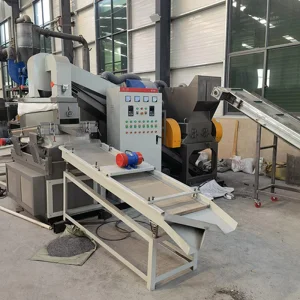
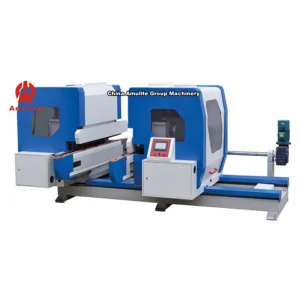
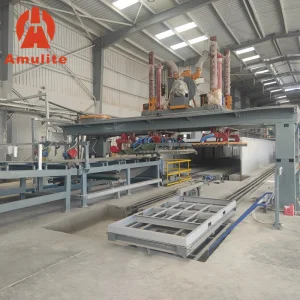
The global construction landscape is undergoing a systemic transition toward lightweight, high-tensile, and sustainably engineered building envelopes. At the epicenter of this modern industrial evolution is the continuous cold roll forming technology. Selecting the best metal roofing corrugated steelforming machine company is no longer merely an equipment procurement choice; it is a long-term strategic decision that influences operational yield, scrap rates, thermal performance compliance, and structural integrity across major infrastructural projects.
Modern industrial, commercial, and agricultural installations demand custom corrugated metal panel profiles capable of withstanding extreme environmental stressors—ranging from typhoon-level wind uplifts to severe corrosive industrial atmospheres. Advanced corrugated steel forming lines engineered by industry leaders seamlessly process high-strength steel grades (including G550 yield strength Galvalume, Aluzinc, PPGI, and stainless steel) into geometric profiles engineered for optimum moment of inertia and load distribution.
Turnkey cold-roll forming solutions for wide-span clear-structure warehouses, distribution centers, and manufacturing plants utilizing high-rib corrugated profiles.
Precision wave profiles and standing-seam integration offering enhanced aesthetic appeal, solar panel mounting capability, and leak-proof micro-grooving.
Heavy-duty corrugated metal sheet machinery specialized in producing anti-corrosive, grain-bin-grade structural panels with integrated punching systems.
As Smart Manufacturing and Industry 4.0 paradigms converge with metallurgical engineering, the roadmap for metal roofing corrugated steelforming machinery focuses on adaptive automation, AI-driven quality inspection, and zero-downtime line transition.
Incorporating inline laser sensors and torque feedback monitors that automatically adjust roll station pressure based on real-time coil thickness and tensile variations.
Modular tool-less cassette changeover technology allowing manufacturing plants to switch profile geometries (e.g., sinoidal wave to trapezoidal rib) in under 15 minutes.
Optical neural-network cameras detecting paint micro-cracks, surface scratching, profile distortion, and hole punch alignment at line speeds exceeding 50 m/min.
Achieving long-term operational excellence requires an uncompromised commitment to structural engineering and material selection within the roll forming machine itself. The engineering design of top-tier corrugated steel forming machinery includes:
| Sub-System Module | Tier-1 Engineering Standard | Impact on Output Quality |
|---|---|---|
| Uncoiler / Decoiler | 10-Ton Hydraulic Expansion with Auto-Tracking Sensor | Eliminates coil slippage and maintains axial alignment to prevent sheet twist. |
| Roll Tooling Stations | Cr12MoV / D2 Die Steel, CNC Turned, Hard Chrome Plated (0.05mm) | Prevents surface degradation on prepainted (PPGI) coils and extends tool life up to 10+ years. |
| Drive Transmission | Individual Gearbox Drive per Station / Heavy-Duty Chain Drive | Delivers smooth torque, preventing micro-surges that lead to profile pitch errors. |
| Cut-off Mechanism | Hydraulic Post-Cutter with Cr12 Die and Servo Flying Shear | Ensures clean, burr-free edge cuts without distorting the corrugated end profile. |
| PLC Automation System | Siemens S7-1500 / Schneider Electric with HMI Touch Interface | Offers multi-language parameter recipe management, error diagnostics, and remote telemetry. |
China's industrial sector has matured into the world's premier cluster for heavy machinery fabrication and precision automation. China-based OEMs specializing in metal roofing corrugated steelforming machinery offer significant competitive advantages over traditional regional manufacturers, driven by robust supply chain integration and localized technical depth.
Proximity to world-class steel foundries, CNC machining hubs, and heat-treatment facilities lowers component procurement lead-times by up to 40%, enabling faster custom fabrication.
By combining high-efficiency assembly processes with premium global electrical components (e.g., Siemens, Schneider, Omron), Chinese manufacturers deliver enterprise-grade durability at superior capital economy.
Unmatched operational scalability allows engineering teams to custom-design specialized roll forming profiles, multi-tier sandwich panel integration, and high-speed automated stackers without excessive lead-time penalties.
Procurement directors, industrial contractors, and manufacturing plant investors must navigate complex evaluation criteria when acquiring high-capacity steel forming lines. A detailed strategic sourcing framework extends beyond initial unit cost, focusing heavily on Total Cost of Ownership (TCO), Operational Equipment Effectiveness (OEE), and long-term risk mitigation.
Mandatory full-speed dry runs and live material trial cuts conducted under realistic operational stress before container loading, ensuring profile dimensional compliance.
Designing machine frames with heavy-duty structural base blocks optimized for 40ft HQ container loading, reducing transoceanic freight costs and site re-assembly time.
Standardizing critical wear parts—such as hydraulic cutter blades, proximity switches, and solenoid valves—to internationally available stock codes for immediate local replacement.
Deploying heavy industrial machinery into global markets requires strict adherence to international electrical, mechanical safety, and environmental standards. Premier machine manufacturing companies ensure that every roll forming line meets regional grid and safety specifications:
Integration of physical safety enclosures, emergency E-stop loops, light curtains, and UL-certified control panel wiring tailored for North American and European markets.
Custom electrical engineering matching regional power supplies (e.g., 220V/380V/415V/480V at 50Hz or 60Hz), paired with heavy-duty line reactors to isolate harmonic distortion.
Deployment of multilingual field engineers for foundation layout validation, mechanical erection, PLC commissioning, and operator safety training.
Evaluating a top-tier machine manufacturer requires reviewing several key benchmarks: machine frame rigidity (welded structural steel vs light plate), roller material and heat treatment depth (Cr12MoV/D2 hardened to HRC 58-62), PLC automation reliability (Siemens/Schneider integration), proven tolerance controls (under ±0.5mm profile variation), and responsive post-sales technical support.
Improperly engineered roller geometry or unpolished roller surfaces introduce micro-abrasions into the organic paint finish of PPGI coils during forming. High-quality machinery utilizes CNC-lathed rollers coated with hard chrome (0.05mm thickness) and smooth pass-radius transitions to preserve paint film elasticity, preventing premature oxidation and corrosion.
Yes. Modern steelforming machinery engineered with manual or motorized dial-gauge side-frame adjustments can accommodate material thickness ranges (typically 0.3mm to 0.8mm). However, forming ultra-high-yield steel (G550 MPa) versus soft commercial quality steel (G300) requires specific station calibration to account for material springback variations.
Standard hydraulic stop-to-cut roll forming lines operate at speeds of 15 to 25 meters per minute. High-efficiency automated production lines equipped with servo-driven flying shears and continuous loop accumulators achieve production speeds of 40 to 60 meters per minute without sacrificing cut accuracy.
Leading OEMs apply anti-rust oil coatings to all polished machine surfaces, wrap key assemblies in moisture-proof vacuum foil, securely bolt heavy structural bases to container floor channels via steel wire tensioners, and enclose sensitive PLC control cabinets in IP54-rated tropicalized wooden cases.