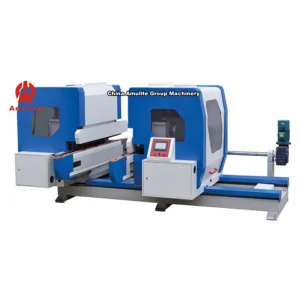
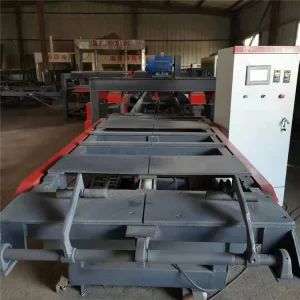
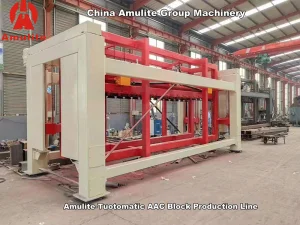
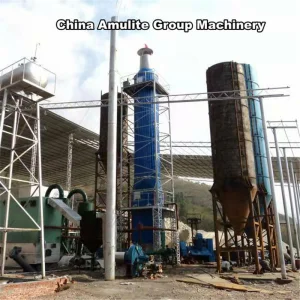
Engineered for seamless downstream integration with our bulk material storage and pneumatic metering silos.
A definitive guide to selecting, engineering, and commissioning industrial lime silos for hydrated lime (Calcium Hydroxide - $\text{Ca(OH)}_2$) and quicklime (Calcium Oxide - $\text{CaO}$).
In modern process engineering—spanning Flue Gas Desulfurization (FGD), municipal water purification, Autoclaved Aerated Concrete (AAC) manufacturing, and chemical synthesis—the continuous, unhindered discharge of bulk lime is critical. Interrupted material flow leads to process downtime, stoichiometry imbalance in chemical reaction tanks, and hazardous manual interventions.
As a leading lime silo manufacturer and factory, we integrate heavy-duty mechanical engineering, advanced fluid dynamics simulation (DEM/CFD), and automated control skids into every silo system. Whether you require bolted panelized silos for international freight optimization or fully welded monolithic silos for stringent atmospheric seals, our designs conform strictly to ISO 9001:2015, DIN EN 1090, ASME Section VIII, and ATEX explosion protection directives.
Every silo engineered at our facility features five integrated operational subsystems designed to prevent compaction, control dust, and deliver exact volumetric or gravimetric feeding.
Constructed from structural Q235B or Q345R carbon steel (with optional 304/316L stainless steel contact zones). Features a 60° to 70° steep discharge cone angle specifically calibrated to exceed the angle of repose and internal friction angle of cohesive hydrated lime.
Combines multi-zone aeration pads (using dry, oil-free micro-pulped compressed air) with mechanical vibration pads or heavy-duty planetary arch-breakers to continuously break material bridges without packing the powder tight.
Top-mounted automatically cleaned pulse-jet bag filters utilizing PTFE-membrane polyester needle felt media. Achieves micro-particulate containment efficiency exceeding 99.99%, keeping ambient discharge well under 5 mg/Nm³.
Equipped with variable-frequency drive (VFD) volumetric screw feeders or Loss-in-Weight gravimetric dosing units. Integrated with knife-gate isolation valves and rotary airlocks to eliminate downstream back-draft moisture ingress.
| Model Series | Volume Capacity (m³) | Diameter (mm) | Shell Height (mm) | Discharge Cone Angle | Dosing Rate Range (kg/h) | Structure Type |
|---|---|---|---|---|---|---|
| ALS-50 | 50 m³ | Ø 3,000 | 11,500 | 60° / 65° | 50 – 1,000 kg/h | Monolithic Welded / Bolted |
| ALS-100 | 100 m³ | Ø 3,500 | 14,200 | 60° / 65° | 100 – 2,500 kg/h | Bolted Segmented / Welded |
| ALS-200 | 200 m³ | Ø 4,200 | 17,800 | 65° / 70° | 250 – 5,000 kg/h | High-Strength Bolted Panel |
| ALS-500 | 500 m³ | Ø 6,000 | 22,500 | 65° / 70° | 500 – 12,000 kg/h | Bolted Flange Heavy-Duty |
| ALS-1000 | 1,000 m³ | Ø 8,500 | 26,000 | 70° Parabolic | 1,000 – 25,000 kg/h | Custom On-Site Modular Weld |
Our engineered lime silos are operational across diverse global sectors, adapted to local regulatory and environmental demands.
In thermal power stations and waste incineration facilities, our hydrated lime silos feed continuous dry or semi-dry sorbent injection systems (DSI/SDA). They maintain exact calcium-to-sulfur ratio stoichiometry to neutralize $\text{SO}_2$ and $\text{HCl}$ stack emissions under stringent environmental standards.
Used extensively for pH adjustment, heavy metal precipitation, and sludge conditioning. Silo skids incorporate sealed continuous lime slaking circuits ($\text{CaO} + \text{H}_2\text{O} \rightarrow \text{Ca(OH)}_2 + \text{Heat}$) that safely manage exothermic reaction steam without clogging delivery pipes.
As crucial raw material storage in Autoclaved Aerated Concrete and Fiber Cement Board plants, quicklime silos deliver high-calcium oxide batching into high-speed slurry mixers. Precision gravimetric dosing ensures uniform pore structure and hydro-thermal reaction during autoclave curing.
Crucial for gold, copper, and iron ore processing where lime acts as a flotation reagent and acid-mine drainage (AMD) neutralizer. Engineered to withstand high-altitude wind loads, seismic zones, and severe sub-zero ambient temperatures.
We are advancing smart industrial storage through IoT monitoring, predictive maintenance, and self-calibrating dosing algorithms.
Moving away from unreliable cable-weighted paddle sensors. Our modern silos integrate 80 GHz non-contact FMCW radar sensors and acoustic surface mappers, delivering real-time 3D volumetric inventory data despite dense dust clouds during tanker pneumatic discharge.
Integrated load pin analytics and motor torque monitoring dynamically detect early-stage rat-holing or bridging. The PLC automatically activates targeted fluidization air pulses before complete discharge blockage occurs, eliminating process stoppages.
Future-proofed loading skids feature automatic pinch valves, over-pressure relief valves connected to containment ducts, and acoustic overfill alarms, completely protecting operator safety and neighboring ecosystems.
Leveraging world-class steel fabrication ecosystems, advanced robotic welding, and streamlined export logistics to deliver unmatched industrial value.
Our heavy production bases in China have direct raw-material access to premier steel mills (Baosteel, HBIS). We source certified high-tensile carbon steel (Q235B/Q345R) and food/chemical-grade stainless steel plates with complete mill test certificates (MTC EN 10204 3.1), eliminating material bottlenecks.
Silo shell plates are precision-cut on 20kW fiber laser beds and rolled with CNC 4-roll plate bending machines. Automated submerged arc welding (SAW) guarantees 100% full-penetration seams subjected to ultrasonic and radiographic non-destructive testing (NDT).
To eliminate high ocean freight costs associated with out-of-gauge breakbulk cargo, our engineering team developed high-precision panelized bolted silos. The entire silo structure (plates, stiffeners, internal cones, filter housing) fits inside standard 40ft HQ shipping containers, reducing international transport costs by up to 60%.
Ensuring full regulatory compliance across North America, Europe, the Middle East, Southeast Asia, and Latin America.
Every silo structure is custom-calculated for site-specific wind velocity (up to 250 km/h), snow load, and seismic acceleration according to Eurocode 3 (EN 1993-4-1), ASCE 7-16, or local building regulations. Complete finite element analysis (FEA) reports are provided prior to fabrication.
Equipped with explosion relief panels (bursting discs rated to $P_{stat}$) and dust-proof electrical instruments rated to ATEX Zone 20/21/22 or Class II, Div 1/2. Control panels utilize premium global components (Siemens PLC, Schneider Electric, ABB drives) tailored to regional grid voltages (380V-480V / 50-60Hz).
We supply comprehensive civil foundation engineering guidelines, anchor bolt patterns, and detailed 3D step-by-step assembly documentation. On-site commissioning engineers and multilingual technical support teams ensure swift plant integration and operator training.
In-depth answers to critical technical queries compiled by our chief process engineers.
Quicklime ($\text{CaO}$) is granular or pebble-like (0-3mm or 3-8mm), denser (bulk density ~1.0-1.1 t/m³), highly abrasive, and violently exothermic when mixed with water. It requires heavy-duty abrasion-resistant steel discharge screws and hermetically sealed desiccant breathers. Hydrated Lime ($\text{Ca(OH)}_2$) is a fine powder (bulk density ~0.4-0.5 t/m³) that aerates easily, behaves cohesively, and tends to form stable material bridges. Hydrated lime silos demand steeper cone angles (65°-70°), fluidization aeration systems, and mechanical agitators.
We utilize a multi-pronged flow aid strategy: First, we optimize the cone angle (minimum 60° to 70°) based on shear cell tests of your specific powder sample. Second, we install micro-porous fluidization pads along the lower cone section that introduce dry fluidizing air to break inter-particle friction. Third, for tough cohesive grades, we integrate a heavy-duty mechanical arch-breaker with rotating flexible sweep arms driven by a bottom-mounted gearbox motor.
For volumetric feeding via variable-speed screw conveyors, accuracy is typically within ±1.5% to ±2.0%. When combined with a Loss-in-Weight gravimetric dosing system mounted on precision load cells (with continuous PLC feedback control), metering accuracy reaches up to ±0.5%. This is ideal for critical chemical dosage applications such as municipal water treatment or FGD acid neutralization.
Yes. Our bolted panelized silos are manufactured using CNC laser-punched high-strength steel sheets with continuous internal flange sealing. We apply specialized chemical-resistant, hydrophobic EPDM elastomer sealants between every seam. Bolted silos offer identical structural life (>30 years) while providing massive advantages in containerized export shipping, reduced port handling fees, and rapid bolt-together site erection without specialized field welders.
During bulk tanker unloading (typically at 0.8 to 1.5 bar pneumatic conveying pressure), air displacement inside the silo is managed by a top-mounted pulse-jet filter with 12 to 36 PTFE-coated filter cartridges. The reverse pulse-jet cleaning system periodically fires high-pressure air bursts to knock captured dust back into the silo. Pressure relief safety valves ($P_{safe}$) are installed to automatically vent excess air if filter media becomes blinded.
Explore our full suite of automated building material production systems and material handling machinery.