High-efficiency, precision-engineered machinery lines designed for modern fiber cement and building material production.
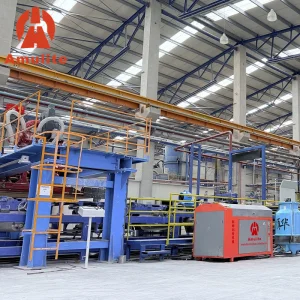
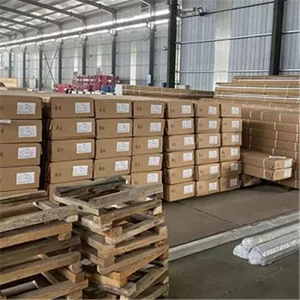
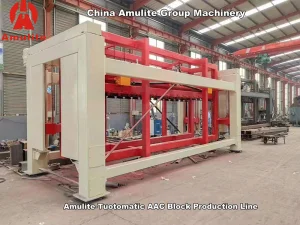
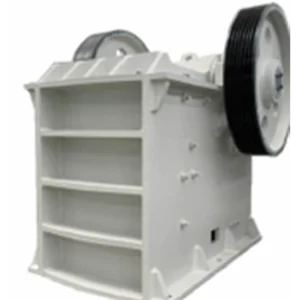
Analyzing the paradigm shift in non-metallic building material manufacturing and turnkey industrial line scalability.
Modern building materials demand absolute dimensional precision, fireproof integrity (A1 Class), and zero-waste manufacturing efficiency. Select manufacturing leaders utilize ultra-high-pressure hydraulic dewatering, closed-loop wet slurry recirculation, and hydrothermal autoclave synthesis to engineer fiber cement boards with flexural strengths exceeding 16 MPa.
Comprehensive comparative evaluation of Hatschek process, Flow-on technology, and Extrusion methodologies in fiber concrete board production.
Cellulose pulp unbaling, hydration, and high-consistency disc refining to achieve optimal Schopper-Riegler (°SR) freeness. Coupled with automated dosing of Portland cement, silica quartz powder, and micro-reinforcement fibers.
Utilizing 3 to 8 rotating sieve cylinders within slurry vats. Ultra-thin film layers (0.2–0.3mm) are continuously transferred onto felt belts and accumulated on the shaping drum until target board thickness is reached.
Green boards undergo high-pressure steam curing at 1.2 MPa and 185°C–195°C for 12–14 hours. Hydrothermal synthesis converts quartz micro-particles and calcium hydroxide into stable tobermorite crystalline structures.
| Process Parameter | Hatschek Wet Method | Flow-on Machine Method | Extrusion Moulding Line |
|---|---|---|---|
| Primary Application | Thin/Medium Sheets (4mm–30mm) | Medium/Thick Architectural Boards | Heavy Structural / Hollow Core Panels |
| Production Capacity | High (up to 30,000,000 m²/year) | Medium to High (up to 15,000,000 m²/yr) | Custom Batch / Continuous Extrusion |
| Density Range (g/cm³) | 1.2 – 1.75 g/cm³ | 1.0 – 1.4 g/cm³ | 0.9 – 1.3 g/cm³ |
| Flexural Strength (MPa) | > 16 MPa (Cross-direction reinforced) | > 12 MPa | > 10 MPa |
| Automated Control Level | Fully Automated PLC + SCADA System | Semi to Fully Automated PLC | Integrated Hydraulic PLC System |
Engineered to adapt to rigorous building standards across diverse climate zones and architectural requirements globally.
Strict fire-safety standards (ASTM E119, EN 13501-1 Class A1 non-combustible) demand high-density fiber cement sidings with hydrophobic surface treatment. Machine lines integrate precision automatic 4-side edge trimming, sanding, and pre-coating application modules.
High relative humidity requires low-density, moisture-resistant calcium silicate ceiling tiles (4mm–6mm thickness) and interior partition walls. Lines are tuned to utilize locally sourced silica sand and fly ash, reducing chemical binder costs.
Focusing on heavy-duty fire barrier walls, heat insulation core boards, and EPS lightweight cement sandwich panels. Machines engineered with reinforced multi-mold casting systems capable of continuous duty in ambient temperatures exceeding 45°C.
Low-cost structural insulated panels (SIPs) and corrugated roof sheets require high throughput and flexible raw material formulations. Amulite lines accommodate low-grade unbleached kraft pulp mixed with synthetic polypropylene fibers.
Unmatched heavy-engineering vertical integration, component optimization, and cost-to-performance benchmark leadership.
Forming cylinders (1300mm–1600mm width), high-pressure autoclaves (up to 2.5m diameter), and 7000-ton hydraulic stacking presses are machined, welded, and stress-relieved under one roof in Hebei, China.
Zero compromise on control reliability: Integrated Siemens S7-1500 PLC systems, Schneider low-voltage electrics, SEW Eurodrive reducers, Parker hydraulics, and ABB variable frequency drives assure continuous operation.
Delivering European-grade operational tolerances, line speed, and board flexural strength metrics at a fraction of capital expenditure, accelerating total project return on investment (ROI) within 18–24 months.
From greenfield site planning and foundation load calculations to recipe optimization and operator certification.
Comprehensive 3D plant layout matching factory dimensions, foundation pits, trenching for slurry recycling, steam boiler integration, and electrical load distribution planning.
Resident dispatch of senior mechanical engineers, electrical technicians, and chemical engineers to lead mechanical assembly, wiring, dry runs, and wet production testing.
Tailoring raw material mix ratios using local cement, silica sand, and cellulose pulp to minimize cost per square meter while achieving strict ISO/ASTM quality standards.
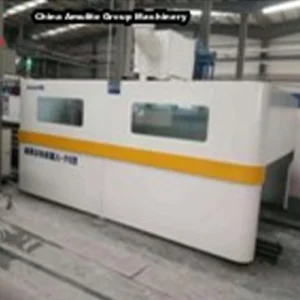
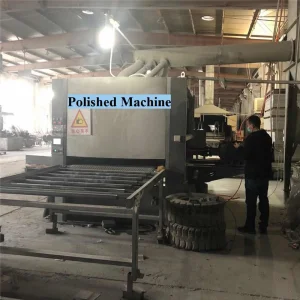
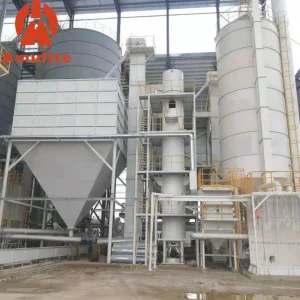
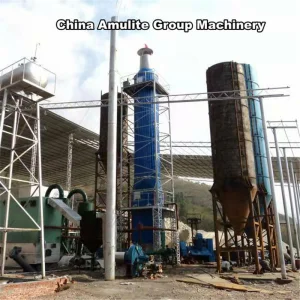
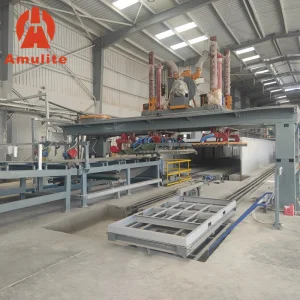
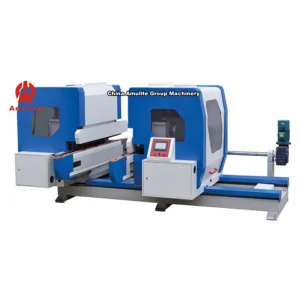
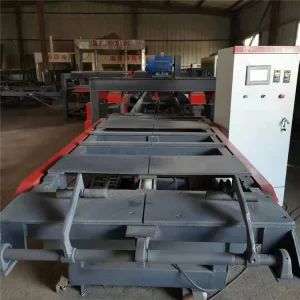
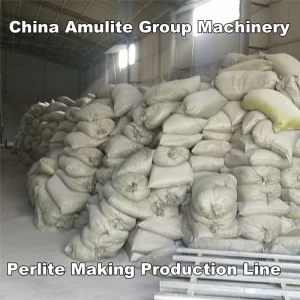
Advanced machinery systems covering secondary processing, block production, grinding, and specialized panel line configurations.
Detailed engineering clarification regarding machinery configuration, raw material compatibility, and operational parameters.