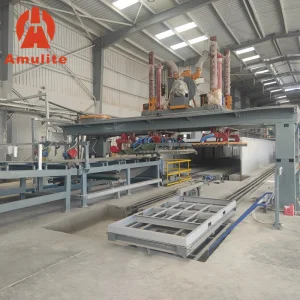
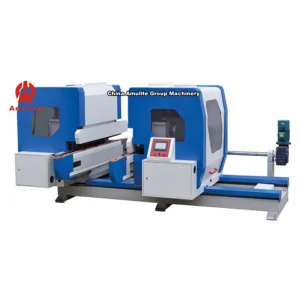
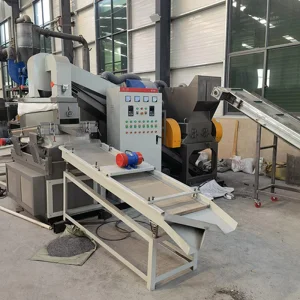
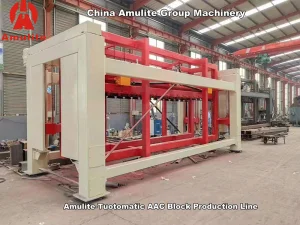
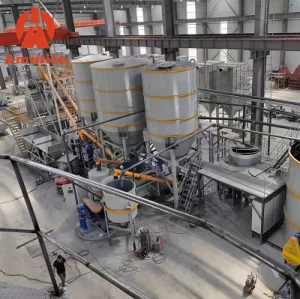
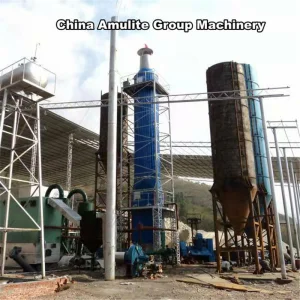
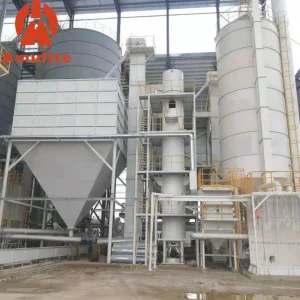
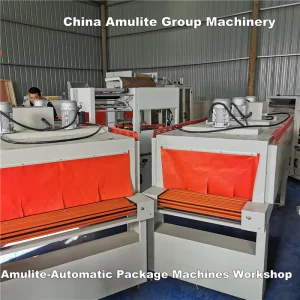
Explore our core engineering line-up featuring automated corrugated sheet machinery, block systems, and recycling infrastructure.
Analyzing capital expenditure (CAPEX), total cost of ownership (TCO), and raw material dynamics for fiber-reinforced cement board lines in modern building material manufacturing.
Modern industrial buyers require equipment that maximizes throughput while minimizing initial machinery expenditures. High-speed Hatschek sheet-forming technologies paired with automated stackers reduce operational labor by up to 45%, delivering an average payback period within 18–24 months of full commercial scale production.
Global regulatory mandates enforce strict shifts from chrysotile asbestos to green synthetic fibers such as Polyvinyl Alcohol (PVA), Cellulose, and Polypropylene (PP). Plant operators demand flexible slurry mixing lines capable of handling diverse fiber length ratios and slurry viscosity profiles without downtime.
Roofing products manufactured via modern lines must satisfy rigorous international performance codes (such as EN 494 and ASTM C1185). Critical performance factors include high flexural strength (>16 MPa), zero moisture permeability, and high resistance to tropical cyclonic wind pressures and freeze-thaw cycles.
Transitioning a production line from chrysotile asbestos to non-asbestos PVA/cellulose fiber requires specific machine recalibrations. PVA fibers exhibit higher tensile strength but require specialized high-shear refining and pulping tanks to prevent fiber clumping, combined with modified vacuum dewatering pressures across the felt layout.
Ensuring full alignment with WHO, ILO, OSHA, and regional environmental directives through engineered zero-dust and closed-loop liquid recovery systems.
Water sustainability is paramount in modern fiber-cement manufacturing. Our plant designs integrate centrifugal liquid clarifying tanks, flocculation recovery channels, and continuous slurry recycling. Water usage is reduced by over 85% compared to legacy open-loop cement processing systems.
To eliminate workplace hazards during raw material dosing (silica sand, cement, calcium carbonate), the production line features negative-pressure pneumatic conveyance paired with pulse-jet baghouse dust collectors, maintaining airborne dust concentration under 1.0 mg/m³ in compliance with OSHA standards.
Roofing sheets produced on our non-asbestos fiber cement lines utilize sustainable organic pulp and supplementary cementitious materials (such as fly ash and slag). End products achieve low embodied carbon footprints, assisting real estate developers in securing LEED Gold and BREEAM certifications.
| Performance Metric | Traditional Asbestos Cement Line | Modern PVA / Cellulose Non-Asbestos Line | Engineering Impact & Compliance Benefit |
|---|---|---|---|
| Primary Fiber Reinforcement | Chrysotile / Amosite Fiber (10-15%) | PVA (1.5-2.5%) + Processed Cellulose (3-5%) | Eliminates health compliance liabilities; aligns with EU/WHO directives. |
| Bending Strength (Flexural) | 14.0 - 18.0 MPa | 16.0 - 24.0 MPa (Hydrothermal Cured) | Higher structural strength allow thinner, lighter roof sheet profiles. |
| Density Range | 1.40 - 1.55 g/cm³ | 1.30 - 1.70 g/cm³ (Adjustable press ratio) | Reduces roof structure deadload and cuts transport shipping costs. |
| Curing Methodology | Ambient Air Curing (14-28 Days) | High-Pressure Autoclave / Accelerated Steam | Cuts inventory holding time from weeks to hours (24-hour cycle). |
| Water Absorption Rate | 22% - 28% | 18% - 24% (Hydrophobic Additives) | Enhanced freeze-thaw durability and reduced biological growth. |
A step-by-step technical breakdown of the advanced Hatschek process, hydraulic corrugation pressing, and automated handling systems.
Raw wood pulp is processed in a hydrapulper and disc refiner to achieve optimum Schopper-Riegler (°SR) freeness. PVA fibers and mineral slurry (silica sand, OPC, limestone) are automatically weighed via PLC batching units.
The homogeneous slurry flows into 3 to 5 vat units where rotating mesh cylinders pick up micro-layers (0.2–0.3 mm) of fiber-cement film, transferring them continuously onto a high-tension synthetic felt belt.
Multiple high-vacuum suction boxes positioned along the felt run remove excess moisture from the laminated film, reducing water content from 60% down to 28–32% prior to accumulation on the forming drum.
The green sheet builds up layer-by-layer on the main forming cylinder until reaching the engineered thickness (e.g., 5mm, 6mm). An automated flying cutter severs the layer cleanly along the drum axis.
Flat green sheets are vacuum-transferred to the corrugation template machine. Precision hydraulic arms press standard wave profiles (e.g., Profile 177/51 or 130/35) while placing corrugated steel separator plates between sheets.
Sheet stacks undergo pre-curing for 8–12 hours, followed by high-pressure autoclaving (1.0–1.2 MPa steam at 180°C) or thermal steam room curing, forming calcium silicate hydrate (C-S-H) crystalline bonds.
Market dynamics, localized procurement preferences, and industrial roof sheet consumption patterns across key economic zones.
High demand driven by agricultural infrastructure, industrial warehouses, and low-cost residential housing projects. Key regional focus is on corrugated sheet mold resistance and thermal insulation under extreme humidity and tropical heat.
Rapid conversion from legacy asbestos sheets to PVA/cellulose non-asbestos lines. Manufacturers prioritize versatile equipment capable of producing both large-wave roofing sheets and flat architectural cladding panels on the same line.
Focus on rapid industrialization and heavy-duty roofing applications. Plant buyers seek turnkey machinery with high tolerance for variable local cement grades and raw silica sand qualities, requiring custom dosing systems.
Rigorous requirements for freeze-thaw durability and high snow load resistance (EN 494 Class A/B compliance). Plants rely heavily on high-pressure autoclaving processes to achieve maximum mechanical flexural strength.
Delivering end-to-end plant commissioning, civil engineering support, custom raw material formulations, and lifecycle technical assistance.
Our engineering teams provide detailed civil foundation drawings, drainage trench blueprints, steam line routing, and load-bearing data. 3D BIM integration ensures frictionless installation alongside existing factory buildings.
Before equipment dispatch, customer raw material samples (cement, local sand, pulp, fly ash) undergo bench testing in our process lab. We formulate optimized mix ratios to ensure target board strength at lowest chemical additive cost.
Senior field engineers oversee mechanical installation, electrical wiring, PLC remote diagnostics integration, and dry testing. Hands-on training programs certify local operator staff in maintenance and emergency protocols.
In-depth responses covering technical, financial, and operational aspects of fiber cement sheet plant setup.
Explore auxiliary processing machinery, wall panel production lines, and material recycling equipment.