Heavy-duty engineering built for continuous operation in South American manufacturing environments.
Analyzing macroeconomic drivers, automation imperatives, and technological convergence in Brazilian industrial manufacturing.
Brazil stands as the industrial powerhouse of South America, driven by massive infrastructure developments, civil urbanization, and a modernizing manufacturing sector across states like São Paulo, Minas Gerais, Rio Grande do Sul, and Santa Catarina. Under national modernization initiatives such as Nova Indústria Brasil (NIB), manufacturing enterprises are facing urgent pressure to transition from legacy, labor-intensive cutting methodologies to zero-defect, high-speed fully automatic cutting systems.
In sectors ranging from building material processing (fiber cement siding, AAC blocks, calcium silicate wall panels) to metal fabrication, rubber, and foam packaging, raw material utilization efficiency directly dictates operational margins. Traditional manual or semi-automated slitting and edge-trimming systems incur heavy kerf losses, dimensional variance (+/- 2.0mm), edge chipping, and severe safety compliance exposure under Brazil's stringent NR-12 regulatory framework.
As a premier Chinese original equipment manufacturer (OEM) specializing in fully automatic cutting machine systems, our engineering philosophy bridges high-tier industrial automation with competitive capital expenditure (CapEx). By integrating multi-axis servo synchronization, real-time laser edge tracking, diamond-tipped carbide saw blade matrices, and industrial IoT SCADA interfaces, our equipment delivers precision tolerances down to ±0.2mm at throughput speeds exceeding 60 meters per minute.
This whitepaper provides procurement directors, chief technology officers, and plant operations managers in Brazil with an exhaustive engineering guide. We analyze systemic integration, material behavior dynamics during high-speed cutting, NR-12 compliance protocols, localized after-sales infrastructure, and total cost of ownership (TCO) optimization.
Delivering sub-millimeter cutting accuracy, automated waste extraction, and continuous multi-shift durability.
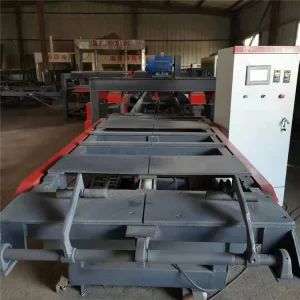
Driven by high-torque Siemens or Yaskawa absolute servo motors matched with planetary gear reducers. The longitudinal and cross-cutting units operate on dual-linear guide rails, eliminating backlash and assuring absolute perpendicularity during high-speed continuous line travel.
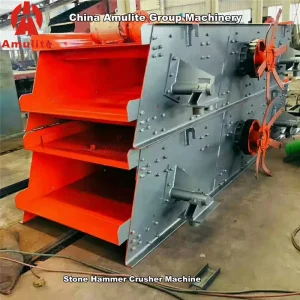
Specifically configured for mineral-heavy substrates (fiber cement, silicate, AAC block). Features enclosed cutting chambers coupled with high-cfm negative pressure cyclone collectors, achieving airborne particulate filtration down to 2.5 microns for enhanced workplace health.
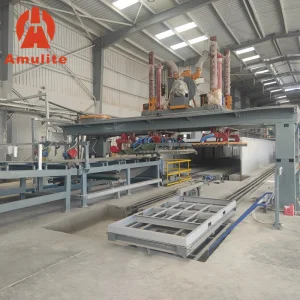
Executes precise longitudinal slitting, cross-cutting, chamfering, and edge-tongue/groove profiling in a single automated pass. Eliminates secondary manual handling, cutting labor overhead by up to 80% while preserving sheet structural integrity.
| Engineering Parameter | Standard Specification Value | Customizable Options for Brazil Market |
|---|---|---|
| Maximum Workpiece Width | 1,300 mm / 1,600 mm | Up to 2,400 mm custom continuous width |
| Cutting Thickness Range | 4 mm – 30 mm (Solid Panels) / 50 – 300 mm (AAC Blocks) | Heavy-duty blade shafts for up to 500mm depth |
| Line Cutting Speed | 15 to 65 meters per minute (VFD Controlled) | Synchronized auto-tracking with production line feed |
| Dimensional Precision Tolerance | ±0.15 mm to ±0.20 mm | High-resolution optical laser closed-loop encoder (±0.05 mm) |
| Control Architecture | Siemens S7-1500 PLC + 12" HMI Touch Interface | Dual Language: Portuguese (BR) & English HMI |
| Safety Compliance Standard | CE Certified / ISO 9001:2015 | Full NR-12 (Brazilian Safety Mandate) Hardware Package |
| Electrical Voltage & Frequency | 380V / 50Hz (Standard China) | 220V/380V/440V 60Hz (Brazil Grid Compatibility) |
Comprehensive engineering compliance, electrical adaptation, and nationwide support services.
Brazil's Norma Regulamentadora 12 (NR-12) imposes some of the world's strictest industrial machinery safety laws. Importing non-compliant machinery risks heavy fines, customs holds, or plant shutdowns by the Ministry of Labor (MTE).
Navigating Brazilian import tariffs (*Custo Brasil*) requires deep knowledge of NCM customs classification codes and *Ex-Tarifário* tax relief mechanisms. Our dedicated trade engineering department works alongside Brazilian importers to maximize fiscal efficiency.
Combining world-class component integration with agile manufacturing and rapid ROI.
Historically, Brazilian plants relied heavily on European cutting equipment suppliers from Germany or Italy. However, shifting macroeconomic realities have highlighted critical bottlenecks: excessive lead times (10 to 14 months), prohibitive initial CapEx, and costly, slow spare-part dispatch across the Atlantic.
Our direct manufacturing supply chain in China offers a compelling alternative without compromising engineering integrity:
Before any cutting system leaves our Hebei manufacturing facility bound for Santos, Paranaguá, or Suape ports, it undergoes strict dynamic validation:
Tailored cutting technology deployed in major manufacturing ecosystems across Brazil.
High-volume processing of non-asbestos fiber cement sidings and calcium silicate boards for modular construction and drywall distributors. Integrated automated stacking and palletizing systems optimize space and warehouse throughput.
Precision hot-wire and high-speed mechanical slitting of XPS foam boards and EPS sandwich wall panels for cold storage construction, refrigerated transport manufacturing, and roof insulation.
Custom high-speed slitting and trimming for specialized protective packaging materials, composite boards, and electronics enclosure padding operating under continuous multi-shift production.
Integrating artificial intelligence, computer vision, and IoT to maximize raw material yield.
Next-generation automatic cutting systems are incorporating high-resolution line-scan cameras powered by deep-learning vision models. As un-cured or cured sheets move down the conveyor, the optical system detects micro-cracks, surface inclusions, or thickness anomalies within milliseconds, dynamically recalculating saw blade position to cut around defects and drastically reduce scrap rates.
Unplanned downtime on high-speed panel lines directly erodes profitability. Our modern systems feature IoT sensor suites monitoring spindle motor vibration, saw arbor bearing temperature, and blade sharpness curves. Machine learning algorithms alert Brazilian maintenance teams before catastrophic blade wear or bearing failure occurs, moving from reactive repair to scheduled predictive maintenance.
Addressing essential technical, commercial, regulatory, and logistics queries for project decision-makers.
Our engineering team designs every machine bound for Brazil in accordance with ABNT and NR-12 parameters. This includes category 4 safety light curtains, dual-circuit safety interlocks on access doors, zero-energy state lockout-tagout (LOTO) isolation valves, electro-magnetic blade braking systems, and full Portuguese safety label documentation. We provide complete electrical schematics for local NR-12 ART (Anotação de Responsabilidade Técnica) sign-off.
Yes. While standard Chinese industrial power is 380V 50Hz, we custom-build electrical control cabinets tailored specifically to your local state grid voltage in Brazil (e.g., 220V 60Hz 3-phase, 380V 60Hz, or 440V 60Hz). Motors, variable frequency drives (VFDs), transformers, and cooling fans are strictly rated for 60Hz continuous duty.
Manufacturing and factory acceptance testing (FAT) takes approximately 60 to 90 days depending on line customization. Ocean transport from main Chinese ports (Qingdao, Shanghai, Tianjin) to major Brazilian ports (Santos, Paranaguá) takes roughly 35 to 45 days. Our commissioning engineers can be dispatched to your site upon container arrival for 14-21 days of assembly, calibration, and local staff training.
We equip every shipped machine with an extensive 2-year operational spare parts kit (including backup sensors, solenoid valves, drive belts, and specialized PCD/carbide saw blades). Furthermore, we standardize on global components (Siemens, Schneider, Festo, SKF) that can be sourced locally in Brazil within hours. Replacement blades can be shipped via express air freight or ordered from our authorized tooling partners.
Yes. Every machine system includes an integrated industrial VPN router (HMS Flexy / Siemens Scalance). With your authorization, our senior automation software engineers in China can securely dial into your machine’s PLC and HMI remotely, performing real-time sensor diagnostics, software updates, and parameter tuning without site visit delays.
We support standard international commercial terms including Telegraphic Transfer (T/T), Irrevocable Commercial Letter of Credit at Sight (L/C at sight) issued by premier Brazilian banks (such as Itaú, Bradesco, or Banco do Brasil), and milestone-based progress payments suited for capital equipment procurement.
Explore our comprehensive industrial manufacturing lines engineered for South American markets.
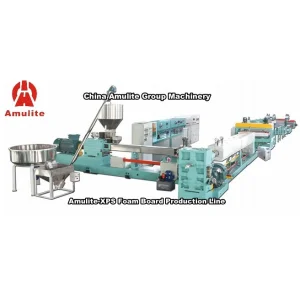
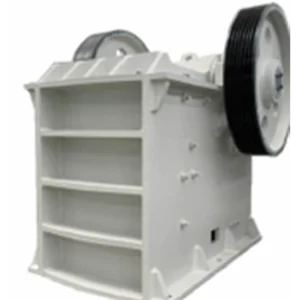
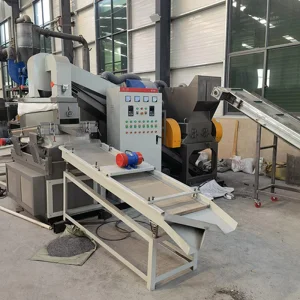
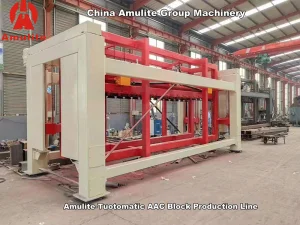
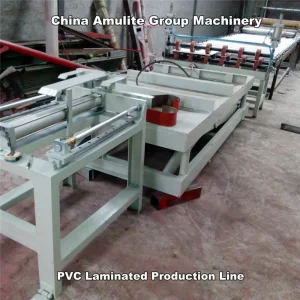
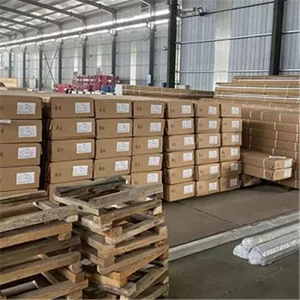
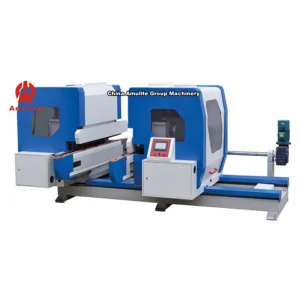
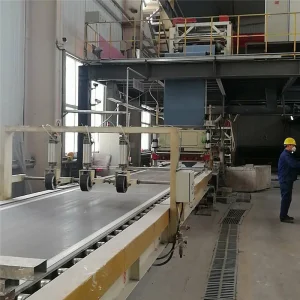
Whether upgrading an existing line or establishing a turnkey manufacturing facility in Brazil, our senior automation engineers provide full technical proposals, NR-12 compliance audits, and custom layout designs within 24 hours.
Send Inquiry Now