High-efficiency, automated machinery solutions deployed to elevate construction productivity across Metro Manila, Bulacan, Cavite, and Laguna.
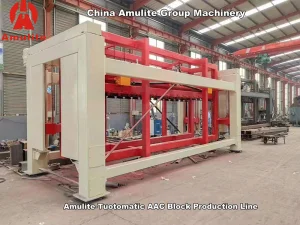
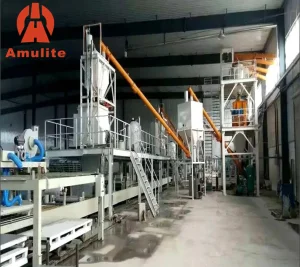
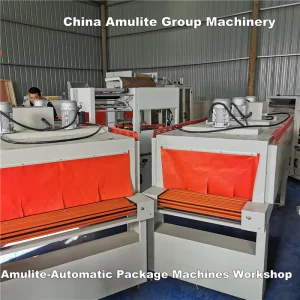
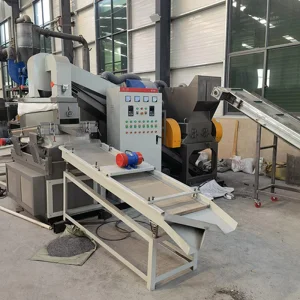
The Greater Manila Area—encompassing Metro Manila (NCR) and its adjacent growth corridors of Bulacan, Cavite, Laguna, and Rizal—is undergoing one of the most aggressive urban infrastructure shifts in Southeast Asia. Under the Philippine Government’s expanded infrastructure initiatives and the rapid acceleration of commercial, residential, and industrial real estate developments, traditional building materials like Concrete Hollow Blocks (CHB) are facing critical structural and economic bottlenecks. For commercial property developers, general contractors, and building material investors in Manila, migrating to locally produced Autoclaved Aerated Concrete (AAC) blocks and reinforcement panels is no longer merely an option; it is an urgent structural imperative.
For decades, standard 4-inch and 6-inch CHB produced by manual or semi-automated batching plants dominated the Philippine construction landscape. However, traditional CHB presents major vulnerabilities in Metro Manila's dense urban developments:
Metro Manila lies entirely within Seismic Zone 4, intersected by the active West Valley Fault System. The National Structural Code of the Philippines (NSCP 2015) mandates severe dead load reductions to minimize inertial seismic forces during major earthquakes. AAC blocks manufactured with an ultra-light dry bulk density of 400–650 kg/m³ (compared to 1800–2000 kg/m³ for dense CHB) reduce total building dead load by up to 45%. This permits structural engineers in Manila to optimize shear wall dimensions, decrease rebar density, and slash foundation pile depth while achieving superior seismic energy dissipation.
Verified operational benchmark parameters delivering high-yield payback for local industrial plants.
Building a successful AAC production plant in the Philippines requires strict adherence to thermo-chemical reactions and precision automation. Raw materials locally available in Luzon—such as fly ash from power plants in Batangas and Limay, silica sand from Zambales quarries, OPC cement (Type 1), quicklime, and gypsum—must be accurately proportioned and processed to form the crystalline Tobermorite (C5S6H5) phase during hydrothermal autoclaving.
Silica sand or fly ash is wet-ground in an automatic closed-circuit ball mill with dynamic classifiers to reach a target fineness of 80–120 mesh (retaining <15% on 0.08mm sieve). Slurry density is continuously regulated by automated ultrasonic transducers to maintain specific gravity between 1.42 and 1.48 g/cm³.
PLC-controlled weighing hoppers dose quicklime, cement, gypsum, and water with an accuracy of ±0.5%. Aluminium powder suspension is injected into the high-speed mixer. The reaction produces millions of microscopic hydrogen gas bubbles, expanding the green cake uniformly inside the 4.2m to 6.0m mould frames.
After reaching optimal green strength (0.15–0.3 MPa) in pre-curing rooms, the block cake is tilted 90 degrees by heavy-duty hydraulic tongs. Amulite’s high-precision cross and longitudinal cutting machine utilizes oscillating steel wires to slice blocks with dimensional tolerances within ±1.0mm, completely eliminating waste crust.
The green AAC cakes are loaded into industrial pressure autoclaves operating at 1.2 to 1.3 MPa (12 to 13 bar) steam pressure and temperature of 190°C to 200°C for 10 to 12 hours. Under these extreme hydrothermal conditions, amorphous silica reacts completely with calcium hydroxide to synthesize crystalline 1.1 nm Tobermorite. This chemical transformation guarantees absolute dimensional stability, zero shrinkage (<0.2 mm/m), and high compressive strength (3.5 to 7.5 MPa) matching Philippine PNS 27:1983 standards.
Investing in an automatic AAC block production line requires a balance of high mechanical reliability, advanced process automation, and fast capital ROI. China Amulite Group stands as a premier global OEM partner, delivering full-turnkey manufacturing solutions that give Manila plant operators a massive competitive edge over European and domestic equipment suppliers.
While European AAC plant machinery requires exorbitant upfront capital expenditures, Amulite delivers equivalent or superior operational precision at a fraction of the cost, drastically reducing investor payback cycles in the Philippines to under 2 years.
We do not compromise on key mechanical and electrical units. Amulite AAC lines feature Siemens PLC automation, Schneider electronics, SEW motor reducers, Rexroth hydraulic systems, and SKF bearings to ensure continuous 24/7 uptime.
Situated near major Chinese deep-water ports (Ningbo/Shanghai/Qingdao), Amulite coordinates direct shipping routes to the Port of Manila (MICT/South Harbor). Heavy equipment, autoclaves, and structural components are delivered within 7 to 10 shipping days.
Tailored walling and panel solutions engineered to solve specific urban construction challenges in the Philippines.
In high-density commercial hubs such as Makati CBD, Bonifacio Global City (BGC), and Ortigas Center, AAC blocks serve as the ideal non-load-bearing infill walling material. Utilizing thin-bed mortar (2-3mm joints), contractors achieve flat wall surfaces ready for direct skim-coating, bypassing heavy exterior plastering and dramatically accelerating tower completion schedules.
Under the Department of Human Settlements and Urban Development (DHSUD) programs, rapid construction of affordable housing in Cavite, Laguna, and Bulacan demands scalable building systems. Interlocking AAC blocks and reinforced ALC floor/wall panels allow rapid modular assembly, slashing labor hours per square meter by up to 60% compared to traditional masonry work.
With an extremely low thermal conductivity (k = 0.11 W/m·K), AAC walls act as natural thermal barriers in tropical climates. For logistics parks and cold storage facilities near the Manila harbor and South Luzon Expressway (SLEX), AAC walls reduce HVAC operational cooling loads by up to 30%, conserving substantial electrical power.
AAC is 100% inorganic and non-combustible, achieving an A1 fire rating. A standard 100mm AAC wall provides a 4-hour fire endurance rating under ASTM E119 / ISO 834 standards, meeting strict Bureau of Fire Protection (BFP) requirements for industrial plants in Cavite Economic Zone (CEZ) and Clark Freeport Zone.
From raw material testing to final trial production: Amulite provides end-to-end lifecycle engineering.
Chemical analysis of local fly ash, sand, lime, and cement samples in our certified laboratory to formulate exact slurry recipes.
Precision CNC machining of autoclaves, cutting machines, fermenting rooms, and heavy structural frame components in China.
Amulite dispatched senior field engineers supervise civil foundation work, mechanical erection, and PLC wiring in Manila.
Conducting live slurry foaming, trial autoclaving, strength testing, and comprehensive operational training for local crews.
Expert technical answers tailored for developers, plant owners, and engineering investors setting up AAC facilities in the Philippines.
Explore our full eco-system of high-yield panel, board, and specialized industrial manufacturing lines.