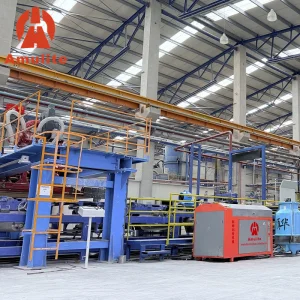
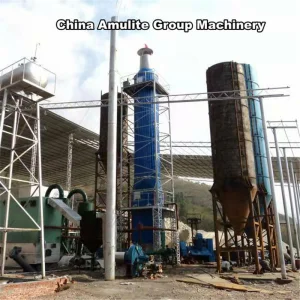
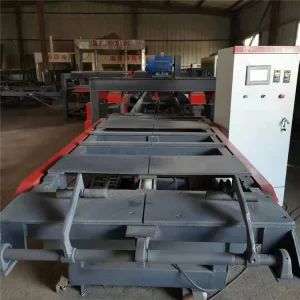
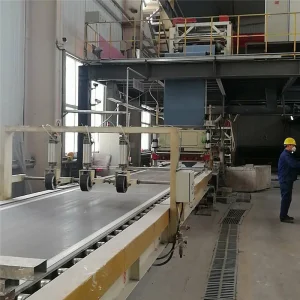
Explore high-precision machinery systems engineered for heavy industrial deployment, prefabricated wall/roof panel production, and automated material handling.
Analyzing the shift toward thermal-efficient pre-engineered buildings, zero-carbon industrial facilities, and high-speed automated roll forming lines.
The global construction sector is undergoing a profound structural shift toward off-site prefabrication, driven by stringent energy efficiency mandates, rising labor costs, and accelerated project delivery schedules. Central to this revolution is the Sandwich Roof Forming Machine—an automated, continuous industrial manufacturing system designed to bond structural metal skins (such as PPGI, stainless steel, or aluminum) with thermal insulation cores (Polyurethane PUR, Polyisocyanurate PIR, Expanded Polystyrene EPS, or Rockwool/Mineral Wool).
OEM (Original Equipment Manufacturer) suppliers and specialized engineering companies play a vital role in providing customized, heavy-duty production machinery capable of maintaining micrometric tolerances over continuous 100-meter production lengths. Modern industrial roofing demands superior structural strength to resist severe wind uplift loads, extreme snow loading, and harsh atmospheric corrosion, while simultaneously providing high thermal resistance (R-value) and acoustic dampening.
Unlike standard sheet roll formers, continuous OEM sandwich roof lines integrate complex physical-chemical processes: synchronized dual-decoiling, high-precision ribbed roll forming, multi-component high-pressure polyol/isocyanate chemical foaming, heated double-belt caterpillar press curing, and high-speed flying saw cutting. Selecting the optimal machinery OEM supplier directly dictates factory yield rates, scrap ratios, and final thermal compliance.
A granular engineering breakdown of the core sub-assemblies comprising a continuous high-speed sandwich roof forming plant.
Equipped with dual hydraulic expansion mandrel decoilers (capacity 5 to 10 tons per coil), dynamic loop accumulators, film-laminating units for surface protection, and alignment optical sensors to maintain web tracking at speeds up to 35 m/min without edge tearing.
Features 22 to 36 forming stations utilizing CNC machined GCr15 or Cr12 alloy steel rollers with hard-chrome plating (0.05mm thickness). Designed with quick-change cassette systems to roll trapezoidal ribs, crown overlaps, and secret-fix side joints.
Integrates high-pressure polyol and isocyanate mixing heads (up to 200 bar injection pressure) for PUR/PIR foam, or specialized automatic slab feeders with staggered cross-joint alignment units for high-density Rockwool mineral wool insulation cores.
A heavy-duty 24-meter to 36-meter caterpillar slat conveyor press with precision temperature control zones (40°C–70°C). Ensures uniform foam expansion, eliminates density voids, and guarantees structural bonding strength >0.12 MPa.
Servo-driven non-stop flying band saws or disk saws equipped with dust extraction systems. Cuts continuous panel ribbons to exact programmed lengths (±1.5mm tolerance) followed by automatic stackers and stretch-wrapping units.
Centralized control architecture running Siemens S7-1500 PLC with industrial Ethernet (PROFINET). Real-time tracking of chemical raw material consumption, roll former motor torque, temperature gradients, and remote cloud telemetry diagnostics.
Comparative analysis of core insulation materials processed by OEM sandwich roof forming machines.
| Performance Parameter | Polyisocyanurate (PIR) | Polyurethane (PUR) | Mineral Rockwool | Expanded Polystyrene (EPS) |
|---|---|---|---|---|
| Thermal Conductivity ($\lambda$) | 0.020 – 0.022 W/m·K | 0.022 – 0.024 W/m·K | 0.038 – 0.044 W/m·K | 0.033 – 0.038 W/m·K |
| Fire Classification (EN 13501-1) | B-s1, d0 (Flame Retardant) | B2 / B3 Class | A1 Non-Combustible | E Class / Flame Retardant |
| Density Range (kg/m³) | 38 – 42 kg/m³ | 35 – 40 kg/m³ | 100 – 140 kg/m³ | 15 – 25 kg/m³ |
| Bond Strength (Peel Resistance) | > 0.12 MPa | > 0.10 MPa | > 0.08 MPa (with primer glue) | > 0.08 MPa |
| Machinery OEM Complexity | High (High-Pressure Foam Injection) | High (High-Pressure Foam Injection) | Very High (Milling, Slicing, Flipping) | Moderate (Block Lamination) |
Custom machine configurations tailored to specific regional climates, fire codes, and structural building envelope requirements.
Requires continuous PIR/PUR sandwich panels up to 200mm thickness featuring multi-gasket tongue-and-groove joint profiles. OEM forming machinery must incorporate micro-ribbing rolls and high-accuracy heated conveyor belts to prevent thermal bridging and water vapor ingress.
Demands A1 fire-rated Rockwool sandwich roof panels. OEM lines are engineered with automated vertical lamella slab cutters, 90-degree block turners, and dual-component polyurethane adhesive spray nozzles to bond mineral wool fibers perpendicularly to the steel sheets for maximum load bearing.
Coastal and typhoon-prone zones (such as Southeast Asia and the Caribbean) utilize standing seam secret-fix sandwich roof panels. OEM machines form overlapping concealed clips into the joint rib, completely eliminating exposed screw penetrations and water leakage pathways.
A technical verification standard for evaluating equipment suppliers, engineering capabilities, and quality assurance protocols.
Verify that the machinery supplier has at least 10+ years of operational history with verified overseas installations. Review FAT (Factory Acceptance Testing) records, dynamic run test videos, and client references in your specific target region.
Evaluate the OEM's in-house capabilities: CNC machining of roll stations, finite element analysis (FEA) of shaft deflection under load, and mastery of chemical foaming mechanics. Standardized electrical cabinets should utilize tier-1 components (Siemens, Schneider, ABB).
Ensure compliance with international machinery standards, including CE Directives (2006/42/EC Safety of Machinery), ISO 9001 quality management, pressure vessel certifications for chemical tanks, and UL electrical compliance where required.
Examine the after-sales framework: remote PLC IoT diagnostic capabilities, extended 24-month structural warranties, localized commissioning engineer availability, and rapid-dispatch spare part stocking warehouses.
In-depth responses to critical technical and operational questions posed by industrial machinery buyers.
Discover our comprehensive suite of industrial manufacturing machinery, material recycling plants, and architectural panel production lines.