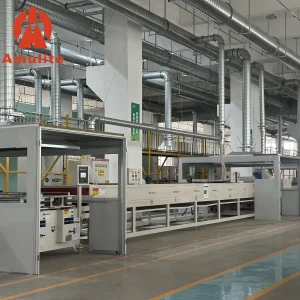
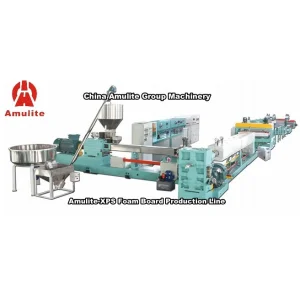
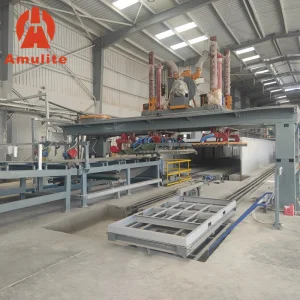
Precision-engineered machinery solutions designed for global building material producers, precast modular plant integration, and high-capacity architectural panel lines.
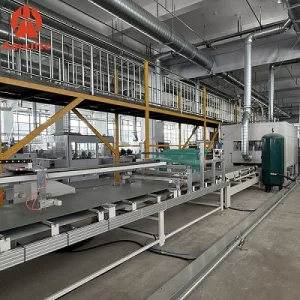
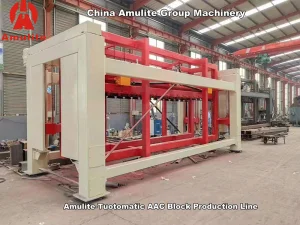
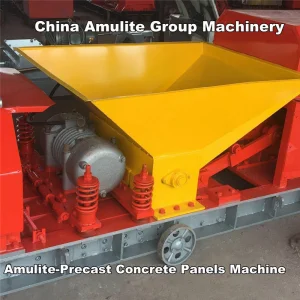
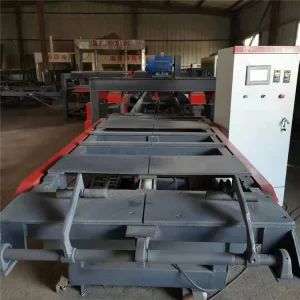
An engineering-level examination of macro market shifts, green building mandates, precast volumetric integration, and operational efficiency metrics defining the next decade of construction machinery.
The global construction equipment ecosystem is undergoing a fundamental structural transition. Driven by aggressive carbon-neutrality directives, rising manual labor expenses, and mandatory energy-efficiency building codes across North America, Europe, and Asia-Pacific, structural wall manufacturing is shifting rapidly from wet site-built masonry to high-throughput, factory-controlled precast production lines. At the focal point of this industrial revolution stands the OEM Lightweight Wall Panel Machine, an automated engineering platform designed to process high-performance cellular concrete, expanded polystyrene (EPS) cement composites, and fiber-reinforced calcium silicate board panels.
Global demand for lightweight precast wall panels (including solid core, hollow core, and sandwich composite panels) is expanding at a CAGR of 8.4%. Industrial OEMs providing fully automated, PLC-integrated extrusion and vertical mould battery machinery are capturing market share by delivering direct job-site speed increases of up to 400% compared to traditional bricklaying practices.
Modern commercial developments, industrial warehouses, high-rise residential towers, and government-backed affordable housing initiatives heavily rely on lightweight precast wall panels due to their exceptional strength-to-weight ratios. Industrialized wall panel machines fabricate panels with densities ranging between 450 kg/m³ to 800 kg/m³, achieving structural integrity while reducing total superstructure deadweight by over 30%. This reduction cascades through the entire structural design process, enabling engineers to optimize foundation engineering, concrete column dimensions, and seismic reinforcement framing.
From closed-loop slurry recovery to multi-axis automated demolding: exploring the technical innovations elevating performance metrics for modern equipment manufacturers.
Modern OEM wall panel machinery incorporates central Siemens/Schneider PLC systems integrated with multi-component load cells. Raw materials (OPC cement, fly ash, expanded perlite, sand, chemical foaming additives, and water) are micro-dosed with ±0.2% precision, ensuring slurry consistency, uniform core density, and consistent hydration kinetics.
To optimize industrial floor space, top OEMs utilize high-capacity vertical battery mould cars equipped with internal hydraulic opening mechanisms, thermal heating jackets, and automatic tongue-and-groove side profiling. This design maximizes daily volumetric yield per square meter of factory floor space by up to 300% over flat casting beds.
Leading plant suppliers engineer mixer geometry and extrusion nozzles to allow high-volume substitution of Portland cement with industrial waste streams—specifically pulverised fuel ash (PFA), ground granulated blast-furnace slag (GGBS), and recycled concrete fines—lowering embodied carbon by up to 45%.
In addition to hardware automation, digital twin modeling and cloud-based predictive maintenance are becoming standard OEM offerings. Sensors placed across hydraulic power units, continuous screw extruders, and thermal curing tunnels upload real-time operational telemetry. Factory supervisors can track key process parameters—such as mold vibration frequency, thermal curing curves, hydration temperatures, and slurry viscosity—ensuring minimal mechanical downtime and reliable panel strength development.
Customized machinery options tailored to specific regional climatic demands, seismic building regulations, and structural typologies.
In rapidly urbanizing metropolises across Asia, the Middle East, and Latin America, lightweight wall panel machinery produces 75mm to 100mm solid and hollow-core interior division panels. Featuring precision male-female interlocking edges, these panels allow rapid dry-wall construction without heavy structural mortar layers, offering up to 45 dB acoustic insulation.
For cold regions in Northern Europe, Central Asia, and North America, OEM machines manufacture sandwich wall panels incorporating dual calcium silicate skin boards wrapped around an EPS/cement matrix core. With thermal conductivity (λ) values as low as 0.055 W/m·K, these panels meet strict net-zero building envelope standards.
The rapid growth of off-site volumetric modular construction demands structural wall panels with precise dimensional tolerances (±1mm). OEM machinery customized with automated edge-trimming and surface-sanding modules produces pre-finished panels ready for immediate paint, tile, or cladding application on modular assembly lines.
Understanding the end-to-end engineering matrix of an industrial OEM lightweight wall panel factory, from raw material intake to final product packaging.
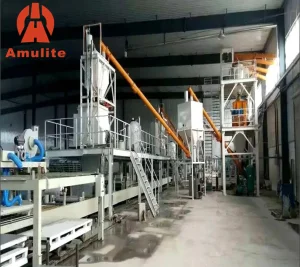
A full turnkey installation provided by a premier wall panel machine supplier encompasses multiple coordinated subsystem modules designed for continuous, reliable operational output. The engineering workflow follows a precise sequential logic:
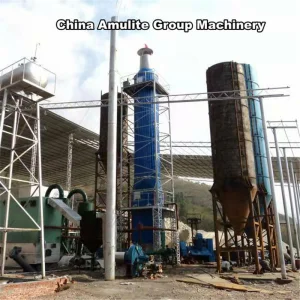
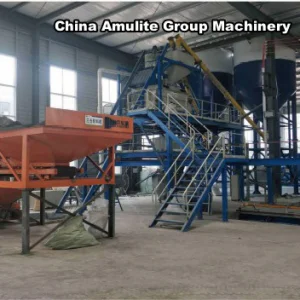
Pneumatic conveying systems transport bulk cement, fly ash, and mineral additives into vertical silos. High-accuracy weigh hoppers dose dry ingredients into intensive high-speed shear mixers, where liquid additives, chemical foaming agents, and water are metered under automated PLC control.
For EPS cement sandwich panels, board feeding systems position dual face-sheets (fiber cement or calcium silicate) onto vertical mold cars. The homogeneous slurry matrix is automatically injected under controlled pressure into the mold cavity, preventing air pockets and material segregation.
Mold cars enter automated steam curing chambers or heated tunnel systems. Controlled thermal profiles (between 50°C and 70°C) accelerate initial cement hydration, achieving green structural strength within 3 to 4 hours to permit safe demolding without surface damage.
Hydraulic demolding machines tilt mold cars 90 degrees, allowing automatic vacuum turnover grippers to extract cured panels. Panels move to multi-blade sawing stations for edge trimming, tongue-and-groove profiling, and automatic robotic stacking onto transport pallets.
What lies ahead for precast wall panel suppliers, plant operators, and industrial machinery developers.
As international energy codes demand tighter building envelopes and lower embodied carbon footprints, the machinery sector is evolving rapidly across several core technical domains:
In-depth answers to crucial commercial, operational, and technical questions regarding lightweight wall panel machines and OEM suppliers.
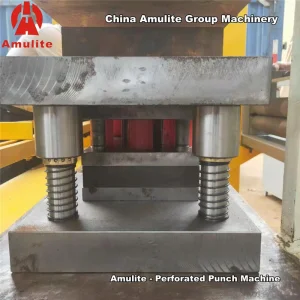
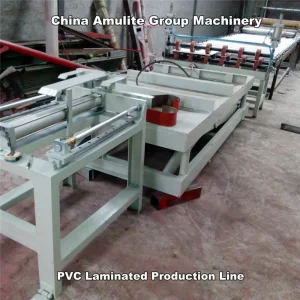
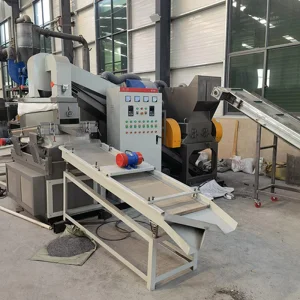
Complementary machinery engineered to streamline cutting, finishing, board perforation, recycling, and material handling across industrial precast facilities.