Explore our engineered line of heavy-duty machinery systems designed for high output density, fireproof board manufacturing, and sustainable building materials.
A comprehensive architectural evaluation of slurry processing, Hatschek wet-forming mechanics, high-pressure hydrothermal synthesis, and fully automated plant integration.
The global construction ecosystem is undergoing a seismic paradigm shift toward lightweight, high-performance, non-combustible, and ecologically sustainable building materials. At the epicenter of this modern modular revolution are Fiber Cement Boards (FCB) and Calcium Silicate Sheets (CSS). As structural engineers, procurement executives, and industrial decision-makers evaluate turnkey production machinery, the demand for high precision, low energy consumption, and high operational reliability has never been more paramount.
This industry white paper analyzes the state-of-the-art engineering principles governing OEM Fiber Cement Board and Calcium Silicate Sheet machinery. By dissecting raw material stoichiometry, slurry fluid dynamics, wet sheet accumulation via Hatschek forming cylinders, and hydrothermal autoclaving chemical reactions, this document provides the technical blueprint for establishing world-class manufacturing facilities with maximum operational uptime and investment ROI.
Industrial machinery for non-asbestos fiber cement and calcium silicate sheets relies primarily on two core manufacturing processes: the refined Hatschek Process and the Flow-on (Extrusion/Slurry distribution) Method. Choosing the optimal machine configuration depends directly on target density, board thickness, and regional raw material characteristics.
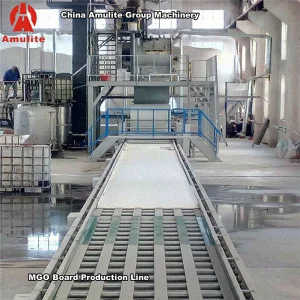
Utilizes multi-vat rotation (3 to 8 cylinders) where synthetic fibers (PVA/PP) and unbleached kraft pulp form a delicate 0.2mm to 0.3mm film per revolution. The film is transferred to a continuous felt belt, dewatered via vacuum boxes, and accumulated on a forming drum to exact board thickness.
Essential for Calcium Silicate Board (CSB) production. High-temperature steam (185°C–195°C at 1.2–1.4 MPa) forces quartz powder (SiO2) and quicklime/cement (CaO) to undergo a hydrothermal synthesis reaction, yielding high-purity crystalline Tobermorite [Ca5Si6O16(OH)2·4H2O] for exceptional structural stability.
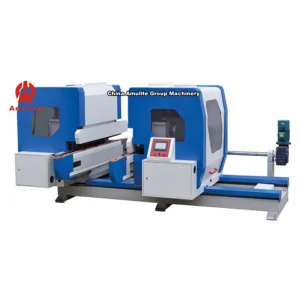
Integrated servo-driven cut-off waterjets or high-speed rotary blades shear green sheets to standardized commercial dimensions (e.g., 1220x2440mm, 1200x3000mm) before passing through smart vacuum stackers and steel template interleavers.
| Parameter / Parameter Metric | Fiber Cement Board (Air-Cured) | Fiber Cement Board (Autoclaved) | Calcium Silicate Sheet (CSB) |
|---|---|---|---|
| Primary Raw Materials | OPC, Cellulose Fiber, Silica, Water | OPC, Silica Sand, Fiber, Additives | Quicklime (CaO), Quartz Slurry (SiO2), Pulp |
| Curing Dynamic | Natural / Warm Water Tunnel (28 Days) | Autoclave hydrothermal reaction (10-12 Hrs) | Autoclave hydrothermal reaction (12-14 Hrs) |
| Matrix Crystal Structure | Calcium Silicate Hydrate (C-S-H) gel | Tobermorite Crystalline Phase | Tobermorite & Xonotlite Phase |
| Density Range (g/cm³) | 1.1 – 1.4 g/cm³ | 1.2 – 1.6 g/cm³ | 0.8 – 1.3 g/cm³ |
| Thermal Conductivity | ≤ 0.25 W/(m·K) | ≤ 0.20 W/(m·K) | ≤ 0.15 W/(m·K) |
| Fire Resistance Class | BS EN 13501-1 Class A2-s1,d0 | BS EN 13501-1 Class A1 Non-combustible | Class A1 Non-combustible (up to 4 Hrs) |
Understanding macro-economic purchasing requirements, raw material substitution frameworks, and international compliance standards for high-yield machinery installation.
Purchasing an OEM Fiber Cement or Calcium Silicate line requires analyzing regional raw material availability. Machine configurations must be engineered flexibly to adapt to varying cement grades, silica quartz purity levels, and organic/synthetic fiber reinforcements.
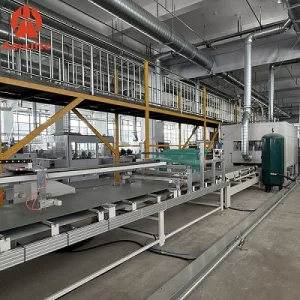
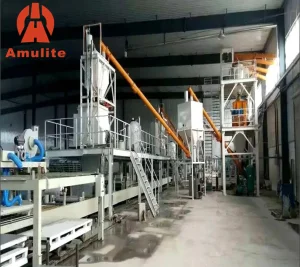
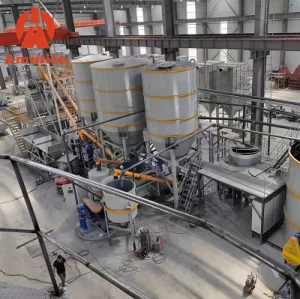
A high-capacity OEM plant functions as a unified continuous system. Below is the technical breakdown of the complete production cycle engineered by top-tier equipment manufacturers:
Ensuring equipment certifications align with global regulatory frameworks while pioneering digital twin automation and carbon-neutral curing tech.
Deploying OEM machinery across North America, Europe, the Middle East, and Southeast Asia requires absolute adherence to structural safety, pressure vessel codes, and electrical standards. Industrial buyers must ensure suppliers comply with the following framework:
Autoclaves must be engineered according to ASME Section VIII Div. 1 or European PED 2014/68/EU standards, equipped with safety interlocks, automatic steam blowdown valves, and burst disc protections.
Machinery output profiles must comply with international fiber-cement product testing standards for bending strength (MOR), water impermeability, frost resistance, and warm-water soak durability.
Control systems powered by Siemens S7-1500 or Schneider Electric PLCs featuring industrial Ethernet (PROFINET/Modbus TCP), remote tele-diagnostics, and real-time slurry density closed-loop control.
The next decade of building material machinery will be defined by smart digitalization and decarbonization. Leading OEM equipment manufacturers are embedding cutting-edge advancements into plant designs:
Direct technical answers addressing equipment sizing, raw material chemistry, operational ROI, maintenance protocols, and plant expansion strategy.
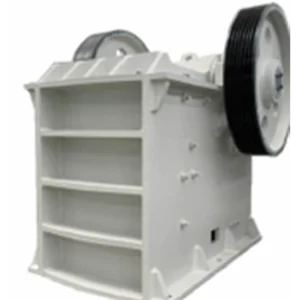
Comprehensive automated processing, stone crushing, perforation punching, perlite expansion, and finishing machinery catalog.
Whether you are planning a greenfield Fiber Cement Board facility or upgrading an existing Calcium Silicate Sheet line, our project directors provide full plant design, ROI feasibility modeling, and customized equipment specifications.