The global construction ecosystem is undergoing a structural paradigm shift towards modular industrialization, carbon abatement, and rapid structural deployment. As urban centers expand and labor costs escalate globally, conventional wet-construction methods (such as site-cast concrete and brick masonry) are rapidly being superseded by light-weight, energy-efficient composite wall panels. Among these, Expanded Polystyrene (EPS) Sandwich Cement Wall Panels represent the apex of structural performance, thermal resistance, and cost-effective scalability.
An EPS Sandwich Panel comprises high-density calcium silicate or fiber cement boards as facing skins, encapsulating a light-weight core matrix composed of Portland cement, expanded polystyrene beads, fly ash, and specialized chemical admixtures. As a premier original equipment manufacturer (OEM) and turnkey plant supplier, China Amulite Group delivers full-spectrum machinery engineered to automate the entire panel production workflow—from automated raw material batching and high-shear slurry mixing to vertical/horizontal core injection, accelerated curing, and automated demoulding.
To achieve high structural integrity while remaining lightweight, EPS sandwich panels rely on a carefully engineered micro-composite matrix. The composite panel works on the stress-skin principle: the high-density exterior facings resist axial loads and bending moments, while the EPS-cement core provides shear strength, thermal insulation, and sound attenuation.
Utilizes 4.5mm–6mm autoclaved fiber cement or calcium silicate sheets. Provides an ultra-smooth finish ready for direct painting, tiling, or cladding, while guaranteeing superior impact resistance and 100% water impermeability.
Engineered mixture of expanded polystyrene beads ($0.5-1.5mm$), Ordinary Portland Cement (OPC 42.5/52.5), fly ash, and air-entraining foaming agents that reduce density without sacrificing compressive strength.
Precision male-female (tongue and groove) edge geometry molded into the panels to prevent thermal bridging, enhance acoustic sealing, and ensure rapid mechanical locking during site installation.
| Performance Characteristic | Standard Benchmark Values | Test Methodology Standard | Engineering Benefit |
|---|---|---|---|
| Volumetric Dry Density | 550 – 700 kg/m³ | GB/T 23451 / GB/T 7019 | 75% lighter than traditional brick walls |
| Compressive Strength | ≥ 3.5 – 5.0 MPa | ASTM C39 / EN 772-1 | High structural integrity for partition walls |
| Fire Endurance Limit | ≥ 3 to 4 Hours (1000°C) | BS 476 Part 22 / EN 1364-1 | Class A non-combustible building certification |
| Thermal Conductivity (λ) | ≤ 0.045 - 0.058 W/(m·K) | ASTM C518 / ISO 8301 | Significant HVAC operational energy reduction |
| Acoustic Insulation (STC) | 38 dB – 48 dB (depending on thickness) | ISO 140-3 / ASTM E90 | Ideal for commercial hotels, multi-family housing |
| Moisture Absorption Rate | ≤ 10% | ASTM C1186 | Zero swelling, warping, or delamination in wet zones |
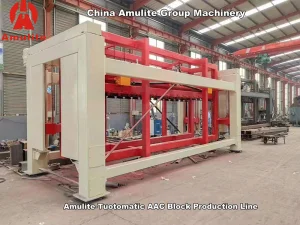
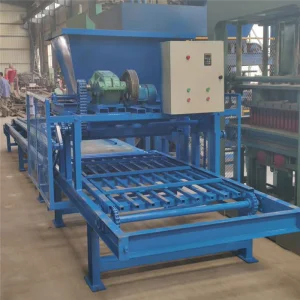
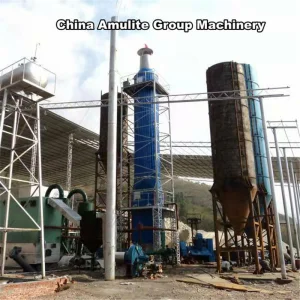
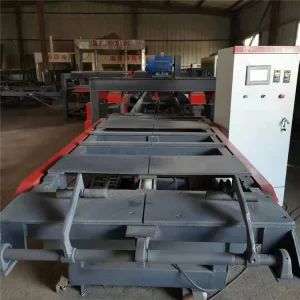
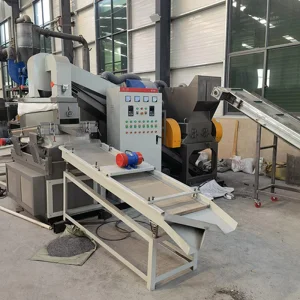
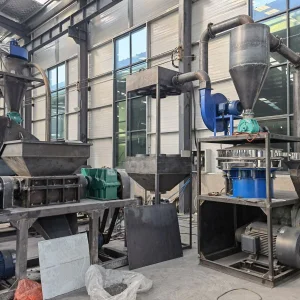
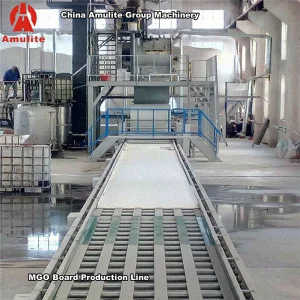
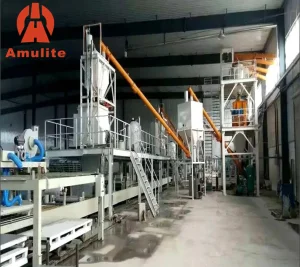
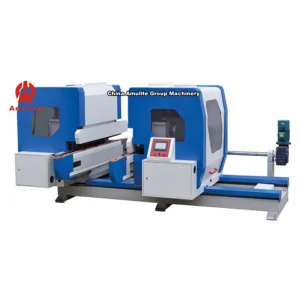
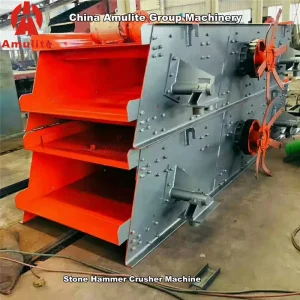
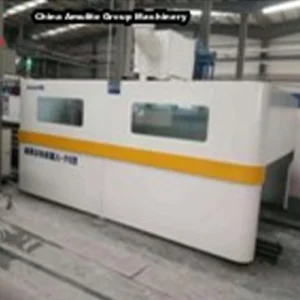
Amulite Group engineers complete, automated factory lines customized for high-volume EPS sandwich wall panel manufacturing. Our OEM engineering services encompass plant layout optimization, raw material formulation tuning based on regional minerals, electrical automation with Siemens/Schneider PLCs, and full commissioning support.
Pneumatic conveying systems transport cement, fly ash, and sand into precision weight-hoppers controlled via SCADA interface. Water and chemical additives are dosed with ±0.5% accuracy.
Planetary slurry mixers blend cementitious paste with pre-expanded EPS beads. Specialized mixing paddle geometries prevent bead crushing while maintaining homogenous distribution.
Facing boards are automatically loaded into vertical battery mould cars. Core slurry is pumped under pressure into the mould cavity, eliminating voids and air pockets.
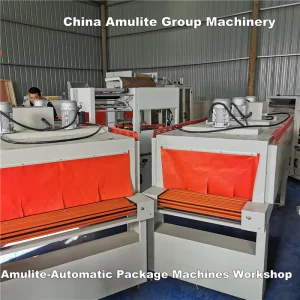
Mould cars enter thermal curing tunnels (40°C–60°C). Hydraulic demoulding systems extract completed panels onto automated stacking lines for final wrapping.
International contractors and commercial developers face aggressive project timelines and stringent energy efficiency directives. Regional market dynamics drive the demand for OEM EPS sandwich panel manufacturing equipment across key global zones:
Driven by massive urbanization, government affordable housing initiatives, and industrial park expansion. High demand for water-resistant, fast-assembly lightweight partition panels that reduce foundation structural load.
Focus on thermal insulation performance due to high ambient temperatures. EPS sandwich panels provide extreme thermal barrier properties, helping projects achieve Estidama, Mostadam, and LEED green building standards.
Priority on low capex building solutions with high structural resistance against seismic activity. Light panel weight allows easy handling in regions with limited heavy crane infrastructure.
Establishing a continuous or semi-automated EPS sandwich panel plant yields rapid financial returns. Compared to conventional block manufacturing plants, EPS panel lines achieve a lower Levelized Cost of Production (LCOP) through fly ash utilization, minimal steel usage, and short curing cycles. Typical ROI payback periods range between 12 to 18 months based on annual factory output capacities scaling from 300,000 m² to 2,000,000 m² per shift.
A primary challenge for investors purchasing manufacturing equipment overseas is adapting machinery to regional raw material specifications. Local sands contain varying quartz fractions; cement hydrations fluctuate by climate; fly ash grades differ between thermal power stations.
Amulite Group solves this through our integrated laboratory testing process. Before shipping any machinery line, our chemical engineers analyze samples of your local sand, cement, fly ash, and water to formulate optimized chemical recipes. This guarantees that your end-product meets local building codes, including ASTM C1289, EN 13501-1, and ISO 9001 quality management benchmarks.
All mechanical fabrications, pressure vessels, and control cabinets are built to international safety standards, ensuring easy regulatory sign-off worldwide.
In-house laboratory testing adapts our slurry binder ratios to local aggregates, maximizing strength while minimizing raw material costs.
Senior mechanical and electrical engineers deploy directly to your jobsite to supervise civil installation, wire PLC control systems, and train local staff.
As building material technology evolves, China Amulite Group remains committed to pioneering high-efficiency solutions. Our R&D division focuses on three main technological advancements for the 2025–2030 horizon:
Integration of real-time sensor networks across curing tunnels and mixing stations. Edge AI algorithms continuously monitor slurry viscosity, ambient humidity, and thermal hydration curves to prevent structural cracking automatically.
Adapting mixing machinery to incorporate recycled expanded plastics, agricultural waste fibers, and bio-foams, significantly reducing the carbon footprint of structural panels.
Developing composite panel profiles with integrated wiring channels and structural mounting points designed specifically for Building-Integrated Photovoltaic (BIPV) exterior cladding integration.
Our EPS panel manufacturing lines are modularly designed and scaled to meet client requirements. Output ranges from semi-automated plants producing 100,000 m² per year to fully automated continuous production complexes exceeding 2,000,000 m² annually. Capacity depends on vertical mould car configurations, thermal curing bay cycles, and automated material dosing setups.
The panel’s non-combustibility stems from the synergistic relationship between the high-density calcium silicate facing sheets (which are A1 fire rated) and the dense matrix of Portland cement and fly ash encapsulating the EPS beads. Under high temperatures, the cementitious matrix prevents oxygen penetration, preserving structural panel integrity under fire conditions up to 1000°C for up to 4 hours.
Yes. Amulite Group provides full raw material testing and chemical adaptation services. Clients send sample batches of local aggregates to our engineering laboratory. We optimize the mix formulation—adjusting water-cement ratios, plasticizer dosages, and EPS expansion rates—to guarantee end-product performance according to ASTM and EN benchmarks.
Equipment manufacturing typically requires 60 to 90 days following layout approval. On-site foundation preparation, mechanical installation, electrical wiring, PLC integration, trial batching, and operator training generally take 30 to 45 days under the supervision of our deployed project engineers.
Amulite Group maintains dedicated global technical support teams. We provide remote diagnostics via PLC cloud gateways, fast dispatch of original OEM wear parts, annual preventative maintenance audits, and continuous mix formulation updates whenever new raw material sources are introduced.