Analyzing the Architectural, Structural, and Financial Dynamics Driving B2B Procurement of EPS Wall Panel Machinery Worldwide
The global construction ecosystem is currently undergoing a structural transition from labor-intensive, wet-masonry techniques to high-efficiency, industrialized precast building systems. Central to this paradigm shift is the EPS (Expanded Polystyrene) Sandwich Concrete Wall Panel Machine. By seamlessly combining expanded polystyrene beads, ordinary Portland cement (OPC), fly ash, chemical additives, and outer fiber cement board skins, this machinery produces lightweight composite wall units that offer unprecedented structural integrity, thermal performance, and fire rating.
As a leading OEM EPS concrete wall machine manufacturer, China Amulite Group delivers full-lifecycle manufacturing assets designed for industrial buyers, real estate developers, EPC contractors, and precast plant investors. This whitepaper evaluates the technical specifications, global market drivers, localized execution frameworks, and economic value propositions associated with modern EPS panel machinery.
Understanding the Key Modules: From Automated Raw Material Dosing to Hydraulic Battery Mold Cars
Utilizes fluid-bed drying, digital pressure controls, and precision steam valves to expand raw polystyrene beads to target densities (8–15 kg/m³) with strict density tolerance, ensuring consistent thermal core properties.
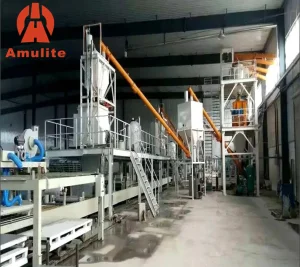
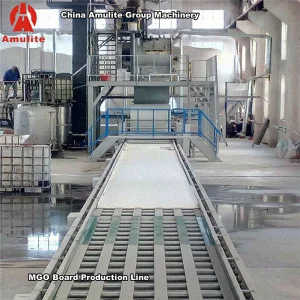
Heavy-duty twin-shaft dynamic mixers combine cement, fly ash, micro-foaming agents, and expanded EPS beads without crushing the bead cell matrix, producing a homogeneous, non-segregating core slurry.
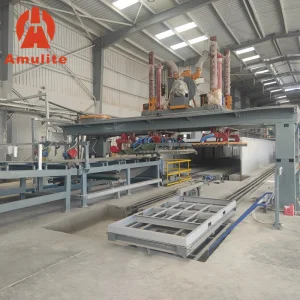
Engineered with high-tensile steel frames and anti-flex hydraulic clamping systems. Holds 20–40 panel slots per car with integrated side-sealing keyway molds for tongue-and-groove joint formation.
In premium EPS sandwich wall panel production, two outer facing sheets—typically 4.5mm to 6mm calcium silicate or fiber cement boards—are automatically loaded into mold slots via vacuum manipulators prior to core slurry injection. The micro-porous structure of the core slurry creates a permanent chemical and mechanical bond with the inner surface of the skins, eliminating delamination risks even under severe wind-load or seismic stress cycles.
| Performance Metric | EPS Concrete Sandwich Panel | Autoclaved Aerated Concrete (AAC) | Hollow Clay Bricks | Drywall Gypsum System |
|---|---|---|---|---|
| Volumetric Weight (kg/m³) | 550 – 650 kg/m³ | 600 – 750 kg/m³ | 1200 – 1400 kg/m³ | 800 – 950 kg/m³ |
| Compressive Strength | 3.5 – 5.0 MPa | 3.2 – 4.0 MPa | 5.0 – 7.5 MPa | Non-structural |
| Thermal Conductivity (W/m·K) | 0.045 – 0.058 W/m·K | 0.13 – 0.16 W/m·K | 0.45 – 0.60 W/m·K | 0.21 – 0.25 W/m·K |
| Fire Endurance Rating | > 4 Hours (1000°C) | 3 – 4 Hours | 2 – 3 Hours | 1 – 2 Hours |
| Acoustic Insulation (dB) | 42 – 50 dB (100mm) | 38 – 44 dB | 35 – 40 dB | 32 – 38 dB |
| Installation Speed (m²/day/worker) | 35 – 50 m² | 15 – 20 m² | 8 – 12 m² | 20 – 30 m² |
Why Global EPCs & Precast Manufacturers Partner with Amulite Group for Turnkey EPS Wall Panel Assets
Amulite Group operates a 100,000 m² state-of-the-art heavy industrial plant in Hebei, China. Core components—including structural mold frames, hydraulic cylinder assemblies, PLC power cabinets, and continuous transit cars—are machined in-house using high-precision CNC equipment. No reliance on third-party sub-assemblers guarantees strict dimensional tolerances and operational reliability.
Every region has unique mineral availabilities. Amulite's process chemical team adapts panel core formulations to local raw materials—whether utilizing high-ratio fly ash, volcanic slag, expanded perlite, or specific grades of river sand—maximizing structural flexural strength while reducing local raw material sourcing costs by 15% to 30%.
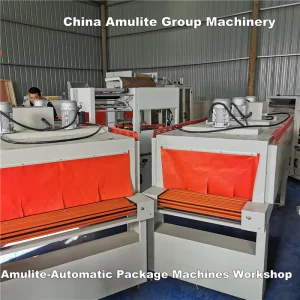
Whether an investor requires a semi-automated starter facility producing 100,000 m²/year or a fully automated smart plant engineered for 3,000,000 m²/year output, Amulite provides tailored OEM machinery configurations. Advanced automation options include robotic panel tilting machines, automatic panel stackers, packaging lines, and central SCADA process control systems.
How EPS Concrete Wall Panel Machinery Solves Regional Housing Shortages and Energy Efficiency Mandates
Primary Driver: Extreme ambient temperatures and strict thermal insulation regulations (e.g., KSA Vision 2030, UAE Estidama).
Application: Exterior envelope insulation & non-load bearing interior partition walls in high-rise commercial & residential mega-projects.
Primary Driver: Seismic zone safety requirements, moisture resistance, and rapid urbanization in humid climates.
Application: Fast-track affordable housing schemes, resort villas, and industrial warehouse partition walls requiring zero water absorption.
Primary Driver: High cost of traditional masonry labor and government social housing initiatives (e.g., Chile MINVU, Brazil MCMV).
Application: Modular single-family & low-rise multi-family housing units utilizing tongue-and-groove interlocking EPS wall panels.
Primary Driver: Nearly Zero Energy Building (nZEB) standards and strict acoustic rating requirements.
Application: High-density precast residential partitions and sound-dampening perimeter walls for logistics hubs.
Innovations Driving Next-Generation Energy-Efficient and Smart Building Material Plants
Integration of real-time moisture sensors and automated rheology adjustments in slurry mixing systems, ensuring micro-foam stability and density uniformity across every batch regardless of raw material variability.
Advanced pre-conditioning units capable of incorporating up to 40% post-consumer expanded polystyrene waste into structural panel cores, aligned with global circular economy standards and LEED accreditation.
Closed-loop steam heat recovery loops within curing tunnels that reduce total energy consumption per square meter of wall panel produced by over 28% compared to traditional open curing methods.
Essential Criteria for Evaluating OEM Machinery Manufacturers and Ensuring Long-Term Line ROI
Investing in an industrial EPS concrete wall panel production line represents a multi-decade capital decision. Procurement officers, technical directors, and plant managers should evaluate prospective OEM manufacturers against five critical engineering verification pillars:
Inspect the steel grade of mold battery cars. Amulite utilizes GB Q355 heavy structural steel with stress-relieved welded joints to prevent frame warping under repeated hydraulic pressure and curing thermal cycles.
Ensure core electrical components utilize universally accessible global brands. Standard Amulite PLC controls incorporate Siemens S7-1500 Series, Schneider contactors, and ABB VFD drives for seamless global spare-parts sourcing.
Demand on-site formulation commissioning. A qualified OEM must test, calibrate, and guarantee target board compressive strength and flexural performance using your locally sourced raw materials before project sign-off.
Select plant layouts engineered for phased expansion. Modular battery car rail systems allow buyers to double plant annual capacity from 300,000 m² to 600,000 m² with minimal additional infrastructure CAPEX.
Expert Answers to Critical Operational, Technical, and Commercial Inquiries