Explore our high-performance OEM production equipment engineered for cement boards, wall panels, lightweight masonry, and industrial coating processing.
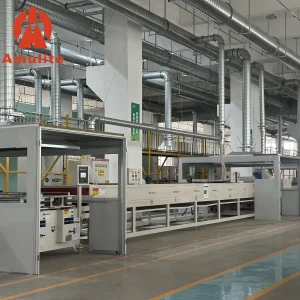
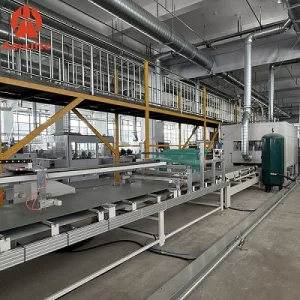
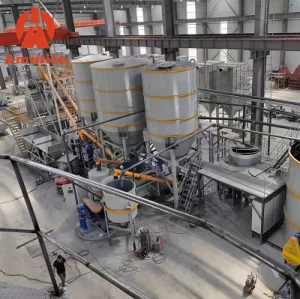
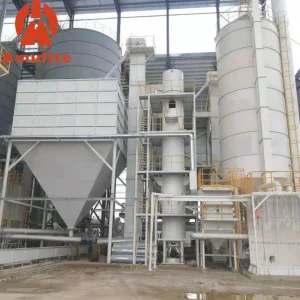
A comprehensive analysis of industrial cement board manufacturing technologies, raw material chemistry, and next-generation Hatschek vs. Flow-on automation engineering.
In modern structural engineering and sustainable architecture, the global demand for fiber cement boards and calcium silicate panels has experienced exponential growth. Driven by strict fire safety standards (BS 476, EN 13501-1 Class A1 non-combustibility), seismic resilience requirements, and moisture-resistant building envelopes, real estate developers and infrastructure contractors are rapidly replacing traditional drywall gypsum and plywood substrates with engineered cementitious composites.
Establishing an industrial-scale manufacturing plant requires deep mastery over slurry mechanics, chemical hydration dynamics, precision sheet forming, vacuum dewatering, and autoclave hydro-thermal synthesis. As a premier OEM Cement Board Production Line Manufacturer, our engineering enterprise integrates complete end-to-end machinery solutions—from automated raw material dosing and high-shear slurry digestion to hydraulic pre-pressing, autoclave curing, and automated high-speed surface finishing lines.
Understanding the mechanical and structural distinctions between primary forming processes is critical when evaluating capital expenditure (CAPEX) vs. operational efficiency (OPEX):
| Technology Process | Board Density Range | Bending Strength (Flexural) | Primary Applications | Production Throughput |
|---|---|---|---|---|
| Hatschek Process (Cylinder Vat) | 1.20 - 1.75 g/cm³ | > 16 MPa (Class 4/5) | Exterior facade cladding, high-impact walls, flooring underlayment | Ultra-High (5M - 20M m²/year) |
| Flow-on Process (Slurry Distribution) | 1.10 - 1.40 g/cm³ | 10 - 14 MPa | Interior partitions, ceilings, decorative substrate panels | Medium-High (3M - 10M m²/year) |
| Extrusion Process | 1.40 - 1.85 g/cm³ | > 18 MPa | Hollow-core acoustic panels, heavy architectural louvers | Moderate (Specialty Batching) |
The core structural integrity of asbestos-free fiber cement boards relies on the mechanical interlocking between Ordinary Portland Cement (OPC), silica sand (>95% SiO2 purity), and refined synthetic or kraft cellulose fibers. Our proprietary pulp refining system utilizes double-disc refiners to adjust the Schopper-Riegler (°SR) freeness of cellulose fibers to optimal levels (30°SR to 45°SR). This specific refining degree maximizes hydrogen bonding and fiber fibrillation, creating an ultra-dense mechanical matrix capable of trapping micro-particulates of cement during the multi-layer film buildup on the Hatschek forming cylinder.
Combining advanced mechanical metallurgy, end-to-end supply chain control, and cost-efficient high-precision OEM fabrication to deliver world-class cement machinery plants.
From high-alloy seamless steel tubes used in forming cylinders to precision CNC machining of heavy-duty felt agitator vats, China's industrial infrastructure allows us to deliver turnkey plants at 40% lower capital expense compared to European alternatives, without compromising machine tolerance or longevity.
Every plant is tailored to local raw material chemistry. Whether utilizing fly ash from local thermal power stations, blast furnace slag, or crushed silica sand, our process engineers optimize the formulation (OPC to Silica ratio 40:60 for autoclaved, or 70:30 for air-cured lines) to ensure target flexural strength and density.
Integrated Siemens S7-1500 PLC architectures, Schneider electrical networks, and SCADA process monitoring allow fully automated thickness control (laser feedback system), automatic sheet stacking, pneumatic demoulding, and robotic palletizing with minimal operator intervention.
From raw material ingestion to hydro-thermal autoclaving and dynamic surface calibration: explore the step-by-step engineering flow of an advanced cement board facility.
Silica sand is ground via a closed-circuit wet ball mill to achieve a specific surface fineness (Blaine value > 3500 cm²/g). Simultaneously, cellulose pulp sheets are dispersed in a high-density hydrapulper at 5-6% consistency, then transferred to storage chests equipped with multi-stage agitators. Precision load cells dynamically weigh OPC cement, quartz flour, fly ash, and recycled green-board trim before discharging into the primary mixer.
The homogenized slurry flows into 3 to 5 continuous cylinder vats. Stainless steel mesh cylinders (200-250 mesh) rotate inside the slurry vats, transferring thin film layers (0.2mm to 0.3mm per revolution) onto a high-speed endless synthetic felt belt. The moving felt passes over high-vacuum suction boxes (vacuum pressure controlled dynamically between -0.04 to -0.06 MPa) to evacuate moisture, bringing the wet web solids content from 20% to over 70% before wrapping onto the main forming drum (making roll).
Once the accumulation drum reaches the targeted green sheet thickness (e.g., 6mm, 9mm, 12mm), an automated flying wire cutter severs the sheet, which is then conveyed to an automatic edge trimmer. For high-density board lines (Density > 1.40 g/cm³), green sheets are transferred onto steel template plates and stacked into a high-tonnage hydraulic cold press (4,000T to 10,000T capacity). Compaction under 200 bar hydraulic pressure squeezes out residual air pockets and pore water, drastically boosting flexural strength, freeze-thaw resistance, and water impermeability.
Calcium silicate boards and high-grade fiber cement boards undergo 10 to 12 hours of high-temperature hydrothermal processing inside ASME/CE-certified pressure vessels (autoclaves). Operating at 170°C to 183°C under saturated steam pressure of 1.0 to 1.1 MPa, the amorphous silica (SiO2) chemically reacts with calcium hydroxide (Ca(OH)2) liberated from OPC hydration. This reaction forms crystalline 1.1 nm Tobermorite [Ca5Si6O16(OH)2·4H2O], imparting extreme dimensional stability, zero moisture expansion, and fireproof characteristics to the finished board.
Integrated closed-loop water treatment systems recycle 98% of process water back into slurry mixing and cylinder vat spraying, meeting stringent global environmental standards.
Non-contact laser thickness sensors monitor board profiles real-time on the forming cylinder, automatically signaling the flying cutter for ±0.1mm tolerance precision.
Autoclave blow-down steam and condensate heat exchangers pre-heat boiler feedwater, reducing plant gas/coal consumption by up to 22% annually.
Key performance indicators, international certifications, and engineering parameters evaluated by multinational EPC firms during equipment procurement.
When global construction consortia and building material manufacturers evaluate an OEM line supplier, compliance with international performance standards is non-negotiable. Our machinery output is engineered to comply directly with international testing benchmarks:
| Line Parameter | Standard Capacity Line | High-Output Enterprise Line | Custom OEM Heavy Duty |
|---|---|---|---|
| Annual Capacity (m²/year) | 3,000,000 - 5,000,000 | 8,000,000 - 12,000,000 | 15,000,000 - 20,000,000+ |
| Board Thickness Range | 4mm - 20mm | 4mm - 25mm | 4mm - 30mm |
| Max Board Dimensions | 1220 x 2440 mm | 1220 x 3050 mm | 1250 x 3660 mm |
| Forming Speed (Felt) | 35 - 55 m/min | 60 - 85 m/min | Up to 100 m/min |
| Installed Electrical Power | 650 kW | 1,200 kW | 1,850 kW |
| Steam Consumption | 3.5 - 4.5 t/h | 7.0 - 9.0 t/h | 12.0 - 15.0 t/h |
Architectural versatility drives high profit margins for board producers across residential, commercial, industrial, and modular sector projects.
High-density autoclaved fiber cement boards (1.4 - 1.7 g/cm³) finished with UV-cured fluorocarbon or polyurethane coatings provide weather-resistant, non-fading architectural rainscreen facades for high-rise commercial structures.
Medium-density calcium silicate boards (0.95 - 1.2 g/cm³) are immune to moisture rot, warping, and mold growth, making them the ultimate tile backer substrate in luxury hotels, commercial kitchens, and hospital cleanrooms.
Rapid urbanization and off-site modular construction rely heavily on lightweight cement boards for floor underlayment, external cladding, and sandwich wall panel face sheets (EPS/Cement core composites).
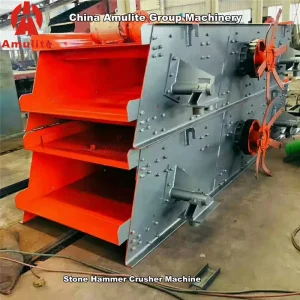
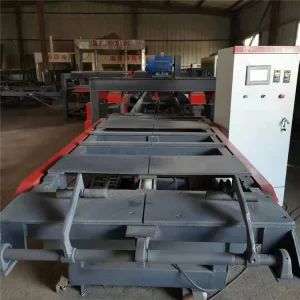
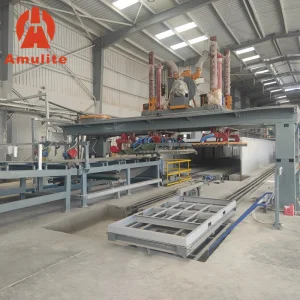
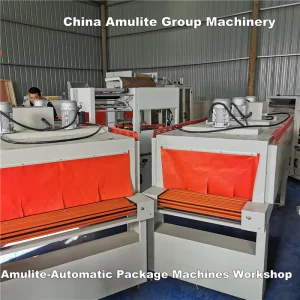
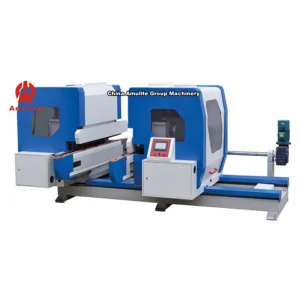
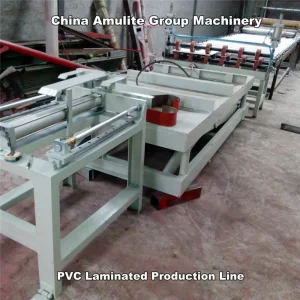
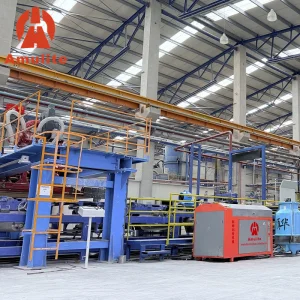
Complete your factory setup with our specialized downstream cutting, crushing, panel laminating, and automated packaging equipment.
Get authoritative engineering insights directly from our senior plant design team regarding commissioning, formulation chemistry, and operational ROI.