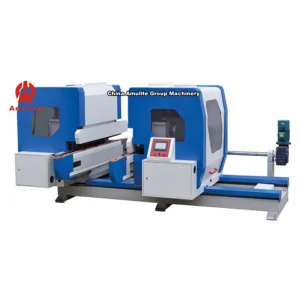
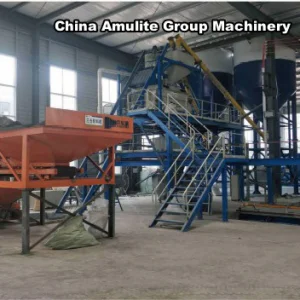
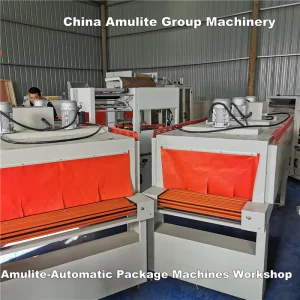
Explore our core OEM production systems, engineered for maximum energy efficiency, precise sheet forming, and automated hydrothermal curing.
Understanding the fundamental differences between standard fiber-cement substrates and high-density autoclaved calcium silicate matrices.
At the core of modern OEM Calcium Silicate Board manufacturing is the high-pressure hydrothermal reaction of siliceous material ($\text{SiO}_2$) and calcareous material ($\text{CaO}$). Under steam temperatures ranging from 180°C to 210°C at 1.0 to 1.6 MPa in saturated autoclaves, the raw components convert into crystalline Tobermorite ($5\text{CaO}\cdot 6\text{SiO}_2\cdot 5\text{H}_2\text{O}$).
This needle-like mineral structure interlocks seamlessly around dispersed reinforcing fibers, producing a zero-asbestos substrate with structural stability, minimal linear thermal expansion, and non-hygroscopic behavior under direct water exposure.
For high-temperature industrial applications, our specialized thermal insulation production lines drive the synthesis further into the Xonotlite ($6\text{CaO}\cdot 6\text{SiO}_2\cdot \text{H}_2\text{O}$) crystal phase. Xonotlite boards withstand continuous operation temperatures up to 1000°C without mechanical degradation.
By managing bulk densities down to 200–240 $\text{kg/m}^3$ while preserving structural integrity, OEM procurement partners gain engineered thermal barriers ideal for petrochemical refineries, metallurgy, and power plant infrastructure.
Unlike standard gypsum board (which calcines under high heat) or cement particle board (which expands up to 0.25% under saturation), autoclaved calcium silicate boards display a dry-wet moisture movement ratio under 0.08%. The autoclave process completely consumes free lime ($\text{Ca(OH)}_2$), preventing efflorescence (white salting) and ensuring long-term surface paint adhesion for exterior curtain walls and moist indoor environments.
| Physical Property Standard | Low-Density (Ceiling/Partition) | Medium-Density (OEM Architectural) | High-Density (Facade/Industrial) |
|---|---|---|---|
| Target Density Range ($\text{g/cm}^3$) | 0.80 - 1.00 $\text{g/cm}^3$ | 1.15 - 1.30 $\text{g/cm}^3$ | 1.40 - 1.70 $\text{g/cm}^3$ |
| Flexural Strength (Bending - Wet) | ≥ 6.0 MPa | ≥ 12.0 MPa | ≥ 18.0 MPa |
| Thermal Conductivity ($\text{W/m}\cdot\text{K}$) | ≤ 0.12 $\text{W/m}\cdot\text{K}$ | ≤ 0.18 $\text{W/m}\cdot\text{K}$ | ≤ 0.25 $\text{W/m}\cdot\text{K}$ |
| Combustibility Class (EN 13501-1) | Class A1 Non-combustible | Class A1 Non-combustible | Class A1 Non-combustible |
| Screw Withdrawal Force | ≥ 400 N | ≥ 850 N | ≥ 1400 N |
| Water Absorption Rate | ≤ 35% | ≤ 28% | ≤ 20% |
Custom-engineered board formulations tailored for global EPC contractors, architectural panel laminators, and industrial system integrators.
Formulated with expanded vermiculite, mica, and high-purity quartz, our fire-rated OEM boards provide up to 240 minutes (F400) of structural fire containment. Used extensively in steel column encasements, ventilation duct enclosures, and fire-rated door core assemblies across high-rise developments and transportation tunnels.
Engineered to handle severe thermal cycling and wind-load pressures, high-density autoclaved substrates serve as the ideal core for exterior cladding. Compatible with fluorocarbon (PVDF) coating, hydrophobic silane impregnation, and direct lamination of HPL or stone veneers.
Featuring absolute zero chemical outgassing, high impact resistance, and antimicrobial surface compatibility. These precision-milled OEM boards are integrated into modular cleanroom wall systems for pharmaceutical plants, semiconductor fabrication facilities, and operating theaters.
Designed with high structural shear modulus to absorb mechanical vibration and impact noise. Utilized as raised access floor cores, sound-damping interior partition backings, and acoustic floating floor substrates in multi-family residential towers.
Certified against stringent IMO FTP Code standards for non-combustibility and low toxicity. Our lightweight marine-grade calcium silicate panels provide critical acoustic insulation and fire separation within commercial vessel accommodations and offshore platforms.
Rigid, high-temperature thermal barriers designed for industrial kilns, ceramic furnaces, and electric battery pack thermal-runaway protection shields, maintaining dimensional integrity under acute thermal shock.
How automated continuous slurry processing, real-time laser gauging, and multi-stage hydrothermal curing guarantee batch-to-batch consistency.
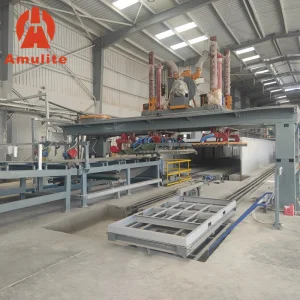
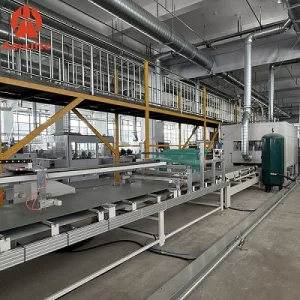
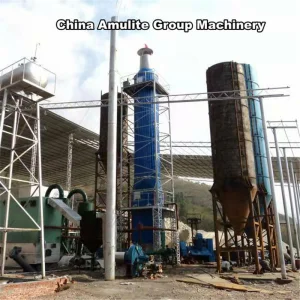
Our state-of-the-art manufacturing facilities utilize automated 4-vat to 6-vat Hatschek wet-process sheet machines. Raw materials—including high-purity quartz powder, unslaked lime, Portland cement, and imported virgin kraft pulp—are micro-batched via PLC-monitored gravimetric feeders.
The resulting homogeneous slurry is dewatered via high-vacuum suction boxes and accumulated continuously on a forming cylinder under controlled nip-roll pressure. This process establishes balanced cross-directional tensile strength and eliminates air inclusions prior to green-board trimming.
Streamlined contract manufacturing services for international brands, distributor privateer labels, and large-scale project tenders.
Full customization of sheet dimensions: Standard 1220x2440mm and 1200x2400mm up to 1220x3050mm. Edge options include Square Edge (SE), Recessed/Tapered Edge (TE) for seamless jointing, Ship-lap, and Beveled tongue-and-groove profiles.
Factory-applied priming, hydrophobic silane sealing, anti-graffiti clear coatings, sanding calibration (up to 240-grit smoothness), and direct inkjet digital printing for decorative architectural wall systems.
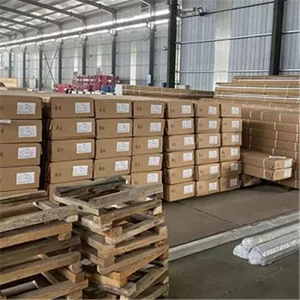
Seaworthy solid wood or fumigated composite pallets, corner-edge protection guards, plastic film wrapping, and container loading arrangements designed to maximize metric tonnage per 20ft container (up to 27,000 kg gross weight).
Pioneering eco-friendly binders, smart structural health monitoring, and phase-change energy storage integration.
Replacing traditional OPC with alkali-activated slag and high-volume fly ash matrices. Lowers net embodied carbon by 45% while preserving Class A1 fire resistance and improving acid corrosion resistance.
Micro-encapsulated organic phase-change materials embedded directly into the matrix core, allowing interior calcium silicate wallboard to absorb peak heat loads and cut HVAC energy demands by 25%.
Integration of printed conductive fiber networks and passive RFID strain/humidity sensors into board interiors for real-time structural health monitoring in tunnel liners and high-rise curtain walls.
Ensuring frictionless importing, local building code sign-offs, and third-party laboratory verification for every shipment.
Certified compliant for Fibre-Cement Flat Sheets (Category A/B, Class 1 to 5 strength grades).
Standard specification for Non-Asbestos Fiber-Cement Flat Sheets (Grade I, II, and III).
Fire test compliance verifying non-combustibility and zero flame spread indices for building regulations.
Audited Quality and Environmental Management Systems covering all continuous production steps.
Direct answers regarding raw material formulations, physical performance parameters, and ordering specs.
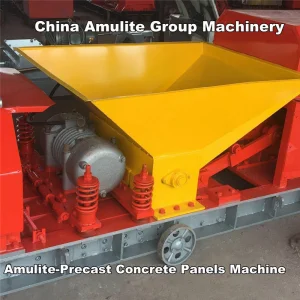
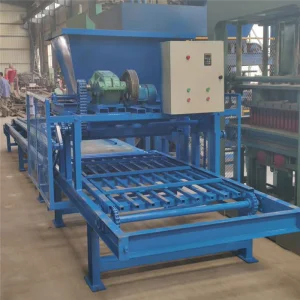
Additional automated manufacturing solutions engineered by China Amulite Group for global infrastructure deployment.