Explore high-precision production lines engineered for automated block fabrication, edge trimming, wall panel extrusion, and eco-friendly structural paneling.
The international construction materials sector is undergoing an unprecedented structural transition. Accelerated by stringent decarbonization mandates (EN 15804, LEED v4.1, and Zero-Carbon Building Codes), multinational EPC (Engineering, Procurement, and Construction) contractors and real estate developers can no longer rely on legacy, energy-intensive building supplies. Sourcing intent has decisively shifted from spot-market commodity purchasing toward strategic OEM (Original Equipment Manufacturer) and ODM partnerships capable of delivering certified, energy-efficient, and structurally resilient prefabricated panel systems.
Building material OEM suppliers operating at the upper quartile of technical capability provide complete turnkey industrial ecosystems. From non-asbestos fiber cement boards and autoclaved aerated concrete (AAC) blocks to expanded perlite insulation matrixes and magnesium oxide (MGO) fireproof panel systems, original equipment manufacturers are tasked with bridging the gap between raw mineral processing and high-speed automated installation on jobsites worldwide.
China has established an unassailable global lead in the design, engineering, and mass fabrication of advanced non-metallic mineral building material machinery. This competitive moat is built upon four foundational pillars of industrial organization:
China's heavy machinery manufacturing hubs in Hebei and Shandong consolidate structural steel fabrication, heavy CNC machining, pressure vessel forging (autoclaves), and Siemens PLC automation integrators within a 50-kilometer radius. This geographic concentration reduces sub-component lead times by over 60% compared to European competitors.
Unlike rigid off-the-shelf Western machinery vendors, Chinese OEM factories excel at modular custom engineering. Whether adapting a Hatschek sheet machine cylinder width from 1300mm to 1600mm or modifying autoclave pressure parameters (1.3MPa to 1.6MPa) for local silica reactivity, Chinese engineering teams deliver bespoke solutions without exorbitant engineering change fees.
OEM equipment manufactured in China delivers an industry-leading Return on Investment (ROI). Capital Expenditure (CAPEX) for a complete 10-million-m² annual capacity Fiber Cement Board line manufactured by China Amulite Group is typically 35% to 50% lower than equivalent European lines, while achieving matching throughput and ISO/CE compliance.
To understand the operational mechanics of top-tier OEM factories, one must analyze the key process technologies engineered across the primary production lines:
| Production Line Category | Core OEM Process Technology | Standard Annual Capacity | Primary Product Output & Applications |
|---|---|---|---|
| Fiber Cement / Calcium Silicate | Multi-vat Hatschek forming cylinder system, vacuum dewatering, 16-bar autoclave hydro-thermal curing. | 1,000,000 m² – 30,000,000 m² | A1 Fire-rated interior drywall partitions, exterior rainscreen cladding, soffits, ceiling tiles. |
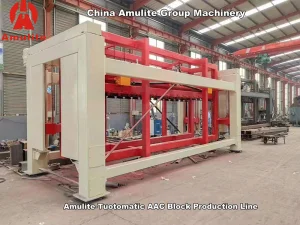
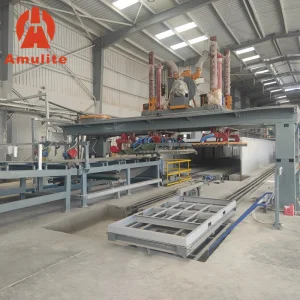
| Automatic AAC Block & Panel | Aluminum powder hydraulic foaming, high-precision tilting cutting frame, 1.3MPa steam pressure autoclave. | 50,000 m³ – 600,000 m³ | Lightweight load-bearing thermal masonry blocks, reinforced floor & roof slabs. |
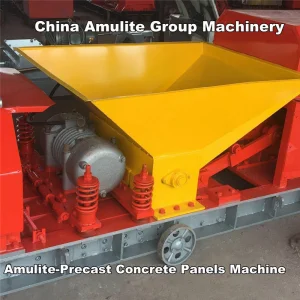
| EPS Sandwich Cement Panel | Continuous vertical/horizontal automatic core injection (cement + EPS beads + perlite) with fiber board skins. | 300,000 m² – 2,000,000 m² | Prefabricated modular housing wall units, acoustic acoustic divider partitions. |
| Paper-Faced Gypsum Board | High-speed pin mixer, continuous rubber belt forming, multi-layer energy-recovery drying kiln. | 2,000,000 m² – 30,000,000 m² | Standard ceiling boards, moisture-resistant bathroom plasterboards, fire-shield drywall. |
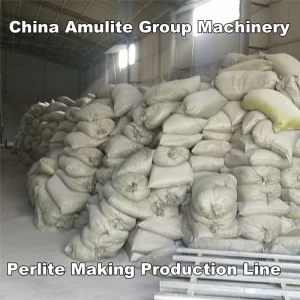
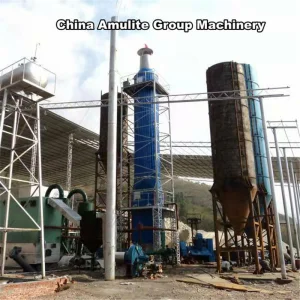
| Expanded Perlite Insulation | Vertical gas/oil expansion furnace with cyclone classification and automatic thermal heat exchange. | 10,000 m³ – 150,000 m³ | Ultra-lightweight non-combustible insulation core fillers, high-temp industrial pipe insulation. |
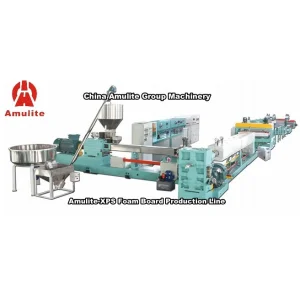
| CO2 XPS Foam Board Line | Tandem primary/secondary extruders utilizing green CO2 blowing agents without ozone-depleting CFC/HCFCs. | 100,000 m² – 1,000,000 m² | Under-slab foundation insulation, cold storage thermal envelope panels, inverted roof deck systems. |
In Fiber Cement and Calcium Silicate processing, the autoclave stage induces a chemical reaction between crystalline silica (SiO2) and quicklime/cement (CaO) at 170°C–190°C under saturated steam pressure. This synthesizes Tobermorite mineral crystals, imparting extreme dimensional stability, zero moisture expansion, and zero rot characteristics to the final panel matrix.
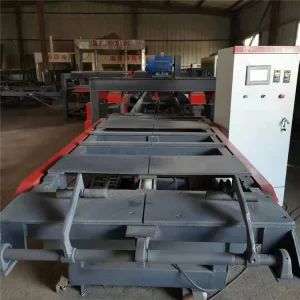
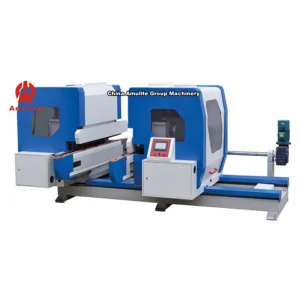
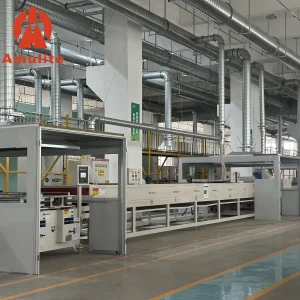
Post-curing processing requires secondary industrial automation. OEM 1300 II Type four-side edge cutting machines utilize diamond-tipped saw blades synchronized via servo motors to achieve length/width tolerances within ±0.5mm and diagonal tolerances within ±1.0mm, essential for seamless architectural tongue-and-groove fitment.
Building material OEM suppliers must tailor plant engineering to local climatic realities, seismic zone requirements, and labor availability across diverse global jurisdictions:
Challenge: Extreme ambient temperatures (>45°C) combined with coastal salinity demand high thermal insulation values (U-value < 0.28 W/m²K) and total moisture resistance.
OEM Solution: High-density AAC block lines producing thermal insulation masonry paired with exterior CO2 XPS foam board insulation envelopes, resisting thermal bridging and salt-spray degradation.
Challenge: Acute urban housing shortages demand rapid structural erection cycles alongside high seismic resistance and termite immunity.
OEM Solution: Turnkey EPS Sandwich Cement Wall Panel production lines. Lightweight tongue-and-groove panels allow 4x faster installation speeds compared to traditional bricklaying while absorbing shear stress during seismic events.
Challenge: High labor costs, stringent fire codes (EN 13501-1 Class A1 non-combustible), and tight carbon footprint thresholds.
OEM Solution: Non-asbestos Fiber Cement and Calcium Silicate Board lines integrated with waste pulp recycling, closed-loop process water systems, and automated SCADA quality logging.
For enterprise procurement directors and EPC project executives, selecting an OEM building material machinery vendor requires a rigorous multi-stage technical audit framework to mitigate financial and operational risk:
Verify that autoclaves comply with international standards (ASME Section VIII Div 1, CE-PED, or GB150). Inspect ultrasonic weld non-destructive testing (NDT) reports and ensure sheet-forming cylinder vats utilize stainless steel cladding (SUS304/316) to prevent electrochemical corrosion caused by cementitious slurry alkaline chemistry (pH 12–13).
Ensure control systems utilize globally standardized components (Siemens S7-1500 PLC, Schneider electrical breakers, SEW Eurodrive motor reducers). Avoid proprietary, unbranded controllers that leave off-shore plants vulnerable to long downtime when seeking replacement modules.
Require the OEM supplier to operate an in-house wet chemistry and physical testing laboratory. Prior to equipment contract signing, representative samples of local silica sand, lime, cement, and cellulose pulp must be pilot-tested to establish precise strength-to-density ratio curves.
Explore specialized machinery lines including flexible clay ceramics, raw gypsum calcination, resource recycling systems, and high-speed UV panel coating.
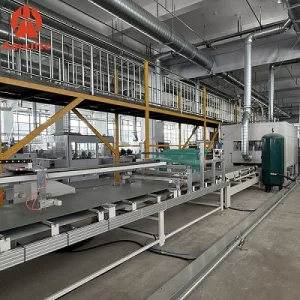
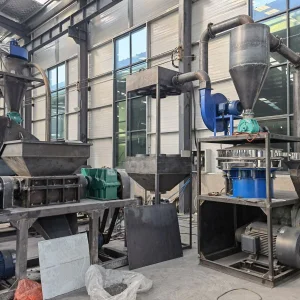
The next decade of building material equipment manufacturing will be defined by smart automation, closed-loop circular economy recycling, and digital twin monitoring:
Integrating microwave moisture sensors and inline viscosity meters into raw material agitator tanks allows real-time automated adjustments to water-cement ratios. This eliminates manual operator error, reducing sheet thickness variation to under ±0.2mm.
Modern OEM lines incorporate inline green-trim waste re-slurrying. Un-cured board cutoffs are immediately returned to the primary slurry tank, achieving 100% raw material utilization and zero solid waste discharge during green sheet forming.
Multi-stage heat exchanger systems harvest waste flash steam from autoclaves and high-temperature drying kilns to pre-heat boiler feedwater, cutting total thermal energy consumption per m² of board by up to 28%.
In-depth answers to critical operational, financial, and engineering questions posed by global building material plant buyers.