Explore our heavy-duty roll forming and structural board production equipment engineered for global infrastructure.
The global construction landscape is experiencing a paradigm shift driven by modern methods of construction (MMC), rapid urbanization, and stringent thermal efficiency mandates. Central to this evolution is the high-quality steel wall and roof panel forming machine, an essential industrial asset engineered to transform cold-rolled galvanized steel, galvalume, and pre-painted steel coils into structurally sound wall cladding and roofing profiles. As commercial logistics hubs, industrial manufacturing plants, modular housing, and cold-storage facilities expand globally, the requirement for continuous, high-speed, zero-defect roll forming machinery has reached an all-time peak.
Contemporary industrial roofing and wall panel production lines are no longer simple mechanical hydraulic presses. They represent integrated smart manufacturing ecosystems featuring real-time closed-loop feedback, automatic width adjustments, servo-driven flying shears, and IoT-enabled predictive maintenance systems. For enterprise buyers, procurement executives, and plant managers, investing in roll forming technology requires an in-depth understanding of material yield, dimensional tolerance controls, roll station calibration, and total cost of ownership (TCO).
Key Industry Takeaway: High-tensile steel processing (up to Grade 550 MPa) paired with computerized multi-stage roll profile configuration allows panel manufacturers to reduce sheet thickness by up to 15% while maintaining structural load-bearing capacity and wind-uplift resistance.
A high-performance steel wall and roof panel cold roll forming machine incorporates several synchronized electro-mechanical sub-systems designed to deliver continuous throughput with zero surface scratching or micro-cracking of protective organic coatings.
The process initiates at the hydraulic uncoiler system. Industrial-grade lines deploy heavy-duty hydraulic expansion mandrels capable of carrying coil weights from 5 metric tons to 15 metric tons. Integrated with photo-electric loop sensors and pneumatic disc brakes, the uncoiler ensures constant material tension control. Pre-leveling roller sets flatten coil curvature and eliminate longitudinal tension stress before entry into the forming stands.
The heart of the panel machine lies in its roll forming stations. High-end machines utilize between 18 to 36 forming passes depending on the complexity of the profile (e.g., trapezoidal, corrugated, tile profile, or hidden fastener standing seam). Rollers are precision CNC machined from 45# forged steel, Cr12 mold steel, or SKD11 alloy steel, followed by vacuum heat treatment and hard chrome plating (0.05mm layer) to achieve a surface hardness of HRC 58-62. This prevents scuffing on PPGI, PVDF, and SMP coated coils.
To deliver clean edge cuts without burrs or profile deformation, high-speed lines feature post-forming hydraulic cutting assemblies with Cr12Mov die blades. Advanced configurations integrate servo-driven flying cut-off systems that match the speed of the moving profile, allowing continuous line speeds exceeding 35 to 50 meters per minute without stopping the main drive motor.
Rollers and cutting dies undergo double tempering and cryogenic treatment for extreme wear resistance under continuous duty cycles.
Centralized touch-screen interface supports multi-language profile sequencing, length programming, and remote diagnostic telemetry.
Quick-change cassette frames allow operators to switch between wall cladding and roofing profiles in under 15 minutes.
Global procurement teams evaluating machinery suppliers assess several critical technical parameters during the RFP (Request for Proposal) stage. Analysis of procurement intent reveals three core drivers:
| System Parameter | Standard Industrial Line | High-Speed Heavy-Duty Line |
|---|---|---|
| Forming Speed | 12 - 18 m/min | 35 - 55 m/min (Flying Cut) |
| Suitable Material Gauge | 0.3mm - 0.8mm | 0.25mm - 1.2mm |
| Material Tensile Strength | G250 - G350 MPa | G300 - G550 High-Tensile Steel |
| Roller Pass Stations | 14 - 20 Stations | 22 - 36 Stations |
| Shaft Diameter & Material | Φ70mm - 45# Steel | Φ80mm / Φ90mm Solid 40Cr Steel |
| Cutting Tolerance | ± 2.0 mm (at 10m length) | ± 0.5 mm (Servo Flying Shear) |
| Control Automation | Delta / Mitsubishi PLC | Siemens S7-1500 + SCADA IoT |
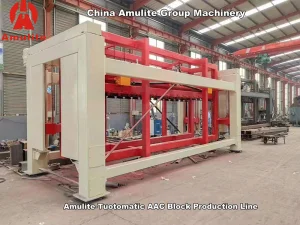
In modern industrial building envelope production, steel wall and roof panels do not operate in isolation. Leading architectural designs integrate steel panels with comprehensive composite structural systems, including EPS sandwich panels, PU/PIR insulated core panels, autoclaved aerated concrete (AAC) blocks, and fiber cement board substrates.
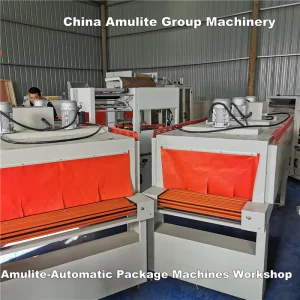
To maximize factory throughput, building material producers frequently pair roll forming lines with automated auxiliary machinery, such as UV coating lines, precision four-side edge trimming machines, and automated packaging systems. This holistic equipment integration allows manufacturing plants to produce fully finished architectural wall panels featuring anti-corrosion, fireproof, and acoustically insulated properties ready for immediate jobsite assembly.
Deploying roll forming equipment across international territories mandates strict adherence to local regulatory frameworks, structural engineering codes, and electrical standards:
The next decade of steel wall and roof panel roll forming will be characterized by intense digitization and autonomous manufacturing workflows:
Inline laser scanners and high-speed vision camera modules will continuously measure profile cross-sections against CAD drawings, automatically signaling servo motors to adjust side-roll clearances when profile deviations exceed 0.1mm.
Flexible roll forming systems featuring individually motorized roll stations will allow real-time profile width variations during continuous production, producing tapered roofing panels for complex stadium dome structures without stopping the production line.
Simulating stress distributions across raw steel coils before physical contact with the rollers reduces startup material scrap during profile changeovers down to virtually zero, significantly saving costly pre-painted coil stock.
Key metrics detailing machine capabilities and engineering excellence.
Expert insights regarding machine operations, profile customization, and factory setup.
Explore complete factory equipment solutions for wall panels, block making, and industrial recycling.