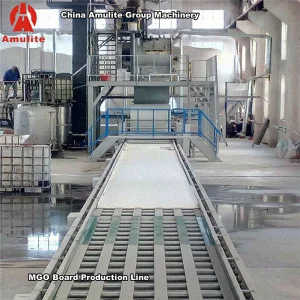
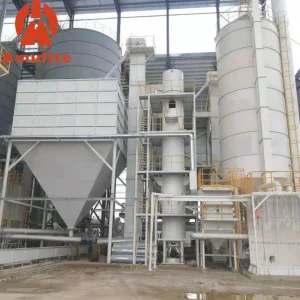
Explore our primary turnkey manufacturing solutions for fiber cement, calcium silicate, MGO fireproof boards, and structural masonry systems.
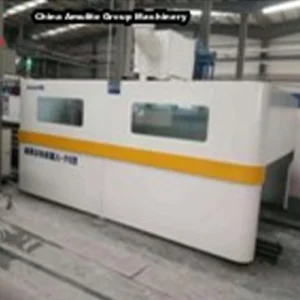
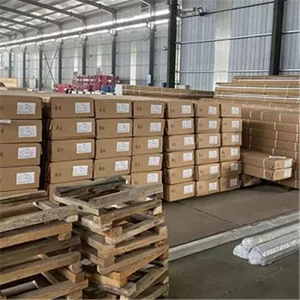
The global architectural landscape is undergoing a monumental transformation towards non-combustible, moisture-resistant, high-durability wall claddings. As urbanization accelerates and environmental regulations tighten worldwide, the market demand for fiber cement boards and calcium silicate panels has surged exponentially. Industrial project developers and building material conglomerates require high-precision, energy-efficient cement board machine lines capable of delivering consistent density, high flexural strength (Class 4/5 per EN 12467), and zero-defect surface finishes.
Selecting top-tier cement board machines factories and companies involves evaluating sophisticated engineering paradigms. Modern plants utilize automated slurry dosing systems, refined wet-forming Hatschek technology, high-tonnage hydraulic presses, and high-pressure steam autoclaves. This document establishes an engineering baseline for evaluating capital expenditure (CAPEX), operational performance (OPEX), process automation parameters, and global supply chain resilience when sourcing manufacturing equipment.
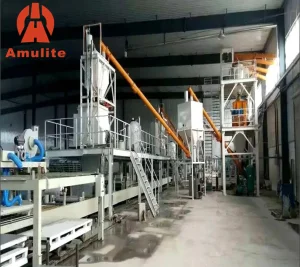
A standard industrial fiber cement plant comprises five interconnected engineering sub-systems. Mastering the physical and chemical interactions at each process stage is essential to achieving commercial profitability and product compliance.
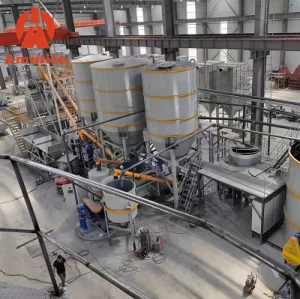
Unbleached kraft pulp or recycled fiber is wet-pulped and refined to a precise Schopper-Riegler (°SR) freeness of 22°–28°SR. Automated loss-in-weight feeders meter Portland cement (OPC), silica sand powder (mesh 200-320), wollastonite, and recycled green-crumb slurry into multi-stage turbo mixers to form a homogenous 8–12% solid content slurry.
The heart of sheet production: 3 to 6 rotating mesh cylinders pick up micron-thin films of slurry, transferring them onto a continuous running felt. High-vacuum dewatering boxes reduce moisture content from 80% to ~28% before the wet film wraps around the accumulating format roll to achieve targeted board thickness (4mm to 30mm).
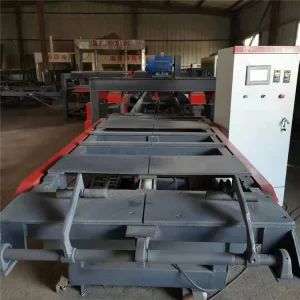
Pre-cut green boards are stacked with steel template plates and loaded into a 7,000T to 14,000T automatic hydraulic press. Pressing squeezes out residual water, increases physical density from 1.15 g/cm³ to over 1.45 g/cm³, and significantly boosts post-curing flexural strength and frost resistance.
Boards undergo hydrothermal synthesis inside 1.0–1.2 MPa high-pressure autoclaves at 180°C–195°C saturated steam for 10 to 12 hours. SiO₂ reacts with Ca(OH)₂ to form Tobermorite crystalline structures, eliminating board expansion/shrinkage tendencies and providing permanent dimensional stability.
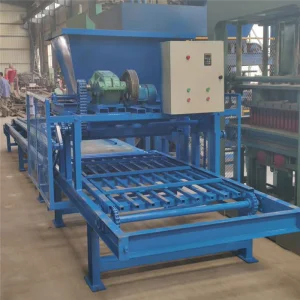
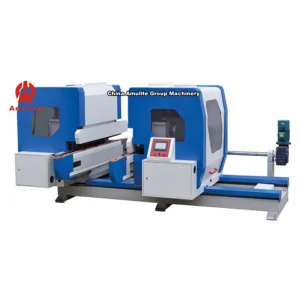
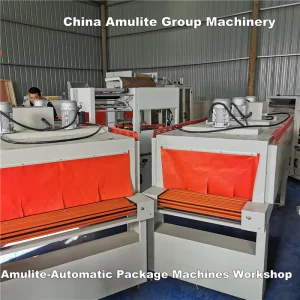
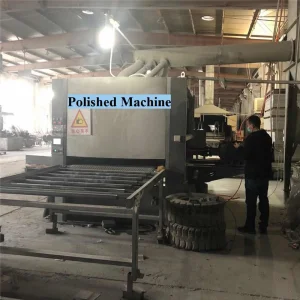
Fully cured boards enter high-speed 4-side edge trimming machines (equipped with diamond-tipped saw blades), double-side sanding lines, dust extraction, automated water-repellent coating systems, and robotized palette stackers with shrink-wrap packaging.
Equipped with multi-stage cone thickeners and sedimentation tanks, 100% of process water is clarified and reused in slurry preparation, satisfying zero-wastewater discharge environmental standards globally.
| Performance / Spec Metric | Autoclaved Fiber Cement Board Line (SiO₂ + OPC) | Air-Cured Fiber Cement Line (100% OPC Base) | Calcium Silicate Board Line (Low Density) |
|---|---|---|---|
| Primary Raw Materials | Cement + Quartz Sand + Cellulose Fiber | Portland Cement + Fly Ash + Cellulose Fiber | Lime Powder + Quartz Sand + Cellulosic Fibers |
| Curing Method | High Pressure Steam Autoclave (1.0-1.2MPa) | Modular Pre-curing Tunnel + Room Humidity | High Pressure Hydrothermal Autoclave |
| Board Density Range | 1.25 – 1.65 g/cm³ | 1.10 – 1.35 g/cm³ | 0.80 – 1.15 g/cm³ |
| Flexural Strength (Bending) | > 16 MPa (Class 4 / EN 12467) | > 9 - 12 MPa (Class 2 / EN 12467) | > 8 - 10 MPa |
| Moisture Movement / Shrinkage | < 0.08% (Ultra-Low) | < 0.25% (Moderate) | < 0.10% (Low) |
| Fire Reaction Rating | Non-Combustible Class A1 (BS 476 Part 4) | Non-Combustible Class A1 / A2 | Non-Combustible Class A1 (Thermal Insulation) |
| Typical Product Thickness | 4mm - 30mm | 6mm - 18mm | 5mm - 25mm |
When evaluating global cement board machines factories and companies, international corporate buyers must analyze initial Capital Expenditure (CAPEX), long-term operational costs (OPEX), lead times, and engineering versatility. Chinese machinery manufacturers have evolved into global market leaders by combining heavy industrial fabrication capabilities with cutting-edge German/Japanese automation components.
Sourcing a complete turnkey fiber cement board line from top-tier Chinese manufacturers yields a 40% to 60% reduction in equipment procurement costs compared to traditional European OEMs—without compromising on component quality. Core PLC systems utilize Siemens S7-1500, hydraulic units feature Bosch Rexroth, and low-voltage electricals leverage Schneider Electric.
This reduced capital payback window enables investors to achieve full plant ROI within 18 to 30 months under standard capacity utilization.
China's mature heavy industrial clusters allow rapid fabrication of oversized pressure vessels (autoclaves), multi-stage forming vats, precision CNC-machined format cylinders, and high-tonnage press frames. Pre-assembly and dry-run testing take place inside 100,000 m²+ modern plants prior to export packaging.
Containerized layout modularization accelerates shipping schedules and simplifies site erection overseas.
Building material manufacturing relies heavily on local mineral availability. A machinery setup tailored for pure silica sand will fail if deployed in regions where only fly ash or low-purity river sand exists. Leading machine manufacturers provide comprehensive process localization services.
Before machine manufacturing begins, raw material samples (cement, local sand, cellulose pulp, volcanic ash) are sent to our process laboratory. R&D chemical engineers adjust the slurry viscosity, chemical binder ratios, and autoclave temperature curves to ensure output boards meet local building codes.
Senior mechanical engineers, electrical technicians, and master operators are dispatched overseas for complete installation supervision, PLC programming adjustments, trial production, and local labor training until target plant capacity is achieved.
Machinery designs adhere strictly to international safety standards: European CE Directives (Machinery Directive 2006/42/EC), pressure vessel certification (ASME / PED for autoclaves), ISO 9001 quality systems, and ISO 14001 environmental management.
Boards produced by our advanced machinery lines serve diverse structural and decorative roles across commercial, industrial, and residential building sectors.
High-density autoclaved fiber cement boards (1.4-1.6 g/cm³) with UV-resistant coatings withstand harsh atmospheric weathering, freeze-thaw cycles, and seismic stress, serving as long-life architectural rainscreens.
Medium-density calcium silicate boards (8-12mm) offer 2 to 4 hours of certified fire resistance in hospital corridors, high-rise office shafts, and educational institutions without emitting toxic smoke.
100% waterproof and moisture-impermeable cement backing panels used behind ceramic tiles in commercial kitchens, bathrooms, swimming pool complexes, and cleanrooms.
Structural EPS sandwich cement wall panels and floor decks utilized in rapid assembly housing, containerized offices, and disaster-relief shelters requiring lightweight high-strength materials.
The fiber cement machinery sector is rapidly integrating Industry 4.0 innovations to lower energy usage and optimize product quality.
Integrating non-contact ultrasonic density sensors, laser caliper thickness scanners, and AI visual defect recognition cameras onto the green-cutting conveyor line. Out-of-spec sheets are automatically rejected and recirculated back into slurry mixers before curing, reducing scrap rates to under 0.5%.
Transitioning from traditional high-carbon Portland cement to alkali-activated geopolymers, granulated blast-furnace slag (GGBS), and calcined clay binders. Modern machine designs adapt vat mixing dynamics and autoclave pressure curves to accommodate green cement chemistries.
Industrial IoT gateways connect factory PLC systems directly to centralized cloud monitoring platforms. Global technical support teams can perform remote diagnostics, PLC software updates, and predictive maintenance alerts on motors, vacuum pumps, and hydraulic presses.
Expert technical answers regarding factory footprint, capital outlay, raw material selection, and installation timelines.
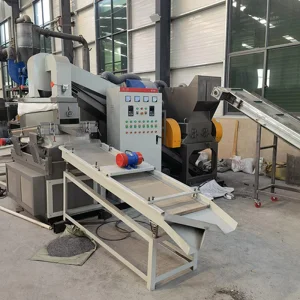
Explore additional specialized machinery systems including EPS sandwich wall panel machinery, UV painting lines, single-face polishing systems, and resource recovery machinery.
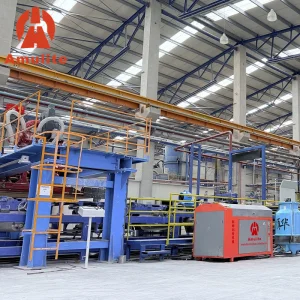
Partner with China's leading process engineers. Submit your target annual capacity, board dimensions, and raw material parameters to receive a turnkey equipment proposal, utility load calculations, and financial ROI estimation within 24 hours.
Contact Our Chief Engineering Director