High-Precision Turnkey Machinery Solutions Manufactured for Global Infrastructure & Building Material Applications
Analyzing Macro Market Dynamics, Material Transformations, and Engineering Paradigms
The global cold roll forming machine manufacturing landscape is experiencing a fundamental structural shift driven by modern architectural requirements, sustainable construction mandates, and Industry 4.0 automation integration. Roll forming—a continuous profile-bending operation wherein metal strip stock is progressively shaped through successive sets of engineered rollers—has transcended simple mechanical bending. Today, top-tier roll forming machine manufacturers operate at the convergence of advanced metallurgy, finite element stress modeling (FEA), servo-hydraulic integration, and real-time inline quality control.
As international construction paradigms transition toward prefabricated building systems, modular steel frames (LGS/Light Gauge Steel), high-insulation composite sandwich cladding panels, and custom structural purlins (C/Z quick-change profiles), global demand for ultra-precise, high-speed roll forming equipment has surged. Enterprise buyers, EPC contractors, and industrial material fabricators no longer seek standard off-the-shelf machinery; they require scalable, fully automated production ecosystems capable of processing high-yield structural steels, pre-painted galvanized iron (PPGI), aluminum alloys, and multi-layered composite materials with sub-millimeter tolerances.
Technical Information Gain Insight: Modern enterprise-grade roll forming machinery requires specialized roll pass design algorithms (such as COPRA FEA modeling) to calculate neutral axis shifts and prevent material stretch, oil-canning, edge wave, and longitudinal twisting in high-tensile steel applications (up to G550 MPa).
Evaluating Roller Material Science, Drive Systems, and Structural Rigidity Standards
Leading factories utilize premium Cr12MoV, D2, or SKD11 alloy steel for forming rollers. Through vacuum heat treatment and precision CNC lathe turning, roller surfaces achieve a hardness rating of HRC 58-62. Hard chrome plating (0.05mm thickness) is applied to mitigate friction coefficient and eliminate surface scratching on pre-painted or coated coils.
Heavy-duty structural integrity relies on solid steel wall panels (typically 30mm to 50mm thickness) or cast-iron stands instead of welded chain-driven frames. High-precision gearboxes connected via universal joints ensure synchronized torque delivery across all passes, preventing material slip and uneven stretch.
Advanced roll forming factories integrate industrial automation platforms featuring Siemens S7-1500 or Schneider Electric PLCs, touch-screen HMI interfaces, absolute encoders, and closed-loop Yaskawa/Mitsubishi servo drives. Cut-to-length accuracy is consistently maintained within ±0.5mm even at elevated line speeds.
| Technical Metric | Standard Entry-Level Machine | Industrial High-Precision Factory Standard | Enterprise Custom Heavy-Duty Line |
|---|---|---|---|
| Roller Shaft Diameter | Φ 50mm - Φ 65mm (45# Steel) | Φ 75mm - Φ 95mm (40Cr Quenched & Tempered) | Φ 100mm - Φ 120mm (Solid Forged Alloy Steel) |
| Machining Process | Standard Manual Lathe Turning | CNC Lathe Turning + Precision Grinding | Multi-Axis CNC Grinding + Mirror Polish |
| Cut-off Mechanism | Stop-to-Cut Hydraulic Shear | High-Speed Servo Flying Cut-off | Rotary Punching & Servo Continuous Flying Shear |
| Yield Strength Handling | 235 - 345 MPa | Up to 450 MPa | High-Tensile Structural Steel (G550 MPa) |
Deconstructing Supply Chain Density, Cost Efficiency, OEM Versatility, and Turnkey Integration
China has established itself as the global epicentre for roll forming machine manufacturing and industrial building material line engineering. Cities across Hebei, Jiangsu, Zhejiang, and Shandong provinces host hyper-dense industrial clusters where raw materials, precision CNC machining centers, heat-treatment facilities, and electronic component suppliers reside within a 50-kilometer radius. This industrial proximity grants Chinese roll forming factories unmatched competitive edges:
By leveraging complete localized supply chains and streamlined assembly techniques, Chinese manufacturers deliver premium-grade machinery at 30% to 50% lower capital expenditure compared to European counterparts, without compromising component quality or structural steel mass.
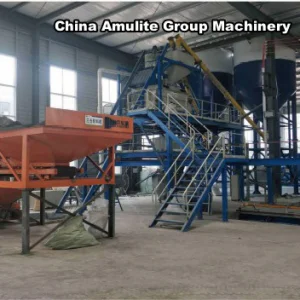
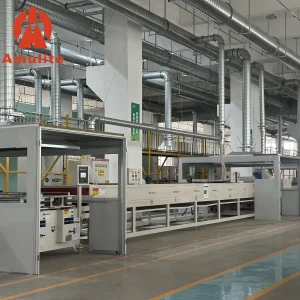
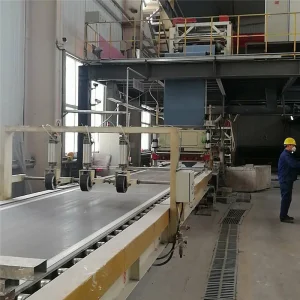
Leading Chinese factories excel in combining core roll forming units with auxiliary industrial operations. From automated decoiling and high-speed hydraulic punching to continuous polyurethane/EPS core injection, thermal curing, and automatic robotic stacking, true turnkey production is delivered seamlessly.
Advanced CAD/CAM engineering teams can analyze complex client profile drawings, execute roll pass simulations, engineer bespoke tooling cassettes, and manufacture complete production lines within strict 45-to-75-day turnaround schedules.
Cross-Sector Engineering Integration: Architecture, Logistics, Energy, and Infrastructure
Roll forming technology spans a vast spectrum of global industrial sectors. Machine configuration, roller profiling, and shear mechanics are specialized based on the intended macro application:
Trapezoidal roof tile machines, corrugated sheet roll formers, and hidden-screw standing seam roof machines. These production lines incorporate inline film-covering, embossing rollers, and continuous hydraulic step-forming dies to produce weather-resistant commercial roofing products.
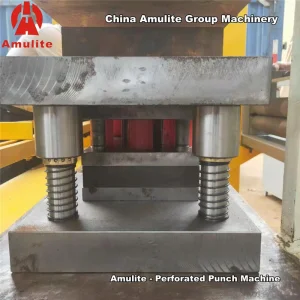
Automated C/U/Z/Hat stud and track roll forming machines for prefabricated light-steel villas and interior drywall partitioning systems. Integrated with high-speed web hole punching, dimple punching, service hole notched cuts, and inkjet profile marking.
Heavy-duty roll formers for highway guardrails (W-beam & Thrie-beam), automated warehouse rack upright columns, box beam profiles, and solar panel mounting structure rails capable of forming 3.5mm to 6.0mm thick high-strength steel coils.
Systematic Evaluation Criteria for Procurement Directors and Technical Selection Committees
To mitigate capital procurement risks when sourcing roll forming machines globally, enterprise procurement departments should implement a multi-tiered factory evaluation protocol based on quantifiable engineering metrics:
Verify whether the manufacturer owns in-house heavy CNC gantry milling machines, horizontal boring machines, and CNC lathe centers. External outsourcing of roller turning or frame machining often introduces cumulative tolerance errors during final line assembly.
Audit the supplier's heat-treatment certification and quality control logs. Roller hardness must be verified via Rockwell Hardness Testing (HRC 58-62 standard). Inadequate heat treatment results in rapid roller wear, profile distortion, and material galling within months of operation.
Never authorize final machine shipment without a rigorous FAT. Run minimum 500-meter continuous test coils using the exact client coil grade and thickness. Inspect final profile dimension consistency, straightness (bow, camber, twist), paint adhesion, and shear edge burr heights.
Explore Advanced Production Lines Engineered for Superior Structural Output
Next-Generation Innovations Defining the Future of Industrial Cold Forming Systems
The roll forming industry is undergoing rapid digital modernization. Pioneering factories are implementing smart technologies that transform traditional roll forming lines into self-optimizing cyber-physical manufacturing systems:
Real-time laser triangulation sensors monitor output dimensions continuously after the final forming station. Any deviation in flange width, lip angle, or rib height instantly communicates back to automatic motorized roller stations for micro-adjustments without stopping production.
Advanced hydraulic pre-shearing units synchronized with optical coil end detection ensure that raw material waste during coil changeover is reduced to absolute zero, dramatically saving material costs in high-grade stainless steel or pre-painted coil production.
To support high-mix low-volume production, modern roll formers feature sub-frame quick-change cassette systems. Entire sets of roller stands can be swapped via overhead crane within 10 to 15 minutes, reducing downtime by up to 85% compared to manual roller adjustments.
Expert Answers to Essential Procurement, Operational, and Technical Questions
Pricing is governed by five key engineering parameters: 1) Number of forming passes (stations) required for profile complexity; 2) Roller tooling material steel grade (e.g., Cr12MoV vs 45# carbon steel); 3) Machine frame structural thickness (cast iron/heavy wall plate vs lightweight tube channel); 4) Automation level (Siemens PLC, servo flying cut vs stop-and-cut hydraulic shear); and 5) Line operating speed (15m/min vs 60m/min continuous high-speed systems).
Springback is mitigated through precise roll pass design modeling (using finite element software like COPRA). The roller design incorporates controlled over-bending passes calculated specifically for the coil’s target yield strength (e.g., G300 vs G550 MPa). Side-roll shaping stands and final turkey-head straightening units are also utilized to eliminate longitudinal curvature and twist.
Standard profile machines (such as simple roof tile or C/Z purlin roll formers) take approximately 30 to 45 days. Complex high-speed lines, heavy-gauge structural profile machines, or continuous sandwich panel production lines requiring custom tooling cassettes, extensive CNC machining, and automated packing systems generally require 60 to 90 days from technical drawing sign-off to Factory Acceptance Testing (FAT).
If roller hardness is insufficient (below HRC 55) or polished inadequately, steel particles can embed into the roller surface, creating abrasive scratches on pre-painted (PPGI) or galvanized coatings. Proper heat treatment (HRC 58-62) combined with hard chrome plating guarantees a smooth friction-free interface that preserves coil surface integrity.
Premier manufacturers provide comprehensive global field service programs, including on-site mechanical foundation verification, machine alignment supervision, PLC electrical integration, trial commissioning with local raw materials, and hands-on operational training for local engineering staff. Remote PLC diagnostic modules are installed standard for instant troubleshooting via internet access.