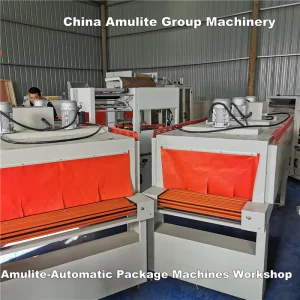
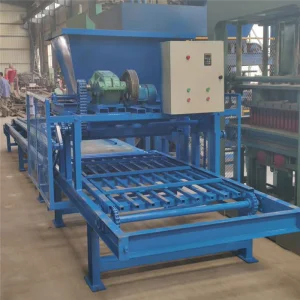
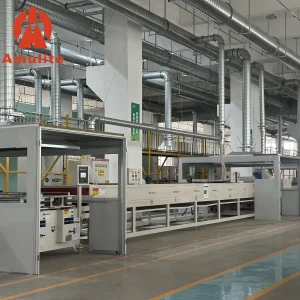
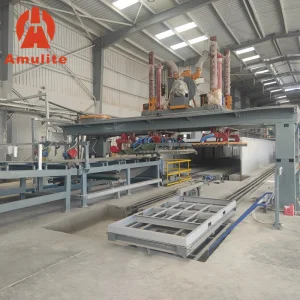
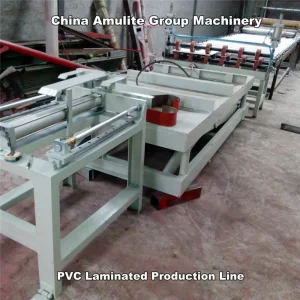
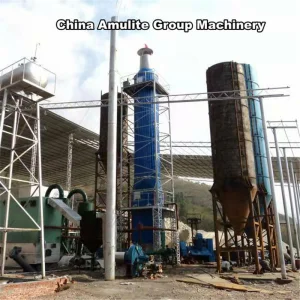
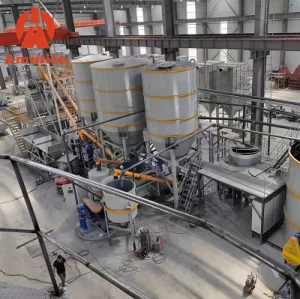
High-precision manufacturing machinery, panel ion surface lines, and automated wallboard production technology engineered by leading OEM factories.
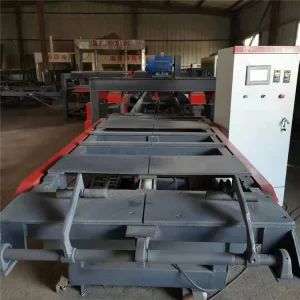
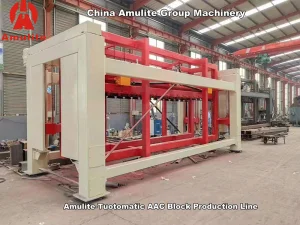
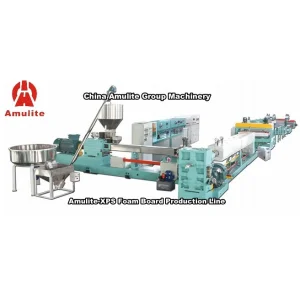
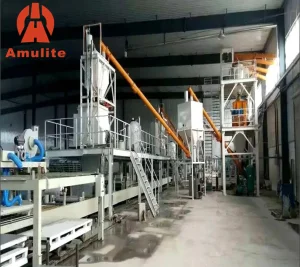
Understanding the physics, chemical crystallization, and automated machinery integration driving famous Panel Ion Lines globally.
In modern industrial manufacturing and high-performance building material fabrication, the term Panel Ion Lines represents the cutting edge of surface functionalization, advanced continuous sheet formation, ionized plasma pre-treatment, and high-pressure hydrothermal reaction systems. As global civil engineering and commercial construction demand lighter, non-combustible, structurally resilient, and environmentally sustainable cladding components, top-tier factories have shifted from manual, energy-intensive processes toward fully automated, closed-loop Panel Ion production infrastructure.
At the fundamental engineering level, famous Panel Ion Lines utilize sophisticated physical and chemical processing steps. Whether manufacturing fiber cement substrates, calcium silicate panels, autoclaved aerated concrete (AAC) blocks, or expanded polystyrene (EPS) composite wall structures, the integration of ion-assisted surface processing alters the interfacial energy of raw mineral substrates. By deploying high-voltage atmospheric plasma ionization units prior to lamination or surface coating (such as UV-cured fluorocarbon coatings or PVC vacuum press films), the critical surface tension ($\gamma_s$) of calcium silicate or cementitious surfaces increases from below $35 \text{ mN/m}$ to over $58 \text{ mN/m}$. This drastic increase in surface free energy eliminates micro-delamination risks in high-humidity and high-freeze-thaw environments.
Simultaneously, in hydrated mineral board lines—such as calcium silicate and fiber cement plants—the forming cylinder and vacuum dewatering sections harness electro-kinetic ion movement to optimize slurry filtration rates. By modulating the zeta potential ($\zeta$) of colloidal cement-silica-pulp slurries using ionic flocculants, water extraction efficiency across vacuum boxes rises by up to 34%, yielding green board green densities ($1.15 - 1.30 \text{ g/cm}^3$) prior to autoclaving. During high-pressure steam curing ($1.2 - 1.5 \text{ MPa}$ saturated steam at $190^\circ\text{C}$), the silica-lime ratio reacts to form a stable Tobermorite C-S-H crystalline matrix ($\text{Ca}_5\text{Si}_6\text{O}_{17}\cdot5\text{H}_2\text{O}$), delivering unmatched dimensional stability.
A rigorous economic and industrial analysis of China's heavy manufacturing clusters, vertical integration, and cost-efficiency advantages.
The global dominance of Chinese panel machinery manufacturers—exemplified by industrial leaders like China Amulite Group—stems from a combination of concentrated supply chain ecosystems, heavy engineering infrastructure, and aggressive R&D investments in automation. Located predominantly in major machinery clusters like Hebei, Jiangsu, and Shandong, modern panel ion lines factories benefit from localized access to raw metallurgy, high-precision CNC machining centres, pressure vessel fabrication hubs, and specialized PLC system integrators.
From heavy structural steel cutting and automated submerged-arc welding to precision cylinder turning, 100% of core mechanical assemblies are manufactured in-house to guarantee quality control.
Integrated SCADA architecture featuring Siemens S7-1500 controllers, Schneider low-voltage protection, and real-time sensor telemetry for continuous monitoring of thermal and chemical loads.
Delivering European-standard engineering precision at 45–60% lower capital expenditure, drastically shortening return on investment (ROI) cycles for international building suppliers.
To highlight the structural performance and engineering specifications across global machine builders, the following data table summarizes key performance metrics achieved by Amulite China Panel Ion Production Lines against conventional machinery alternatives:
| Engineering Metric / Specification | Standard Legacy Board Line | Amulite High-Speed Panel Ion Line | European Tier-1 Benchmark Line |
|---|---|---|---|
| Annual Capacity Range | 1,000,000 – 3,000,000 m² | 5,000,000 – 30,000,000 m² | 10,000,000 – 25,000,000 m² |
| Forming Cylinder Machine Width | 1,200 mm | 1,350 mm – 1,650 mm | 1,400 mm – 1,600 mm |
| Thickness Tolerance Control | ± 0.5 mm | ± 0.15 mm (Laser Calibrated) | ± 0.10 mm |
| Autoclave Pressure Rating | 1.0 MPa (Air Cured Options) | 1.2 – 1.6 MPa (GB/ASME/CE Certified) | 1.2 – 1.5 MPa |
| Dewatering Vacuum Differential | -0.04 to -0.05 MPa | -0.07 to -0.085 MPa | -0.07 to -0.08 MPa |
| Power Consumption Efficiency | 38 kWh / m³ product | 24.5 kWh / m³ product | 26 kWh / m³ product |
| Total CapEx Relative Index | 100% (Baseline) | 140% (High ROI Value) | 320% – 450% |
Analyzing global market vectors: AI-assisted quality monitoring, zero-carbon thermal curing, and modular precast building integration.
The global construction equipment sector is undergoing a structural transition toward digitalized, highly sustainable manufacturing processes. Panel Ion production lines are no longer standalone mechanical units; they function as fully connected smart factory ecosystems where IoT sensors, automated optical inspection (AOI), and closed-loop feedback systems constantly calibrate production variables.
Modern panel lines integrate multi-spectrum vision cameras along high-speed edge trimming and stacking conveyors. Utilizing deep-learning neural networks trained on thousands of surface defect profiles (including micro-cracks, edge-chipping, moisture spots, and thickness variation), the automated system instantaneously diverts non-conforming green boards prior to entering the expensive autoclaving stage. This pre-curing rejection mechanism saves up to $180,000 annually in steam and thermal energy waste per line.
Driven by strict ESG requirements and carbon border adjustment mechanisms (such as Europe's CBAM), panel manufacturers are replacing traditional energy-intensive curing protocols with direct $\text{CO}_2$ mineral sequestration technology. By injecting industrial flue gas ($\text{CO}_2$ concentration 15-20%) into specialized curing chambers, hydrated lime ($\text{Ca(OH)}_2$) within cementitious matrix panels rapidly reacts to form durable calcium carbonate ($\text{CaCO}_3$):
As off-site modular construction gains traction across North America, Europe, and Asia-Pacific, procurement mandates call for multifunctional panels. Production lines must now produce composite panels integrated with electrical conduits, thermal insulation cores (EPS, XPS, or Mineral Wool), and pre-embossed architectural stone textures in a single continuous process. Modern equipment engineered by China Amulite Group addresses this by pairing high-capacity board lines directly with automated coating, UV curing, and four-side profiling systems.
Comprehensive EPC workflow: From site foundation civil layout to local raw material formulation adjustment and mass production hand-over.
Investing in a commercial-scale panel line requires far more than acquiring standalone machinery. It demands end-to-end Process Engineering (EPC) expertise. A successful plant deployment relies on custom raw material analysis, precise utility balancing (steam, compressed air, process water recycling), structural civil planning, and continuous technical training.
Comprehensive lab testing of client-provided sand, cement, fly ash, lime, and cellulose fibers to establish optimum slurry mix ratios and chemical reactivity curves.
Architectural engineering for foundation load distribution, pit design, steam boiler piping layout, heavy electrical substation integration, and forklift logistics pathways.
On-site mechanical erection, electrical PLC wiring verification, wet testing, and formulation tuning managed by senior field engineers until stable yield targets are reached.
In modern fiber cement and calcium silicate panel production, process water consumption represents a major environmental compliance factor. Advanced Amulite Panel Ion Lines utilize a closed-loop multi-stage clarification system. Process wastewater collected from vacuum dewatering boxes, sheet trimming cutters, and felt washing jets passes through automated flocculation settling tanks and secondary disc filters. Clarified water is continuously recirculated back to the primary slurry pulping agitators, achieving a **98.5% water reuse rate** and maintaining zero liquid discharge (ZLD) to municipal sewers.
Essential checklist for B2B procurement directors, EPC contractors, and factory investors evaluating panel production lines.
Procuring a multi-million-dollar industrial manufacturing asset requires a total cost of ownership (TCO) calculation model rather than focusing solely on initial machinery purchase price. Enterprise buyers must analyze operational expenditures (OpEx), power consumption, spare-parts wear cycles, and global technical service availability.
Based on financial audits across 50+ commissioned operational plants globally, the capital expenditure and operational cost distribution of a 10-Million m²/year Fiber Cement Board Production Line breaks down as follows:
In-depth responses covering capacity sizing, raw material flexibility, installation timelines, and post-sales process engineering support.
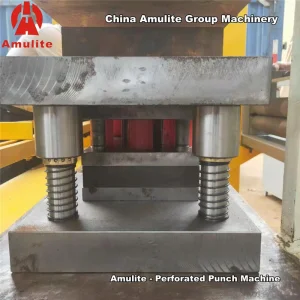
Explore complete turnkey lines, continuous lamination equipment, precision punch systems, and recycling solutions manufactured by top China factories.