Explore engineered manufacturing lines from China's leading OEM exporter. Every plant configuration delivers maximum operational uptime, precision dosing, and sustainable throughput.
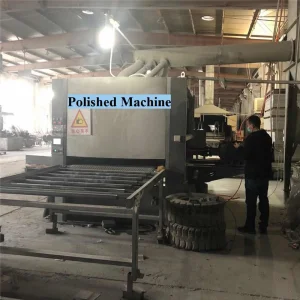
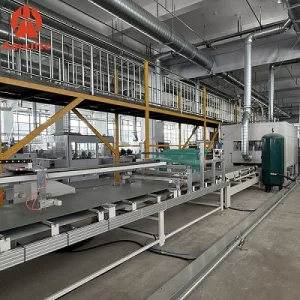
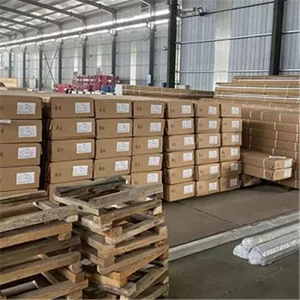
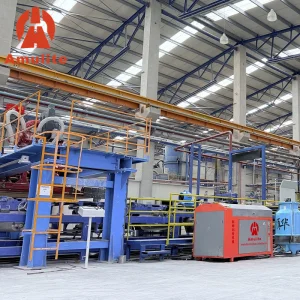
The global interior architecture and commercial construction sectors are experiencing a fundamental shift toward fire-resilient, moisture-impermeable, and environmentally stable suspended ceiling materials. Historically, traditional gypsum board and acoustic mineral wool dominated commercial interiors. However, structural limitations such as humidity sag, low impact tolerance, and vulnerability to microbial growth have rapidly accelerated the adoption of fiber cement ceiling boards across international markets.
Manufactured primarily from Ordinary Portland Cement (OPC), high-purity silica sand, refined cellulose fibers, and specialized functional additives, fiber cement ceiling panels provide an unprecedented strength-to-weight ratio. As building codes worldwide transition toward stringent EN 13501-1 Class A1 non-combustibility standards and LEED v4.1 sustainability benchmarks, industrial procurement directors are increasingly seeking reliable fiber cement ceiling board production line suppliers capable of engineering high-speed, automated turnkey lines.
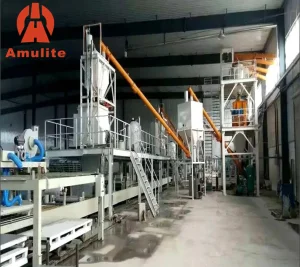
Precision manufacturing of high-density fiber cement ceiling boards (thickness range 4mm to 8mm, density range 1.2g/cm³ to 1.5g/cm³) requires an uncompromising focus on raw material homogenization, sheet formation, hydraulic pressing, and hydrothermal curing. Premier equipment OEMs utilize advanced Hatschek wet-process continuous forming technology customized specifically for low-thickness ceiling applications.
Computer-controlled loss-in-weight feeders meter micro-silica, cement, and unbleached kraft pulp fibers. High-shear hydrapulpers disperse fiber bundles into uniform suspensions, ensuring defect-free green sheet formation with maximum tensile matrix bonding.
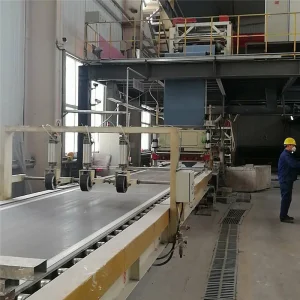
Multiple rotating mesh cylinders pick up sub-millimeter slurry layers, transferring them onto a continuous synthetic felt belt under controlled vacuum dewatering. Multi-layer lamination creates ultra-dense structural ceiling boards with minimal caliper variation.
Formed sheets undergo pre-curing followed by high-pressure steam hydrothermal reaction inside autoclaves at 170°C–190°C (approx. 1.0–1.2 MPa). This induces Tobermorite crystalline phase formation, granting absolute dimensional stability and zero moisture expansion.
| Technical Parameters | Autoclaved Fiber Cement Line (Siliceous-Calcareous) | Air-Cured Fiber Cement Line (Portland Cement Matrix) |
|---|---|---|
| Primary Raw Materials | Quartz Sand (Silica), OPC Cement, Kraft Pulp, Additives | OPC Cement, Fly Ash, PVA/Cellulose Fibers, Micro-silica |
| Curing Cycle Time | 12 – 14 Hours (Hydrothermal Steam Reaction) | 14 – 28 Days (Ambient Hydration Curing) |
| Moisture Movement / Sag | < 0.12% (Negligible sag in high humidity) | < 0.25% (Requires anti-sag backing coatings) |
| Bending Strength (Flexural) | ≥ 14 - 18 MPa (Category 3 / ISO 8336) | ≥ 10 - 14 MPa (Category 2 / ISO 8336) |
| Fire Performance | Class A1 Non-Combustible (EN 13501-1) | Class A2 Non-Combustible |
Over the past decade, Chinese engineering leaders such as China Amulite Group have redefined global expectations for building material machinery. By integrating Industry 4.0 smart plant architectures, real-time IoT diagnostic arrays, and fully automated PLC control system networks, Chinese equipment manufacturers offer unmatched production efficiency and capital investment return (ROI).
Key competitive advantages engineered into modern Chinese turnkey plants include:
From initial greenfield site engineering to commercial board commission, our multi-disciplinary project units provide end-to-end operational security.
When global procurement teams evaluate fiber cement ceiling board line suppliers, key purchasing decisions must go beyond basic machine acquisition cost (CAPEX). Evaluating Total Cost of Ownership (TCO), energy consumption per square meter of board, and line scrap rates is vital to long-term profitability.
Thinner 4.5mm to 6mm fiber cement ceiling tiles installed on exposed T-bar grid systems provide Class A1 fire protection and zero moisture absorption in air-conditioned office towers, preventing costly sagging and drop-ceiling replacement cycles.
In tropical climates, coastal resorts, or indoor swimming facilities, conventional ceiling materials quickly degrade. Fiber cement ceiling boards maintain zero structural deformation, resisting mold, rot, and fungal degradation under 100% relative humidity.
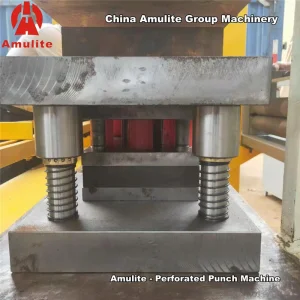
By pairing high-speed hydraulic ceiling punch systems with CNC perforation equipment, production lines can produce acoustic ceiling boards lined with micro-porous sound-absorbing membranes for auditoriums, hospitals, and transit hubs.
Amulite fiber cement ceiling board production lines are engineered for scalable capacities ranging from 2 million m² to over 20 million m² per year. Annual capacity is dictated by sheet machine width (standard 1,300mm to 1,600mm), the number of slurry forming vats (typically 3 to 5 vats), hydraulic press tonnage, and total autoclave curing chamber volume.
Yes. Amulite board lines are engineered with multi-functional thickness adaptability. By adjusting the PLC stacking cycle parameters, green sheet cutting length, and press pressure, a single line can seamlessly switch between manufacturing 4mm–8mm ceiling tiles, 8mm–12mm interior partition boards, and 14mm–20mm heavy-duty exterior cladding panels.
Prior to finalizing mechanical engineering drawings, our process laboratory conducts comprehensive chemical and physical testing on your local raw materials (silica sand SiO2 content, cement grade, pulp fiber length, and water quality). We then issue a precise slurry formula recommendation to guarantee ISO 8336 physical strength compliance upon plant startup.
Manufacturing lead time for complete line machinery is typically 90 to 120 days. Civil foundation preparation occurs concurrently. On-site mechanical and electrical erection takes 45 to 60 days under the direction of our senior site engineers, followed by 20 to 30 days of trial slurry running, formula optimization, and hands-on staff operational training.
We provide 24/7 remote PLC diagnostic assistance, continuous process optimization support, and comprehensive spare-part packages. Critical wear parts (such as synthetic felts, wire cylinder meshes, and cutting knives) are maintained in global stock hubs to ensure rapid international dispatch and minimal factory downtime.
Complete your manufacturing plant ecosystem with automated finishing systems, recycling machinery, and auxiliary block equipment.
Partner with China's leading building material engineering authority. Speak with our Senior Process Engineers today to request customized site plans, utility consumption analyses, and formal budget quotations.
Request Engineering Proposal & Consultation