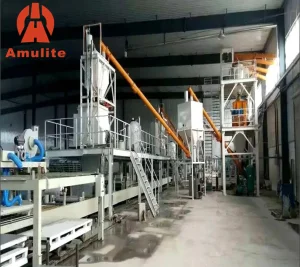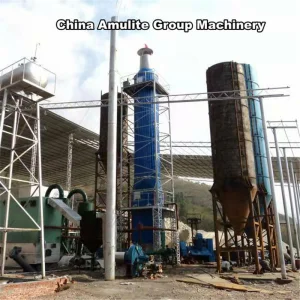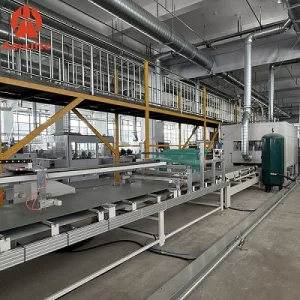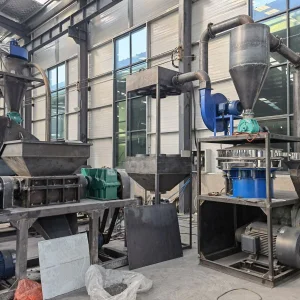
In the era of modern modular construction and industrial off-site manufacturing, the demand for lightweight, fire-resistant, and high-thermal-efficiency wall paneling systems has surged exponentially. At the core of this structural evolution lies the advanced EPS Ion Line (Expanded Polystyrene Cement Sandwich Panel Production Line). As global regulatory bodies push for net-zero building envelopes, premier suppliers and OEM engineering manufacturers have redefined the mechanics of composite panel fabrication.
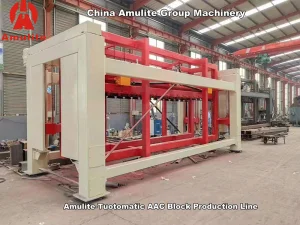
The term "EPS Ion Line" represents the modern automated system that merges pre-expanded polystyrene beads, cementitious binders, fly ash, silica additives, and specialized ionic surfactants into a homogeneous core matrix, pressure-bonded between dual fiber-cement or calcium silicate facing boards. Leading suppliers have moved away from legacy manual battery molds toward fully automated vertical and horizontal continuous hydraulic moulding lines, drastically cutting cycle times while optimizing density homogeneity.
The international market for EPS panel machinery is undergoing a paradigm shift driven by urban population density growth and strict carbon accounting standards (such as the EU Carbon Border Adjustment Mechanism and US LEED V4 certification). Strategic suppliers across North America, East Asia, and Europe are delivering turnkey plants equipped with predictive IoT analytics, real-time slurry rheology monitors, and automated demolding robotics. Tier-1 manufacturers like China Amulite Group lead the sector by combining robust heavy-machine engineering with specialized biochemical raw material formulations.
Achieving uniform mechanical strength across an expanded polystyrene cement panel requires precise control over bulk density, moisture dispersion, and chemical hydration dynamics. Modern EPS Ion Line suppliers configure their plants into five interconnected sub-systems:
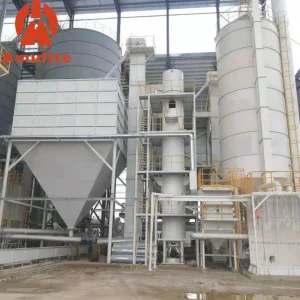
Raw expandable polystyrene beads undergo pressurized steam expansion inside a closed fluidized bed. Microprocessor-controlled steam valves maintain bead density tolerances within ±0.5 g/L, followed by pressurized fluid bed drying and silo aging for thermal stabilization.
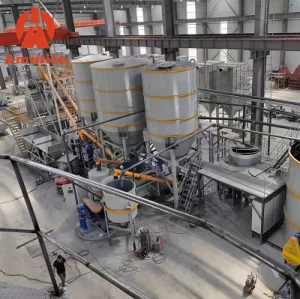
Utilizing dual-axis planetary mixers, cement, fly ash, silica sand, and hydrophobic ionic additives are blended into a uniform suspension. EPS beads are injected pneumatic-in-line to prevent bead crushing and density stratification.
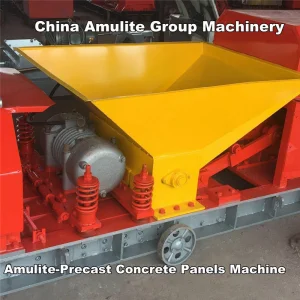
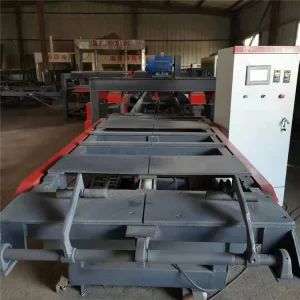
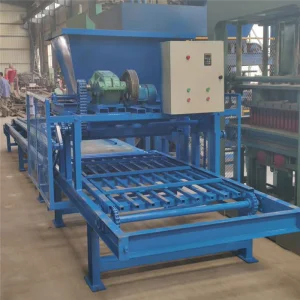
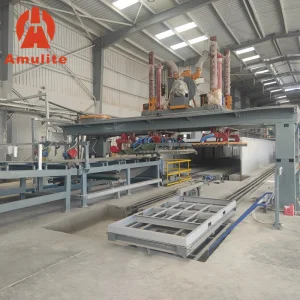
Heavy structural steel mold cars equipped with hydraulic clamping mechanisms hold calcium silicate facing boards in tight alignment. Internal steam channels accelerate initial setting, reducing mold cycle time to under 18 minutes.
A primary point of failure in lower-grade EPS panel production is interfacial delamination—where hydrophobic polystyrene beads separate from the hydrophilic cement paste under shear load or thermal cycling. Advanced EPS Ion Line machinery addresses this challenge at a molecular level:
"By integrating inline ionic surfactant aerosol spraying directly prior to slurry mixing, the surface tension of EPS beads drops from 72 mN/m to below 34 mN/m. This allows Calcium-Silicate-Hydrate (C-S-H) gels to crystallize tightly around each bead, forming an engineered Interfacial Transition Zone (ITZ) that increases flexural strength by up to 38% compared to standard mixing methodologies."
| Performance Metric | Standard EPS Line Output | Amulite Advanced Ion Line Standard | Testing & Compliance Method |
|---|---|---|---|
| Core Bulk Density Range | 450 – 650 kg/m³ | 280 – 480 kg/m³ (Configurable) | GB/T 30100-2013 / ASTM C518 |
| Compressive Strength | 3.5 MPa | ≥ 5.2 MPa | EN 772-1 / ISO 1920-4 |
| Thermal Conductivity (λ) | 0.085 W/(m·K) | 0.042 – 0.058 W/(m·K) | ASTM C177 / BS EN 12667 |
| Acoustic Insulation (STC) | 38 dB (100mm thickness) | 48 – 52 dB (100mm thickness) | ISO 10140-2 / ASTM E90 |
| Fire Resistance Duration | 2 Hours (Non-Load Bearing) | 4 Hours (Integrity & Insulation) | BS 476 Part 22 / EN 1364-1 |
Navigating turnkey factory procurement requires absolute reliance on vendor engineering background. Google's Search Quality Rater Guidelines emphasize E-E-A-T (Experience, Expertise, Authoritativeness, and Trustworthiness). Here is how premier suppliers establish operational authority:
With over 200 turnkey plants commissioned worldwide, engineering teams hold empirical dataset logs across diverse climate zones—from high-humidity tropical sites in Southeast Asia to sub-zero alpine regions in Eastern Europe.
In-house structural engineering teams maintain wet-chemistry and mechanical testing labs. Equipment designs incorporate Siemens PLC SCADA automation, Schneider electrical protection, and ISO-certified heavy fabrication.
Full compliance with CE directives, ISO 9001:2015 quality management systems, and transparent contract guarantees covering line capacity, raw material utilization efficiency, and spare-part availability.
The application of EPS cement sandwich panels is expanding beyond basic partition walls into high-load exterior building envelopes, cold-chain storage facilities, and emergency modular housing systems.
High adoption of precision tongue-and-groove EPS panels pre-notched for lightweight gauge steel (LGS) framing, meeting tight California Title 24 energy conservation codes.
Custom EPS panel formulations utilizing expanded volcanic perlite additives to endure peak thermal shocks exceeding 55°C while maintaining zero core degradation.
Deployment of high-capacity vertical mold battery systems capable of producing 1.5 million m² annually to satisfy low-cost public housing and flood-resilient wall projects.
Engineering departments across leading equipment companies are pioneering next-generation upgrades to minimize embodied carbon and human error during plant operation:
Integration of inline optical sensors and ultrasonic slurry density scanners to automatically adjust water-cement ratios in real time based on raw material batch variations.
Transition from standard fossil-derived EPS beads to bio-attributed expandable polylactic acid (EPLA) and recycled marine plastic beads, supported by dynamic steam control algorithms.
Elimination of external steam boilers through exothermic hydration heat capturing loops, combined with autonomous AGV transport systems from mold demolding to automated bundling.
Investing in a high-capacity EPS Ion Line requires careful evaluation of capital expenditure (CapEx) against long-term operating costs (OpEx). Tier-1 manufacturers provide customized plant engineering proposals tailored to local raw material availability:
Formulation engineering that allows up to 45% industrial byproduct (fly ash, blast furnace slag, perlite waste) substitution without compromising structural load margins.
Condensate recycling and heat exchanger loops reduce steam generation costs by up to 22%, dramatically cutting utility expenditures per square meter of panel.
Plant floor layouts designed with scalable battery bays—allowing investors to start with 500,000 m²/year and scale seamlessly to 3,000,000 m²/year as market demand grows.