Explore our core engineering hardware manufactured for high-throughput architectural and industrial panel production.
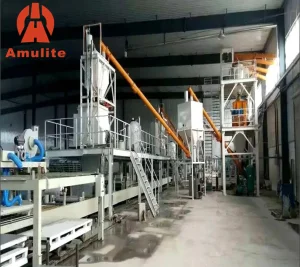 Thermal Insulation
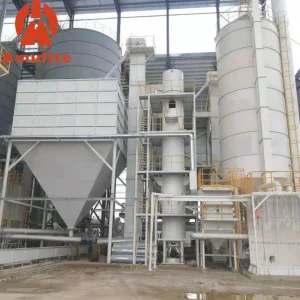 Lightweight Aggregate
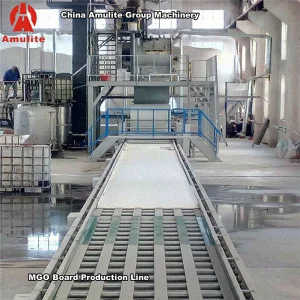 Fireproof Panel
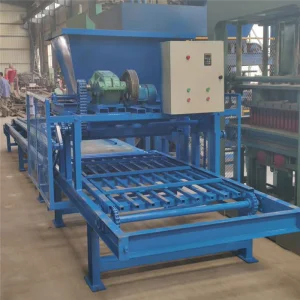 Block Forming
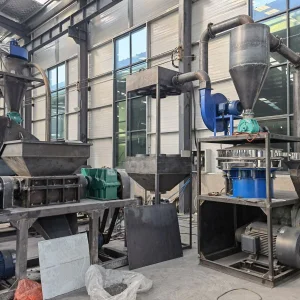 Green Recycling
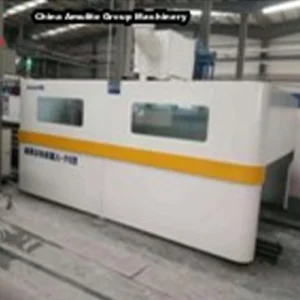 Autoclaved Aerated
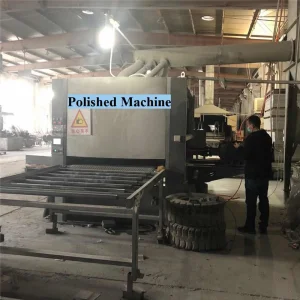 Surface Finishing
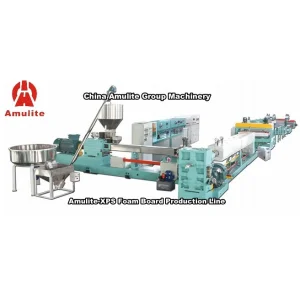 Eco-Foam Line
The global construction ecosystem is undergoing a fundamental structural transition toward lightweight, non-combustible, high-durability prefabricated building elements. At the forefront of this industrial transformation is the high-density Calcium Silicate Plate Panel Making Machine. Engineered to convert raw siliceous and calcareous materials into inorganic matrix boards through hydrothermal synthesis, modern production lines define the gold standard for fireproof interior partitions, exterior thermal cladding, and high-spec ceiling infrastructure.
As a premiere Calcium Silicate Board Machinery Company, our focus centers on optimizing the hydro-chemical reaction of calcium hydroxide ($\text{Ca(OH)}_2$) and quartz powder ($\text{SiO}_2$) under saturated steam autoclaving. This hydrothermal curing process synthesizes crystalline Tobermorite ($\text{C}_5\text{S}_6\text{H}_5$) matrix structures, which deliver zero flame spread, superior flexural strength, and moisture insensitivity unmatched by traditional gypsum or plywood alternatives.
A deep technical breakdown of slurry processing, sheet forming, pre-pressing, and hydrothermal autoclaving phases.
Precision dosing units wet-mix quartz powder (95%+ $\text{SiO}_2$), Portland cement, quicklime, and cellulose pulp. The slurry undergo high-speed dispersion and fiber opening in pulpers, ensuring uniform fiber matrix distribution for optimal bending resistance.
Utilizing multiple mesh vats and continuous felt filtration, thin wet films (0.8–1.2mm) are continuously wrapped onto the building cylinder. High-capacity vacuum dewatering boxes extract excess moisture until target sheet thickness (4–30mm) is achieved.
Green boards are subjected to 7,000–10,000 ton hydraulic pre-pressing to increase density up to 1.7 g/cm³. Subsequently, they enter steam autoclaves operating at 1.0–1.3 MPa (180°C–195°C) for 10–12 hours to finalize Tobermorite crystallization.
Technical Innovation Note: Our proprietary dual-loop energy recovery system reclaims flash steam from autoclaves to pre-heat raw slurry mixing tanks, lowering overall energy consumption by up to 22% per metric ton of finished calcium silicate board.
| Technical Parameter | Low-Density Board (Ceiling) | Medium-Density Board (Partition) | High-Density Board (Cladding) |
|---|---|---|---|
| Density Range ($\text{g/cm}^3$) | 0.8 – 1.0 | 1.1 – 1.3 | 1.4 – 1.7 |
| Flexural Strength (Bending MPa) | ≥ 9.0 | ≥ 14.0 | ≥ 22.0 |
| Water Absorption Rate (%) | ≤ 35% | ≤ 28% | ≤ 20% |
| Thermal Conductivity ($\text{W/m}\cdot\text{K}$) | ≤ 0.12 | ≤ 0.18 | ≤ 0.24 |
| Fire Endurance Rating (Incombustibility) | Class A1 (EN 13501-1) | Class A1 (EN 13501-1) | Class A1 (EN 13501-1) |
Navigating global macroeconomic shifts requires equipment suppliers to deliver uncompromised machinery quality, rapid turnaround times, and strategic cost containment. China's industrial infrastructure offers an unprecedented ecosystem for heavy machinery manufacturing.
By leveraging localized metallurgical supply chains, precision heavy-machining CNC clusters, and in-house component fabrication, our plant yields structural equipment engineered to withstand decades of continuous industrial duty cycles.
Streamlined production modularity reduces standard plant delivery windows by 35% compared to European machine builders.
All pressure vessels and autoclave shells are built from certified Q345R / 16MnR vessel-grade steel with non-destructive ultrasonic weld inspection.
Direct port connectivity enables frictionless sea-freight dispatch of oversized machinery packages worldwide.
How calcium silicate boards are integrated across residential, commercial, industrial, and infrastructure sectors globally.
Replaces drywall in interior commercial spaces. High density panels coupled with light-gauge steel studs provide up to 4-hour passive fire protection and elevated STC acoustic ratings.
Autoclaved medium and high-density boards resist freeze-thaw cycles, UV degradation, and extreme rain conditions, serving as ideal substrate panels for fluorocarbon coatings.
Low-density, ultra-lightweight calcium silicate boards serve as core insulation for ship bulkheads, engine rooms, and offshore platforms meeting IMO SOLAS fire safety codes.
Smooth, anti-static coated calcium silicate ceiling tiles provide zero-dust shedding environment necessary for microelectronics, pharmaceutical, and healthcare facilities.
Deploying heavy industrial machinery across international jurisdictions requires adherence to rigorous safety standards, environmental protocols, and operational training regimes. Our turnkey engineering methodology guarantees seamless local compliance.
Standards Adherence: Every line engineered by our team is designed to manufacture boards meeting ASTM C1185, EN 12467, and BS 476 international testing frameworks for fiber-cement and calcium silicate flat sheets.
We provide full field commissioning support, sending multidisciplinary senior engineering crews to oversee civil foundation work, mechanical erection, PLC networking, and raw material formulation tuning on-site.
Explore auxiliary crushers, edge trim cutters, and complementary board manufacturing equipment.
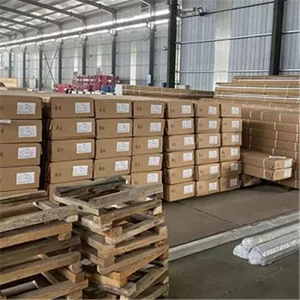 Exterior Panels
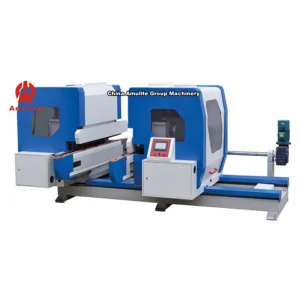 Precision Hardware
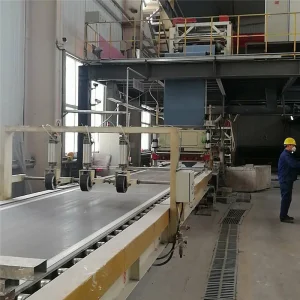 Plasterboard Line
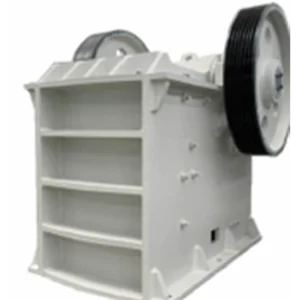 Raw Material Crushing
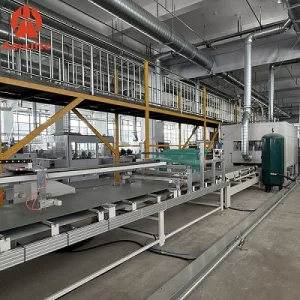 Flexible Tile
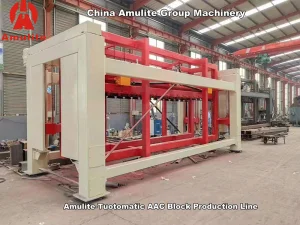 AAC Line
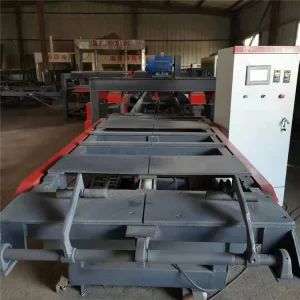 Trimming & Sizing
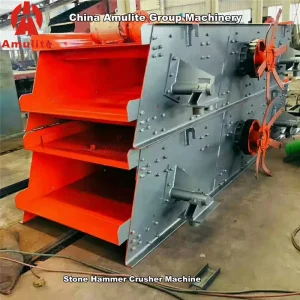 Heavy Crusher
Comprehensive technical answers to critical engineering, investment, and operational queries.
The core process involves the hydrothermal reaction of siliceous material ($\text{SiO}_2$) and calcareous material ($\text{CaO}$) under high-pressure steam in an autoclave ($180^\circ\text{C} - 195^\circ\text{C}, 1.0 - 1.3\text{ MPa}$). This synthesizes Tobermorite ($\text{C}_5\text{S}_6\text{H}_5$) crystals, which lock together to create an ultra-dense, fireproof, and dimensionally stable matrix.
While both systems use a Hatschek sheet-forming machine, Calcium Silicate boards rely heavily on reactive quicklime/slaked lime and quartz powder cured inside high-pressure autoclaves to form Tobermorite. Fiber cement boards often rely more on Portland cement hydration (air cured or low-steam cured). Calcium silicate boards achieve superior fire resistance and lower thermal conductivity.
A standard non-asbestos formulation consists of Quartz Powder / Silica Sand (40–50%), Quicklime / Cement (30–40%), Recycled Wood Pulp / Cellulose Fiber (8–12%), and Wollastonite / Synthetic Reinforcement Fibers (3–5%). Local raw material samples are tested in our lab prior to plant sizing.
We engineer plants with annual capacities ranging from 2 million m² to 20 million m² per line. Capacity is determined by the width of the Hatschek forming machine (1300mm to 1600mm), the number of forming vats, cylinder rotation speed, press tonnage, and autoclave capacity.
Our plants are governed by centralized Siemens S7-1500 PLC architectures paired with WinCC SCADA software. The automation suite regulates continuous slurry density, automatic sheet thickness control, precise hydraulic pressing ramps, and automated autoclave steam cycle profiling.
Depending on local energy tariffs, raw material prices, and regional board market pricing, most clients achieve full capital expenditure payback (CAPEX ROI) within 22 to 36 months of reaching stable mass-production capacity.