Famous Board Making Machine Company & Companies

Global Engineering Whitepaper on High-Throughput Manufacturing Systems, Automated Slurry Processing, & Turnkey Industrial Plant Architecture

Featured Board & Panel Manufacturing Systems

High-precision production lines designed for maximum throughput, low energy consumption, and compliance with global building standards.

Buy Hollow Core Wall Panels Production Line Factory, Factories
View Technical Specs
Buy Gypsum Powder Production Line Supplier, Product
View Technical Specs
High-Quality Embossed Metal Composite Exterior Panels Production Line Manufacturers, Company
High-Quality Embossed Metal Composite Exterior Panels Production Line
View Technical Specs
Best Precast Concrete Products Machinery Manufacturers, Products
View Technical Specs
Best AM806BH-10 Technical Parameters Manufacturer, Products
View Technical Specs
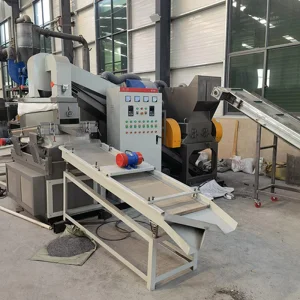
Buy Copper Wire Recycling Machine Companies, Products
View Technical Specs
China Fiber Cement Board /Calcium Silicate Board Production Line Factory, Companies
China Fiber Cement Board / Calcium Silicate Board Production Line
View Technical Specs
OEM EPS Sandwich Cement Wall Panels Production Line Companies, Products
OEM EPS Sandwich Cement Wall Panels Production Line Companies
View Technical Specs

Executive Summary: The Evolution of Industrial Board Manufacturing Machinery

An authoritative analysis of mechanical automation, material science integration, and production efficiency in modern non-metallic building material lines.

The global construction industry is undergoing a structural transition toward structural lightweighting, prefabrication, and fire-resistant architectural envelopes. At the epicenter of this technological shift are premier board making machine companies that engineer industrial-grade manufacturing lines for fiber cement boards, autoclaved calcium silicate boards, gypsum plasterboards, and EPS sandwich wall panels. As tier-one engineering procurement firms and building material conglomerates seek higher operational performance, selecting an enterprise-grade equipment manufacturing partner requires evaluating mechanical design precision, thermal hydro-thermal synthesis integration, automation controls, and long-term thermodynamic stability.
Modern industrial board making machinery is no longer comprised of standalone mechanical presses; it operates as an integrated ecosystem of continuous raw-material dosing, automated pulping refining, high-vacuum dewatering, precision web accumulators, dynamic cutting matrices, high-pressure steam autoclaving, and robotic palletization. Leading manufacturers engineer these systems to process diverse industrial byproducts—including fly ash, silica sand, desulfurized gypsum, and recycled cellulosic fibers—turning zero-value minerals into high-density structural substrate panels.
30M m²
Max Annual Output per Line
±0.15mm
Thickness Tolerance Precision
98.5%
System Availability (OEE)
35%
Energy Recovery Thermal Yield

Macro Engineering Solutions: Core Manufacturing Technologies

Deciphering the core process methodologies used by market-leading machinery manufacturers to achieve superior panel flexural strength and dimensional stability.

Hatschek Wet-Forming Process
Utilizing multi-vat cylinder molds paired with continuous synthetic felt belts and multi-stage vacuum dewatering boxes. This process builds thin laminates layer-by-layer to achieve uniform fiber orientation, maximum modulus of rupture (MOR), and superior impact resistance.
Hydro-Thermal Autoclaving
High-pressure saturated steam reaction vessels operating at 1.0–1.3 MPa pressure and 180°C–190°C temperatures. Induces the synthesis of crystalline Tobermorite phase ($C_5S_6H_5$), eliminating moisture expansion and maximizing fire resistance.
Automated Batching & Dosing
Gravimetric continuous dosing systems integrated with loss-in-weight feeders and PLC SCADA control systems. Guarantees precise proportioning of Portland cement, micro-silica sand, pulp fibers, and additives within ±0.2% mass accuracy.
Automated Handling & Stacking
Vacuum plate lifters and high-speed servo gantries that stack green boards onto curing cars with sub-millimeter position accuracy, minimizing mechanical corner chips and delamination defects.
High-Capacity Dryer Matrices
Multi-deck jet drying tunnels engineered with heat recovery recirculation systems. Reduces panel free moisture from 30% down to under 8% with uniform thermal distribution to prevent panel warping.
In-Line Surface Finishing
Integrated four-side edge trimmers, calibrated calibration sanders, chamfering tools, and UV coating lines, allowing producers to supply market-ready architectural wall cladding directly.

Global Procurement Criteria: What Buyers Demand in Board Machinery

Key technical parameters and contractual benchmarks evaluated by international corporate buyers prior to capital equipment acquisition.

Enterprise buyers evaluating a premier board making machine company prioritize long-term Reliability, Overall Equipment Effectiveness (OEE), and Raw Material Adaptability. Because capital expenditure on automated building material plants typically ranges from $2 Million to $15 Million USD depending on capacity, equipment selection must align with rigorous engineering matrix metrics:
1. Raw Material Mix Versatility: Regional differences in mineral composition present major processing challenges. Superior machinery suppliers design slurry hydropulpers and fiber refining systems that accommodate varying grades of unrefined quartz sand, river silt, slag, fly ash, and unbleached kraft pulp without clogging or abrasive wear.
2. Structural Tolerance & Machining Accuracy: Forming cylinders, press rollers, and cutting gantries must maintain strict mechanical tolerances. For example, forming cylinder runout must be kept within 0.05 mm to prevent uneven board thickness profiles that cause high reject rates during sanding operations.
3. Energy Recovery Architecture: Energy overhead accounts for over 35% of operational expenditure in autoclaved board production. Leading plant designers integrate flash steam heat exchangers, boiler flue gas recovery systems, and variable frequency drives (VFDs) across all high-wattage motor assemblies to minimize kWh consumption per square meter of output.

Compliance, Safety & Localized Engineering Support

Ensuring international regulatory compliance, operational safety, and continuous localized engineering field services.

Global Standards Compliance
All pressure vessels (autoclaves, steam boilers) adhere strictly to ASME Section VIII Div 1, EU PED (2014/68/EU), and ISO 9001:2015 quality directives. Electrical cabinets conform to CE Mark and UL 508A enclosure specifications.
Operational Safety Systems
Machinery lines incorporate Safety Integrated PLC networks, light curtains, emergency stop loops, and interlocking autoclave door safety mechanisms to comply with OSHA 1910 industrial machinery safety protocols.
Turnkey Field Lifecycle Support
From initial site foundation layout drawings and civil engineering consultations to localized mechanical installation supervision, commissioning trial runs, raw material chemical testing, and 24/7 remote diagnostic PLC telemetry.

Technology Roadmap: The Future of Board Making (2025–2030)

Pioneering Industry 4.0 automation, AI defect detection, and carbon-neutral cementitious manufacturing lines.

2025 - 2026
AI Vision Inspection & closed-Loop Dewatering
Integration of high-speed machine vision arrays to detect microscopic surface micro-cracks and automated vacuum pressure modulation based on real-time slurry freeness measurements.
2027 - 2028
Zero-Carbon Hydration Chemistry
Transitioning board matrix formulations to non-calcined geopolymer binders, alkali-activated slag systems, and direct $CO_2$ mineral curing chambers to achieve net-zero embodied carbon panels.
2029 - 2030
Full Digital Twin & Predictive Maintenance Telemetry
Complete cloud-synchronized Digital Twin plant modeling. Predictive vibration analysis on all high-load rollers, slurry pumps, and autoclaves to eliminate unplanned downtime.

Expanded Machine Portfolio & Ancillary Processing Systems

Explore specialized machinery systems for wall panel manufacturing, surface finishing, and material recycling.

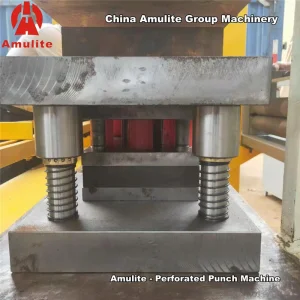
High-Quality Amulite Perforated Punch Machine System Technical Data Manufacturer, Suppliers
High-Quality Amulite Perforated Punch Machine System
View Technical Specs
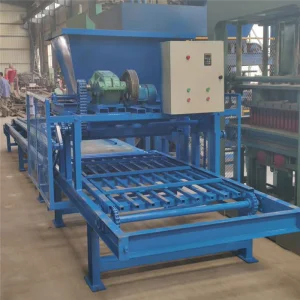
China Automatic Bricks Making Production Line Manufacturers, Products
China Automatic Bricks Making Production Line
View Technical Specs
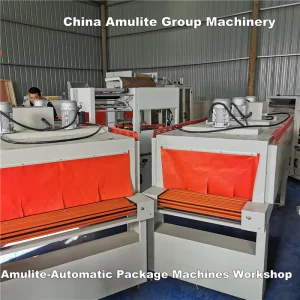
Famous Automatic Package Machines Workshop Factory, Company
Famous Automatic Package Machines Workshop Factory
View Technical Specs
OEM UV Coating/Painting Production Line Manufacturer, Factories
OEM UV Coating / Painting Production Line Manufacturer
View Technical Specs
High-Quality Amulite Automatic AAC Block Production Line Manufacturers, Companies
High-Quality Amulite Automatic AAC Block Production Line
View Technical Specs
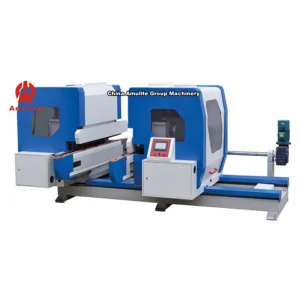
OEM 1300 II Type Automatic Four Side Edge Cutting Machine Factory, Companies
OEM 1300 II Type Automatic Four Side Edge Cutting Machine
View Technical Specs
Best Flexible Clay Ceramic Tile Production Line Manufacturer, Companies
Best Flexible Clay Ceramic Tile Production Line
View Technical Specs
Famous Amulite AAC Blocks Customized Automatic Machines- 4.2m Manufacturers, Company
Famous Amulite AAC Blocks Customized Automatic Machines - 4.2m
View Technical Specs

Frequently Asked Questions: Technical Engineering & Procurement

In-depth answers addressing semantic search queries, operational planning, and technical specifications for industrial buyers.

Q: What is the annual production capacity of a standard fiber cement board line?
Annual plant capacity is determined by forming cylinder width (typically 1300mm to 1600mm), the number of vat forming stages (3 to 8 vats), hydraulic press tonnage, and autoclave autoclave volume. Standard configurations range from 2 million to 10 million square meters per year for single lines, while high-throughput multi-line facilities can exceed 30 million square meters annually.
Q: What is the primary operational difference between Autoclaved and Non-Autoclaved board lines?
Autoclaved board lines utilize quartz sand fines ($SiO_2$) and high-pressure steam (1.2 MPa at 190°C) to react cementitious materials into Tobermorite crystals, producing high-density, dimensional stable, A1-fire-rated boards suitable for exterior facades. Non-autoclaved lines rely on natural or warm-water curing with higher cement ratios, making them suited for interior partitions and budget ceiling applications.
Q: Can locally sourced raw materials be utilized without altering board performance?
Yes. Leading board making machine companies conduct comprehensive raw material laboratory tests (XRF/XRD analysis, particle size distribution, pulping freeness) before line commissioning. Formulations are custom-engineered to optimize local OPC cement, quartz sand, fly ash, and native cellulose fibers while maintaining target flexural strength and density parameters.
Q: What level of automation is required to run a modern board manufacturing facility?
Modern high-efficiency lines utilize centralized SCADA control systems with PLC field buses (Siemens S7-1500 / Schneider Electric). Fully automated lines require as few as 5 to 8 operators per shift for raw material dosing monitoring, stacker oversight, and quality inspection, dramatically reducing labor overhead and human operational error.
Q: What are the installation, commissioning, and handover lead times?
Custom machinery engineering and manufacturing typically require 90 to 150 days. On-site mechanical and electrical erection takes 45 to 60 days, followed by 15 to 30 days of trial production, formulation fine-tuning, and operator training until contractual output capacity and quality standards are fully validated.