High-precision engineered equipment components designed for modular expansion, high-speed cutting, and automated panel production.
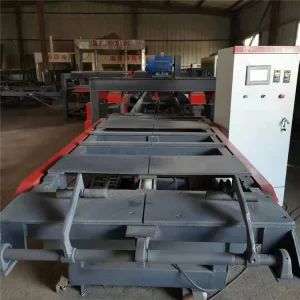
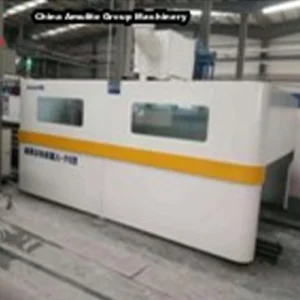
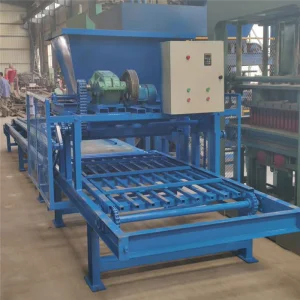
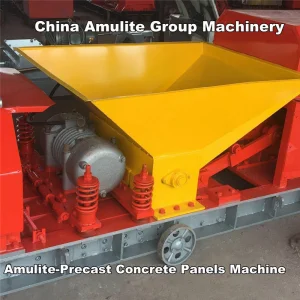
An engineering deep-dive into how modern Chinese machine builders have redefined high-capacity continuous production lines for global infrastructure projects.
The global construction industry is undergoing an unprecedented paradigm shift toward prefabricated building envelopes, energy-efficient cold storage solutions, and rapid-assembly modular structures. At the epicenter of this industrial transformation is the continuous and semi-continuous sandwich panel production line. Modern sandwich panels—comprising structural metal facings, fiber-cement skins, or calcium silicate board facings bonded to core materials such as Polyurethane (PU/PIR), Mineral Rockwool, Expanded Polystyrene (EPS), or Lightweight Cementitious Slurry—demand precise thermal control, zero-tolerance roll forming, and automated metering technology.
Historically dominated by Western European equipment manufacturers, China’s industrial machinery sector has executed a profound technological transition over the past two decades. Today, a leading China Sandwich Panel Line Company integrates European-tier servo-driven machinery architectures, precision Siemens PLC networks, high-pressure foam injection equipment (such as Hennecke or KraussMaffei engineering standards), and automated double-belt laminator systems at a fraction of traditional capital expenditure (CapEx). This balance of technical precision, heavy mechanical fabrication, and economic scale has established Chinese OEMs as strategic partners for multinational EPC contractors and wall board manufacturers globally.
Engines engineered to process PIR, PUR, mineral rockwool, and EPS cores delivering thermal conductivity ($\lambda$) down to $0.022\text{ W/m}\cdot\text{K}$.
Integrated rockwool insertion systems with automatic ribbon turning and micro-gaps for strict EN 13501-1 fire safety standards.
Real-time density tracking, servo synchronization, thickness laser monitoring, and cloud-based predictive maintenance diagnostics.
The synergistic combination of heavy industrial manufacturing infrastructure, localized raw material supply chains, and rapid engineering customization.
Chinese production line manufacturers operate within highly concentrated industrial hubs (such as Hebei, Jiangsu, and Shandong). This geographic advantage ensures immediate access to heavy-duty machining centers, high-frequency induction welding, precision roll-forming roller grinding, and advanced surface coating lines. The proximity of structural steel mills and chemical formulation plants dramatically accelerates machine fabrication cycles and prototype trials.
Investing in a modern continuous sandwich panel line requires significant capital allocation. Chinese manufacturers offer turnkey plant setups that reduce initial machinery investment by 35% to 50% compared to European equivalents. Crucially, this cost reduction does not come at the expense of component quality; lines routinely incorporate European high-pressure metering pumps (e.g., Rexroth), Schneider/Siemens electrical switchgear, Beckhoff EtherCAT automation controllers, and Omron optical sensors.
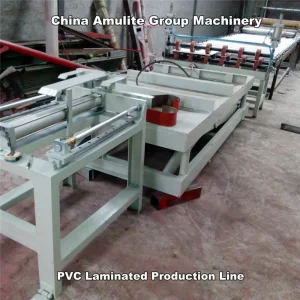
Unlike standard off-the-shelf equipment, Chinese manufacturers excel at custom-engineering line geometries to handle alternative sub-layers. Beyond traditional prepainted galvanized steel (PPGI) and aluminum, lines are customized for fiber cement board skins, MGO (Magnesium Oxide) fireproof boards, PVC laminates, and calcium silicate substrates. This modular flexibility allows plant operators to pivot output between structural roof/wall panels, acoustic partitions, and decorative architectural cladding.
Engineering Benchmark: High-speed continuous lines engineered by leading Chinese suppliers operate at linear speeds up to 15 m/min for PIR panels and up to 12 m/min for structural rockwool panels, backed by 36-meter double-belt curing conveyers.
Empirical data reflective of top-tier Chinese sandwich panel line output standards.
From controlled-atmosphere cold chains to acoustic commercial high-rises, specialized sandwich panel lines cater to distinct mechanical requirements.
Demands ultra-thick (150mm–250mm) PIR/PUR panels with labyrinth cam-lock or deep tongue-and-groove joints to eliminate thermal bridging. Chinese lines integrate specialized edge-milling units and side-rubber inserting devices for hermetic seal integrity.
Focuses on high-speed corrugated roof panel and hidden-screw wall panel manufacturing. Lines feature dual-decoilers, fast-change cassette roll formers, and automated mineral wool slitting and 90-degree block flipping systems.
Requires lightweight EPS-cement composite panels or fiber-cement skin sandwich walls. Automated vertical mold cars and horizontal extrusion lines deliver high flexural strength for non-load-bearing internal partitions.
| Line Type Parameters | PIR / PUR Continuous Line | Mineral Rockwool Line | EPS Cement Board Line | Hybrid Multi-Core Line |
|---|---|---|---|---|
| Core Density Range | 38 – 45 kg/m³ | 80 – 140 kg/m³ | 450 – 800 kg/m³ | Variable (PIR / Rockwool) |
| Fire Rating Standard | B1 / B2 (ASTM E84) | Class A1 Non-Combustible | Class A Fireproof | Class A1 to B1 adjustable |
| Laminator Type | Double Rubber/Slat Belt (24m-36m) | Heavy-Duty Slat Track | Vertical Mold / Extruder | Quick-change Double Belt |
| Linear Production Speed | 6 – 15 m/min | 4 – 10 m/min | 2 – 6 m/min | 4 – 12 m/min |
| Facing Material Compatibility | PPGI, Aluminum, Stainless Steel | PPGI, Fiber Cement, Aluzinc | Fiber Cement, MGO Board | PPGI, Stainless, Fiber Cement |
Key evaluation metrics for international buyers and the structural technological shifts shaping the next decade of machinery engineering.
When procuring heavy manufacturing machinery from China, corporate sourcing directors must move beyond initial price evaluations to audit underlying structural engineering and control component integrity. Essential verification checkpoints include:
1. Pentane Blowing Agent Conversion: Driven by environmental ESG mandates, lines are increasingly outfitted with zero-ODP, low-GWP Pentane premixing systems. This requires explosion-proof (ATEX-rated) foaming rooms, hydrocarbon gas detectors, and forced ventilation systems engineered directly into the Chinese factory layout.
2. AI Vision Quality Control: Modern continuous lines integrate inline optical cameras that scan board surface profile variations, paint scratches, and joint tongue defects at full line speeds, automatically tagging defective sheets before robotic palletizing.
Direct insights regarding technical capabilities, factory acceptance testing, delivery schedules, and site installation.
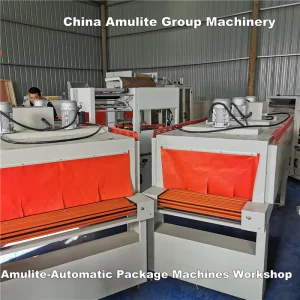
Manufacturing and factory pre-assembly typically require 90 to 150 days depending on double-belt laminator length (e.g., 18m, 24m, or 36m) and the level of downstream automation (such as cooling spiders, automatic stackers, and shrink-wrapping machines). Factory Acceptance Testing (FAT) is conducted prior to dispatch.
Yes. We engineer 2-in-1 hybrid continuous lines. These lines incorporate both a high-pressure polyurethane chemical foaming unit and an inline rockwool slab cutting, mineral wool ribbon turning, and side-strip polyurethane sealing unit. Switching between media modes is streamlined via pre-programmed PLC recipes.
A standard continuous line requires a plant bay measuring 120m to 180m in length, 12m to 18m in width, and a clear hook height of at least 6m. Total electrical connected load ranges from 250 kW to 450 kW depending on double-belt heating systems, alongside a dry compressed air supply (0.8 MPa).
We deploy a multidisciplinary field team consisting of mechanical engineers, electrical automation specialists, and process chemists. They oversee civil foundation checks, equipment erection, wiring integration, raw material chemical tuning, and operator safety training until stable commercial output is achieved.
Our control systems feature open PLC parameter calibration. Whether sourcing Polyol/Isocyanate from BASF, Covestro, or local suppliers, or steel coils with varying zinc thickness, injection pressures, belt speeds, and curing temperatures can be adjusted and saved in localized operator recipes.
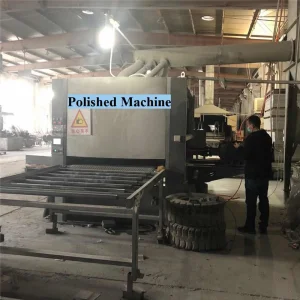
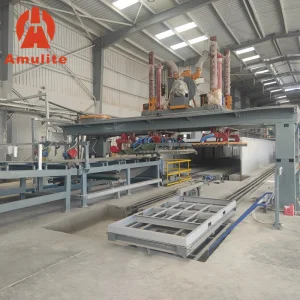
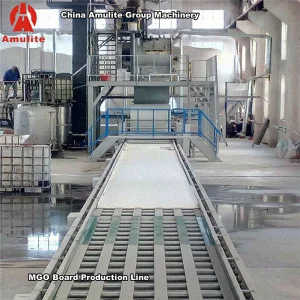
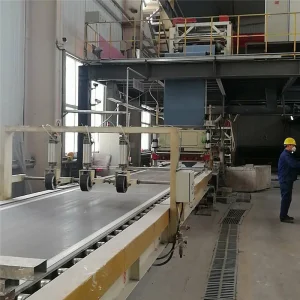
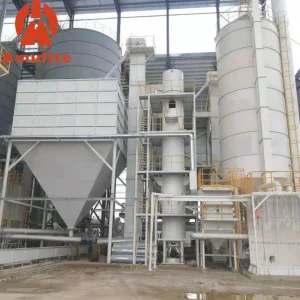
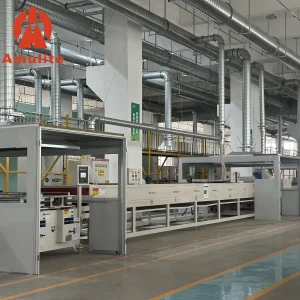
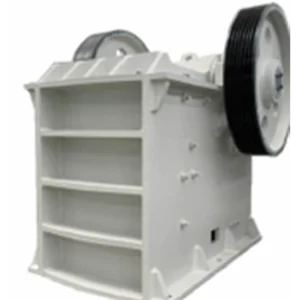
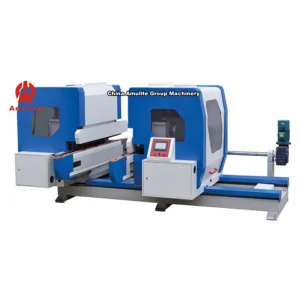
Complete turnkey plant capabilities including board polishing, coating, board slicing, and raw material processing.
Consult with our senior machinery design directors to receive technical proposal drawings, factory layout designs, and complete machinery quotes tailored to your project requirements.